m. Сміла, Незалежності, 67г. оф, 406/6









FOX ESS: how a company from Wenzhou became one of the main names in the energy storage market in six years
In 2019, almost no one outside of a narrow circle had heard of FOX ESS. Now the brand operates in more than 70 countries, and its inverters and batteries are on the roofs of private homes from Britain to Australia. It is worth understanding where this manufacturer came from and whether there is anything real behind the loud numbers.
The company was founded in September 2019 in Wenzhou, Zhejiang Province. The city, by the way, is the same as the parent company, Tsingshan Group, one of the world's leading nickel and stainless steel producers, with its own lithium resources. The important thing here is not the name, but the essence: when a battery brand grows under the wing of a raw materials giant, it is a completely different conversation about the stability of supplies than when components are sought on the open market around the world.
The first year was spent mainly on research - they opened an R&D center in Wuxi, attracted an angel round. Already in 2020, the first own products and the first shipments abroad appeared. In 2021, a full-fledged headquarters in Wenzhou (at that time one of the largest production sites for residential storage systems in Asia) was launched, and offices in Britain and Poland were opened almost simultaneously. What followed was quick: Germany as the European headquarters, Italy, Australia, Brazil, South Africa.
In 2023, the company went through a pre-IPO round with a valuation of over 10 billion yuan and was included in the Forbes unicorn list. FOX ESS now has several thousand employees, and the production of inverters and batteries is measured in hundreds of thousands of units per year. In residential storage systems, the brand has repeatedly been among the leaders in deliveries in the UK, continental Europe and Australia. BloombergNEF has assigned the company Tier 1 status - and this is no longer marketing, but confirmation of real production volumes and financial stability, and not just loud statements on the website.
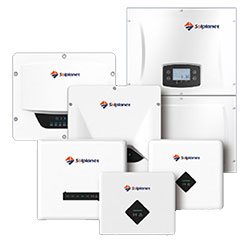
As for the equipment itself, the range covers almost the entire spectrum of distributed energy. There are network string inverters, single-phase and three-phase, for different scales of objects: compact, with high efficiency, suitable for both private homes and commerce. There are hybrid inverters - they work simultaneously with panels and batteries, support parallel connection of several devices, have backup power (EPS) and are able to switch between network and autonomous mode. Microinverters have also appeared - a newer direction, for small and balcony systems.
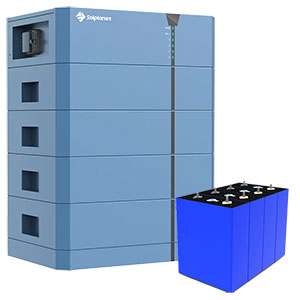
Separately, it is worth mentioning batteries. Modular storage systems based on lithium-iron-phosphate (LFP) chemistry, the EQ, EP series, and so on - the capacity is increased simply by adding modules, which is convenient when the budget or needs change over time (and they almost always change). There are solutions for both the residential segment and the commercial and industrial (C&I), the first products have appeared for the utility level. Many models have IP65 protection and support stacking.
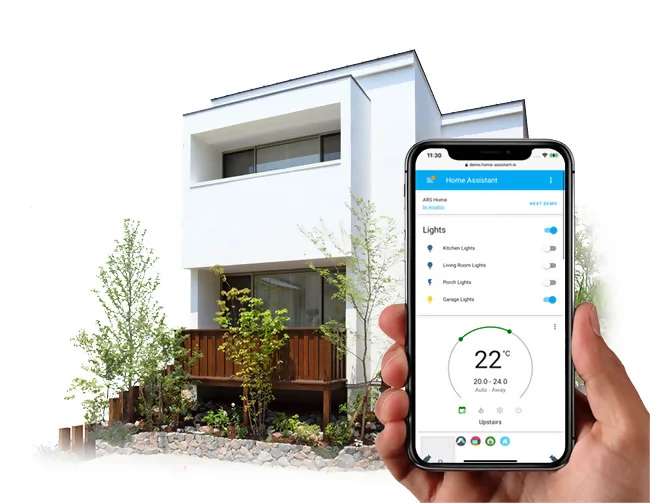
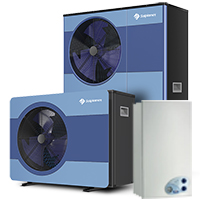
And, of course, charging stations for electric vehicles - 7, 11, 22 kW, with simple connection and integration into the general power system of the house. Added to this are heat pumps and ready-made complexes "panels plus storage plus charging" - the company is increasingly moving towards a complete ecosystem, rather than a set of individual components. Almost the entire model range can be monitored remotely, via a portal or application, and most systems are made on the principle of "plug and play", with built-in protection against overload and short circuit.
Why this manufacturer and not one of dozens of others on the market? There is no one magic ingredient here - rather a combination of several factors. Own engineering base plus industrial support from Tsingshan plus rapid entry into new markets. Access to the resources of the parent group gives better control over the cost and supply of critical materials for batteries. LFP chemistry is primarily a safety issue: less risk of thermal runaway compared to other types of lithium batteries, and there is no cobalt in the composition at all.
In practice, it all comes down to specifics. The efficiency of hybrid inverters in FOX ESS often exceeds 97–98%. The batteries are modular - you can start with a small capacity and buy additional modules later, when money appears or consumption increases. The installation is logical and understandable, so the installer spends less time on site. The system owner sees generation, consumption and battery charge right on the phone and is less dependent on the network - especially relevant where everything is not smooth with the power supply.
The company is significantly investing in local service support in key countries, and for a market where warranty and response time often outweigh the numbers on the datasheet, this is a serious argument. Tier 1 status and leadership in individual national markets here work to build the trust of distributors and installers, and not just decorate the presentation.
Although, to be honest, it is not worth idealizing - the competition in this segment is fierce, and FOX ESS is far from the only player. Not only the characteristics in the datasheet are important, but also the availability of spare parts for years to come, regular firmware updates, and the quality of local service. Judging by the pace - new automated factories in Wenzhou, expansion of the line - the company plans to stay here for a long time, and not just shoot and go into decline.
Who is all this suitable for in practice? Residential hybrid systems with modular batteries are a logical choice for a private home, where they want to maximize their own solar generation and have a reserve in case of a power outage. Commercial and industrial solutions give businesses a tool to manage peak loads and reduce electricity costs. Charging stations naturally complement the picture for electric vehicle owners who have already invested in solar generation.
If you are considering FOX ESS equipment for your project, it is worth checking in advance the current certificates for your country, compatibility with the local network and warranty terms from the official supplier. The line is updated quite quickly: new hybrid platforms, solutions for C&I and the utility segment appear, so what was top-of-the-line two years ago may now be a basic model.