FOX ESS: energy storage with safe LiFePO4 chemistry
What the "Power Elements" category covers
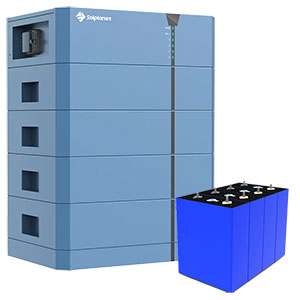
The "Power Elements" category covers the storage and supporting components of an energy system — everything that stores or distributes electricity besides the inverter itself. In the FOX ESS range, this segment is represented by lithium iron phosphate storage systems in the P100 series and battery management (BMS) modules, which work paired with inverters from the same line, forming one managed ecosystem from generation to consumption.
P100 storage systems and LiFePO4 safety
P100 storage systems are built on LiFePO4 (lithium iron phosphate) chemistry, which differs substantially from traditional lithium-ion batteries in safety profile: it isn't prone to thermal runaway even under mechanical damage or a short circuit, making it a reasonable choice for placement inside living spaces or basements of private homes, where traditional chemistries would need a separate fire-rated enclosure.
LiFePO4 cell charge-discharge cycle life substantially exceeds that of traditional lead-acid batteries, still used in some budget backup power systems: where a lead-acid battery holds up for a few hundred full cycles before significant capacity loss, a lithium iron phosphate system is rated for several thousand cycles, which under daily use means a service life comparable to the inverter itself.
The role of BMS and FoxCloud monitoring
The battery management module (BMS) is a critical component that's often underrated when choosing a storage system: it's the BMS that handles charge balancing between individual battery cells, protection against overcharge or deep discharge, and temperature monitoring for each section. Without a quality BMS, even the best cell chemistry degrades unevenly, cutting the system's overall service life well below its rated figures.
BMS integration with the FoxCloud platform lets you track each battery cell's condition remotely, receiving warnings about deviations long before they grow into visible capacity loss or an emergency system shutdown. For an owner, that means scheduled maintenance instead of emergency repair once a problem has already affected the whole household.
Compatibility, modularity, temperature and how to choose
When picking power elements for a system built around a FOX ESS inverter, focus on voltage and communication protocol compatibility with the specific inverter model — components from one ecosystem are guaranteed to work together without extra configuration, while mixing storage from a different manufacturer with an inverter of another brand often requires extra adapters or simply doesn't work at all due to protocol mismatches between the inverter's controller and a third-party BMS.
The modular design of P100 storage systems lets you grow total capacity gradually, adding modules to an existing system as household needs increase, rather than committing to a maximum-capacity budget upfront. That's especially convenient for owners starting with a minimal set covering basic needs, who plan to expand once they see their actual consumption profile after the first year of use.
Operating temperature range is another factor worth considering when choosing where to place power elements: LiFePO4 cells hold stable characteristics across a wider temperature range than traditional lithium-ion equivalents, allowing storage placement in an unheated garage or utility room without significant winter capacity loss, though the manufacturer still recommends avoiding extreme cold for maximum service life.
It's worth noting that cell chemistry alone doesn't determine safety — pack-level design matters just as much. FOX ESS builds fire-resistant separation between modules within a P100 unit, so a fault in one module is contained rather than able to spread through the entire storage bank, a distinction that rarely shows up in a spec sheet but matters a great deal in the rare event something does go wrong.
Compare capacity, charge cycle count, temperature range and built-in BMS availability across the models in the catalogue, and pick a storage system that delivers stable autonomy for your home for years to come, not just its first season of use.

 m. Сміла, Незалежності, 67г. оф, 406/6