m. Сміла, Незалежності, 67г. оф, 406/6












Monocrystalline solar panels: technologies, advantages and how to make the right choice
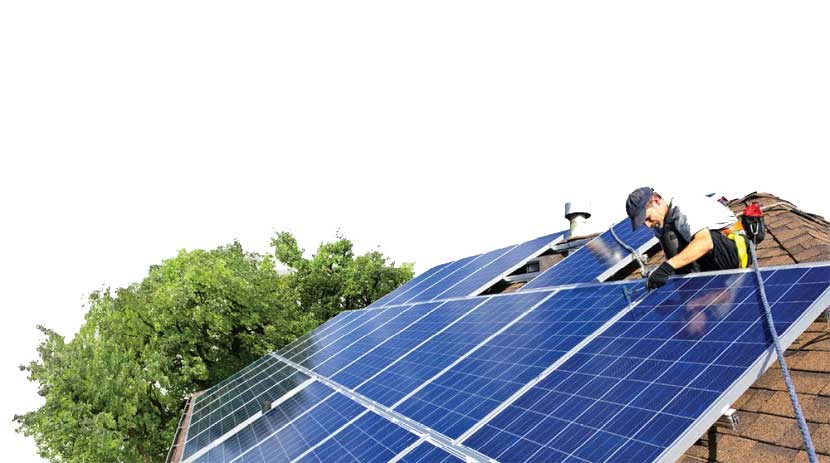
When we talk about modern solar energy today, we almost always mean monocrystalline photovoltaic modules. Crystalline silicon accounts for about 95% of the global panel market, and the overwhelming majority of it is monocrystalline. Polycrystalline modules, once popular due to their lower price, have practically disappeared from production. Let's figure out why this happened, what technologies are behind monocrystalline and what to pay attention to when choosing panels for your home or business.
What is a monocrystalline panel?
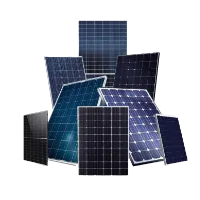
The basis of such a module is a plate cut from a single solid crystal of silicon. It is grown using the Czochralski method: a tiny “seed” crystal is immersed in a melt of ultrapure silicon and slowly pulled out, rotating, thus growing a cylindrical ingot with an ordered crystal lattice. It is this uniformity of the structure that allows electrons to move freely and explains the characteristic uniform black color of single-crystal cells. In polycrystal, silicon solidifies with many small grains, the boundaries between which interfere with the movement of charge — hence the lower efficiency and bluish “marble” shade.
Monocrystal vs. polycrystal: why the market made the choice
The difference is not only in appearance. Monocrystalline panels are consistently more efficient: they extract more kilowatt-hours from the same roof area. They work better in cloudy weather and at dawn, lose power more slowly over the years and feel more confident in the heat. As the price gap between technologies narrowed, polycrystalline became unprofitable even in the budget segment - so leading manufacturers curtailed its production. In fact, the question of “mono or poly” for a new installation no longer arises today.
One foundation — many technologies
Benefits experienced by the owner
Regardless of the specific architecture, monocrystalline offers several tangible benefits. This is a higher return per square meter - critical when the roof is small. This is stable operation for years: modern N-type modules lose a few tenths of a percent of power per year. This is better behavior in the heat, when a heated panel must give its maximum. And this is aesthetics - an even deep color that does not spoil the appearance of the roof, and often on the contrary adds modernity to the house.
How to choose monocrystalline photovoltaic modules: some tips
- Look at the cell type, not just the watts. For a new installation, choose N-type (TOPCon or HJT) over the outdated P-type PERC—the durability gain is more important than the loud power number on the label.
- Compare efficiency to roof area. The highest efficiency is needed primarily where space is limited. If the roof is spacious, it is sometimes cheaper to add another panel than to overpay for premium efficiency.
- Read the power warranty, not just the defects. A linear generation warranty of 25–30 years and a low percentage of annual degradation will say more about the quality of the panel than the advertised maximum watts.
- Pay attention to the temperature coefficient. In the summer, cells heat up much higher than the 25 °C at which the nominal power is measured. The lower the coefficient, the less energy is lost on the hottest days.
- Check the manufacturer. A decade-long warranty only makes sense if there is someone to enforce it. Look for Tier 1 brands and independent reliability test results.
- Double-sided panels - for the appropriate surface. The bifacial module provides an additional benefit only over a light roof, concrete or snow; on a dark surface, the overpayment for the active back side will not pay off.
And a separate rule that is often forgotten: high-quality installation affects the final result no less than the brand itself. The wrong angle, shading, or a weak connection can negate the benefits of even the best panel.
What real experience shows
Passport figures are the conditions of an ideal laboratory. In real life, a panel gives off approximately 85–95% of its nominal value due to heating, pollution, and the angle of incidence of light, so sober expectations and a competent project weigh no less than the brand. But many years of observations are inspiring: independent studies (in particular, the American laboratory NREL based on thousands of real systems) show that modern monocrystalline modules lose an average of about 0.4% of power per year - often even less than the warranty promises. Owners of such stations mention panels only at the planning stage: high-quality monocrystalline works quietly and predictably for decades. Installers confirm that N-type modules maintain their output significantly better than old PERCs, both in the summer heat and on cloudy days.
Result
Monocrystalline solar panels are not yesterday's day, but the foundation on which all modern photovoltaics are built. When choosing a module, look primarily at the cell technology, a real guarantee of power and the reputation of the manufacturer, and not just at the highest number in watts. This approach provides the main thing, for which a solar station is built, - predictable energy and peace of mind for many years to come.