m. Сміла, Незалежності, 67г. оф, 406/6










| Product | Price |
|---|---|
| Ajax Hub Plus security system controller | 0.00 ₴ |
Brand
Prices
Security control panels: a device that controls security
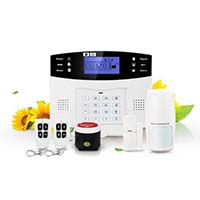
The control panel, or hub, is the element of the alarm system without which the rest of the devices become a disparate set of sensors. It collects information from all detectors, analyzes it and decides how to act: raise the alarm, turn on the siren, send a message to the owner or transmit a signal to the security panel. If you imagine a security system as a living organism, the sensors will be the sensory organs, and the control panel will be the brain that processes signals and makes decisions. Therefore, it is logical to start building the protection of a house, apartment or commercial facility with the choice of a control panel.
What's going on inside
The control panel continuously communicates with each connected device via a secure radio channel, monitoring their status, signal strength, and battery charge. As soon as a detector detects an event — motion, an open door, smoke, or water leakage — the information reaches the control panel in a split second, and the control panel decides who to notify and how. The data is encrypted, and the exchange itself is protected from jamming attempts and equipment substitution, making it extremely difficult to bypass a properly configured system.
Multiple communication channels instead of one
The reliability of the control panel is largely determined by how many ways it can "knock" on the owner. Modern models combine wired Internet, Wi-Fi and mobile communication, often with support for two SIM cards at once. If an attacker cuts the cable or the electricity goes out, the system will not go silent: it will simply switch to a backup channel. The built-in battery supports operation for several hours after a power outage, which is exactly the period when protection is especially needed.
How many devices can the control panel hold?
Control panels differ in the number of devices, groups, and scenarios they support. For a one-room apartment, a compact model with several dozen detectors will suffice, while a large house or office requires a hub capable of combining hundreds of sensors, cameras, and automation elements. When planning a system for growth, it is worth taking a control panel with a margin: adding a new sensor later is much easier than changing the basis of the entire alarm system.
Smartphone control and automation
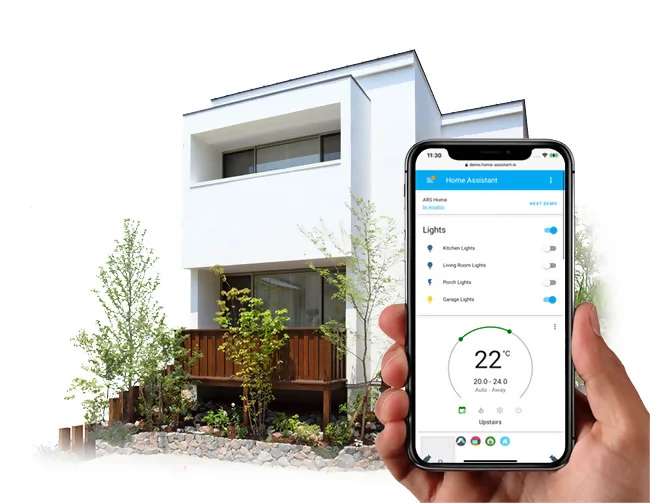
All interaction with a modern control panel takes place through a mobile application and desktop programs. From there, the system is armed and disarmed, the status of devices is viewed, instant notifications are received, and access rights are distributed between family members or employees. Automation scenarios are of particular value: in response to an alarm, you can turn on the light, shut off the water, or start recording video. This way, the alarm system ceases to be just a “guard” and becomes part of a smart home.
How not to make a mistake with your choice
Focus primarily on the scale of the facility, the required communication channels and expansion plans. For an apartment, a basic solution is usually enough, for a private house it is better to take a model with several communication channels and redundancy, and if the facility already has a wired alarm system, it makes sense to look at hybrid control panels that combine wired and wireless devices. If it is difficult to make a final decision, comfortlife.market consultants will help correlate the capabilities of the control panel with your tasks and budget so that the system works smoothly from day one.
💵 Most expensive Central
💎 The cheapest central in the store
As of august 2026 year, the cheapest central in our store are:
| Product | Price |
|---|---|
| Ajax Hub Plus security system controller | 0.00 ₴ |
| Ajax Hub is a smart center | 6 849.00 ₴ |
| Ajax Hub 2 is a smart switchboard | 11 199.00 ₴ |
| Ajax Hub 2 Plus is a smart switchboard | 13 699.00 ₴ |
| Ajax Hub Hybrid (2G) security system controller | 11 899.00 ₴ |