Motion sensors: the technology that notices the intruder first
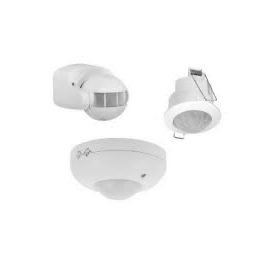
Imagine someone trying to break into your room. Even before they take a few steps inside, a motion sensor is triggered - a device that reacts to the movement of a person and instantly sends an alarm signal. This is one of the basic elements of any alarm system: it is it that turns an empty room into a zone under constant surveillance. This section contains wireless motion detectors for your home, apartment, office, shop or warehouse - from simple indoor models to protected outdoor models.
The physics behind the trigger
Most of these devices are based on an infrared sensor. It does not "see" the person himself, but the thermal radiation of his body against the background of a colder environment. When a warm object moves in the field of view, the pattern of infrared radiation changes, and the sensor records this change. Some models additionally use a microwave module: it "probes" the space with radio waves, and the alarm is turned on only when both channels confirm movement. Such double control dramatically reduces the number of false alarms.
Peace of mind for those with pets
One of the most common fears is that the alarm system will sound an alarm because of a cat or dog. Modern motion sensors are able to take this into account: the special shape of the lens and the algorithms are configured to not notice animals up to a certain weight limit. The pet can freely walk around the apartment while the system remains armed. This is especially valuable when you leave the house and do not want to choose between the safety and comfort of your four-legged resident.
Different shapes of detection zone
Sensors differ not only in sensitivity, but also in the shape of the area they control. Classic room models form a wide “fan” sector and cover the entire room. “Curtain” type devices create a narrow vertical plane - they are placed along windows, display cases or walls to respond to approach without occupying the center of the room. To protect the area around the building, there are street sensors in a moisture-proof housing that work reliably in rain, snow and fog, without confusing a person with a branch or fallen leaves.
Installation without wires and dirt
Wireless detectors are powered by batteries, the resource of which is enough for several years, so you don’t have to drill holes in the walls and pull cables. Mounting usually comes down to one movement: the panel is fixed on the wall, and the sensor itself is snapped onto it. The system is not left unattended - it monitors the charge and quality of communication, and an attempt to remove the housing is perceived as an alarm. The optimal installation height and viewing angle are selected so that there are no “dead” areas in the control zone.
How many sensors do you need?
The general rule is simple: every room through which an intruder can enter the object, as well as key rooms with valuables, needs to be monitored. For an apartment, several room detectors are often enough, for a house with a plot it is worth adding street detectors. If there are doubts about the number or type of sensors, comfortlife.market specialists will tell you how to block all vulnerable areas without unnecessary costs and where to place the devices so that the protection is complete.

 m. Сміла, Незалежності, 67г. оф, 406/6