FOX ESS: three inverter types for different needs
The "Inverters" category: choosing the right type
The "Inverters" category groups FOX ESS devices that convert DC power from solar panels or batteries into AC power for a household grid. The brand's range includes three fundamentally different inverter types, and choosing between them comes down not to budget but to the actual energy system configuration on site: whether panels are already installed without storage, whether the system is being built from scratch, or whether three-phase connection is needed for a commercial site.
Single-phase hybrid H1/KH and AC-coupled KA
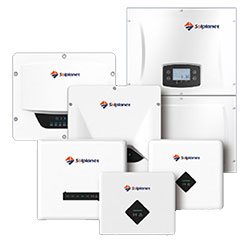
Single-phase hybrid inverters in the H1 and KH series, from 5 to 10.5 kW, cover the needs of the vast majority of private homes with single-phase grid connections. They simultaneously manage battery charging, solar conversion and home grid power in one device, automatically switching between sources. This is the simplest way to build an off-grid or backup power system from scratch, since it doesn't require a separate charge controller or additional control electronics.
AC-coupled inverters in the KA series serve a different scenario — adding energy storage to an existing grid-tied solar system. If a site already has a grid inverter without battery-charging capability, replacing the whole system with a hybrid unit would cost far more than adding an AC-coupled inverter, which connects on the AC side and manages only battery charge and discharge, leaving the existing inverter running as before.
Three-phase P3 and remote monitoring via FoxCloud
Three-phase hybrid inverters in the P3 series, spanning 5 to 125 kW, are built for sites with three-phase grid connections — not just large private homes with high power consumption, but commercial facilities too: small production sites, shops, office buildings. The Plus series models at 50-125 kW cover much larger-scale demand without switching to a different manufacturer.
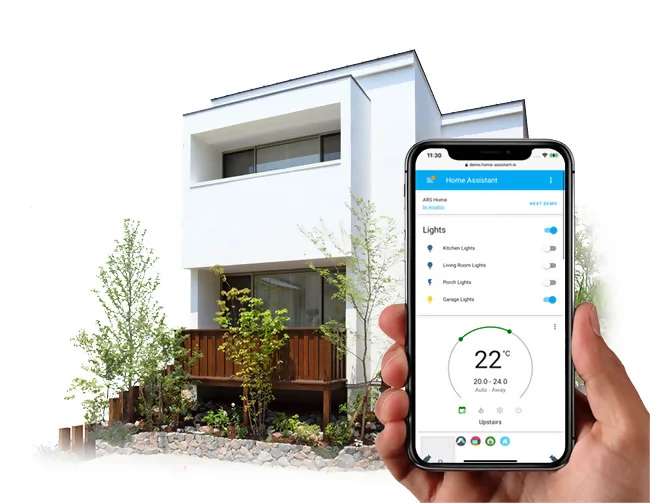
All FOX ESS inverters support remote monitoring through the FoxCloud platform, letting an owner or service company track generation, consumption and system status remotely, receiving alerts about any deviations before they show up on electricity bills or in how household appliances run.
Efficiency, service and how to choose the type
Conversion efficiency is a spec worth comparing between models separately from stated peak power: inverters on the second-generation (G2) platform hold high efficiency across a wider range of solar panel input voltages than previous-generation models, which in practice means less sensitivity to time of day or the angle of sunlight hitting panels that aren't mounted at an ideal angle.
Warranty service for FOX ESS inverters in Ukraine covers both remote fault diagnosis through FoxCloud and on-site service when physical intervention is needed — especially important for inverters mounted into a garage or utility room wall, where self-diagnosis by the owner is limited without specialized equipment and access to the device's internal electronics.
Choosing an inverter type should start with a simple question: does the site already have solar panels installed without energy storage? If so, an AC-coupled KA model is the cheaper, faster solution, since it doesn't require dismantling existing equipment. If the system is being built from scratch or a full equipment replacement is planned, a hybrid inverter — H1, KH or P3, depending on grid connection type — delivers the most complete solution in a single device, without needing to coordinate several separate controllers.
It's also worth checking a model's rated surge capacity, not just its continuous output: a hybrid inverter that briefly handles a motor start-up load — a well pump or an air conditioner compressor kicking in — without tripping is far more useful in practice than one whose surge rating barely exceeds its steady-state figure, even if the two look identical on a spec sheet at first glance.
Compare power, grid connection type, hybrid capability and efficiency across the FOX ESS models in the catalogue, and pick the inverter that matches your actual energy system setup, not just the most popular model on the market.

 m. Сміла, Незалежності, 67г. оф, 406/6