GoodWe: energy storage with safe LiFePO4 chemistry
The "Power Elements" category: the Lynx series
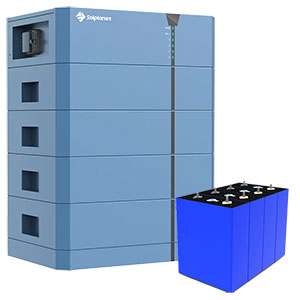
The "Power Elements" category covers all storage components of a GoodWe energy system — everything that stores electricity for later use besides the inverter itself. In the brand's range, this segment is represented by Lynx-series storage systems on LiFePO4 chemistry, designed for integration with ET-series hybrid inverters into a single managed ecosystem.
LiFePO4 chemistry and cycle life
Lithium iron phosphate (LiFePO4) chemistry, on which the Lynx series is built, differs substantially from traditional lithium-ion cells (NMC, LCO) through higher thermal stability: the cathode material doesn't release oxygen when overheated, which removes the main mechanism behind thermal runaway. For a system placed inside a living space or a private home's garage, that safety margin has direct practical value, not just theoretical significance.
Lynx system charge-discharge cycle life is measured in thousands of full cycles before capacity drops below an acceptable level — under daily use, that means a service life comparable to the rated lifespan of the GoodWe inverter itself. The storage unit won't become the system's "weak link" needing replacement ahead of the rest of the expensive equipment.
Built-in BMS and modularity
Every Lynx module includes a built-in battery management module (BMS) that balances charge across internal cells, protects against overcharge and deep discharge, and sends diagnostic data to the SEMS Portal monitoring platform. An owner doesn't need to separately buy or configure a protection system — it's already integrated into every storage module, and BMS firmware updates happen remotely without physical intervention.
The modularity of the Lynx line lets you combine several units to grow total system capacity if household needs increase over time — after switching to electric heating, installing a heat pump, or buying an electric vehicle, for instance. That lets you start with the minimum needed configuration and scale the system gradually, without needing to replace already-installed equipment.
Temperature, brand reliability and how to choose
The Lynx form factor is built for wall mounting in a utility room or garage, with a compact footprint that doesn't require a dedicated room for the energy system — unlike traditional lead-acid battery systems, which at equivalent capacity need far more space and a reinforced floor due to their greater weight and bulk.
Operating temperature range is a factor worth considering when choosing where to place power elements: LiFePO4 cells hold stable characteristics across a wider temperature range than traditional lithium-ion equivalents, allowing storage placement in an unheated garage or utility room without significant winter capacity loss, though the manufacturer still recommends avoiding extreme cold for maximum equipment service life.
GoodWe's public listing on the stock exchange means more stable funding for developing and refining storage systems compared to lesser-known manufacturers — a factor that shows up not at the time of purchase but several years into active use, when the quality of engineering decisions and firmware support becomes decisive for the equipment's real service life.
When picking power elements for a system built around a GoodWe inverter, focus on the compatibility of a specific Lynx series (A, D or U) with the inverter model you plan to integrate with — the manufacturer optimizes each form factor for a particular hybrid inverter line, and a mismatch can lead to limitations in monitoring functionality or the data exchange protocol.
Consulting a dealer or installer at the equipment-selection stage helps confirm series-to-inverter compatibility before purchase, rather than discovering a mismatch in monitoring functionality or protocol support only after the storage unit has already been delivered and mounted.
Compare capacity, cycle life, form factor and compatibility with your existing or planned inverter across the GoodWe models in the catalogue, and pick a storage system that delivers stable autonomy for your home for years to come, without the risk of incompatibility with the rest of your installed equipment.

 m. Сміла, Незалежності, 67г. оф, 406/6