Haisser: power at a sensible price
What the "Power Tools" category means for Haisser
The "Power Tools" category covers Haisser equipment driven by an electric motor — corded or cordless — as opposed to manual tools. For this class of tool, the main selection criteria aren't the badge but the actual technical specs: power draw in watts, operating voltage, speed or impact rate per minute. These numbers directly determine which materials and workloads a given model can handle, and that's what a comparison should be based on.
Line-up by type and power
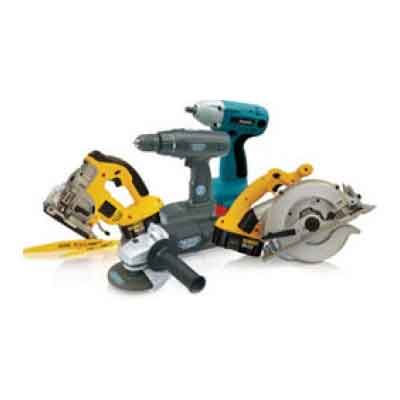
The Haisser range in this category includes impact drills at 1000-1200 W, cordless drill-drivers and screwdrivers with electronic torque control, angle grinders from 700 to 2800 W for discs between 125 and 230 mm, and rotary hammers with impact energy sized for drilling concrete and brick of varying density. The power spread within each sub-category lets a buyer match a tool precisely to their workload: compact models for occasional household jobs, more powerful ones for regular semi-professional use.
Motor, protection and ergonomics
The motor is the component that defines the tool's overall lifespan, and Haisser models use brushed motors with reinforced winding insulation designed for dusty job-site conditions. Unlike the brushless motors found in premium brands, brushed motors are simpler in design and cheaper to maintain — replacing carbon brushes is routine maintenance that can be done independently or at any workshop, without being tied to an official service center.
Overload protection is handled by an electronic control unit that limits inrush current and cuts the motor on sudden bit or disc binding — this prevents winding overheating when working hard or inconsistent materials like old concrete with embedded rebar. Rubberized grips and an auxiliary side handle on the more powerful angle grinders and drills improve control under high torque, reducing injury risk if a disc or bit binds.
Choice, accessory compatibility and service
The choice between corded and cordless in the Haisser range comes down to how the tool will be used: corded tools have no runtime limit and cost less than a comparable cordless model, while cordless drill-drivers free you from a cable where that matters most — work at height, mobile jobs, spaces without stable power. Batteries across the Haisser cordless range are also unified across several tool models, which lowers the cost of expanding a tool set over time.
Another point that's often overlooked is accessory compatibility between models in the range. Disc mounting diameters for angle grinders and chuck types for drills are standardized within each series, so consumables and accessories bought for one model fit others too — lowering total cost of ownership over several years, especially once a household or crew accumulates several tools from the same brand.
Warranty terms on Haisser power tools include official service support within Ukraine, which removes the risk typically associated with the budget segment — the lack of spare parts or qualified repair. For a buyer, that means a single component failing doesn't mean losing the whole tool; it gets resolved by replacing that specific part at a reasonable cost.
Housing sealing against dust and moisture ingress is another spec worth checking beyond raw power, since a job site produces far more fine debris than a home workshop and that debris finds its way into motor vents faster than most buyers expect. Models with tighter seals around the switch and gearbox housing hold their rated output longer before a service clean becomes necessary, which matters most for anyone using a tool outdoors or on masonry work where dust load is constant.
It's also worth weighing duty cycle against price when narrowing down a model: a tool rated for short, occasional bursts of use will run hotter and wear faster if pressed into daily service, while paying extra for a heavy-duty motor that then sits idle most of the month is money that could have gone toward accessories or a second tool entirely.
Compare power, power source and speed class across the models in the catalogue, and pick a Haisser power tool that matches your actual workload without paying for capability you'll never use.

 m. Сміла, Незалежності, 67г. оф, 406/6