m. Сміла, Незалежності, 67г. оф, 406/6







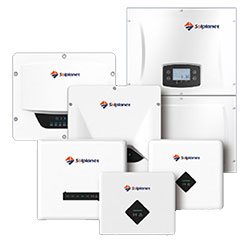
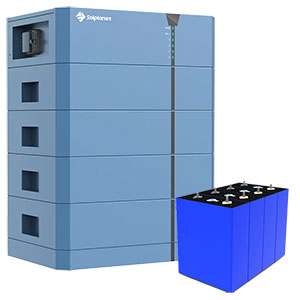






GoodWe GW10K-ET-20 - three-phase hybrid inverter 10 kW.


Description GoodWe GW10K-ET-20
GoodWe GW10K-ET-20 is a three-phase hybrid inverter rated at 10 kW with two MPPT inputs and a high-voltage LiFePO₄ battery at 180–600 V. Efficiency 98.2%, nominal output current 14.4 A per phase, three CAN channels, generator support. IP65, passive cooling, 5-year warranty.
Ten kilowatts and an electric car
The arrival of an electric car changes a house's energy picture more than any domestic appliance. A home charger at 11 kilowatts moves as much energy in one night as the whole house consumes in a day.
That is why a ten-kilowatt hybrid has become the de facto standard for households with an EV. The rating allows the house to be powered while a substantial share of capacity still goes to charging.
The most interesting scenario is daytime charging from the sun. If the car is at home during the day even a few times a week, charging on solar surplus effectively turns the panels into fuel. Every kilowatt-hour that goes into the car's battery instead of coming from the grid is a direct saving.
This requires automation that sees current generation and controls the charger's power. The inverter publishes that data over Modbus, so linking it to a charging station is technically straightforward.
Priorities worth configuring
A ten-kilowatt hybrid serves three competing tasks: powering the house, charging the stationary battery and exporting the surplus. The order of priority is configurable, and the economics of the whole system depend on it.
A sensible sequence for most houses is this: self-consumption first, then charging the house battery to its reserve level, then the car, and only the surplus beyond that to the grid.
The logic is simple. The house battery is your protection against an outage and should always be charged. The car, by contrast, has its own large store and tolerates not being fully charged today.
Getting priorities wrong is a common error: the system exports everything and by evening the house sits on a depleted battery. This is a matter of settings, not equipment, and it is resolved in five minutes — if you know what to look for.
Technical specifications
rated power 10 kW, three phases 380/400 V;
two MPPT inputs, maximum input voltage 1000 V;
MPP range 200–850 V;
LiFePO₄ battery 180–600 V, nominal voltage 500 V;
BMS communication: three CAN channels;
efficiency 98.2% peak, 97.8% European weighted;
output current 14.4 A nominal, 15.8 A maximum;
generator support;
IP65, passive cooling with no fans;
dimensions 415 × 516 × 180 mm, 5-year warranty.
Passive cooling at ten kilowatts
Natural convection in a unit of this output is not an easy thing for a manufacturer to achieve. Heat is dissipated by the substantial aluminium enclosure, which is effectively one continuous heatsink.
The benefit is obvious: no fans means no bearings using up their life, no dust in an impeller, no noise. For equipment expected to run for twenty years, the absence of moving parts is a serious argument for reliability.
The price is care over the mounting location. The unit needs free space below and above for airflow. An unshaded south wall is a poor choice in summer: at midday, when generation peaks, the inverter may start derating precisely because of the heat.
The best options are a north or east wall, a ventilated recess, or a canopy. IP65 permits outdoor mounting, but the unit is better shielded from direct sun.
Expanding the battery later
Three CAN channels mean support for several independent battery stacks. This is mentioned in advertising less often than capacity, yet in practice it is precisely this capability that determines whether the inverter will have to be replaced in two years.
The typical path looks like this: a 10–15 kilowatt-hour battery is installed first, the system's real winter behaviour is assessed, and only then is more capacity considered.
Since each stack has its own BMS and its own communication channel, adding a second assembly does not force batteries of different ages onto one bus. Older and newer cells work in parallel but are managed independently.
The 600-volt upper limit against a 500-volt nominal leaves ample room for serious capacity growth without approaching the design ceiling.
Ten kilowatts is the capacity at which an electric car and a house stop competing for energy. Write to us with your car model, daily mileage and load list: we will size the battery and show how many kilometres a year you can drive on your own sunlight.
Characteristics GoodWe GW10K-ET-20
Reviews about GoodWe GW10K-ET-20 from real users
No reviews found