GCL: 12 N-type TOPCon models in 5 W steps
What monocrystalline panels are and why they're better
Monocrystalline solar panels are made from silicon wafers grown as a single continuous crystal using the Czochralski process — unlike polycrystalline panels, where silicon is used in the form of many small crystals fused together. The monocrystalline structure gives electrons higher mobility within the material, and therefore higher efficiency converting sunlight into electricity at the same panel area.
12 models across the NT12/66GDF and NT12R/66GDF series
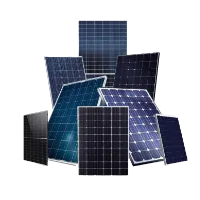
In this category, GCL is represented by twelve monocrystalline module models across two series: NT12/66GDF at 710-740 W and NT12R/66GDF at 615-640 W, with a 5 W step between adjacent models within each series. That fine granularity lets you precisely match an array configuration to a system's calculated power requirement, minimizing unused reserve or a power shortfall that comes from coarser model steps in a line-up.
All models are built on N-type TOPCon technology — today's standard for monocrystalline panels, replacing PERC technology on P-type silicon. The extra tunnel oxide layer in the TOPCon cell structure reduces carrier recombination at the contact surface, raising stated conversion efficiency above 22.5% — roughly 1-1.5 percentage points higher than typical previous-generation PERC panels.
N-type TOPCon technology and the bifacial gain
The difference between the NT12 and NT12R series likely comes down to cell geometry or layout within the module: the higher-power series (710-740 W) is built for maximum power density on sites with limited mounting area, while the lower-power series (615-640 W) may have different dimensions or weight, more convenient for certain mounting structure types or transport logistics.
The bifacial design used across both series adds output by capturing reflected light off the panel's rear side. For ground-mount stations, this is especially effective with a light-colored ground surface — gravel, concrete, or a dedicated reflective membrane — while for roof installations the gain is less pronounced due to the darker color of typical roofing material and its shorter distance from the panel.
Temperature coefficient, strength and sizing power
Monocrystalline panel service life on N-type TOPCon is determined mainly by resistance to light-induced degradation (LID) and light-and-thermally-induced degradation (LeTID) — two gradual efficiency-loss mechanisms more pronounced in P-type silicon. GCL's N-type panels retain a higher percentage of initial power throughout the warranty term compared to earlier P-type generations of the product.
The power temperature coefficient is a spec often overlooked when choosing monocrystalline panels, though it directly affects real-world output in hot weather: N-type TOPCon panels typically have a less negative temperature coefficient than P-type, meaning they lose a smaller percentage of power as the panel surface heats to 60-70°C in summer sun — a common condition for dark panels under direct light.
Frame mechanical strength and resistance to snow and wind load are standardized specs worth checking in a specific model's technical documentation, especially for sites in regions with significant winter snow cover. Monocrystalline panel manufacturers typically state maximum allowable load separately for snow (static, from above) and wind (dynamic, from the side), and these figures can differ between models even within the same series.
When choosing a specific power rating within the line-up, base the decision on a precise calculation of available roof or plot area and the desired total system power, rather than rounding up to the most powerful available model "just in case" — a single module's excess power rarely offsets the price difference compared to a more precisely matched array configuration.
Compare power, series and cell geometry across GCL's monocrystalline panel models, and pick a configuration that makes the most efficient use of your project's available mounting area.

 m. Сміла, Незалежності, 67г. оф, 406/6