GCL: N-type TOPCon from a public leader in Suzhou
The GCL System Integration brand: scale and public status
GCL System Integration (GCL-SI) is a Chinese manufacturer of solar modules and energy storage systems, part of the GCL Group, trading on the Shenzhen Stock Exchange under ticker 002506. The company is headquartered in Suzhou, with production capacity exceeding 60 GW annually spread across several sites, including a large 20 GW N-type TOPCon project in Wuhu. That scale and public-company status mean financial transparency and a lower risk of the brand disappearing from the market, which matters for a buyer of equipment with a 25-30 year service life.
The NT12/66GDF and NT12R/66GDF series: N-type TOPCon technology
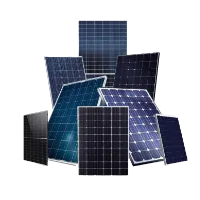
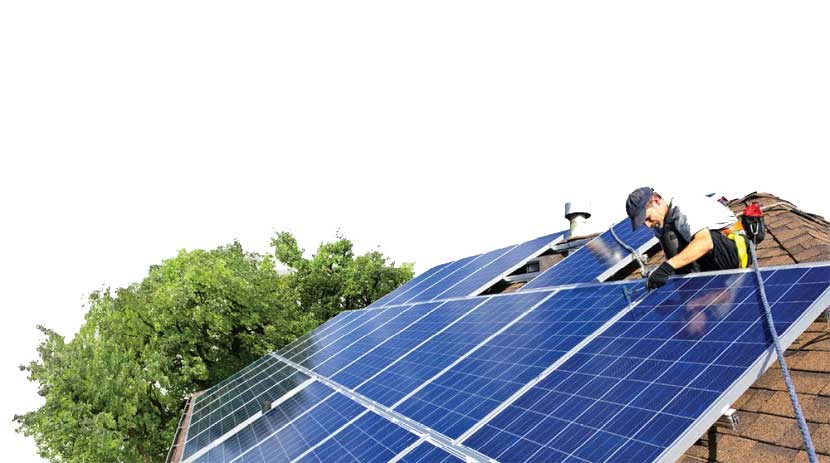
In the "Energy" category, GCL is represented by monocrystalline solar modules in the NT12/66GDF and NT12R/66GDF series, from 615 to 740 W, built on N-type TOPCon (Tunnel Oxide Passivated Contact) technology. The "N" in the series name directly points to the wafer type — N-type, which is gradually displacing traditional P-type PERC across the industry due to higher conversion efficiency and slower performance degradation over time.
TOPCon technology adds an extra tunnel oxide layer to the standard cell structure, passivating the contact surface and reducing carrier recombination — the physical process that limits any solar cell's efficiency. The result is a stated conversion efficiency above 22.5%, substantially higher than previous-generation PERC panels at a comparable module area.
Bifacial design, durability and manufacturing
The bifacial design of GCL modules captures additional reflected light off the rear side of the panel — from a light-colored roof surface, gravel ballast, or winter snow cover. In practice, that means an additional 5-15% yield boost depending on the ground surface type and mounting height above it, without increasing the array's footprint.
The power difference between the NT12/66GDF (710-740 W) and NT12R/66GDF (615-640 W) series reflects a different cell count or layout within the module — the higher-power models target large commercial and industrial installations, where power density per square meter of roof or land directly affects the project's economics and payback timeline.
N-type silicon, unlike P-type, is less prone to light-induced degradation (LID) and to degradation driven by light and temperature combined (LeTID) — two effects that gradually reduce a panel's output over its first years of operation. For an owner, that means more stable output throughout the warranty period, not just higher initial efficiency at the moment of installation.
Sizing power and how to choose among competitors
GCL's production facilities span several large sites — 20 GW in Wuhu, 17.5 GW in Hefei, and 12 GW in Funing — providing manufacturing diversification and lowering the risk of supply disruption from a problem at any single plant. For a buyer planning a large project with a long equipment procurement cycle, that's a practical reliability factor, not just a line in a manufacturer's corporate deck.
For an owner comparing GCL to other manufacturers in the N-type TOPCon segment, focus on actual specs — stated efficiency, power temperature coefficient, warranty terms on linear degradation over the service life — rather than the badge alone, since the technology level among leading Chinese manufacturers in this segment is largely comparable. The real difference often shows up not in lab figures but in actual output stability years into field operation.
It's also worth checking a supplier's actual stock and lead times for a given wattage tier, since a project sized around a specific model can stall for months if that exact SKU runs out mid-procurement — a detail that matters more in practice than a spec sheet comparison alone.
Choose GCL solar modules matching the power your project needs, available mounting area, and bifacial generation requirements, and get panels from a manufacturer with proven production scale and current N-type TOPCon technology at a competitive cost per installed kilowatt.

 m. Сміла, Незалежності, 67г. оф, 406/6