
 m. Сміла, Незалежності, 67г. оф, 406/6























Deye SUN-8K-SG01LP1-EU (8 kW) - single-phase hybrid inverter


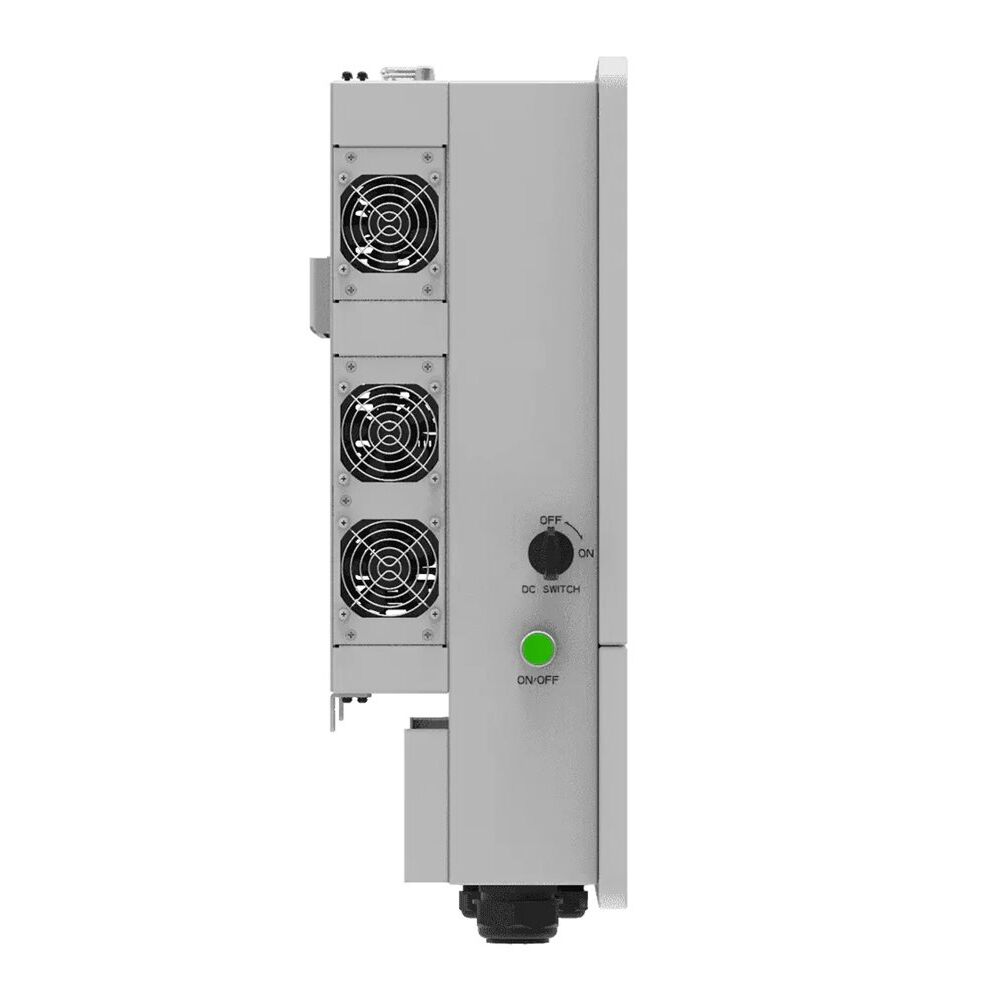


Description Deye SUN-8K-SG01LP1-EU
What this inverter is for
The SUN-8K-SG01LP1-EU is an 8 kW single-phase hybrid built for a house fed from an ordinary single-phase service that still has to ride through outages without anyone running to the distribution board. Eight kilowatts of output at a rated 36.4 A covers a 120–200 m² home where a borehole pump, a water heater, an induction hob, refrigeration and a couple of air conditioners can all be running at once. On a site with a three-phase service it is a compromise: it will back up one phase only, so a three-phase pump or machine tool will not run from it, and the SUN-12K-SG04LP3-EU or SUN-10K-SG04LP3-EU belong there instead. And if backup is not the point at all and you only want to export surplus generation, the battery side is dead weight here — the grid-tie SUN-5K-G does that job without a battery and without an off-grid output.
PV input: two trackers, a 10.4 kW array and two different MPPT windows
On the panel side there are two independent MPPT trackers carrying two strings each, with 26+26 A of operating current, 44+44 A of short-circuit current and a 500 V ceiling. The official module limit is 10,400 W against an 8 kW rating, so the array can be deliberately oversized by roughly a third: mornings, evenings and winter days yield noticeably more, while the inverter simply clips the summer midday peak. Pay attention to the two separate MPPT windows quoted for this unit — 150–425 V overall, but a narrower 200–425 V for full load. In practice a short string of six or seven modules will start and generate, yet the inverter will not pull the full 8 kW out of it; to have the whole rating at midday the string has to hold above 200 V, which means eight or nine modern panels in series. A 125 V start-up voltage and two genuinely separate trackers let you split the array across two differently oriented roof planes, where east and west stretch the generation curve across a longer day.
Working with the battery: 48 V, 190 A and the real ceiling
The battery channel is rated for a nominal 48 V with a 40–60 V working window and charge and discharge currents of up to 190 A. At 51.2 V that is about 9.7 kW, which means the inverter can deliver its full rating from storage with headroom to spare and never hits its own limiter — the constraint sits in the battery, not in the electronics. Concretely: a single 5.12 kWh SE-F5 sustains 120 A, good for roughly 6 kW, so pulling the full 8 kW from storage calls for two such modules in parallel, and a stack of two also gives 10 kWh of usable energy, which is a genuine night for a house with a gas boiler. Lithium and lead-acid banks are both supported, but the self-adapting BMS link over RS485 or CAN works with lithium only: with lead-acid the inverter charges by voltage alone, blind to cell temperature and true state of charge, and bank life suffers measurably. The 190 A charge figure also means a sunny day can refill 10 kWh in about two hours, so even a short November break in the cloud puts a useful amount back into storage.
When the grid fails: 16 kW of surge, the GEN port and 50 A of pass-through
On grid loss the inverter takes the loads onto itself and holds twice its rating for ten seconds — roughly 16 kW of surge against the 8.8 kW apparent power it manages while the grid is present. That margin decides whether a submersible pump or a cold-room compressor actually starts, because inrush current runs three to five times the running figure — most complaints about a weak hybrid are about surge headroom, not continuous rating. The GEN port on this series serves two roles: a generator input for long outages, or a smart load output that energises only once the battery has reached a set state of charge and the array is producing enough — typically a water heater or underfloor heating, so they run on surplus instead of eating the reserve. Grid pass-through is capped at 50 A, and that is the practical limit of the whole installation: a site with a 63 A or 80 A service has to be split, leaving part of the load outside the inverter. Plan backup for a dedicated group — pump, boiler, refrigeration, lighting, communications — and settle it at the consumer unit rather than after the inverter is already on the wall.
Efficiency, heat and noise across a real day
Peak efficiency of 97.6 % and a European figure of 97 % are laboratory numbers; over a real day the result sits closer to the European value, because the unit spends most of its time part loaded rather than flat out. Read the 99.9 % MPPT efficiency separately: that is the figure deciding how much of what the panels make actually reaches the bus, and in broken cloud it matters more than peak conversion efficiency. Total harmonic distortion below 3 % means the output waveform is clean enough to run an inverter air conditioner, a gas boiler with electronics and a desktop computer without second thoughts — something that is always a gamble with cheap modified-sine converters. The -40 to +60 °C range reads like headroom for any climate, but derating starts above +45 °C, and that is the key practical point: the same machine on a south-facing wall in full July sun will give less than one under a canopy or in a plant room. Smart cooling keeps typical noise at or below 30 dB, which is quiet for an 8 kW machine — the fans only spin up under load, so a hallway or a utility room inside the house is perfectly acceptable.
Installation, protection and monitoring
An IP65 enclosure weighing 32 kg at 420×670×233 mm means wall mounting, but with two people and onto solid masonry: plasterboard or a timber partition will not do, because the stiff copper of the battery cabling adds to the weight of the unit itself. Protection is comprehensive: earth fault and grid monitoring, DC reverse-polarity and short-circuit protection, an all-pole sensitive residual current monitoring unit, and type II surge arresters on the DC side with type III on AC. The all-pole sensitivity of that residual current unit is not a formality — it is what allows the installation to work without the external type B RCD this topology would otherwise demand. Monitoring runs over RS485 and CAN, while the BMS link self-adapts to most common lithium banks, which simplifies matching storage from outside Deye's own range. Certification to IEC/EN 62109-1/2, IEC/EN 61000-6-1/2/3/4, VDE4105, IEC 61727/62116, VDE0126, AS4777.2 and CEI 0-21 covers grid-parallel requirements, which is exactly what the network operator asks for.
How it differs from the neighbouring models here
This unit sits in the middle of the single-phase hybrid range, and choosing between its neighbours comes down to two things: surge headroom and the number of trackers. The smaller SUN-6K-SG05LP1-EU has two trackers of one string each, 120 A on the battery and an array limit of 7.8 kW — if daily consumption is 15–18 kWh and the heaviest load is a water heater plus one pump, it closes the job without overspending and the difference goes into panels. The larger SUN-10K-SG02LP1-EU-AM3 and SUN-12K-SG02LP1-EU-AM3 offer three trackers of two strings, 220 and 250 A on the battery and arrays up to 16–19.2 kW; you take them when the roof splits into three planes or when a large bank has to charge faster than a 190 A channel allows. The top single-phase SUN-16K-SG01LP1-EU with its 100 A pass-through is a different class altogether: it backs up a 100 A service without splitting loads, but it weighs 48.5 kg and is overkill for a house with a gas boiler. A fundamentally different option is a grid-tie SUN-5K-G or SUN-10K-G — cheaper, lighter, excellent at exporting surplus, but they shut down with the grid, take no battery and provide no backup by definition.
If you are unsure whether 8 kW is the right size for your house, send us a list of your loads and the backup time you are aiming for, and we will work out the number of battery modules and the array to match.
Characteristics Deye SUN-8K-SG01LP1-EU
Reviews about Deye SUN-8K-SG01LP1-EU from real users
No reviews found







