Suntech: a solar pioneer since 2001
The Suntech brand: over 22 GW shipped to 100+ countries
Suntech is one of the recognized pioneers of global solar energy, founded in 2001 by Dr. Shi Zhengrong in Wuxi, China. Over more than two decades of operation, the company has supplied over 22 GW of photovoltaic modules to more than 100 countries worldwide, becoming one of the first manufacturers to scale crystalline silicon panel production to an industrial level back in the early 2000s, when the industry was still taking shape.
H48 and C72 panels with half-cell technology
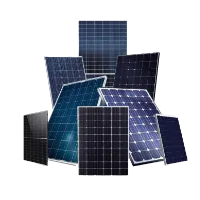
In the "Solar Panels and Photovoltaic Modules" category, Suntech is represented by monocrystalline panels using half-cell technology in two lines: the more compact STP S-H48-Nkh+ (435-455 W) and the more powerful STP S-C72/Nsh+ (565-585 W). Half-cell technology splits each standard silicon cell in half via laser cutting, reducing the panel's internal resistance and heat losses under load.
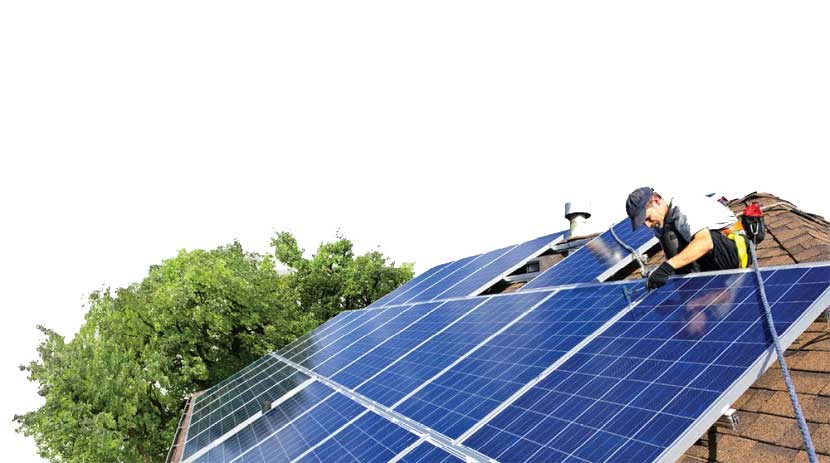
Smaller half-cells handle partial shading better: if shade falls on part of the panel, only the affected section loses output, not the whole panel — a principle that substantially improves generation stability in real-world conditions with trees, chimneys or neighboring buildings nearby, typical of residential settings in a town or suburb.
Shading tolerance and monocrystalline advantages
The key difference between the H48 and C72 lines isn't just power but physical dimensions and cell count: the C72 series, with 72 full cells, uses a larger panel area and is built mainly for commercial and industrial projects with more available mounting space, while the more compact H48 suits residential roofs with limited or non-standard area better.
Monocrystalline silicon, underlying both lines, is grown as a single continuous crystal using the Czochralski method, providing higher electron mobility and higher solar-to-electricity conversion efficiency compared to polycrystalline silicon at the same panel area.
Manufacturer experience, warranty and how to choose
Suntech's long track record on the market means accumulated engineering expertise in panel structure optimization, anti-reflective coatings and resistance to climate loads, which directly affects photovoltaic modules' real service life in the field, not just the spec sheet numbers the manufacturer states. Manufacturers that have gone through a full cycle of several technology generations since the industry's early days generally have a better sense of which design choices actually hold up over decades outdoors.
Warranty terms for Suntech panels split into a performance warranty (linear power degradation over 25-30 years) and a shorter materials-and-workmanship warranty. It's the former that determines a project's real investment payback period, not the marketing figure of overall service life.
The power temperature coefficient is a spec worth comparing between models separately from rated wattage: it shows how much output drops as the panel heats up in hot weather. For regions with long, hot summers, that figure often carries more practical weight for annual output than power measured under standard lab conditions at 25°C.
It's also worth confirming actual stock availability of a specific model with the supplier in advance before committing a project's full panel count to it, since even long-established Tier 1 brands occasionally run short on a particular power step in a given region.
Reading a specific model's datasheet closely also pays off: the stated impact-resistance rating, snow load capacity and salt-mist corrosion test results reveal more about a panel's suitability for a given climate than the headline wattage figure ever will on its own.
Compare line (H48 or C72), power, temperature coefficient and half-cell count across the Suntech models in the catalogue below, and pick monocrystalline solar panels from a manufacturer with over two decades of experience that will keep performing reliably even under partial shading of the installation site.

 m. Сміла, Незалежності, 67г. оф, 406/6