
 m. Сміла, Незалежності, 67г. оф, 406/6























DAHUA DH-XVR5104C-4KL-I3 (4 CHANNELS, RS-485) - HYBRID VIDEO RECORDER

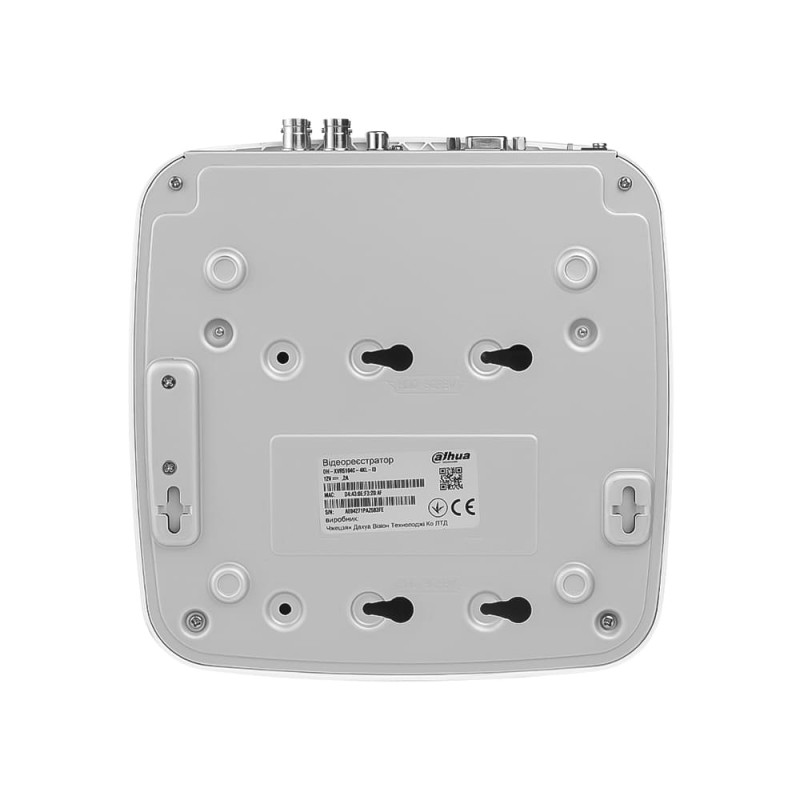
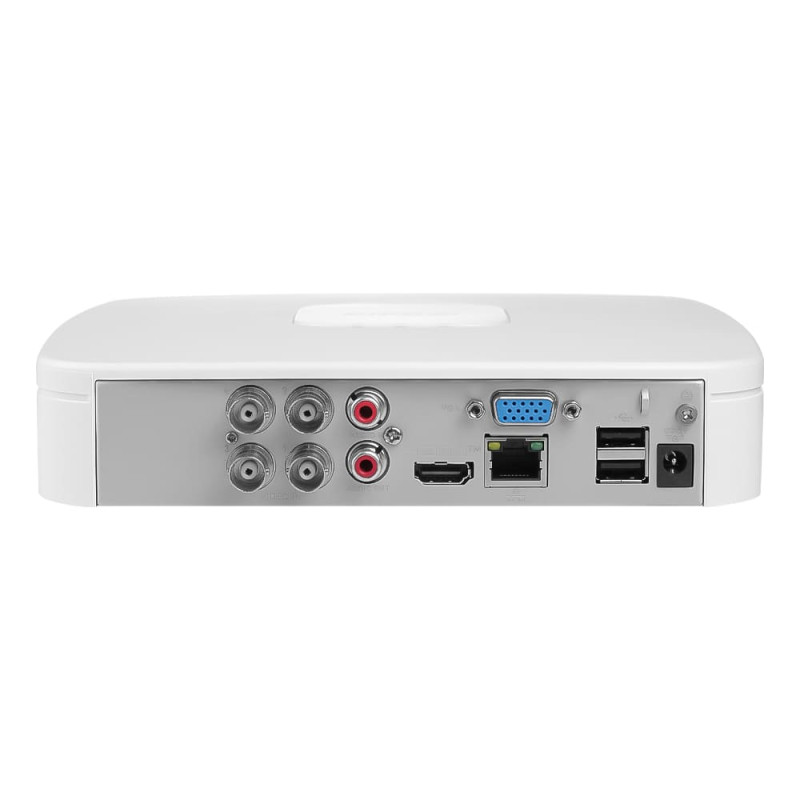
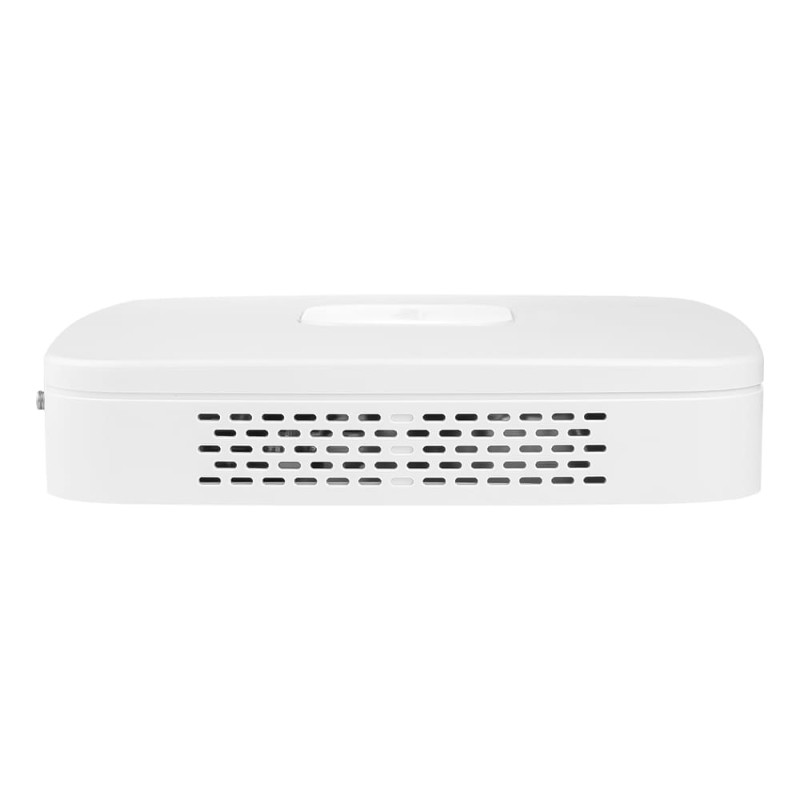
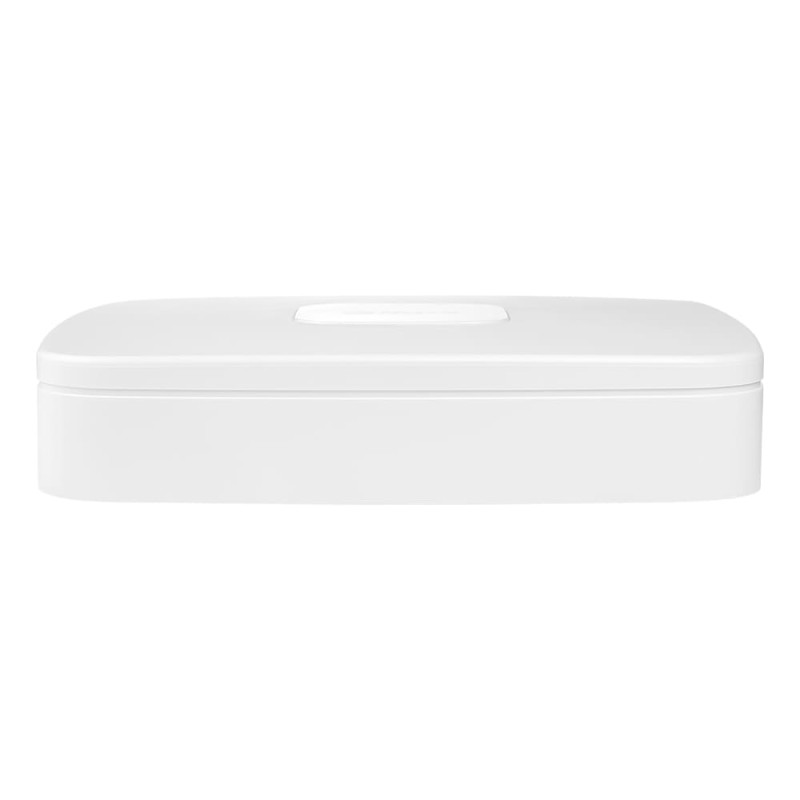


Description Dahua DH-XVR5104C-4KL-I3
Penta-brid: five video formats on the very same connector
The letters XVR mean a hybrid recorder, and that is circuitry rather than marketing: each of the four BNC inputs auto-detects what has been plugged into it — HDCVI, AHD, TVI or plain old analogue CVBS. Add the network channels and you get five supported formats, so one device can take a modern 5 MP HDCVI camera, a standard-definition camera inherited from the previous owner, and an IP camera on the local network. The practical value of that is singular but substantial: the coaxial wiring stays where it is. If the building already has tens of metres of coax chased into walls or run above a suspended ceiling, swapping the cameras for new HDCVI units is a one-day job, whereas moving to pure IP means a new cable route to every single point. The flip side has to be understood as well: an analogue channel has no PoE, so 12 V power reaches each camera over a separate wire or a combined cable.
Four analogue channels — and up to eight with IP cameras
The base configuration is four BNC inputs, and that is exactly how the model is sold and listed in its specification. The XVR architecture, however, lets analogue channels be switched into IP mode: with the BNC inputs unused the recorder takes up to eight network cameras, and with the coax partly in use you can assemble a mixed layout such as two analogue plus several IP. This is the main reason to choose a hybrid for a site being modernised in stages: the old cameras keep working, the new ones arrive as network units, and everything lives in one archive and one app. Total incoming bandwidth is capped at roughly 64 Mbps, so eight high-resolution network cameras would sit right against that ceiling and some of them would need their bitrate trimmed. Network cameras connect over ONVIF and RTSP, so the recorder does not force you to buy Dahua specifically, although with cameras of that brand the automatic search finds everything by itself.
4K-L: what resolution you get and at what frame rate
The 4KL index stands for 4K-Lite: the recorder accepts and records an 8 MP image, but not at a full 25-30 frames — in 4K mode the rate is limited to roughly 15 frames per second. At 5 MP the model holds 25 frames and at 1080p up to 30, and in practice those two modes are what the overwhelming majority of installations actually use. The difference between 15 and 25 frames shows up in motion rather than in a still frame: a person walking briskly past the camera yields fewer identifiable frames at 15 fps, which is why an entrance point is better left at 5 MP with the full frame rate than pushed into 4K. The HDMI output delivers genuine 3840×2160, so a 4K monitor makes sense even with 5 MP cameras: on a large screen a four-channel multiview reads clearly without extra scaling. The second output, VGA, runs in parallel with HDMI and is capped at 1920×1080, which suits an older monitor at the operator's desk.
WizSense inside a hybrid recorder: analytics where there usually is none
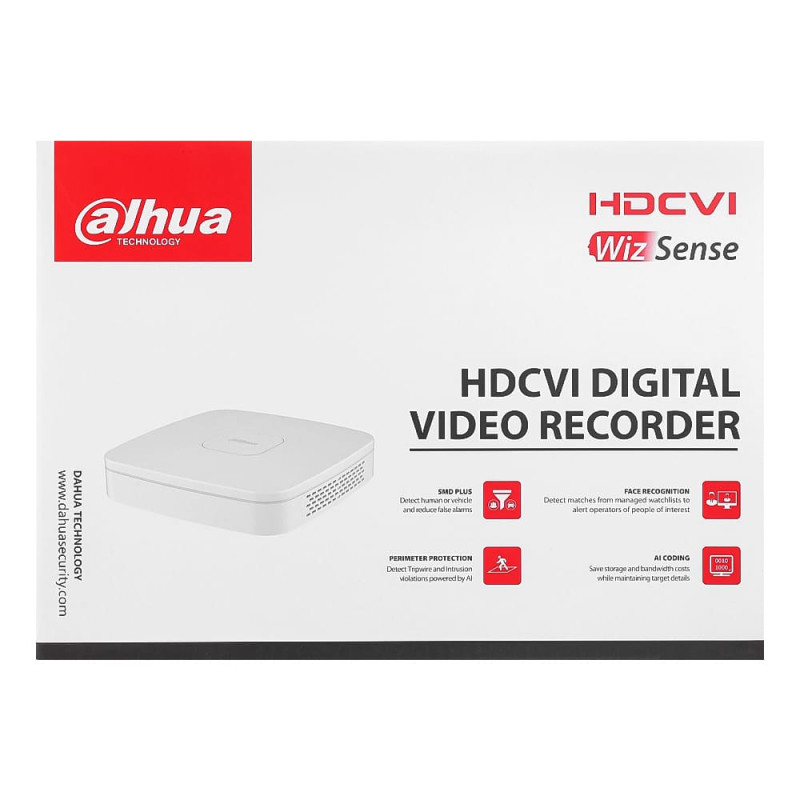
The least obvious strength of this model is that the built-in AI analytics work even with analogue cameras, which have no intelligence of their own whatsoever. SMD Plus processes all four channels and separates people and vehicles from branches, shadows, rain and cats, so notifications arrive only for things that actually matter. Perimeter protection also covers four channels: you draw a line or a zone on the frame layout and the alarm fires on a crossing in the chosen direction rather than on any movement at all. Face detection and face recognition run on two channels, which is enough to make the front door and the till area the "smart" channels while the rest stay on ordinary surveillance. The limitation is honest and obvious: the analytics are computed by the recorder's processor rather than the camera's, so their quality depends on the viewing angle and the clarity of the analogue signal, and on a four-channel unit the resource is allocated within exactly the stated limits rather than across every channel at once.
A single disk of up to 10 TB: counting the archive in days
The chassis has one bay for a 3.5-inch hard drive of up to 10 TB; the drive is not supplied, and there is no hot swap here, so changing it means powering the recorder down and opening it. Calculating archive depth is simple once you keep one benchmark in mind: one megabit per second of continuous stream is about 11 GB per day, and H.265+ gives roughly 2 Mbps for 2 MP, about 5 Mbps for 5 MP and around 6 Mbps for 4K at its reduced frame rate. Four analogue 1080p cameras running 24/7 consume about 90 GB per day, so a 4 TB disk yields roughly a month and a half of archive and a 10 TB disk close to four months. Four 5 MP cameras already mean about 215 GB per day: 4 TB lasts around two and a half weeks and 10 TB around a month and a half. If a year of retention is the requirement, continuous recording is the wrong approach in principle — switch to SMD Plus event recording and the same disk lasts four or five times longer, because an empty yard at night writes nothing at all.
Power, RS-485 and audio: what to plan for during installation
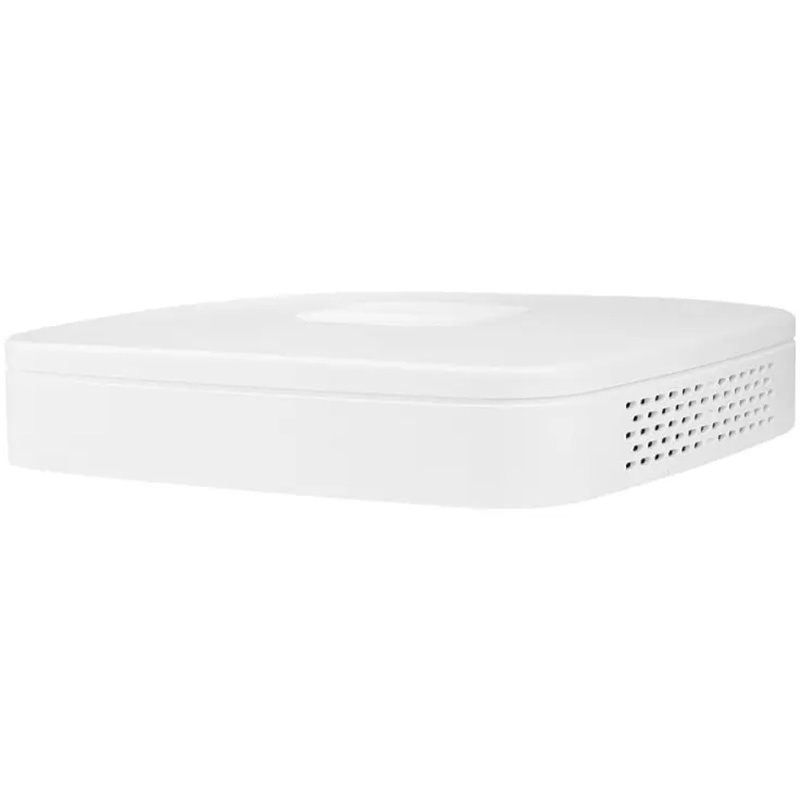
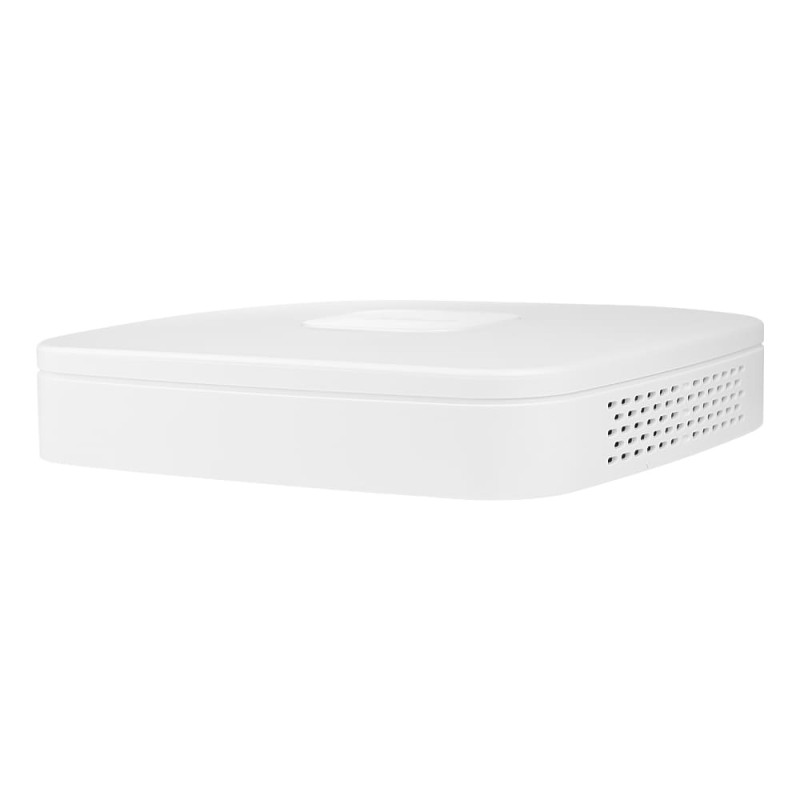
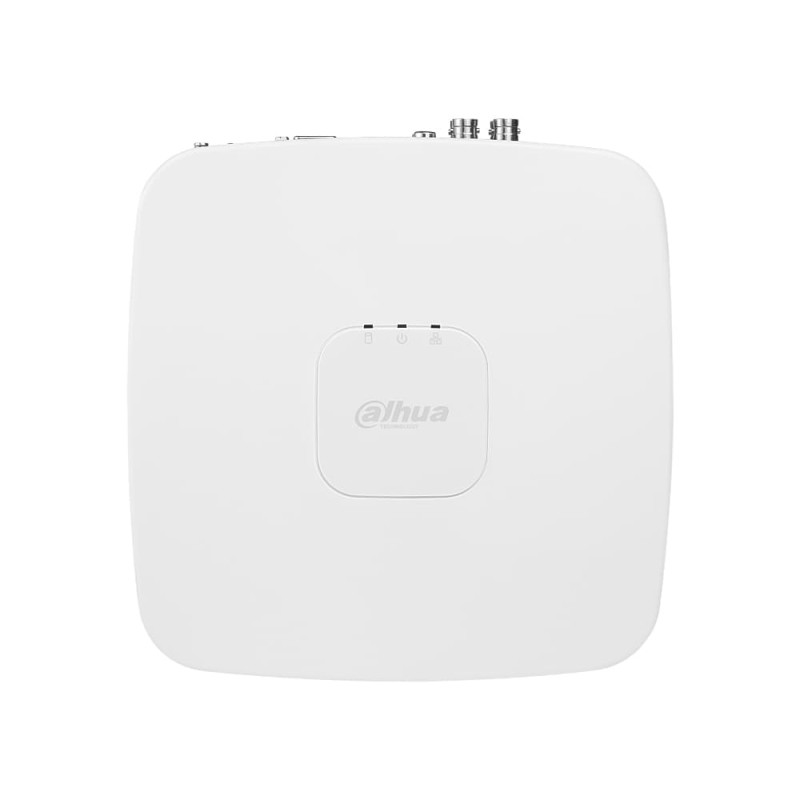
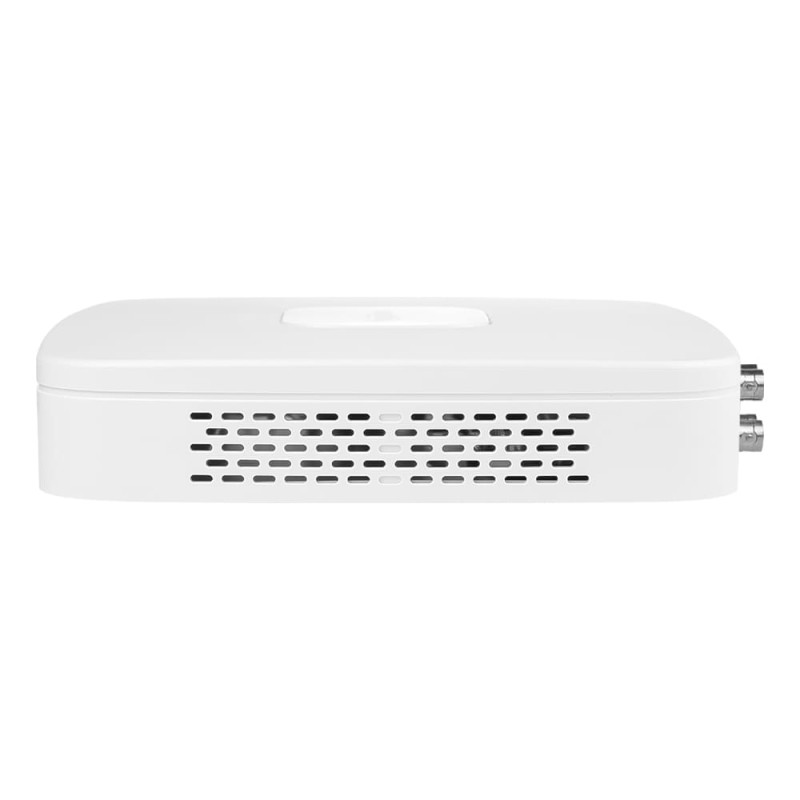
This model has no built-in PoE ports and cannot have them — an analogue channel does not support PoE by definition, so every camera gets its own 12 V supply from a power unit or splitter, and any network cameras you add will need a separate PoE switch. The recorder itself runs from a 12 V / 2 A adapter and draws under 7 W without a disk, making it one of the thriftiest devices in its category and letting it sit on a small UPS together with the router for several hours during an outage. The RS-485 port is there for controlling pan-tilt-zoom cameras over the PTZ protocol, which remains relevant in hybrid systems because an analogue PTZ camera is driven over that line rather than over the network. Audio is handled by an RCA input plus four coaxial audio channels, meaning the sound travels on the same cable as the video with no separate microphone run. The enclosure is white plastic, 205×211×46 mm and just 530 grams, with an operating range of -10 to +45 °C — so its place is a heated room, a cabinet in the back office or a niche above a sales floor ceiling.
Where this recorder belongs and what it was built for
The classic situation for this model is a site where an analogue system already exists and has aged badly: a shop, a car service, a car wash, a small office or a warehouse with four cameras installed several years ago. Instead of redoing the cable routes, the old cameras are replaced with 5 MP HDCVI units and the recorder with this one, and the system instantly gains a modern image, AI alarm filtering and a mobile app while keeping every metre of existing wiring. Its second strong position is long cable runs: an analogue signal travels hundreds of metres over coax without active equipment, whereas Ethernet without an intermediate switch is limited to a hundred metres, and for a long warehouse or a parking area that argument decides the project. The model also works well at a till point because it supports overlaying POS transactions onto the recording, which closes the question of disputed receipts in a shop. It is the wrong choice where a system is being built from scratch entirely on IP cameras: half of its capability would sit idle, and a pure NVR from the same maker would give more bandwidth headroom and built-in PoE.
How it differs from the neighbouring hybrids and NVRs in this catalogue
The Dahua DH-XVR51xxC-I3/T in this catalogue shares the same compact chassis and four analogue inputs but drops the 4KL index, meaning no 8 MP support; if the cameras will be 2 or 5 MP and 4K is not needed at all, the simpler version covers the task without paying for headroom you will not use. The Dahua DH-XVR41xxHS-I/T is the junior XVR4000 series with four analogue channels and a single IP channel: it has less room for network cameras and weaker analytics, and it fits when a move to IP is not planned at all. If four channels are too few, the catalogue holds direct seniors: the DH-XVR5108HS-4KL-I3/T with eight channels and the DH-XVR5216AN-I3 with sixteen and a disk up to 16 TB, while the DH-XVR51xxHS-5M-I3/T takes up to sixteen analogue plus eight IP for a large mixed site. The Hikvision iDS-7108HQHI-M1/S(E) is the direct rival from another brand with eight hybrid channels and AcuSense; it wins on channel count, but this Dahua answers with a true 4K output and face recognition on two channels. And the main fork in the road: if there is no coax on site, compare it not with hybrids but with pure NVRs such as the Dahua DHI-NVR21xx-I2 or the DHI-NVR1108HS-8P-S3/H — the latter also brings eight PoE ports, which no XVR will ever have.
Tell us what cable is already in place at your site and how many cameras you are planning — we will advise what is worth keeping analogue, what to move to IP, and which disk size matches the archive depth you need.
Characteristics Dahua DH-XVR5104C-4KL-I3
Reviews about Dahua DH-XVR5104C-4KL-I3 from real users
No reviews found







