
 m. Сміла, Незалежності, 67г. оф, 406/6























IMOU Cell 3C IPC-K9DC-5M0WEH-FSP12 - Solar-Powered Wi-Fi IP Camera

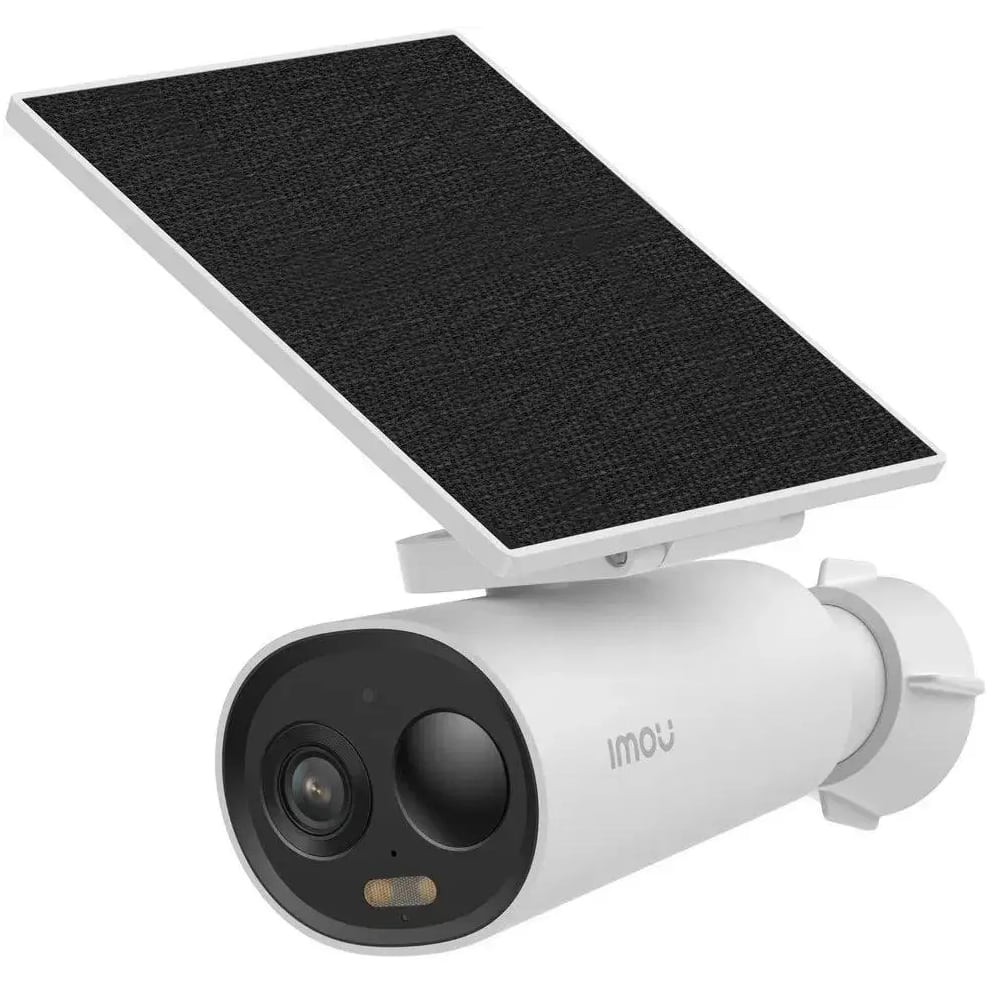

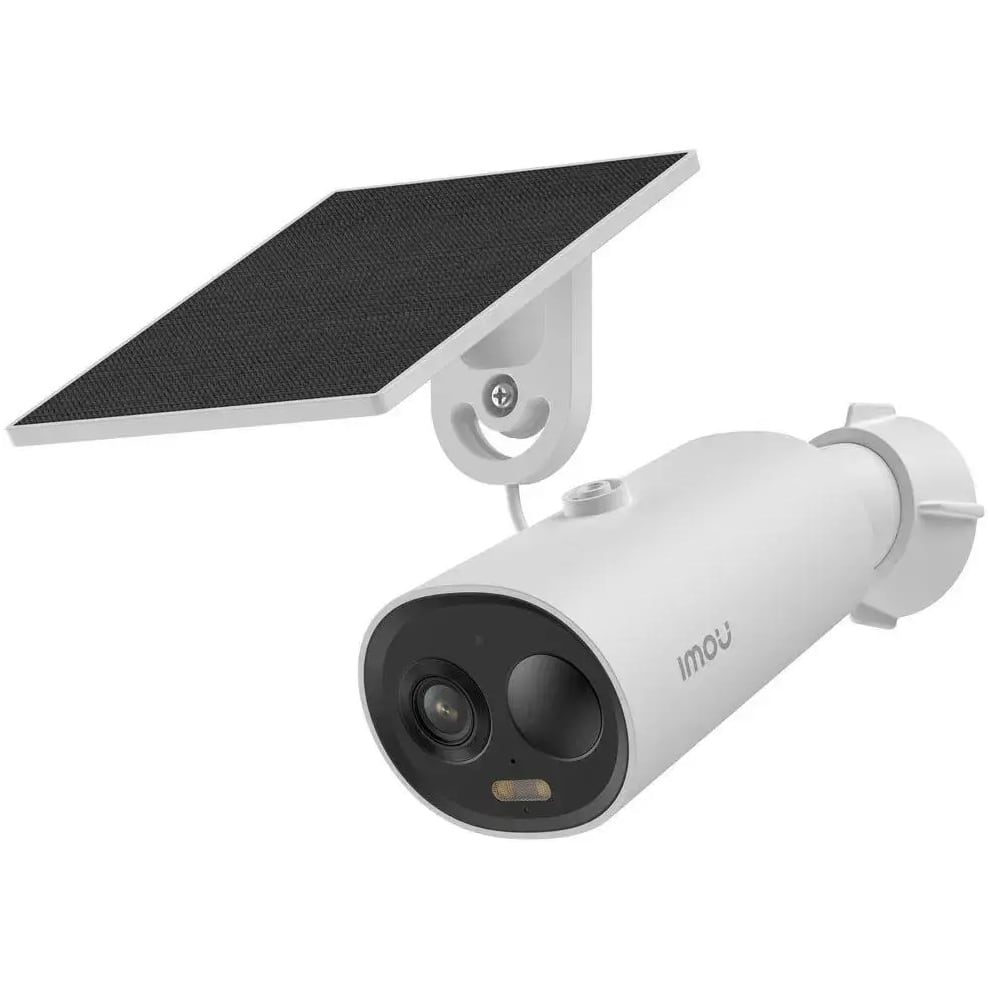
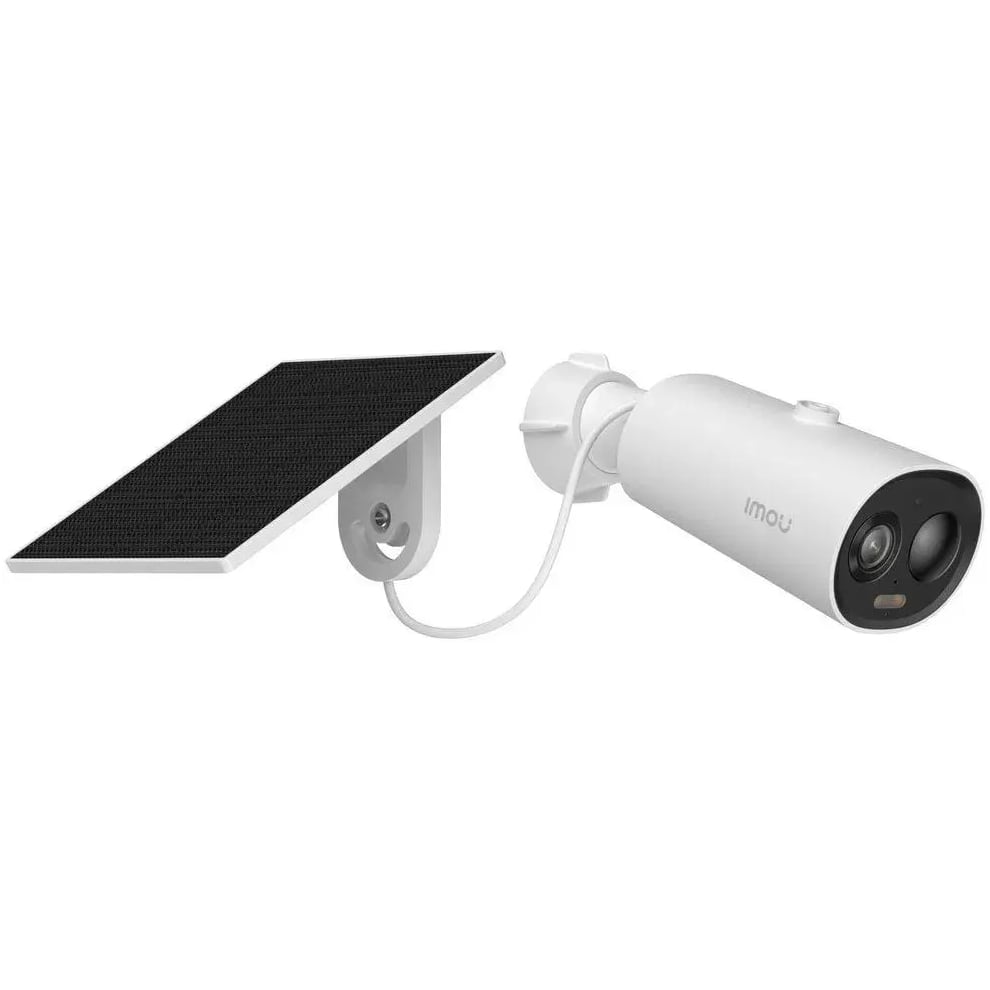
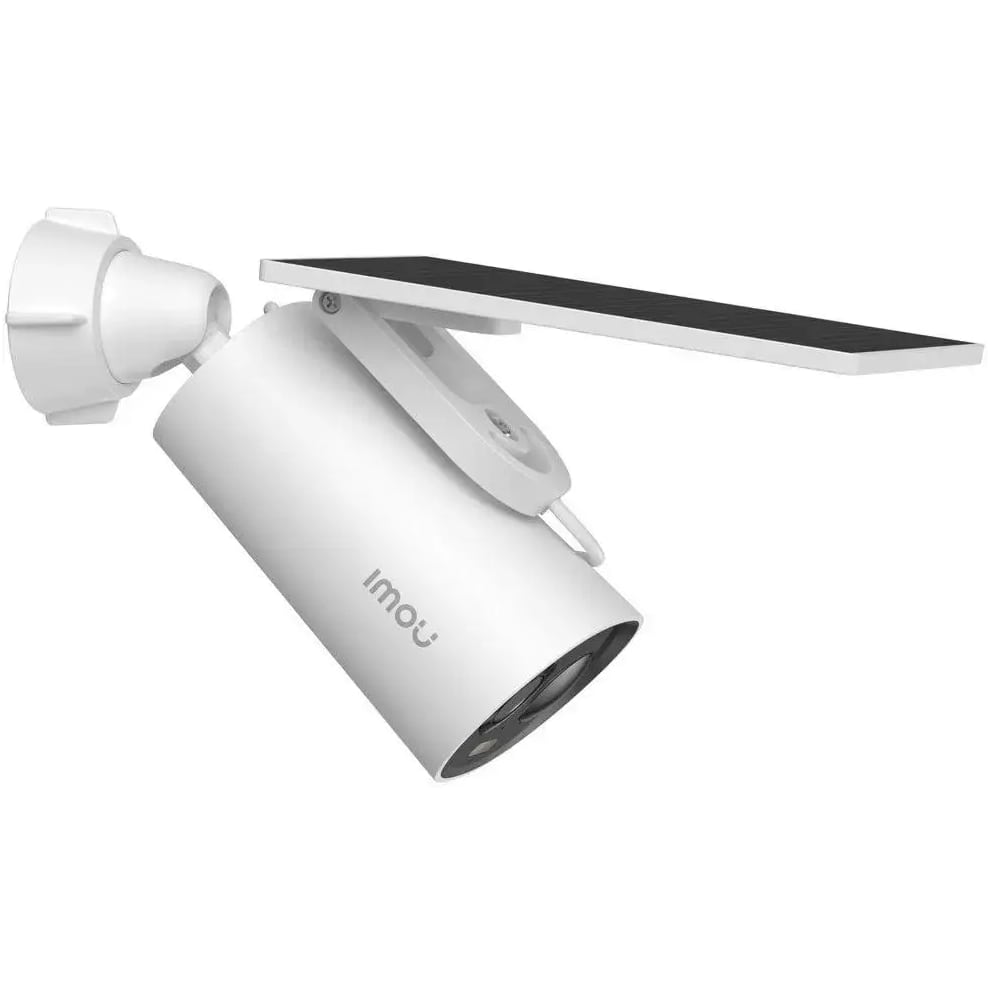


Description IMOU Cell 3C IPC-K9DC-5M0WEH-FSP12
The FSP12 solar panel in the box: steady power instead of a discharge-and-recharge cycle
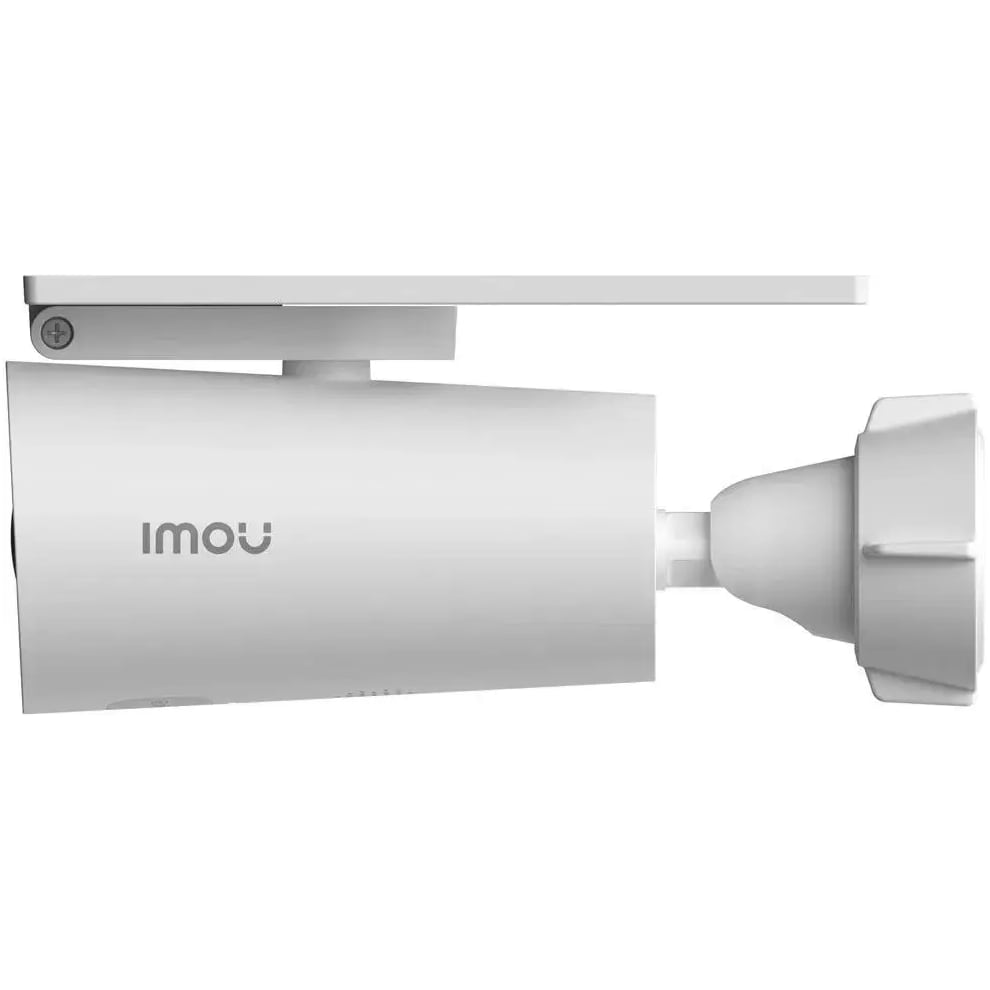
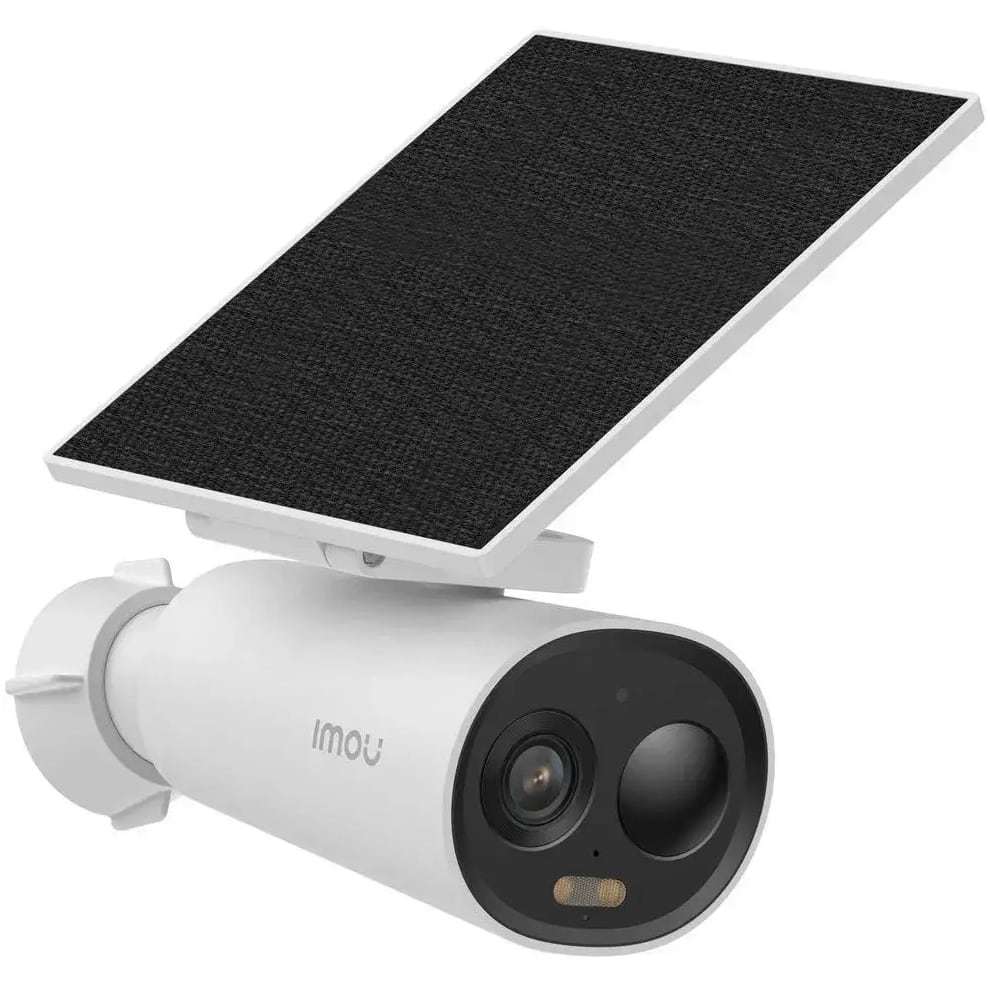
The FSP12 suffix at the end of the name is not a firmware revision but a separate Imou solar panel shipped in the same box as the camera. The panel delivers 6 V at 0.5 A, so up to 3 W at peak, connects through a 4-metre USB-C cable and carries its own IP65 rating with a working range from -20 to +60 °C. Translated into energy, that is roughly 3.6 Wh over a daylight day in direct midday sun, while the built-in 5000 mAh battery holds about 18 Wh. In practice a few hours of direct sunlight cover the daily consumption of a camera with a moderate number of triggers, so the balance stays flat instead of slowly draining. Winter changes the arithmetic: a short day, a low sun and snow on the glass mean the panel will not cover consumption in full, it will only stretch the interval between charges from weeks to months. That is exactly why the panel should face south at roughly 30-45 degrees and be wiped clean once a month — a small chore that decides whether there is any benefit at all.
When paying extra for the panel makes no sense
The panel is worth exactly as much as the difficulty of reaching the camera itself. If it hangs at arm's height above a porch, on a garage wall or next to a gate, taking it down and plugging it into USB-C takes five minutes, and you will do that three or four times a year. In that situation the plain IPC-K9DC-5M0WEH-V2 version (item 1727 in this catalogue) is the more sensible buy, with no second bracket, no hunt for a sunny spot and no cable running along the facade. The panel needs its own mounting point where sunlight actually lands: under an eave, in the shade of a tree or on a north wall it becomes pure decoration. The 4-metre cable also limits your options, since camera and panel have to sit within that distance of each other. On the other hand, if the camera is on a pole, under a second-floor roof or at a site you visit once a month, the kit pays for itself with the very first hour you do not spend on a ladder.
A 5000 mAh battery and the key limitation: event recording, not round-the-clock
The Cell 3C does not record continuously, and that is a defining property of every battery camera rather than a flaw of this particular model. In standby only the PIR sensor is awake; the camera itself starts up when a heat source enters the zone and stores a clip of 10 to 30 seconds depending on settings. The claimed figure of up to 120 days per charge describes a country house with a handful of triggers per day, whereas a camera facing a pavement with dozens of passers-by an hour will flatten the same battery in two or three weeks. The practical consequence is that gaps appear between clips, and if an event starts outside the PIR zone its first seconds never reach the archive. Detection zones should therefore be narrowed down to your own property and sensitivity lowered, so the camera is not fed by street traffic. If you need an unbroken archive covering every minute of a shift, that is a job for a wired camera with a recorder, not for a standalone battery unit.
5 MP in 3K and a 2.8 mm lens: what the frame actually shows
The 1/3-inch sensor produces 2880 by 1620 pixels, a 3K format that carries roughly twice the detail of the two-megapixel cameras common in this price bracket. The 2.8 mm lens gives a horizontal angle of about 95 degrees, enough to fit a typical yard, a porch with its path or a garage entrance into one frame without blind corners at the edges. Up to five or six metres a face is readable with confidence; beyond that the footage slips into the category of a person in a dark jacket. The eightfold zoom here is digital rather than optical, so it simply stretches pixels that were already recorded and will not reveal a licence plate in front of the gate. This is the usual trade-off of a wide lens, and plate recognition should not be pinned on it — that task needs a separate camera with tighter optics right at the entrance.
Colour at night, a spotlight and a 110 dB siren
After dark the camera works in full colour thanks to its built-in spotlight instead of switching to black-and-white infrared only. The difference is practical: a colour frame shows that the jacket was blue and the bag was red, and those are precisely the details that matter when the footage has to be shown to somebody. Effective illumination reaches 15 metres, which makes this a close-range camera for a yard, a porch or a driveway rather than for the far corner of a plot 40 metres away. The built-in 110 dB siren fires on a rule and works as a deterrent — that is roughly the loudness of a car alarm at close quarters, and for a casual visitor to the yard it is usually enough. There is an honest caveat specific to battery models: the spotlight and the siren are the hungriest consumers, so triggering light on every single motion event cuts battery life several times over, and both are better tied to a confirmed human detection.
PIR plus AI human detection, 2.4 GHz Wi-Fi and cards up to 512 GB
Detection is built in two layers: the PIR sensor reacts to thermal contrast first, then an on-camera algorithm checks whether the object really is a person. This pairing cuts false alerts sharply compared with plain pixel comparison, because a branch, a cloud shadow or rain simply does not register on a thermal sensor. At the same time this model's specification does not claim vehicle detection, so it is not the best pick for logging every car that enters a driveway; its strength lies with people. Connectivity is 2.4 GHz Wi-Fi only: the signal travels through walls better, but the band is crowded with neighbouring networks, and weak coverage also hurts battery life because the camera spends longer uploading each clip. Footage is written to a microSD card of up to 512 GB inside the camera, while Imou Life cloud storage remains an option for anyone who wants access to recordings even after the device itself disappears.
Where this camera belongs and the jobs it was built for
The Cell 3C is at its best where you cannot or will not run a cable: a country house without permanent power, a shed wall, a gate on a plot, a temporary point on a building site, or a rented flat where drilling the facade is off limits. An IP66 rating and a range from -20 to +50 °C allow year-round outdoor mounting, and 270 grams of weight means a simple bracket on a couple of screws is all the support it needs. Two and a half to three metres is the sweet spot for height: mount it higher and the PIR struggles, because a thermal sensor responds best to movement across the frame rather than straight towards the lens. It is the wrong choice wherever a continuous archive of a whole shift is required — a sales floor, a till area or a stockroom with accountable goods all need 24/7 recording and a proper recorder. It is equally unsuitable for a long driveway or a 40-50 metre perimeter, since 15 metres of illumination and a wide angle cover the near zone and leave a dark patch further out.
How it compares with neighbouring models in this catalogue
Its closest relative is the IMOU Cell 3C IPC-K9DC-5M0WEH-V2 (item 1727): the same camera, the same optics and the same battery, with the solar panel in the box as the only difference, so the choice comes down to whether you are willing to fetch the camera for charging every few months or would rather mount it once. Wired Imou models in the same catalogue cost less, with the Imou Bullet 3 3MP PoE (1568) and the Imou Bullet 3C 3MP (1564), but both demand a cable to every point while giving you the round-the-clock recording the Cell 3C cannot provide at all. Among battery rivals the Reolink Argus B330 (1573) offers a 6000 mAh cell and dual-band Wi-Fi, and the Argus B340 (1577) adds a pair of spotlights and vehicle detection — yet both ship without a solar panel, so once you add its price the gap against the Cell 3C widens further. The cheapest battery model in the catalogue, the Reolink Argus B310 (1579), has only 3 MP and a 4 mm lens, meaning a narrower field of view and less detail in the frame. The summary is straightforward: if you want an affordable outdoor camera with no cable, colour night footage and a mount-and-forget power budget, the Cell 3C with FSP12 covers that cheaper than anything else here, whereas a continuous archive or number plate work is money better spent on a wired model with a recorder.
Tell us where exactly you plan to mount the camera and whether the spot still gets sun after midday, and we will advise whether the FSP12 panel is enough in your case or the version without it makes more sense.
Characteristics IMOU Cell 3C IPC-K9DC-5M0WEH-FSP12
| CODE | Color | Availability | Price | ||
|---|---|---|---|---|---|

|
CL-000802
|
Availability:
2 item(s)
|
3 80000 ₴ |
Reviews about IMOU Cell 3C IPC-K9DC-5M0WEH-FSP12 from real users
No reviews found







