
 m. Сміла, Незалежності, 67г. оф, 406/6























REOLINK TRACKMIX SERIES G770 - DUAL-LENS PTZ 4G CAMERA



Description Reolink G770
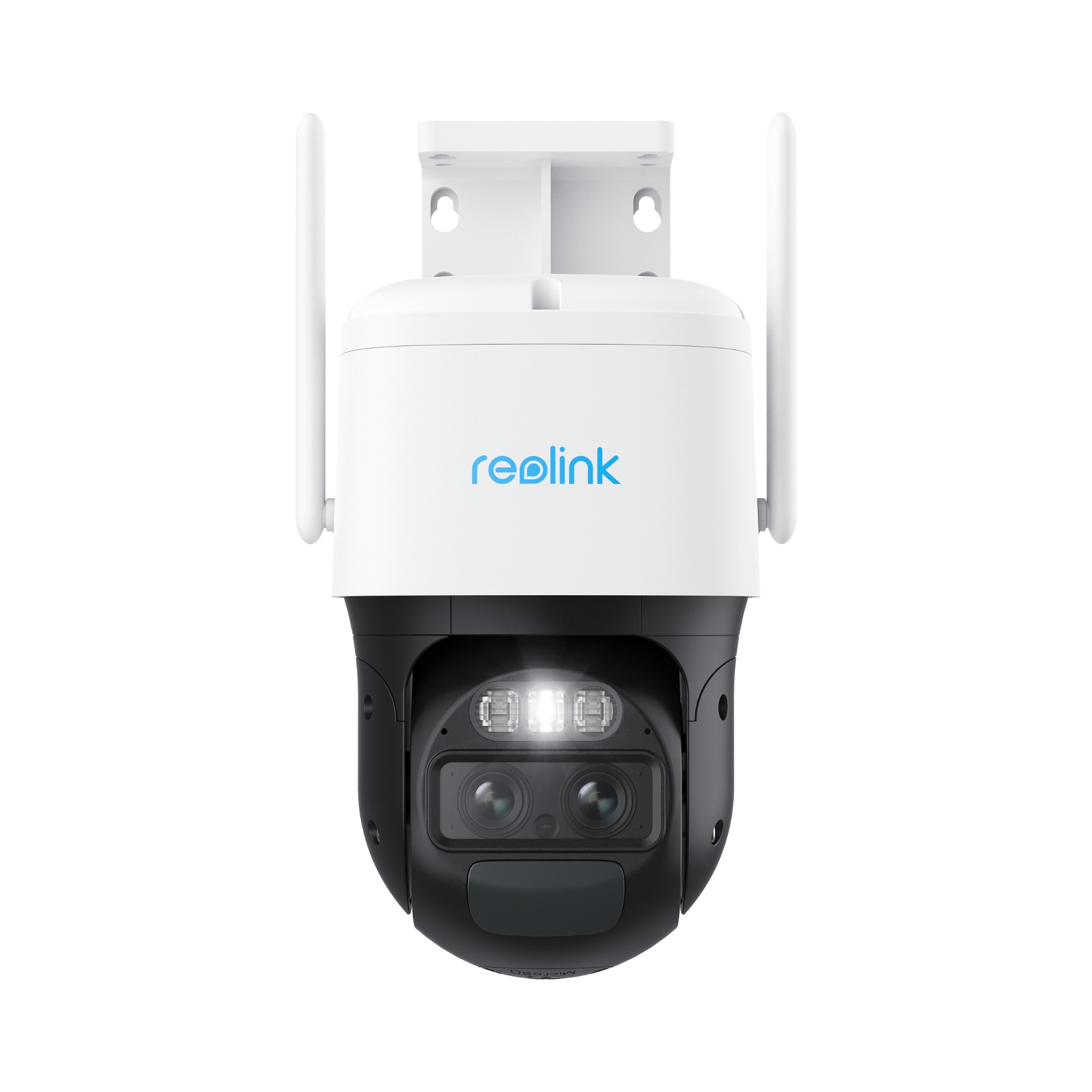
Two sensors in one body: the wide shot and the close-up at the same time
TrackMix is the only layout in the Reolink range that puts two independent lenses with two separate sensors into a single housing: a 2.8 mm wide lens covering about 104° and a telephoto that narrows the field to roughly 38°. Both record simultaneously, and in the app you either see the two streams side by side or a combined frame where the wide lens holds the whole scene while the second one shows a close-up of whoever is moving through it. The value lies precisely in that simultaneity: an ordinary pan-tilt camera loses context the moment it zooms in and no longer sees the gate, whereas TrackMix keeps both views in the same recording. Together with digital magnification the system offers up to sixfold hybrid zoom, so you can inspect a detail without losing the overall picture of the event. The 8 MP resolution is distributed so that the close-up remains usable for identification instead of turning into the enlarged mosaic you get when a single-sensor camera simply crops.
Battery, 4G and a motor: the most power-hungry design among the autonomous models
This model combines everything at once: a built-in 4G/LTE modem with its own nano-SIM, a 5100 mAh battery and a motorised head that pans 355° horizontally and tilts 90° vertically. Every one of those subsystems draws current, and together they make the G770 the hungriest autonomous camera in the range — two sensors, a motor and 4K transmitted over a cellular network burn charge noticeably faster than a plain fixed Argus. The practical conclusion is simple: on a site with real activity the 6 W Reolink Solar Panel 2 is not a pleasant accessory but effectively a condition of normal operation, since without it you will be taking the camera down to recharge far too often. In summer the panel fully covers daily consumption even with dozens of triggers, while in winter, with short daylight, it is realistic to plan periodic manual top-ups over USB-C. The -10…+55 °C operating range matters too: in hard frost lithium capacity drops, and a camera that ran for weeks in summer may want attention every few days in January.
Auto-tracking: what it genuinely does and where it fails
When the analytics recognise a person or a vehicle, the motor turns the head and follows the subject for as long as it stays within reach, then returns the camera to its preset waiting position. That solves the classic weakness of a fixed camera: an intruder who enters from the side no longer leaves the frame after three seconds but stays in the recording for the whole time they are on the property. Tracking has limits that are fairer to state upfront: the camera loses a target behind an obstacle — a wall, a tree, a parked van — and while it follows one person, another sector of the site is unwatched. The second caveat is consumption: every rotation is motor work, so on a busy site tracking should be limited by zones or schedule, otherwise the camera spends its charge following the neighbour's cat. The third is mechanical: a moving head wears faster than a static housing, so for a spot where one fixed direction suffices, a motorised design is simply unnecessary complexity.
Night vision: 30 metres of infrared plus a 450-lumen spotlight
Night work rests on two sources: infrared LEDs produce a black-and-white image out to about 30 metres, while an LED spotlight of roughly 450 lumens fires when colour footage is needed. For a battery camera that is considerably more reach than the compact cordless models with ten metres of IR offer, which is exactly why TrackMix makes sense on a large plot rather than beside a porch. Colour matters specifically when the recording has to be shown to someone: infrared gives you a figure and a direction of travel, colour gives you the shade of the jacket and the car, the attributes by which a person can actually be identified. Keeping the spotlight in automatic mode tied to confirmed detections is wise, because on a battery-powered camera constant light is a direct drain rather than merely a nuisance to neighbours. One more effect is worth knowing: during night-time tracking the spotlight follows the subject together with the head, and the sensation of light moving with you is a surprisingly effective deterrent in itself.
The archive lives on the memory card, and recording is event-driven
Like the rest of Reolink's autonomous models, the G770 keeps no round-the-clock archive: it waits in standby, wakes on an event, writes a clip to a microSD card of up to 128 GB and goes back to sleep. For a moving camera this is even more logical than for a fixed one — continuous recording with a rotating head would produce a constantly shifting frame and would flatten the battery within a day. Clips are reviewed by event in the app, and object classification into person, vehicle and animal runs locally with no subscription attached. Reolink Cloud remains a separate option available only in selected countries, so the card inside the camera, not the cloud, should be treated as the primary storage. If your actual requirement is a continuous log of the working day — a yard with a goods-receiving area, for instance — no battery model will provide it, and the budget is better redirected to a wired PoE system with a recorder.
Where it belongs: large unpowered sites, not narrow passages
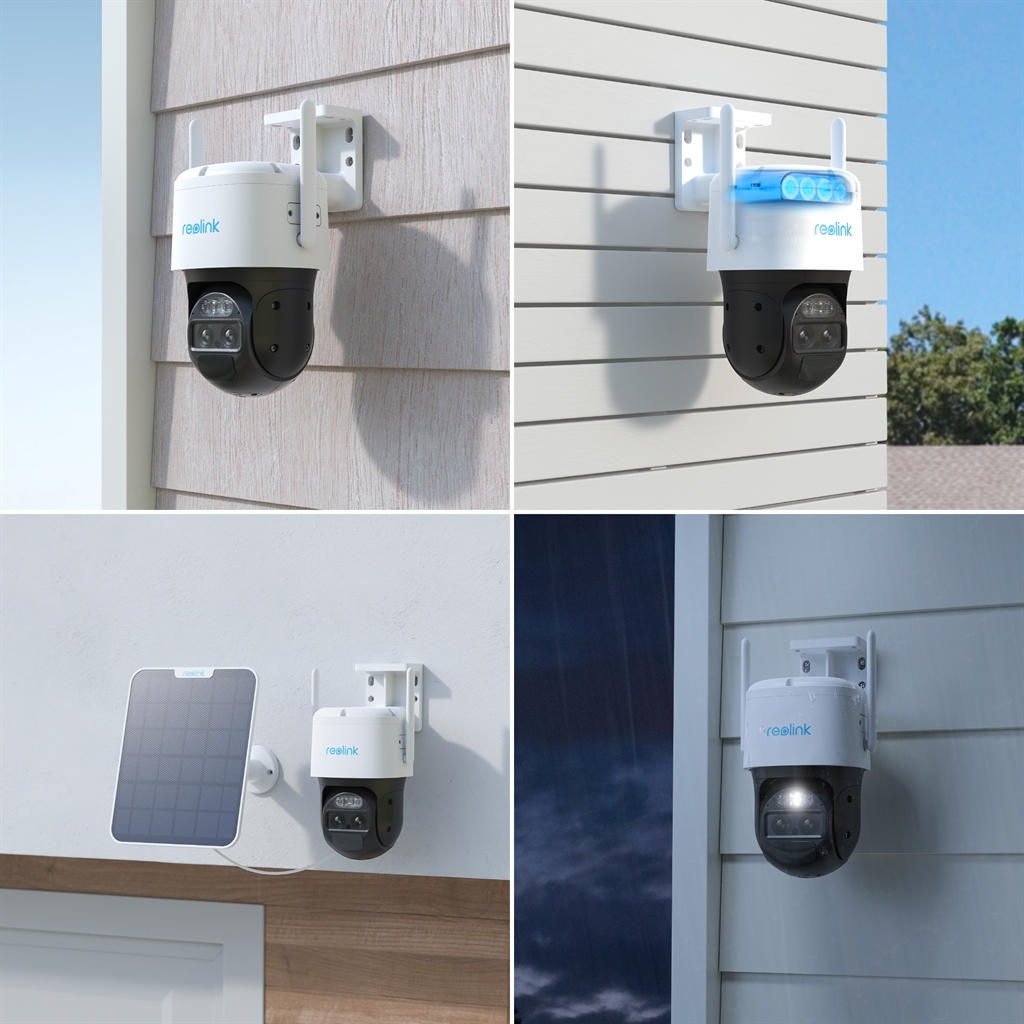
The scenario this camera was designed for is a large area with neither electricity nor internet: a plot awaiting construction, a farm, a yard full of machinery, a remote compound, a trailer park or a building site still at foundation stage. One camera with a moving head and two lenses covers what would otherwise need three or four fixed units, and that is where its economics lie, not in the specification of any single sensor. Mounting deserves thought: the device weighs 1210 g at 228×147×129 mm, a solar panel adds to that, and the whole assembly catches wind, so the pole or bracket must be rigid rather than the thin fixing sold for lightweight cameras. IP65 permits open installation, but the -10…+55 °C range means this is not a professional outdoor camera for severe frost, and a position you can reach with a ladder should be planned from the start. For a narrow point — a gate, a storeroom door, a single passage — it is overkill, since a cheaper fixed model delivers the same result without a motor that can be broken.
How it compares with the neighbouring models in this catalogue
Within Reolink the closest relative in concept is the Duo Series P757: also two lenses and an even higher combined resolution, but a wired PoE camera without a moving head, which in exchange records continuously and never depends on a charge level. Where mains power and a network exist, the P757 delivers more useful work for less money, while the P840 is a full PoE pan-tilt unit with a 2.7-13.5 mm optical zoom and 60 metres of illumination — the tool for genuinely long-range observation. Inside the autonomous branch there is a cheaper option: the Reolink Go PT Plus without solar panel also pans and also runs on LTE, but offers 4 MP and a single lens, so tracking there comes without the wide-plus-close pairing. And if the site does have Wi-Fi, the Argus B430 gives you a battery-powered pan-tilt camera for half the price — paying extra for LTE in the TrackMix is justified only where the internet is physically absent. For perspective: the wired Hikvision DS-2DE2C400MWG-E pan-tilt camera costs less, some less, and that gap is precisely the price of independence from cable and grid.
Describe the size of the site, the 4G situation and what exactly has to be in frame — we will tell you whether one TrackMix with a solar panel is enough or whether a pair of simpler cameras works out better.
Characteristics Reolink G770
Reviews about Reolink G770 from real users
No reviews found







