
 m. Сміла, Незалежності, 67г. оф, 406/6























REOLINK RP-WCB8MZ (8 MP/2.7-13.5 MM) - PoE IP CAMERA WITHOUT CLOUD



Description Reolink RP-WCB8MZ
Wi-Fi 6 and 12V power: how this version differs from the PoE model
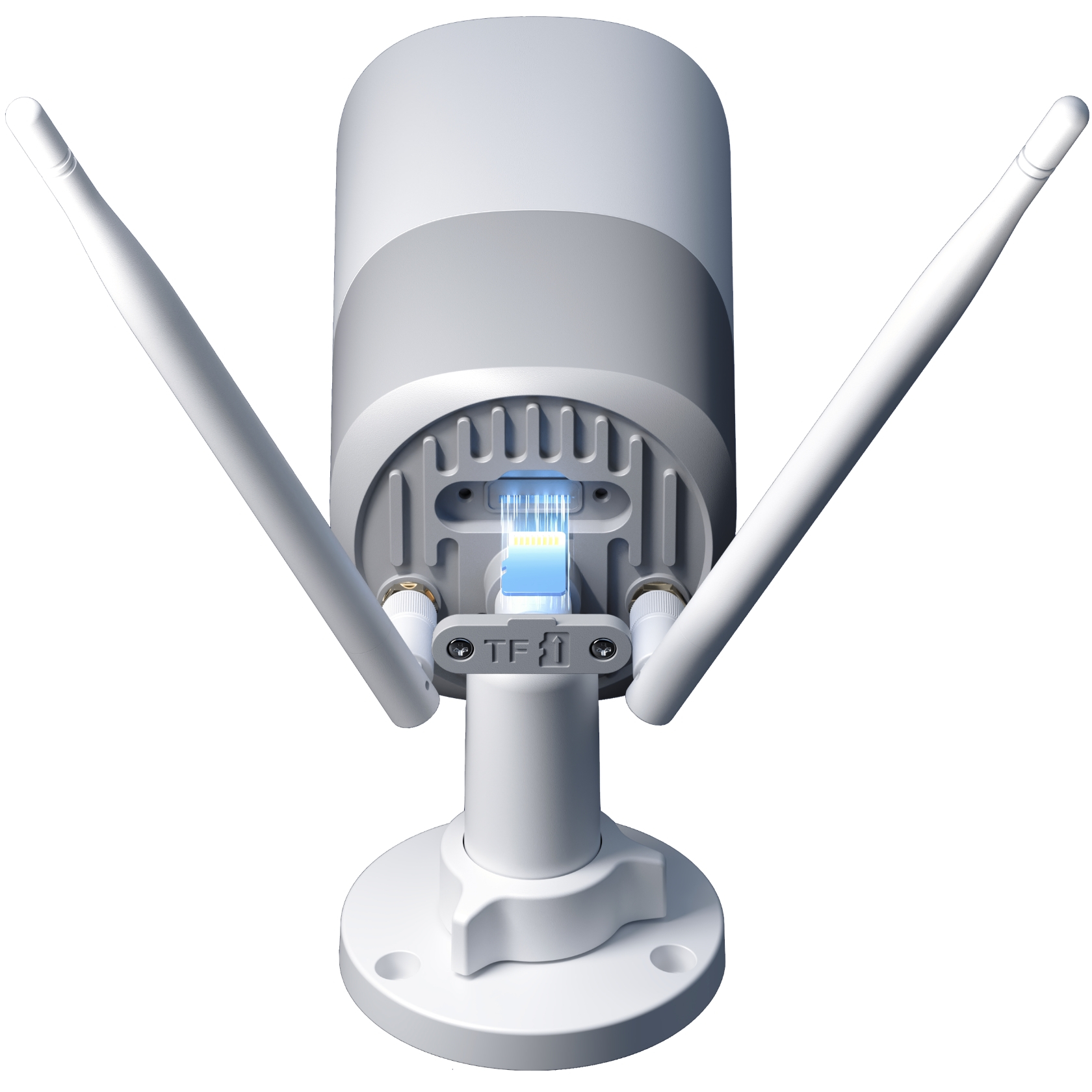
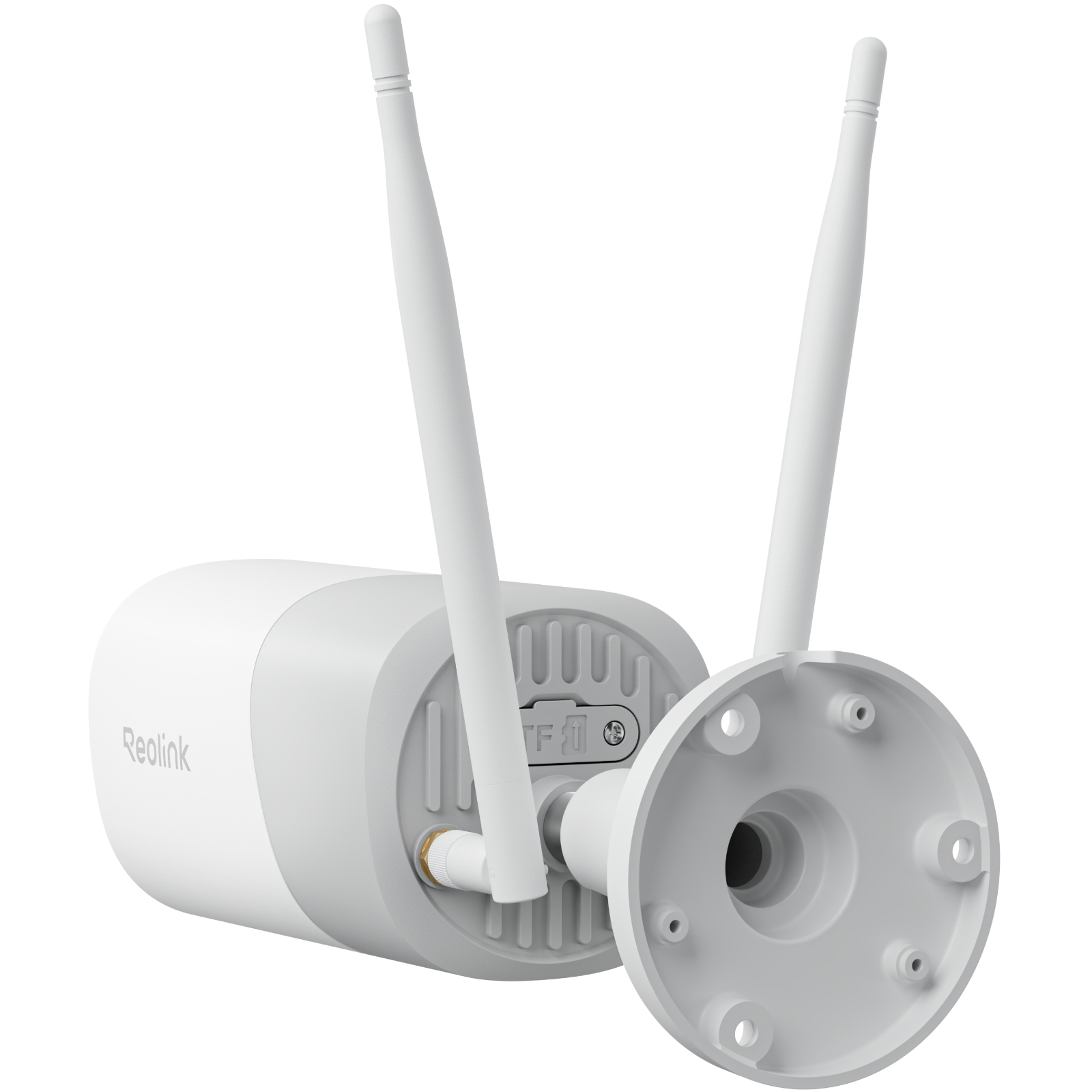
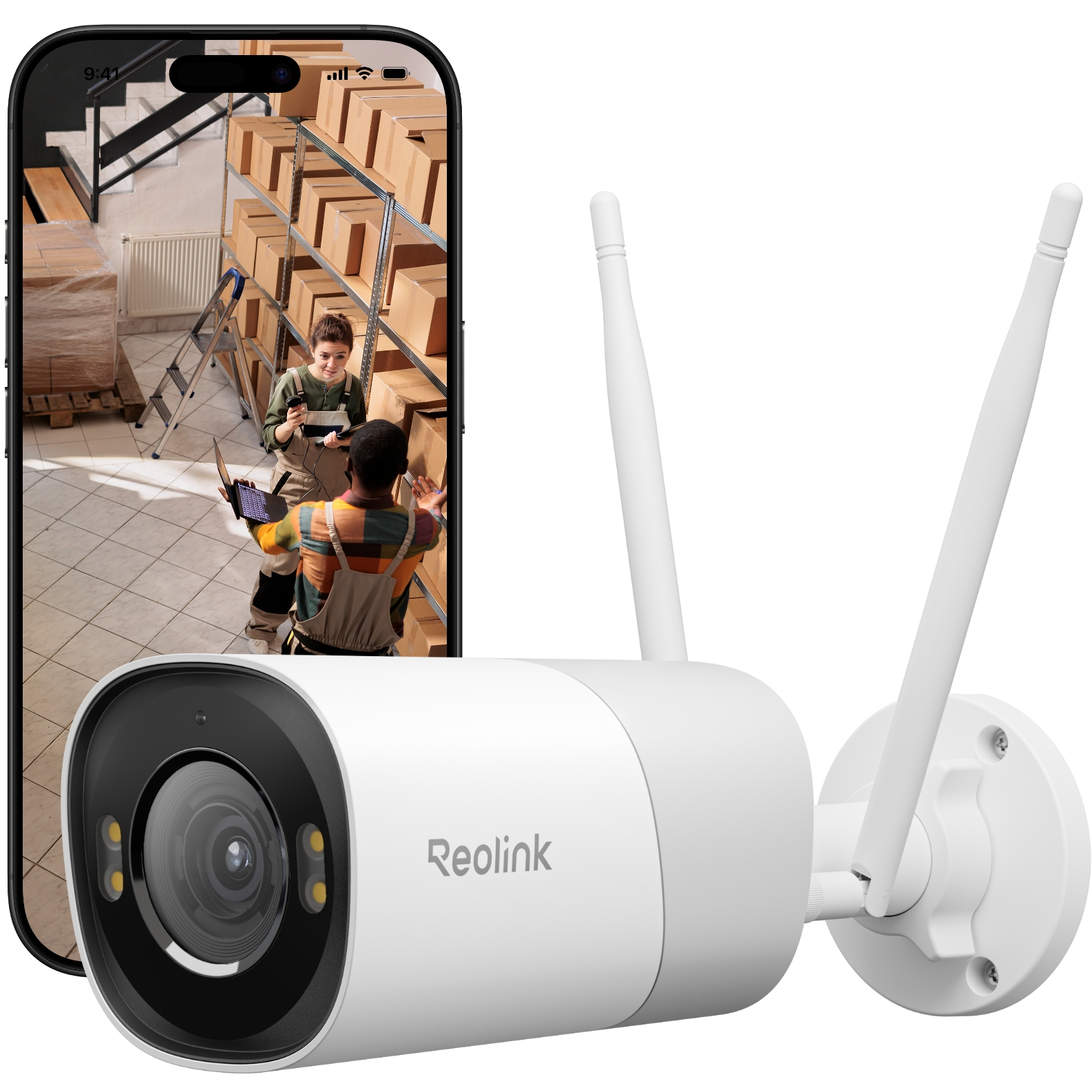
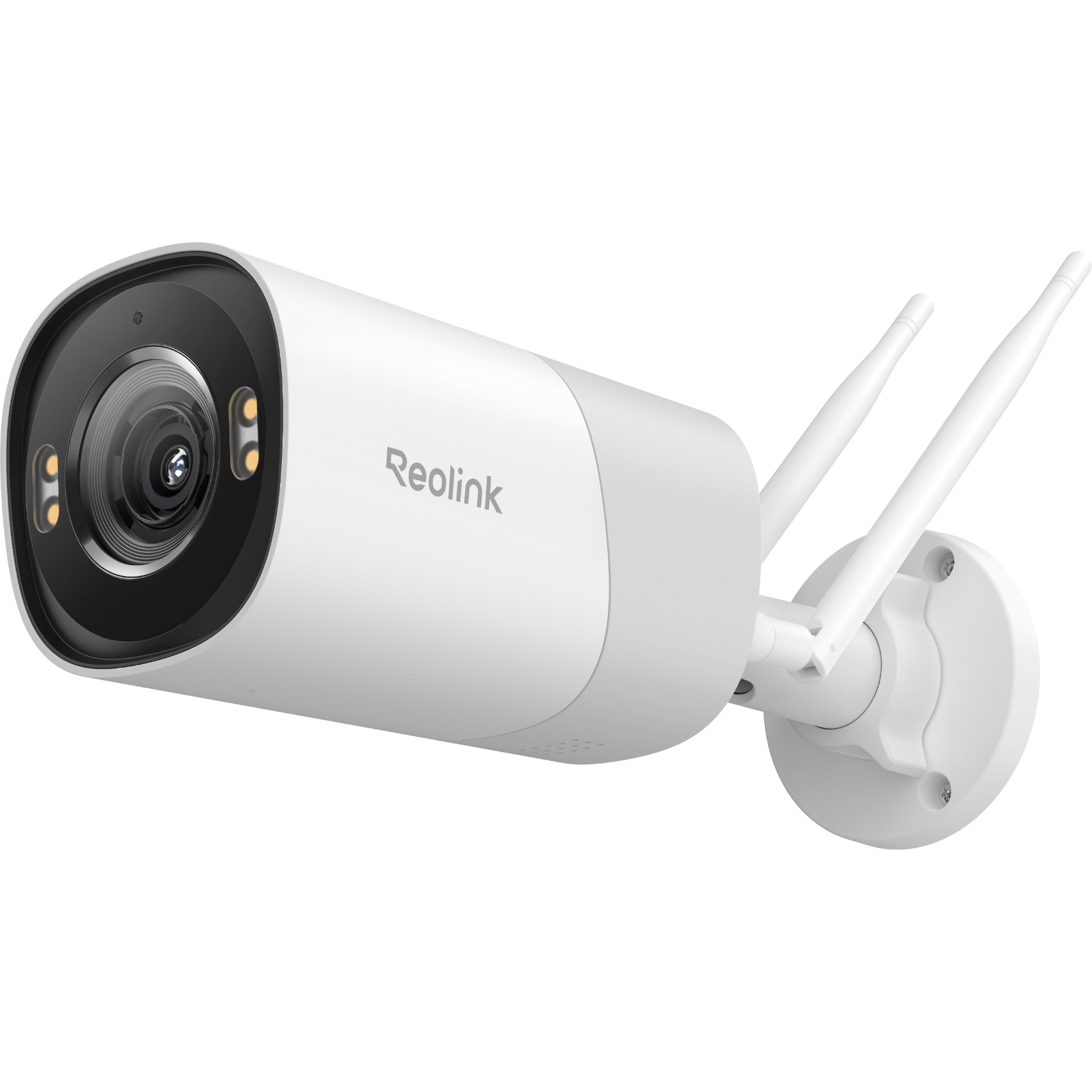
The W in RP-WCB8MZ stands for Wi-Fi, and that single letter is what separates this camera from the almost identical RP-PCB8MZ in the same catalogue. The radio is not an afterthought: 802.11 a/b/g/n/ac/ax across both bands means genuine Wi-Fi 6, with 5 GHz giving the throughput headroom a 4K stream needs and 2.4 GHz trading speed for the ability to get through brick walls and floor slabs when the router sits indoors and the camera hangs on a fence. There is also a 10/100 Mbit RJ-45 socket, and it is worth treating as the primary option for critical positions rather than a backup: copper does not care about the neighbours' networks or a wall of wet snow between the antennas. One thing has to be clear before you buy, though: that RJ-45 port does not accept PoE. The camera runs strictly from a 12V 2A supply drawing under 15W, so a socket or a dedicated power run to the mounting point is mandatory either way — Wi-Fi saves you the data cable, not the electrical one.
Five times optical zoom, 2.7-13.5mm: a field of view from 108.6° to 32°
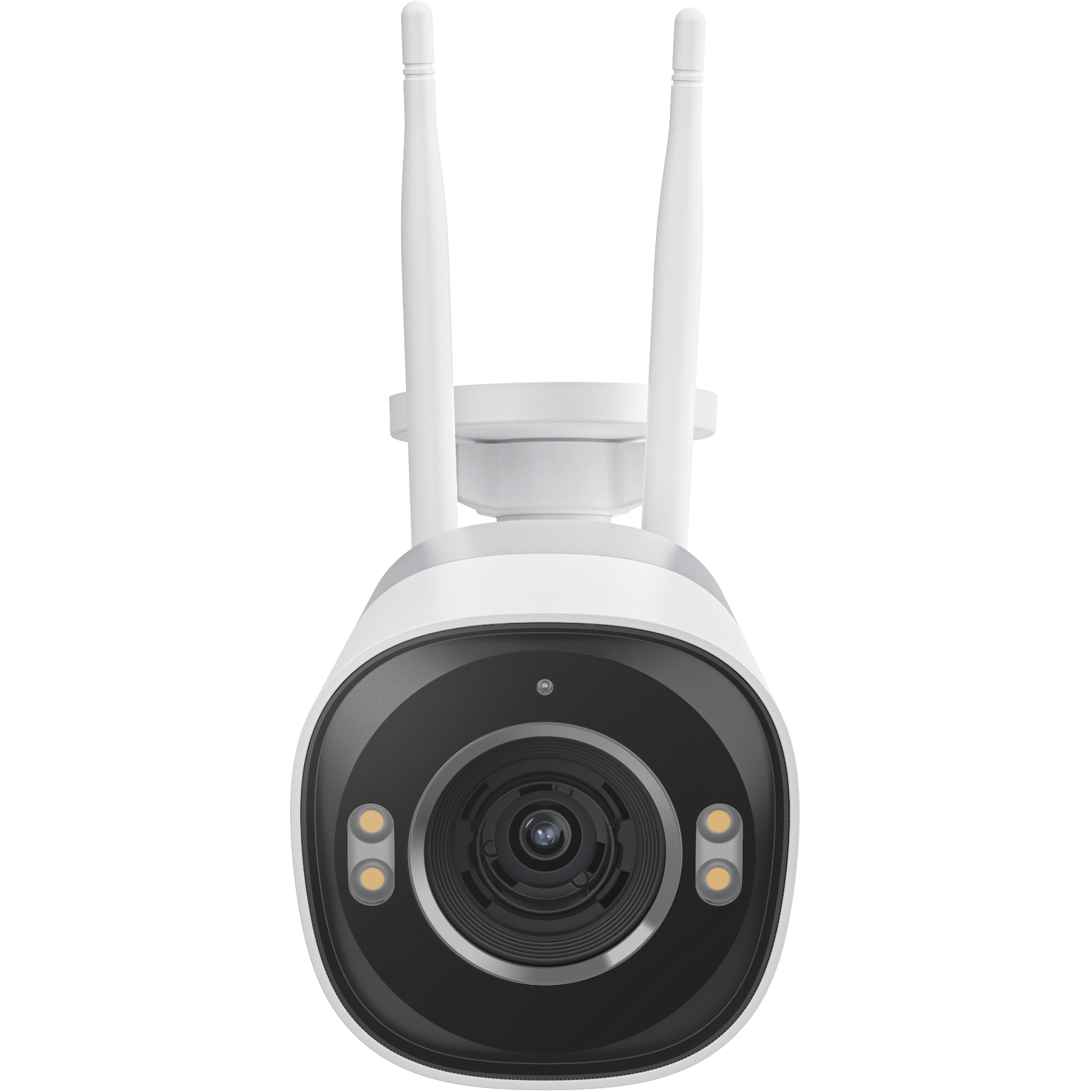
The motorised 2.7-13.5mm lens delivers roughly five times optical magnification, sweeping the horizontal field of view from 108.6° at the wide end down to 32° at full telephoto (133° to 36.7° measured diagonally). Optical zoom is a different thing entirely from the digital kind: instead of stretching pixels that have already been captured, the camera points the whole sensor at a narrower slice of the scene, so detail genuinely increases rather than dissolving into blocks. All of it is driven from the app, with no ladder and no unscrewing of the housing, and autofocus re-establishes sharpness after every change of focal length. In practical terms 133° diagonally covers most of a suburban yard from a single position, while 36.7° is a narrow corridor in which a gate, a barrier or a shop window several dozen metres away becomes genuinely readable. The trade-off deserves stating plainly: zoom does not add coverage, it redistributes it, and the moment you narrow the angle to 32° the flanking areas are being watched by nobody at all.
8MP on a 1/2.8-inch sensor at 25 frames per second
The 1/2.8-inch sensor outputs 3840×2160 at 25 frames per second on the main stream, and that second number matters as much as the first: plenty of 4K cameras only deliver full resolution at 15fps, and fast movement in their footage breaks into visible steps. Twenty-five frames means a car passing at 30-40 km/h leaves several usable stills in the archive instead of one smeared blur that proves nothing. The 4K resolution itself carries four times the pixels of ordinary Full HD, and the value of that surplus is not a prettier monitor image but the ability to crop into a recording after the event, when there is no second chance to film it. A sub-stream runs at lower resolution and 10-15fps, and that is what the phone app pulls over mobile data, so live viewing does not devour your traffic allowance or demand a perfect link. Just do not overestimate megapixels on their own: at the wide end 8MP is no substitute for magnification, and reading a licence plate still means either bringing the control point closer to the camera or driving the lens to telephoto.
Night mode: 30 metres of infrared plus a white spotlight
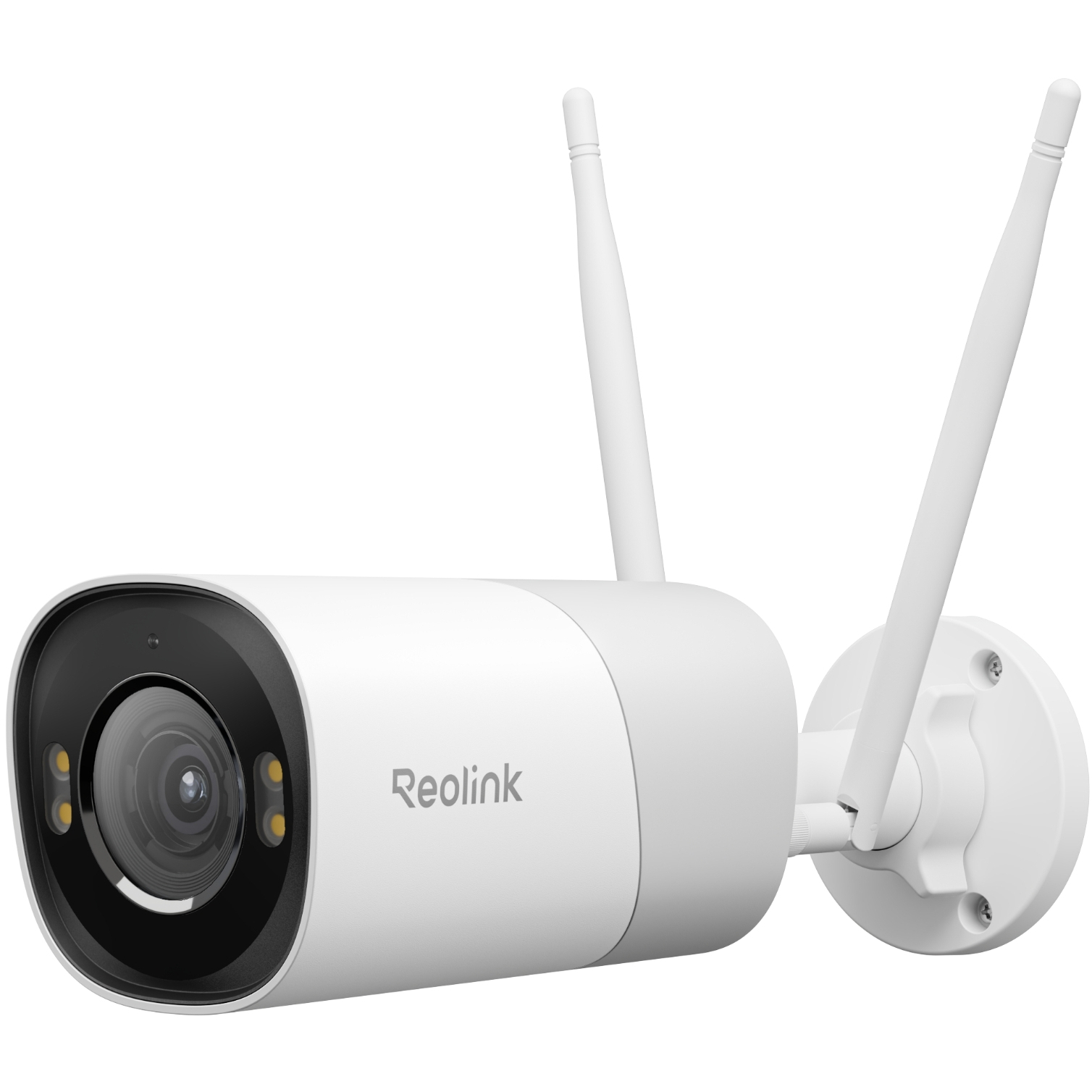
Night operation works in two stages and the camera decides between them by itself. Four 850nm infrared LEDs produce a black-and-white image out to roughly 30 metres — light your eye cannot see, so the camera does not advertise its position or flood the neighbours' windows. When colour is required, four white LEDs at 4000K and around 600 lumens combined switch on and the frame turns fully colour. The difference is not cosmetic: a monochrome recording shows a silhouette in a jacket, a colour one shows that the jacket was red and the car a silver estate, and those are the details that carry weight in a conversation with the police or an insurer. The spotlight can stay in event mode or burn continuously as a porch light over the entrance, which is a deterrent in itself; and because this camera is mains-powered rather than battery-powered, firing the spotlight costs nothing, unlike the Argus and Go models where every illumination event eats into the charge.
Analytics: people, vehicles, animals, parcels and perimeter rules
The detector set here is broader than on ordinary Reolink cameras: alongside person, vehicle and animal it separately recognises a parcel left at the door and non-motorised traffic such as bicycles, scooters and motorbikes. On top of classification sits perimeter protection: you can draw a line and be alerted when it is crossed, outline a zone and catch entry into it, or set an alarm for someone lingering inside that zone longer than a chosen number of seconds. That last rule is the most useful in daily life — a pedestrian walking past the fence bothers nobody, while somebody who stops by the gate for a full minute is worth a glance at the screen. There is also people counting, crowd assessment within a zone and a search that lets you query the archive by what happened, features that make more sense for a shop, a restaurant or an office entrance than for a private yard. All classification happens inside the camera, so filtering takes place before anything becomes a push or an email, and the owner stops receiving a dozen nightly alerts about a branch and the neighbour's cat.
Housing, -30 °C winters and up to 512GB of local storage
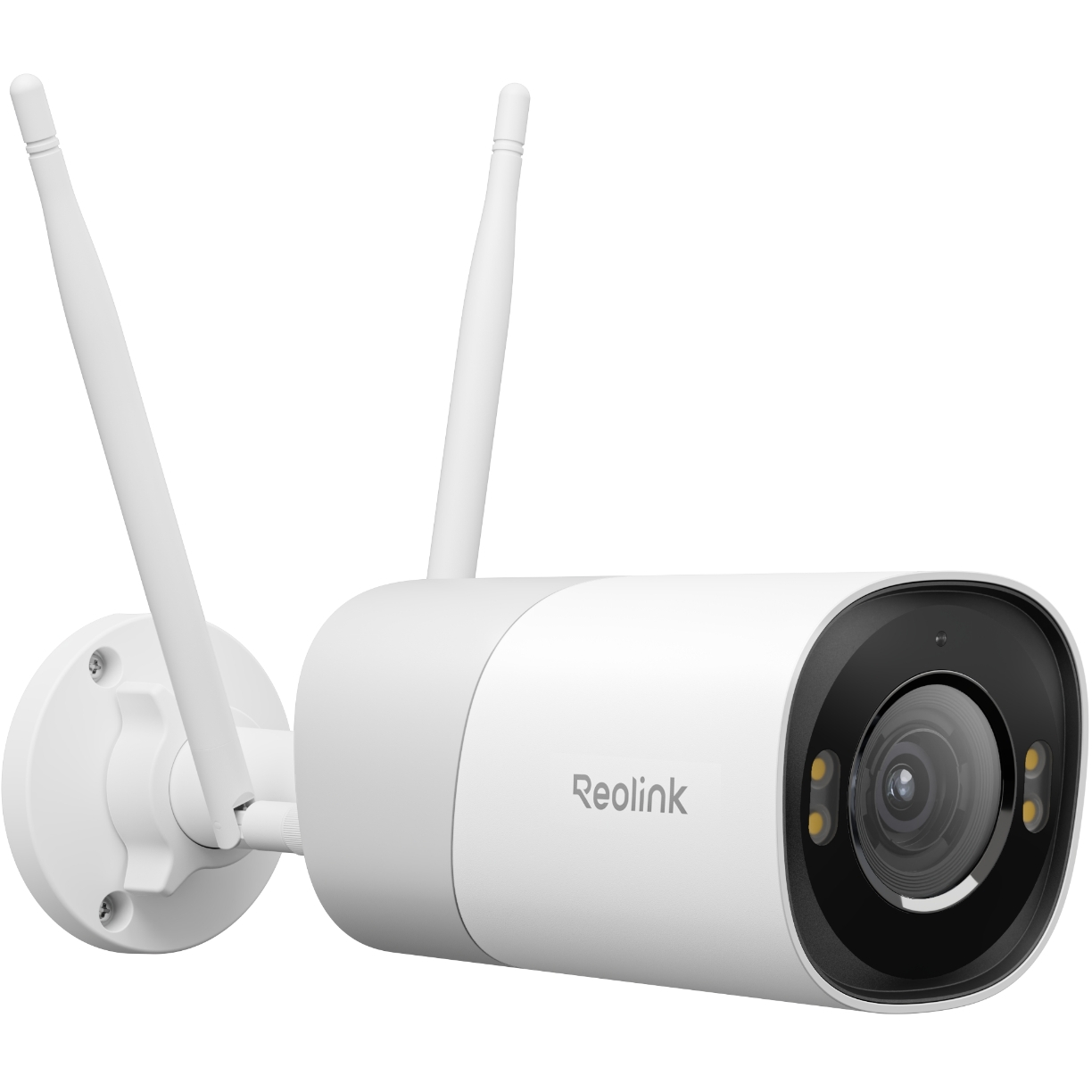
The metal body is 220mm long and weighs 776g — a large, conspicuous camera, which in this case is an advantage, since visible equipment deters before any analytics get involved. IP67 means complete dust sealing and survival of brief immersion, so the unit belongs on an exposed facade where rain arrives sideways on the wind, not only under a sheltering eave. The -30 °C to +55 °C operating range is built for a real Ukrainian winter, and on a motorised-lens model that matters more than usual: in cheap cameras rated only to -10 °C the zoom mechanism stiffens in January and plastic parts deform enough to pull the image out of focus. Recording goes to a microSD card of up to 512GB, which at continuous 8MP with intelligent H.265+ works out to roughly a week and a half of round-the-clock video, or several months of event-only clips. The camera speaks ONVIF, RTSP and FTP and pairs with Reolink recorders, but keep the power question separate: you can feed it into the PoE port of an NVS8 or RLN16-410 for data, yet it will not draw current from there.
Where this camera belongs and what it was built for
This model is made for large open spaces where the subject is far away and running a separate data cable is awkward: a yard with a long driveway, the entrance to a depot, a car park, a construction site with a site office, the facade of a warehouse or a vehicle workshop. It shines where a single position has to provide both the wide overview and, on demand, a close look at one specific place — the gate, the barrier, the loading bay. For a small room, a porch or a narrow corridor its capabilities are excessive: a fixed 2.8mm camera does that job, and a 220mm body would look absurdly heavy on the wall. It is equally wrong for sites with no electricity at all: Wi-Fi or not, the 12V line has to reach it, and if there is no socket the correct answer is a battery model rather than this one. One last thing to check before mounting: if two solid walls or more than thirty metres of open ground separate the router from the camera, real 5 GHz throughput will sag, the 4K stream will start breaking up, and it is more honest to plan the RJ-45 cable from the outset.
How it compares with the neighbouring Reolink models in this catalogue
The closest relative in this catalogue is the RP-PCB8MZ: identical 8MP sensor, the same 2.7-13.5mm lens and the same bullet housing, but power and data arrive together over PoE 802.3af. If a cable reaches the mounting point anyway, or a PoE recorder already sits nearby, the wired version is the more dependable choice — one run instead of two and no dependence on radio conditions — which is precisely why the Wi-Fi variant earns its place only where pulling twisted pair is hard but a socket is close. The RP-PCV8MZ puts the same optics into a dome housing that is much harder to knock aside or twist by hand, making it the better answer for a stairwell, a garage entrance or any mounting at head height. If five times magnification is simply not needed, the catalogue also holds the RP-PCB8M with a fixed 2.8mm lens — a simpler version that suffices whenever the frame is defined in advance and the subjects sit within ten to fifteen metres. And if the site has no mains supply at all, look past the Wi-Fi model towards the battery-powered Argus B340 or the LTE-equipped Go G340, bearing in mind the central compromise: a battery camera records on events, not around the clock, so a continuous archive is not something it can give you.
Tell us the distance from your router to the mounting point and what exactly has to be legible in the frame. We will say whether Wi-Fi is enough here or whether running a cable and taking the wired PoE version is the safer plan.
Characteristics Reolink RP-WCB8MZ
Reviews about Reolink RP-WCB8MZ from real users
No reviews found







