
 m. Сміла, Незалежності, 67г. оф, 406/6























REOLINK P344 (12 MP/2.8 MM) - DOME PoE IP CAMERA



Description Reolink P344
The eye-ball housing: when the shape matters more than the spec sheet
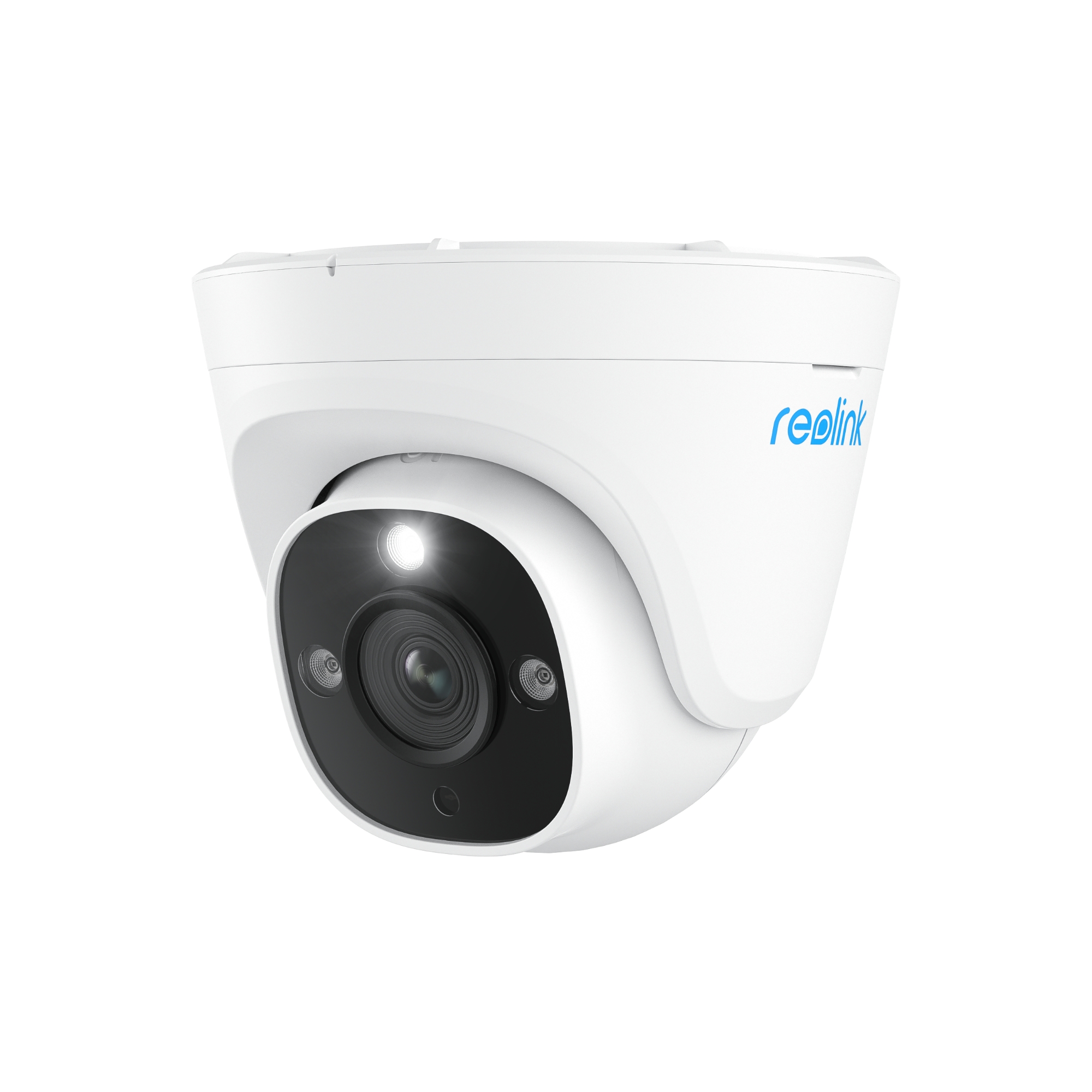
The P344 comes in an eye-ball turret housing — a 117 mm hemisphere with a movable lens ball inside, fixed straight onto a ceiling, a wall or the underside of an eave without a long bracket. The practical difference from a bullet is immediate: this shape is much harder to knock aside or twist by hand, it catches less wind, and it does not collect the snow and cobwebs that love the shade of a bullet's sun shield and generate false triggers all night. Unlike a classic dome under a clear bubble, the eye-ball's lens is not covered by a large glass sphere, so infrared light does not reflect off the cover and create the milky haze that disappoints so many buyers of cheap domes after dark. The inner ball rotates on two axes during installation, letting you aim precisely along a wall or steeply downwards, and once the collar is tightened the aim stays put. There is a downside to the form as well: an eye-ball is less conspicuous from a distance, so it works less well as a visual deterrent, which is why a visible bullet often goes on the gate while this model goes under the canopy.
A 12 MP sensor: what the headroom buys and what it costs
The 1/2.49-inch sensor with 4512×2512 pixels puts the P344 above most cameras at this price, where 4 or 8 MP remains the norm. The benefit is singular but you use it constantly: in recorded footage you can magnify the part of the frame that matters and actually see a face, a label on a parcel or a detail on a car, instead of noting that somebody walked past. The cost is storage — even under H.265, a 12 MP stream fills a disk several times faster than 4 MP, and a 256 GB card holds roughly three days of continuous video, so this camera should be paired with a recorder sized generously rather than the smallest drive on the shelf. There is a physical limit too: the more pixels share the same sensor, the smaller each one is, so in near-total darkness a 12 MP frame is noisier than 4 MP on a comparable chip — the spotlight compensates, but it is worth knowing in advance. If the job is simply to register that someone entered a corridor or a store room, 12 MP is overkill and the cheaper P324 will do it just as well.
Continuous recording and a single cable for power and data
This is a wired camera for permanent installation: power and data arrive on one cable to IEEE 802.3af PoE, consumption reaches 12 W, and it is precisely that mains supply which lets it record twenty-four hours a day with no sleep cycles. A continuous archive is fundamentally different from the event clips of battery models: you see not only the trigger itself but also the five minutes before and after it, and in practice those are the minutes that turn out to matter. A microSD card up to 256 GB acts as local insurance against a network outage, while the real archive belongs on a recorder — this catalogue carries the Reolink NVS4 with four PoE ports and the NVS8 with eight. When sizing the switch, budget 12 W per camera: a typical eight-port PoE switch rated 60-65 W will carry five or six of these, and overlooking that is the most common mistake in self-planned systems. The camera supports ONVIF and publishes an RTSP stream, so it can join not only a Reolink recorder but also Hikvision, Dahua, Blue Iris, Frigate or Home Assistant, and none of its core functions require a subscription.
After dark: thirty metres of infrared plus a white spotlight
The night package consists of two 850 nm infrared LEDs reaching up to thirty metres and a white 700-lumen spotlight that can fire on an event or stay permanently on, depending on the setting. In monochrome infrared the camera is invisible and suits discreet observation; with the spotlight it delivers full colour, and colour is what lets you describe a person or vehicle in terms usable in a police report. Thirty metres is above average for a turret: most domes in this price class reach twenty to thirty, and battery-powered Argus models manage only ten because their LEDs have to spare the cell. One mounting tip matters more than any setting: do not tuck an eye-ball tight under a wide eave and do not leave a branch a metre in front of it, because infrared bounced off a nearby surface will wash out the whole frame and no amount of resolution will fix it. In winter there is a second consideration — the lens glass frosts over during sharp temperature swings, and a camera under a roof copes with morning fog far better than one on an open wall.
IP67 protection, mounting, and an honest word about temperature
This model carries an IP67 rating, a step above the IP66 of its sibling P340: on top of full dust protection the housing survives brief immersion, which in practice means calm operation under driving sleet and in spots where water can pool on the body. The metal housing weighs 526 g at 117 mm across and 104 mm tall and fastens with three screws to a ceiling or wall; if the cable comes in from outside, plan a junction box, otherwise the connection has to be sealed by hand. The rated range of -10 to +55 °C is the model's main limitation in Ukrainian conditions: below roughly -15 °C for extended periods the manufacturer guarantees nothing, so an exposed mast in the colder regions calls for a wider-rated camera or a sheltered position. Indoors none of this applies, and indoors is where an eye-ball is happiest — on the ceiling of a shop, a warehouse or a production area. The two-year warranty is normal for this class, but remember that most failures in wired systems occur not in the camera but in a badly sealed outdoor connector.
Where this camera belongs and the jobs it does best
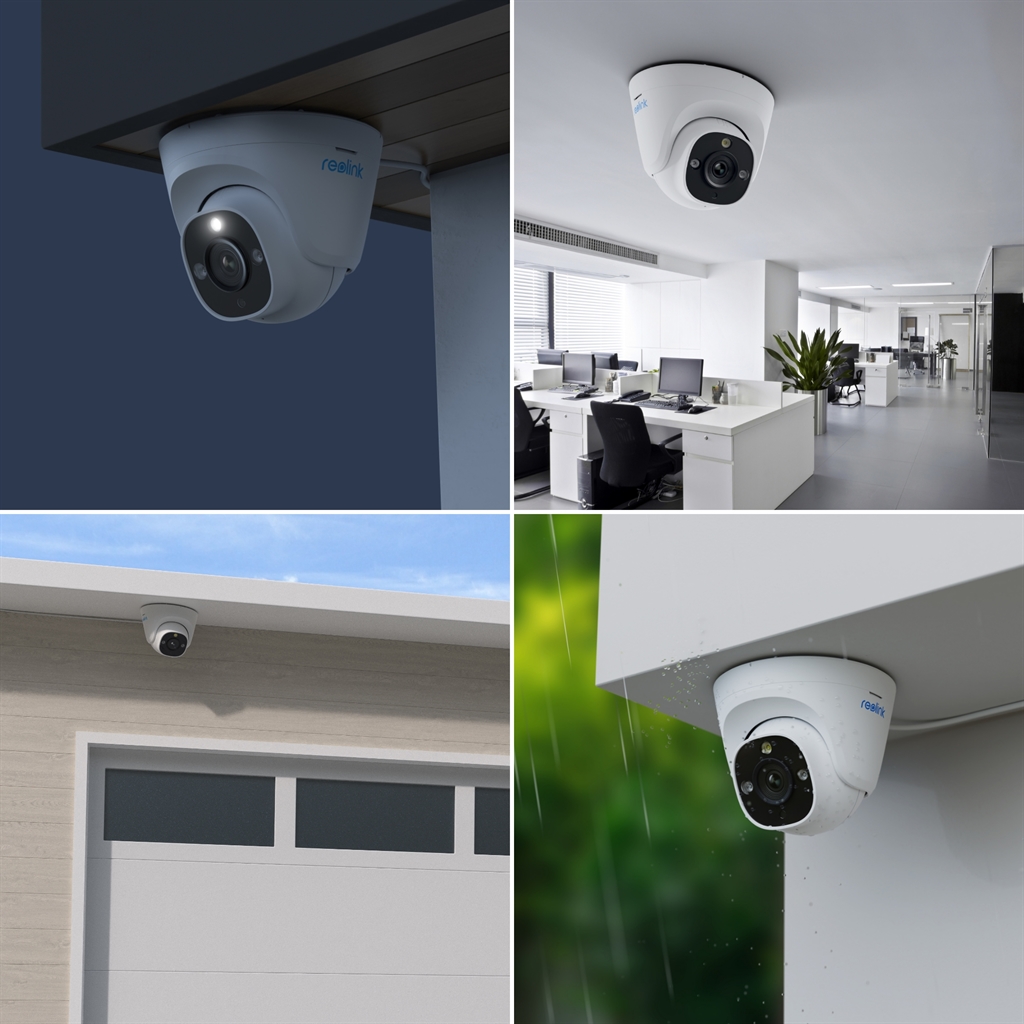
The natural home for a P344 is a ceiling or the underside of an eave: a porch, a canopy over a driveway, a shop entrance, a sales floor, a warehouse, an office corridor, covered parking. It covers the zone where people pass three to ten metres from the lens especially well — a till, an entrance, a collection point, a loading bay — and there 12 MP lets you work out later what exactly someone was carrying. Outdoors it is usually fitted under the eaves of a house aimed down at the yard or a path, and that position also shields the optics from rain and sun, extending the life of the seals. For watching a large open area from a distance it is the weaker choice: a 100-degree field blurs detail beyond twenty-five metres, and a driveway or long fence is better served by narrower or varifocal optics. One more limit deserves plain speech: an eye-ball is not a vandal-resistant dome, so if the camera hangs within arm's reach somewhere it might be deliberately attacked, choose a housing designed for that.
How it differs from its neighbours in this catalogue
The direct alternative inside Reolink is the P340: same 12 MP sensor and same optics, but a bullet housing rated IP66, which makes the P344 both cheaper and better sealed — so choose on form factor and mounting position rather than on specifications. If you want the same turret format with a narrower field for greater distance, the RP-PCT12M with a 4 mm lens costs more, and if 12 MP is more than you need, the P334 and the RP-PCT8M give 8 MP with exactly the same operating logic. Among rivals in this bracket, the Dahua DH-IPC-HDW2449TM-S-IL costs more and the Hikvision DS-2CD2443G2-I: both stop at 4 MP but handle deep dusk better and enjoy wider service coverage in Ukraine, so if a Hikvision or Dahua recorder is already installed, a single-brand system will behave more predictably. Worth a separate mention is the Dahua DH-IPC-HDBW2449E-S-IL, a vandal-resistant dome — the model you pick for a stairwell, a staff entrance or anywhere a camera may be attacked by hand. And if you have neither cable nor network, the right comparison is not with any of these but with the battery range: the Argus B340 costs almost the same, yet records events only and lights just ten metres, which is a different philosophy rather than a worse camera.
Describe your site and the intended mounting points and we will advise where a turret such as the P344 fits best, where a bullet is the better answer, and what switch and storage a 24/7 archive would require.
Characteristics Reolink P344
Reviews about Reolink P344 from real users
No reviews found







