
 m. Сміла, Незалежності, 67г. оф, 406/6
























LG MU5R40 (11.2 kW) - multi-split outdoor unit for 5 indoor units

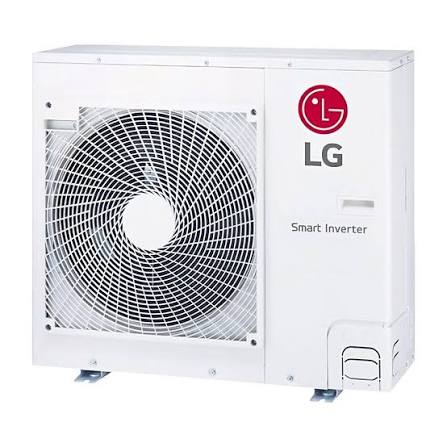
Description LG MU5R40
The MU5R40: the most powerful multi in the range
The MU5R40 is the outdoor unit of an LG R32 multi-split system rated at 11.2 kW cooling and 12.5 kW heating for five indoor units. The casing is 950 mm wide, 834 mm high and 330 mm deep, the supply is single-phase 220-240 V, 50 Hz, the compressor is a Dual Inverter and the construction is metal with plastic parts. Manufacturer country and country of origin are Korea, with a 24-month warranty. Indoor units come from the multi range: the MA09R and MA12R wall units (items 1866-1867), the MJ05PC to MJ24PC (items 1868-1874), the MT09R and MT11R cassettes (items 1875-1876). This is the top model of the domestic multi line: 11.2 kW from one phase is a serious load, and preparing the building matters here as much as the equipment itself.
When 11.2 kW is genuinely needed
The difference between the MU5R30 and the MU5R40 is 2.4 kW - another full air conditioner for a large room. The larger model is needed when the rooms are large: a fifty-square-metre open living room, several bedrooms of twenty to twenty-five metres, a study with panoramic glazing. The second situation is a house where the air conditioners run all day because somebody is always home, so the overlap in the sum of ratings has nowhere to hide. The third is commercial premises: a salon, a studio, a medical centre with several consulting rooms, where both people and equipment add heat throughout the working day. If five medium rooms are used in turn, however, the MU5R30 (item 1858) will run more economically, because a large compressor will not have to sit permanently at the bottom of its range.
When two systems beat one
At this size a multi approaches its natural limit, and the alternative deserves an honest look: two smaller systems instead of one large one. Two outdoor units cost more, take more space and need two supply circuits, but they give two independent machines, different modes for different parts of the house and a far less dramatic failure. Splitting is particularly attractive where the house has two storeys or two functional parts - living and office, say, or a main house and a guest wing. The second argument for splitting is pipe length: five lines from one unit in a large house quickly approach the limit on total length, while two units stand nearer their own rooms. We cost both options and show the difference in equipment terms, so the choice is made from figures rather than intuition.
The electrical supply: the key question before buying
11.2 kW of cooling from a single-phase supply is a load to check before ordering, not after. The first thing to establish is how much power the property is contracted for and how much of it is already taken by the water heater, the hob, the pump and underfloor heating. The second is the condition of the incoming supply: an old aluminium cable sized for lighting will not carry this, and that is a matter for an electrician rather than an air conditioning installer. The third is a dedicated circuit with a breaker and cable sized by calculation, allowing for the distance from the board. The fourth is surge protection: inverter electronics are the most sensitive part, and in areas with overhead lines spikes are routine. With a three-phase supply the system goes on the least loaded phase and the balance is checked - at this load an imbalance is noticeable.
A large outdoor unit on the plot: noise and distances
A unit of this output moves a lot of air, so its position is chosen with the neighbours in mind. The basic rule is simple: the discharge is not aimed at windows - not your own bedrooms, not the neighbouring house, not the terrace where you sit. The distance to the boundary is worth keeping generous: regulations may formally permit a close position, but in practice disputes start precisely with a unit against the fence. Resilient mounts and decoupled pipework damp the low-frequency hum that travels through the structure and irritates most. If an acoustic screen is wanted, it is built with gaps rather than as a solid wall: an enclosed unit loses capacity and trips on protection exactly during a heatwave. The cheapest way to avoid the problem is to pick a position on the service side of the house at design stage, when it costs nothing.
Heating a large house: where the limit lies
12.5 kW of heating sounds as though the multi could heat the house, and in the shoulder seasons it does so efficiently. But an air-source heat pump loses output as the outdoor temperature falls, so at minus fifteen in January the nameplate figures should not be relied on. The second limitation is the shared mode for all units: in cold weather you cannot heat the bedrooms while cooling a room with server equipment or the kitchen. The third is distribution: indoor units heat the air locally and do not give the even warmth of a water circuit with radiators or underfloor heating. If the goal is primary heating, the right choice is a Therma V heat pump (items 1877-1887) with a water circuit, leaving the multi for summer and the shoulder seasons.
Combinations with large indoor units
This model's capacity allows large indoor units: the MJ18PC (item 1873) at 18,000 BTU and the MJ24PC (item 1874) at 24,000. A typical arrangement for a large house is a 24,000 unit in the open living room plus four smaller ones in bedrooms and a study. Bear in mind that a large wall unit has dimensions to match and a noticeable airflow, so its position is planned so the air does not blow across the seating area. For rooms with a suspended ceiling the alternative is an MT11R cassette (item 1876), which distributes air on four sides and looks less intrusive, but needs a decorative panel and a service void above the ceiling. The permitted combinations for the MU5R40 are checked against the manufacturer's table before the order, because it is on the larger models that a set of indoor units most often exceeds what is allowed.
Accepting the work: the client's checklist
A system of this size is a serious investment, so the work is worth accepting against a list rather than on trust. Ask to see: the commissioning record with pressures, current and temperatures; the nitrogen pressure test record with the hold time; the top-up charge calculated from the actual length of each line; the pipe route drawing with lengths and diameters. Test all five units one at a time and then together - it is the simultaneous mode that shows whether the capacity was chosen correctly. Look at the drains: water should run steadily without collecting in the tray, and the discharge points must not drip onto the facade or next door. Make sure the warranty documents were handed over and that the installers left the manuals for every unit and handset. Such an inspection takes under an hour and catches ninety per cent of the problems that otherwise emerge in the first heatwave.
Send us the areas of all the rooms, the contracted electrical capacity and how the house is used, and we will calculate whether 11.2 kW is needed and compare one system against two smaller ones. We will also suggest a position for the outdoor unit that accounts for noise, neighbours and service access.
Characteristics LG MU5R40
Reviews about LG MU5R40 from real users
No reviews found







