
 m. Сміла, Незалежності, 67г. оф, 406/6
























LG A12GA1 (12,000 BTU, 3.7 kW) - ARTCOOL Gallery Special wall-mounted inverter air conditioner

Description LG A12GA1
Gallery Special in the 12 000 BTU size: same square, different circuit
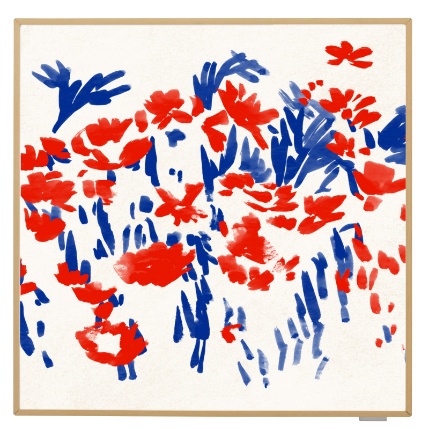
The A12GA1 carries the same 652 by 652 mm gallery panel at a depth of 158 mm as the smaller A09GA1, but a more powerful refrigeration circuit sits behind it. The indoor unit still weighs 16.7 kg, while the outdoor unit has grown to 30 kg at 770 by 545 by 288 mm: a larger compressor and a denser heat exchanger account for those four kilograms. The front frame comes off without tools, so the picture inside it can change together with the interior while the machine itself is never opened. Three-way perimeter airflow pays off in a bigger room: the stream spreads like a fan instead of hitting one spot on the floor. For the wall it means the same requirement as with the smaller model - a 16.7 kg square unit asks for solid masonry or a properly reinforced partition.
3.7 kW of cooling and 4.0 kW of heating: rooms up to 35 m²
A 12 000 BTU machine delivers 3.7 kW of cooling and 4.0 kW of heating, and the catalogue card quotes a served area of up to 35 m². That figure is realistic for a living room in a flat with one external corner, ordinary windows and ceilings up to 2.7 m, with headroom for two or three people and a television. In an open studio where kitchen and living room share one space, heat from the hob and the fridge eats part of that margin, and the same unit confidently covers something closer to 28-30 m². Spare capacity works in your favour with inverter equipment: in a 25 m² room the 12 000 BTU unit reaches the set point sooner and then settles at low output, where it is quieter and more frugal than a 9 000 BTU unit running flat out. There is a sensible limit to oversizing, though: put this unit in a 12 m² bedroom and it will work in short bursts, and the sense of an even temperature disappears.
What a 12 000 BTU unit asks of the electrics
The machine runs from a single-phase 220-240 V, 50 Hz supply and draws around a kilowatt of electrical power at full cooling - that is where the ratio of 3.7 kW of cooling per kilowatt consumed comes from. The usual engineering answer for a machine like this is a dedicated circuit in 2.5 mm² copper with its own breaker, rather than a plug shared with the washing machine. An inverter start has none of the current surge typical of older machines with direct compressor starting, so lights no longer flicker when the unit kicks in. In a house with unstable mains it is worth adding a protection relay: an inverter board is more sensitive to sags and surges than simple electromechanics. And if the supply often fails in winter, it helps to know that the unit returns to the mode it was in once power comes back, which can be used deliberately to restart heating.
Quiet running at part load and the A++ class
The rated 20 dB(A) of the indoor unit belongs to the lowest of six fan speeds, which is the mode the machine spends most of its time in once the room is at temperature. The outdoor unit is rated at 48 dB(A), and that matters less to you than to the neighbours: under a bedroom window in a narrow courtyard such a unit is audible, so it is better moved along the facade or screened in a way that does not block airflow. The A++ cooling and A+ heating classes come from the seasonal method, which measures exactly these part-load conditions, and in practice they mean markedly lower consumption than older class A machines. Besides the fan, an ionizer and a dry mode take part in handling the air: the first works against odours, the second removes humidity without chilling the room into discomfort. Dry mode earns its place in the shoulder seasons, when it is +12 and damp outside and the room needs drying without full cooling.
Installation: where to put the outdoor unit
The pipe run is the same as on the smaller model: a 1/4 inch liquid line, a 3/8 inch gas line, up to 15 m in length and up to 10 m of height difference. A 30 kg outdoor unit needs brackets with a margin and free space around it: at least 10-15 cm behind it, an unobstructed discharge in front of the grille and access to the service ports from the side. The unit should not go into a closed light well or a grilled recess with no through-flow: heated air returns to the inlet and the machine loses capacity precisely on the hottest days. Under a canopy or with a small roof above it the unit survives winter more calmly, because snow from the roof does not pack the heat exchanger and defrost water does not build an ice cushion under it. Vibration mounts under the feet are a cheap part that stops structure-borne hum in a flat, and they belong there from day one rather than after the first complaint.
Which jobs it fits and where it is out of place
The A12GA1 belongs in a living room, a large bedroom, a study or a small meeting room of 25-35 m² where the air conditioner has to be part of the interior rather than a technical detail on the wall. A gallery panel sits comfortably in a minimalist room, where any oblong indoor unit looks like a foreign object. Where it is out of place: a small bedroom up to 15 m² is better served by the 9 000 BTU A09GA1 (item 1794), and rooms with ceilings from 3.5 m or open two-storey volumes need a different way of distributing air altogether. For a shop or an office with constant footfall a semi-industrial series is the safer answer - a CL12R cassette (item 1825) or a CT12R ducted unit (item 1835), which spread air evenly across the space. Nor is this a machine to heat a home through winter: that is the job of a Therma V heat pump such as the HU121MA.U33RU (item 1880).
How it differs from neighbouring models in this catalogue
The A09GA1 (item 1794) is the smaller 9 000 BTU unit of the same line: 2.6 kW of cooling, rooms up to 25 m² and a 26 kg outdoor unit; the choice between them comes down to room size alone. The A12GA2 (item 1797) is the Gallery Premium version of the same 12 000 BTU machine, where a 27-inch LCD screen with speakers replaces the photo frame, so the panel can show anything at all but adds electronics the Special does not have. The AC12BK (item 1799) is an ARTCOOL Mirror at 3.5 kW of cooling with a mirrored panel and UVnano ultraviolet treatment of the fan: different aesthetics and an emphasis on hygiene. The H12S1D (item 1801) is DUALCOOL Deluxe, rated A+++ in cooling, in a conventional wall casing and with the best efficiency at this capacity. The WZ12AWN (item 1805) is the practical option without design ambitions: 2.75 kW of heating, a lighter 9.2 kg indoor unit and a smaller 21 kg outdoor unit.
What to check before ordering
Three things are worth checking before you order: whether the wall will carry a 16.7 kg square unit, whether the facade has a spot for the outdoor unit with free airflow, and whether the pipe run reaches that spot within 15 m. The second question is mounting height: a gallery panel looks right at picture level, but technically it has to sit high enough that the airflow does not blow onto the head of anyone sitting nearby. The third is the sequence of the renovation: pipe run, condensate line and power circuit are laid before plastering, otherwise the services end up in a trunking on the wall. If a stretch ceiling is planned in the room, the pipe outlet has to be agreed with the ceiling installers in advance. And one practical detail: the frame panel takes a print made to size, so it is worth learning the frame opening dimensions before choosing the photograph.
Send us the room area, the ceiling height and a photo of the wall where the unit would go, and we will tell you whether 12 000 BTU is the right size and what has to be prepared for the installation.
Characteristics LG A12GA1
Reviews about LG A12GA1 from real users
No reviews found







