Makita: two tools in one — drilling and fastening
What a drill-driver is
A drill-driver is a versatile tool that combines drilling and fastening in a single housing, thanks to a quick-clamp chuck and an electronic torque regulator. Unlike a plain drill, it lets you dial in exactly how much force goes into driving a screw, so you don't strip a screw head or crush drywall, and unlike a dedicated screwdriver, it carries enough power and speed reserve to drill into wood, metal or light concrete without switching tools.
The Makita line-up in this category
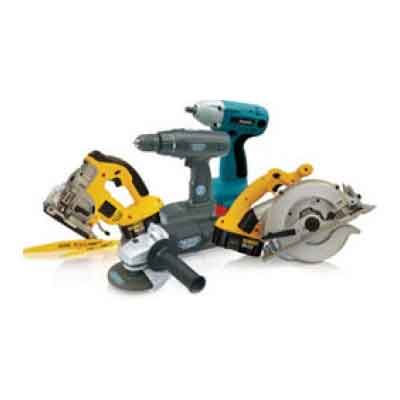
Makita's line-up in this category covers three models for different scenarios. The corded DP4700, at 510 W and up to 550 rpm, suits a stationary workshop or production setting where mobility isn't the priority — a battery tool under comparable load would need recharging several times per shift. The cordless DDF486Z on the 18V LXT platform delivers up to 2100 rpm on its second speed and fits any fit-out work with no cable to manage. The impact version DHP486Z adds a hammer mode for drilling into brick and concrete — effectively two tools in one housing: a standard driver for wood and metal, and a light rotary hammer for masonry.
Both cordless models run on the brushless motor Makita designed specifically for the LXT platform: no carbon brushes means the motor doesn't lose power as the assembly wears, and electronic speed control extends battery life through more precise current distribution under load. The 13 mm keyless chuck lets you swap bits and drills without a wrench, and a torque clutch with 21-plus settings makes it possible to work brittle materials — from thin sheet metal to furniture board — without marring the surface or stripping a thread.
Technology: brushless motor, chuck, torque control
The practical difference between the DDF486Z and DHP486Z shows up on the job: if the main work is drywall installation, furniture assembly or wiring in timber framing, the non-impact DDF486Z is more than enough, and it's lighter and more compact for extended one-handed use. If you also need to drill anchor holes into brick or concrete alongside fastening, the impact DHP486Z saves you from carrying two separate tools. Buying the most expensive model "just in case," without checking the actual materials on site, is a common mistake that pays for capability that never gets used.
Housing ergonomics is another factor that's often underrated when choosing a drill-driver. Makita shapes grips with rubber inserts at contact points to cut vibration transmitted to the wrist during extended use, and a forward-shifted center of gravity in cordless models reduces wrist strain when working overhead or in awkward positions — something electricians and installers holding a tool for hours notice directly. A built-in LED work light above the chuck solves the practical problem of working in recesses, under ceilings or in dark corners where fixed lighting isn't available.
Ergonomics, service life, and how to choose
The service life of a cordless drill-driver depends directly on matching the work mode to the material: running maximum torque where medium would do accelerates gearbox wear and shortens runtime per charge. The electronic motor-protection system in both the DDF486Z and DHP486Z automatically limits load when a bit binds, preventing winding overheating while also protecting the operator's wrist from a sudden kickback — a detail that in practice saves not just the tool but the person using it.
A Makita drill-driver on the LXT platform plugs straight into the brand's ecosystem: the same battery runs other tools in the range — an angle grinder, a rotary hammer, a screwdriver — so you can grow your tool set gradually, buying just the bare tool without a new battery and charger every time.
Compare power, power source, speed range and impact capability across the models in the catalogue below, and pick the Makita drill-driver that handles your daily work on the first try, with no compromise between weight, runtime and capability.

 m. Сміла, Незалежності, 67г. оф, 406/6