TaleSun: a full production cycle since 2010
The TaleSun brand: 4 GW of cells, 5 GW of modules a year
TaleSun Solar is a solar panel manufacturer founded in 2010 as a subsidiary of the industrial group Jiangsu Zhongli Group, with total manufacturing investment of around 5 billion RMB. The company is based in Suzhou and operates fully automated production lines with an annual capacity of around 4 GW for cells and 5 GW for finished modules — a scale that allows quality control at every production stage, from silicon wafer to finished panel.
The TM3G66M (620 W) and TM7G72M (585-605 W) lines
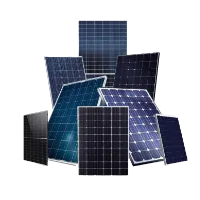
In the "Monocrystalline" category, TaleSun is represented by six models across two lines: the more compact TM3G66M (620 W, a single model on 66 cells) and the TM7G72M line (585-605 W, five models in 5 W steps on 72 cells). The difference in cell count (66 versus 72) directly affects the module's physical dimensions and rated power for the same manufacturing technology.
Monocrystalline silicon, underlying both lines, is grown as a single continuous crystal using the Czochralski method, unlike polycrystalline silicon, which uses many small crystals. That provides higher electron mobility and higher solar-to-electricity conversion efficiency at the same panel area — a spec critically important for projects with limited mounting area.
Vertical integration and monocrystalline advantages
TaleSun's full control over the production cycle — from manufacturing silicon cells to assembling finished modules at a single site in Suzhou — reduces the risk of quality variance between batches, typical for manufacturers that source cells from third-party suppliers. Vertical integration at this level isn't available to every player in the industry and requires substantial capital investment, which TaleSun already committed at the company's founding with an initial budget of around 5 billion RMB.
The TM3G66M at 620 W is the more compact of the two lines, suiting projects with limited mounting area, where every watt of power per square meter of roof matters — private homes with non-standard or small roof area, for instance. The TM7G72M line, with more cells and higher power, suits commercial and industrial projects with enough space for larger modules better, where minimizing cost per watt of installed capacity is the priority.
Temperature coefficient, availability and how to choose
Warranty terms for TaleSun panels, like most Tier 1 manufacturers, include separate periods for the performance warranty (linear power degradation over 25-30 years) and for materials and workmanship, with a shorter period covering possible manufacturing defects. It's the performance warranty that determines a project's real investment payback period, not the marketing figure of overall service life often cited without detailing year-by-year power decline terms.
The power temperature coefficient is a spec worth comparing between models separately from rated wattage: it shows how much output drops as the panel heats up in hot weather. For regions with long, hot summers, that figure often carries more practical weight for annual output than power measured under standard lab conditions at 25°C.
For projects where matching one model line matters for array uniformity, it's worth confirming actual stock availability with the supplier in advance: even manufacturers with a full production cycle periodically adjust their model line-up to current demand, and not every model stays available for order year after year.
It's also worth checking a specific model's certification portfolio — IEC standards, fire rating, and independent lab test reports — rather than relying solely on the manufacturer's own marketing claims about durability.
Compare line (TM3G66M or TM7G72M), power, temperature coefficient and cell count across the TaleSun models in the catalogue below, and pick monocrystalline panels from a manufacturer with a full production cycle that allows quality control at every manufacturing stage, from silicon wafer to finished module.

 m. Сміла, Незалежності, 67г. оф, 406/6