LONGi: high-power bifacial modules at 595-625 W
The LR8-66HGD series: LONGi for commercial and industrial projects
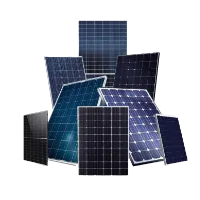
LONGi's solar panels and photovoltaic modules in this catalogue category are represented by the LR8-66HGD series — bifacial monocrystalline modules from 595 to 625 W, with 66 cells and dual-glass construction. LONGi Green Energy, the world's largest manufacturer of monocrystalline silicon wafers, controls the production chain from raw material to finished panel, a rare arrangement among competitors who mostly source wafers on the open market.
High per-unit power and precise sizing
These aren't residential panels for private home roofs but higher-power modules aimed at commercial rooftops, ground-mount stations and industrial sites. A high per-unit panel power — 595-625 W instead of the typical 400-450 W for the residential segment — means fewer modules in an array for the same total power, and therefore fewer connections, fewer mounting points, and faster installation on a large project.
Choosing a power rating within the series' 5 W step lets you precisely size an array configuration to a system's calculated power requirement, leaving no unused reserve or power shortfall. For a commercial project with limited roof or plot area, precise power-per-area sizing has a direct impact on the investment's overall economics.
Dual glass, HPBC and HJT technology
The dual-glass construction of the LR8-66HGD series delivers not just a bifacial output gain from reflected light but also greater mechanical strength and moisture resistance compared to the classic glass-and-film construction. For sites with elevated humidity or an aggressive environment, this design feature directly affects real-world panel service life, not just spec-sheet figures.
LONGi is developing two promising cell technology directions at once — HPBC (contacts on the back of the wafer) and HJT (crystalline-amorphous silicon heterojunction) — both aimed at pushing conversion efficiency further beyond what classic PERC or even TOPCon technology can achieve. Running several parallel development tracks lowers the risk of the company falling behind competitors whenever the industry's dominant technology shifts again.
Warranty, installation, aesthetics and how to choose
Warranty terms are worth checking separately for manufacturing defects (typically 12-15 years) and linear power degradation (typically 25-30 years, guaranteeing at least 80-84% of initial power at the end of the term) — the details of these terms often matter more for a project's long-term economics than the headline service life figure quoted in marketing materials.
LONGi's control over its own wafer production is a practical advantage for supply stability: the company is less exposed to raw material shortages or price swings on the global silicon market, a real reliability factor for a buyer planning a large project with a long equipment procurement cycle.
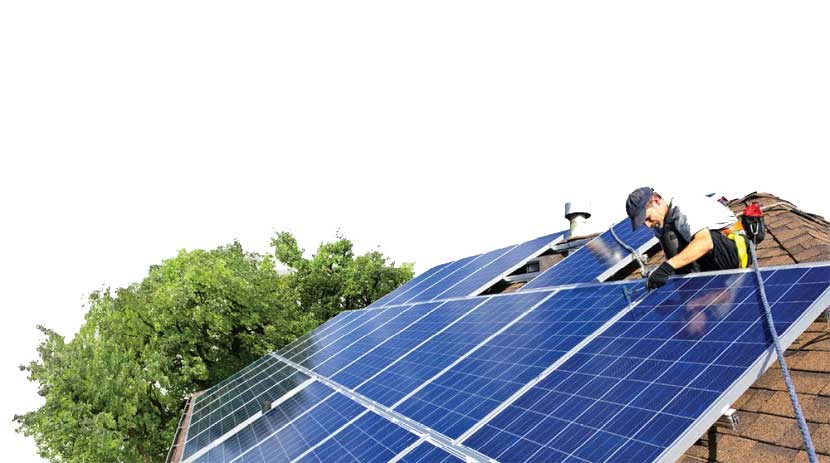
Transporting and installing the large-format LR8-66HGD panels calls for proper logistics planning: a larger module area and weight mean different requirements for on-site lifting equipment and crew size compared to more compact residential panels. That's worth factoring into a project's cost estimate at the design stage, not after equipment arrives.
For sites where appearance matters alongside power — commercial buildings with roofing visible from the street, for instance — the uniform dark front surface of HPBC-technology panels can be an additional argument in favor of LONGi compared to classic-construction panels with visible metal contact traces on the front surface.
It's also worth confirming real stock availability for a chosen wattage tier before finalizing a project's design, since substituting an adjacent model mid-procurement can force a rework of an array's mounting layout.
Compare power, warranty terms, construction features and logistical requirements across the LONGi models in the catalogue below, and pick photovoltaic modules that precisely match the scale of your commercial or industrial project.

 m. Сміла, Незалежності, 67г. оф, 406/6