m. Сміла, Незалежності, 67г. оф, 406/6








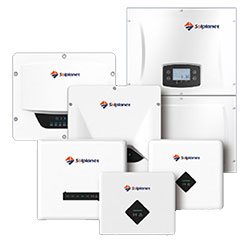







GoodWe GW250K-HT - three-phase grid-tied inverter 250 kW.


Description GoodWe GW250K-HT
GoodWe GW250K-HT is a utility-scale three-phase grid-tied inverter rated at 250 kW, the most powerful model in the HT range. Twelve MPPT inputs of two strings each (twenty-four strings total), DC voltage up to 1500 V, output 800 V without neutral. Efficiency 99.0%, operation from -30 °C up to 5000 m. IP66, 5-year warranty.
250 kilowatts: the top of the utility class
This is the most powerful single-enclosure model in the HT range. The same 1091 × 678 × 341 millimetre enclosure and 111-kilogram mass as the smaller 225-kilowatt model — the manufacturer scales power within one platform without changing the form factor.
For a utility-scale solar plant, the difference between 225 and 250 kilowatts per unit means dozens of additional inverters across a project of several megawatts. Choosing this specific model directly affects the total number of power cabinets, cable runs and service points.
DC voltage up to 1500 volts and an 800-volt output without neutral mean connection through a transformer substation — the standard architecture for sites of this scale.
Technical specifications
rated power 250 kW, three phase, output 800 V (3L/PE);
twelve MPPT inputs, two strings per input — twenty-four strings total;
MPP range 500–1500 V, maximum input voltage 1500 V;
efficiency 99.0% peak, 98.5% European weighted;
output current 180.4 A nominal, 180.5 A maximum;
smart fan cooling, operation from -30 to +60 °C;
IP66, maximum operating altitude 5000 m;
mass 111 kg, 5-year warranty.
Minimal current headroom: why that is normal
Nominal and maximum output currents here are nearly identical — 180.4 and 180.5 amperes. For a utility inverter this is not a shortcoming but a deliberate design: the unit is built for stable, continuous operation exactly at the declared level, with no allowance for short-term excursions typical of domestic or commercial systems with motors and compressors.
At solar-plant scale there are no equipment starting surges — the load is the grid itself, and the power delivery profile is predictable and smooth.
Fewer units for the same project
Choosing the most powerful model in the range instead of several smaller ones can reduce the total number of inverters in a station for the same combined megawatt figure. That means fewer connection points to the transformer substation, fewer cable runs and simpler servicing.
At the same time it means less redundancy — the failure of one 250-kilowatt inverter is a bigger capacity loss than the failure of one 100-kilowatt unit. This is a trade-off worth calculating at the station design stage, not after the fact.
Monitoring and parallel operation
The standard SEMS Portal app shows generation from each of the twenty-four strings separately; Modbus TCP and RTU are available for integration with power-plant dispatch systems.
Units connect in parallel to form megawatt-scale and larger stations with centralised monitoring of the entire inverter array.
250 kilowatts is the top of the HT range for the largest solar power plants. Write to us about your project's combined capacity: we will calculate the optimal number of units and the substation connection scheme.
Characteristics GoodWe GW250K-HT
Reviews about GoodWe GW250K-HT from real users
No reviews found