m. Сміла, Незалежності, 67г. оф, 406/6










GoodWe GW80K-ET-G10 - three-phase hybrid inverter 80 kW.


Description GoodWe GW80K-ET-G10
GoodWe GW80K-ET-G10 is a three-phase industrial hybrid inverter 80 kW with two MPPT inputs and a high-voltage LiFePO₄ battery 180–600 V. Efficiency 98.2%, rated output current 115.5 A per phase, three CAN channels, generator support. IP65, 5-year warranty.
Eighty kilowatts: the scale of large-scale production
At this level of generation, the device no longer serves a separate room, but an entire production site: a logistics complex, a large farm with several buildings, a medium-sized factory.
The key feature of this scale is that the generation already significantly exceeds the daily consumption of a typical facility, and some of the energy is either used to charge a large battery or sold to the grid. This moves the conversation from the category of "savings on bills" to the category of a full-fledged energy project with a separate business plan.
At this level, it is worth calculating in advance not only the production, but also the conditions for selling the surplus - tariff, quotas, requirements for metering equipment. This is a separate part of the project, which should be agreed upon before purchasing the equipment, not after.
Technical specifications
rated power 80 kW, full power 80,000 VA, three phases 380/400 V;
two MPPT inputs, tracking efficiency 99.9%;
MPP range 200–850 V, maximum input voltage 1000 V;
LiFePO₄ battery 180–600 V, nominal voltage 500 V;
communication with BMS: three CAN channels;
Efficiency 98.2% maximum, 97.8% European weighted;
output current 115.5 A nominal, 127 A maximum;
generator support, THD less than 3%;
IP65, passive cooling, up to 4000 m, -25 to +60 °C;
5 year warranty.
Parallel operation of several devices
For facilities of this scale, a typical configuration is not one inverter, but several connected in parallel. GoodWe assumes such operation as standard: the devices synchronize with each other and distribute the load automatically.
The advantage is obvious: if one inverter fails or goes for scheduled maintenance, the rest continue to work, and the facility does not lose generation completely. For production, where downtime costs money every hour, this is not a secondary detail, but part of risk management.
The second advantage of a parallel scheme is the gradual increase in capacity. You can start with two machines and add a third when production expands, without dismantling the already installed equipment.
Three CAN channels and battery park scale
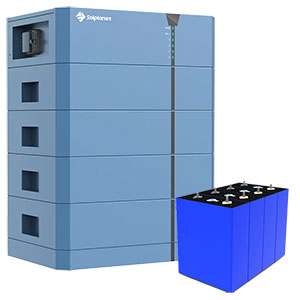
At the eighty kilowatt generation level, the battery system typically consists of multiple independent stacks housed in a dedicated room or container. Three CAN channels allow them to be controlled without losing any individual status information.
For an industrial facility, this means the ability to scale capacity gradually as production increases, and to take individual modules out of service without stopping the entire system.
Design for specific production
At this level of power, there are practically no ready-made solutions "out of the box" - each project begins with an analysis of the load schedule of a particular enterprise: when shifts are running, what are the peak processes, and what is the forecasted consumption.
That is why for facilities of this scale we always offer a separate engineer visit and detailed calculation, rather than a typical package. The cost of error at this level is too high to rely on approximate estimates.
Eighty kilowatts is the level of a full-fledged industrial energy project. Write us the production load profile and available connection capacity: we will prepare a detailed configuration calculation and options for parallel operation of inverters.
Characteristics GoodWe GW80K-ET-G10
Reviews about GoodWe GW80K-ET-G10 from real users
No reviews found