m. Сміла, Незалежності, 67г. оф, 406/6





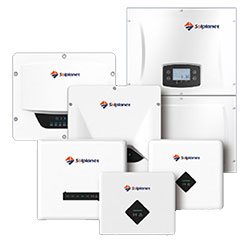






GoodWe GW20K-ET - three-phase hybrid inverter 20 kW.


Description GoodWe GW20K-ET
GoodWe GW20K-ET is a three-phase hybrid inverter rated at 20 kW with two MPPT inputs and a high-voltage LiFePO₄ battery at 180–600 V. Efficiency 98.2%, nominal output current 28.9 A per phase, three CAN channels, generator support. IP65, passive cooling, 5-year warranty.
Twenty kilowatts — commercial-site territory
At this rating the domestic scale ends for good. Twenty kilowatts is already the language of a small enterprise: a medium-sized shop, a car service centre, a small workshop, a greenhouse operation with supplementary lighting.
The common trait of such sites is not simply high total consumption but several independent load groups running at once. Refrigeration equipment, machine tools, compressors, lighting, ventilation — each switches on its own schedule, and peak moments overlap unpredictably.
Twenty kilowatts gives margin enough to withstand such overlap without tripping protection. For a business where stopped equipment costs money by the minute, that is not a luxury but insurance.
Technical specifications
rated power 20 kW, apparent power 20000 VA, three phases 380/400 V;
two MPPT inputs, tracking efficiency 99.9%;
MPP range 200–850 V, maximum input voltage 1000 V;
LiFePO₄ battery 180–600 V, nominal voltage 500 V;
BMS communication: three CAN channels;
efficiency 98.2% peak, 97.8% European weighted;
output current 28.9 A nominal, 31.8 A maximum;
generator support, THD below 3%;
IP65, passive cooling, up to 4000 m, -25 to +60 °C;
dimensions 415 × 516 × 180 mm, mass 24 kg, 5-year warranty.
A thousand volts at the input and long strings
A maximum input voltage of 1000 volts allows long series strings of panels to be formed — up to twenty modules or more in a chain, depending on their characteristics.
For a twenty-kilowatt site this is not a minor detail. An array of this size is often positioned a considerable distance from the technical room — on the far side of a large shed's roof, on a separate support structure.
A longer string means lower current for the same power. Lower current means thinner, cheaper cable, smaller heating losses, and lower installation cost per metre of run.
The practical takeaway for a project: before sizing cable cross-section out of habit, it is worth checking whether lengthening the strings and using the inverter's full voltage headroom would pay off better.
Three phases and load balance on a commercial site
Unlike a private house, where the distribution of circuits across phases can easily be revised at the design stage, a commercial premises often already has its switchboard, and rebuilding it is expensive.
It is therefore worth measuring the actual load on each phase separately, at various hours of the working day, before selecting the inverter. That gives a more accurate picture than the meter's total figure.
A three-phase hybrid distributes generation evenly by itself, but backup power in island mode depends on how evenly the phases in your switchboard are loaded. This is a point worth discussing with an electrician before installation, not after.
Expanding the battery in stages
Three independent CAN channels allow several battery stacks to be connected, each with its own management system. For a commercial site this means the option to start with the minimum capacity needed and grow it alongside the business.
This is especially valuable for sites with seasonal load — greenhouse operations, processing workshops, the hotel business — where the real backup requirement only becomes clear after the first full season.
Each assembly reports separately, so diagnosing and replacing a module in the event of a fault does not affect the rest of the system.
Twenty kilowatts is the level at which a business stops depending on grid quality. Send us your switchboard layout and equipment operating schedule: we will calculate the battery configuration and check the phase balance against your real load.
Characteristics GoodWe GW20K-ET
Reviews about GoodWe GW20K-ET from real users
No reviews found