m. Сміла, Незалежності, 67г. оф, 406/6





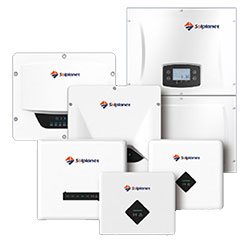





GoodWe GW100K-ET-G10 - three-phase hybrid inverter 100 kW.


Description GoodWe GW100K-ET-G10
GoodWe GW100K-ET-G10 is a three-phase industrial hybrid inverter rated at 100 kW, the top model in the ET series. Two MPPT inputs, LiFePO₄ battery 180–600 V, efficiency 98.2%, nominal output current 144.3 A per phase, three CAN channels, generator support. IP65, 5-year warranty.
A hundred kilowatts: one station replacing a whole fleet
This is the most powerful single-enclosure unit in the ET series, and at this level the conversation is no longer about saving on bills but about a facility's own generating capacity. A hundred kilowatts is an energy project with its own business case, payback period and, often, sale of surplus to the grid.
Typical buyers at this level are large logistics complexes with cold storage, processing plants, industrial-scale greenhouse operations, hotel complexes.
At this level every percentage point of efficiency turns into substantial money over a year. The difference between 97% and 98.2% for a station of this scale is no longer an abstract percentage but real thousands of kilowatt-hours annually.
Technical specifications
rated power 100 kW, apparent power 100000 VA, three phases 380/400 V;
two MPPT inputs, tracking efficiency 99.9%;
MPP range 200–850 V, maximum input voltage 1000 V;
LiFePO₄ battery 180–600 V, nominal voltage 500 V;
BMS communication: three CAN channels;
efficiency 98.2% peak, 97.8% European weighted;
output current 144.3 A nominal, 158.7 A maximum;
generator support, THD below 3%;
IP65, passive cooling, up to 4000 m, -25 to +60 °C;
5-year warranty.
Selling surplus as part of the project's economics
At the hundred-kilowatt level, generation on a sunny summer day almost certainly exceeds the site's own consumption, even accounting for charging a large battery. A project of this scale is therefore worth costing not only through the lens of 'how much will we save' but also 'how much will we sell'.
The terms of selling surplus — tariff, contract with the network operator, commercial metering requirements — form a separate block of questions that should be resolved alongside designing the station itself, not after it is commissioned.
We support this part of the process: from calculating the expected generation profile to preparing documents for the contract with the network company.
Redundancy through parallel operation
For a site of this scale, a generation stoppage due to one unit's fault is a real financial loss. The typical configuration at a hundred kilowatts and above is therefore not one inverter but several connected in parallel with automatic load distribution.
This delivers redundancy without excess spending: each unit is used at full capacity under normal operation, and if one fails, the rest cover most of the load while repair is under way.
A modular scheme also simplifies expansion: adding another inverter as production grows requires no stoppage or rework of the part of the system already running.
Turnkey design
At the hundred-kilowatt level no solution comes as a 'standard package'. Every project starts with a site survey: the real load schedule, available connection capacity, the roof or ground structure for panels, redundancy requirements.
Our team prepares a full technical calculation and accompanies the project from the first measurement to commissioning — this is the standard approach for sites of this scale, and the only way to avoid costly errors during implementation.
A hundred kilowatts is the level of a facility's own generating station. Write to us about your site and plans for selling surplus to the grid: we will prepare a full technical calculation and configuration options with redundancy.
Characteristics GoodWe GW100K-ET-G10
Reviews about GoodWe GW100K-ET-G10 from real users
No reviews found