
 m. Сміла, Незалежності, 67г. оф, 406/6























Deye SUN-12K-SG04LP3-EU (12 kW) - three-phase hybrid inverter


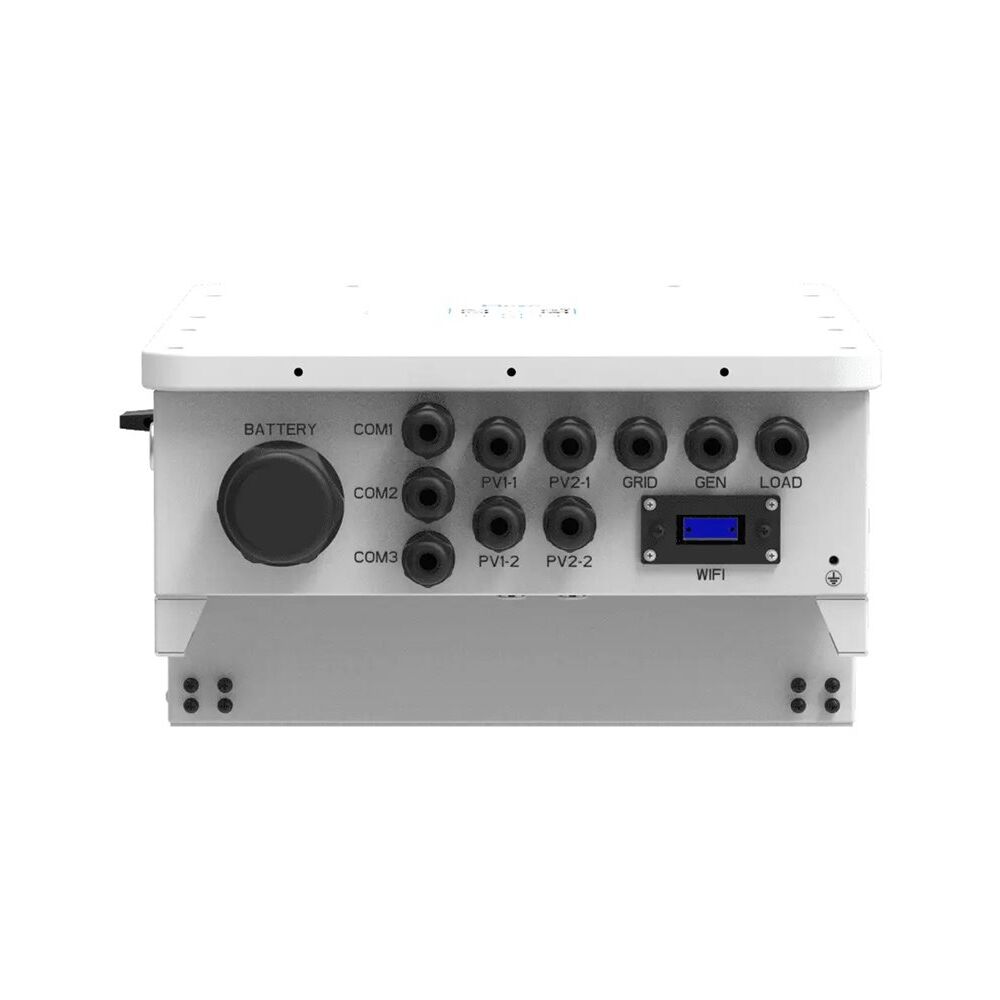


Description Deye SUN-12K-SG04LP3-EU
Who a 12 kW three-phase hybrid is for
The SUN-12K-SG04LP3-EU covers the most common case in residential energy work: the three-phase supply is already in place, daily consumption sits somewhere between 25 and 45 kWh, and outages have to be survived without drama and without an industrial budget. That profile fits a 150–250 m² house with a boiler and a borehole, a small garage workshop, a dental surgery, a shop with refrigerated display cases, or a workshop running two or three machines. Three phases matter here for more than headroom: the induction motors in pumps, compressors and woodworking gear are themselves three-phase, and feeding them from a single-phase hybrid through a converter leads to recurring trouble. Where the model does not belong is a flat or a weekend house on a single-phase supply — there is nowhere to connect a three-phase output, and the single-phase SUN-8K-SG01LP1-EU is the sensible answer. And if backup is not wanted at all and the only goal is exporting surplus, the storage side of a 12 kW hybrid will sit unused, so the grid-tie SUN-15K-G03 deserves a look instead.
PV input: two trackers with unequal capacity
The solar side is built on two independent MPPT trackers, but they are not twins: maximum operating input current is 25 A on the first and 12.5 A on the second, with the string layout given as 2+1. The design conclusion follows directly — hang the main array on tracker one as two strings and keep tracker two for a smaller extra group of panels on a different roof plane, because half the array will not fit it on current. An MPPT window of 200–650 V inside an 800 V ceiling, with a 160 V start voltage, means strings have to be long enough: a short chain of six or seven modules will not reach 200 V on an overcast morning and the tracker simply will not wake up. The official array limit is 15.6 kW at a 550 V nominal PV design voltage, roughly 130 % of the inverter rating, which is healthy oversizing for a cloudy climate. A caveat for whoever draws the layout: splitting panels evenly across both trackers, the habit formed on the SM2 row with its 36+36 A, does not work here, because this platform's topology is different.
The 48 V battery side: 240 A and where the real ceiling is
The storage channel is low-voltage in the classic sense: 48 V nominal, a 40–60 V working window, charge and discharge currents up to 240 A. At 51.2 V, 240 A works out to about 12.3 kW, so the inverter can genuinely deliver its full rating from storage without running into its own limiter. The bank sets the limit, as always: one 5.12 kWh SE-F5 sustains 120 A, so loading the full 12 kW needs two of them in parallel, while a single SE-F16 rated 230 A on discharge handles it alone. Lithium banks are supported alongside lead-acid AGM and GEL, which is rare in current hybrids and genuinely useful when retrofitting an older installation; the RS485 or CAN link to a BMS, however, works with lithium only, and lead-acid is charged by voltage alone, effectively blind. If storage will grow in stages, size the busbar and the protection for the final module count from the outset: at 48 V every extra kilowatt is tens of amps, and reworking the power side later costs more than building in the margin now.
When the grid goes down: 24 kW of surge and the transfer limit
Off grid the inverter holds 24 000 W for ten seconds, twice its continuous rating. That margin decides the fate of a borehole pump, a display-case compressor or a circular saw, because their inrush current runs three to five times the running figure, and most complaints about a weak inverter trace back to surge headroom rather than continuous power. The number people overlook is the other one: grid pass-through is capped at 26.1 A of input current, which is roughly 18 kW across all three phases together. On a site fed by a 3×32 A or 3×40 A service, part of the load has to stay outside the inverter, and backup should be planned for a dedicated group — boiler, pumps, refrigeration, lighting, network gear — not for the whole building. Rated output current of 17.4 A per phase against a 19.1 A maximum is one more reason to split the power groups at the design stage instead of routing everything through the inverter.
Efficiency, waveform quality, cooling and noise
Peak efficiency of 97.6 % and a European figure of 97 % are laboratory values, and across a real day the outcome sits closer to the second, because the unit spends most hours part-loaded. A different number deserves equal attention: MPPT efficiency of 99.9 % yields more real kilowatt-hours in broken cloud than half a percentage point of peak efficiency ever will. Harmonic distortion stays below 3 %, and under linear load below 1.5 %, which means computer power supplies and waveform-sensitive laboratory or medical equipment run off this output without complaint. Cooling is forced, yet typical noise is declared below 30 dB — genuinely quiet for a 12 kW machine, quieter than a domestic fridge, so the unit can even go in the corridor of a utility floor. The -25 to +60 °C range covers a hard winter, but remember the 48 V battery standing next to it does not share that tolerance: lithium will not accept charge below zero, so a heated room for the storage is not optional.
Mounting, protection and monitoring
An IP65 enclosure measuring 422×658×281 mm and weighing 36.8 kg means wall mounting, done by two people onto structural masonry; plasterboard or timber cladding is not a place for this assembly. IP65 formally permits outdoor siting, but practice says otherwise: direct summer sun on the casing raises internal temperature and provokes power reduction exactly at the midday generation peak, so a canopy or a plant room pays for itself. Communication with the battery BMS runs over RS485 or CAN, and for a lithium bank that link is mandatory — without it the inverter sees neither true state of charge nor cell temperature. Remote supervision needs a separate data logger; where reliable Wi-Fi is absent, plan a wired path from the start, because the only way you see what the system actually yields is through monitoring. The output is three-phase L/N/PE, and connecting to the grid makes a phase-sequence check compulsory: wrong phase rotation is the single most common reason a new hybrid refuses to synchronise.
How it differs from neighbouring models here
Its closest relative is the SUN-10K-SG04LP3-EU: the same platform and the same wiring logic, differing by 2 kW of rating, 210 A instead of 240 A on the battery and 13 kW instead of 15.6 kW of array. Where site peak demand stays under 8 kW the smaller unit covers it confidently, and the difference goes into panels or one more battery module, which is where it does more good. The SM2 row is a different proposition: the SUN-14K-SG05LP3-EU-SM2 and SUN-15K-SG05LP3-EU-SM2 offer 36+36 A on the trackers, 70 A of pass-through and markedly higher battery currents, making them the choice for a large service connection and an array above 20 kW, paid for with 51.9 kg of mass and up to 60 dB of noise against 30 dB here. The high-voltage SUN-12K-SG01HP3-EU-AM2 carries the same 12 kW rating but works with a 160–700 V battery: thinner cables and six kilograms less weight, in exchange for high-voltage modules with a separate control unit, and it will not connect to an ordinary 48 V bank at all. And if no battery is planned, the grid-tie SUN-15K-G03 exports exactly the same energy but shuts down with the grid, leaving no backup by definition.
Send us a list of your loads and the backup time you have in mind, and we will work out whether 12 kW is the right size for your site and match the battery and array to it.
Characteristics Deye SUN-12K-SG04LP3-EU
Reviews about Deye SUN-12K-SG04LP3-EU from real users
No reviews found







