m. Сміла, Незалежності, 67г. оф, 406/6





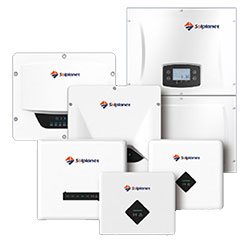






GoodWe GW3K-DNS-G40 - single-phase grid-tied inverter 3 kW.


Description GoodWe GW3K-DNS-G40
GoodWe GW3K-DNS-G40 is a single-phase grid-tied inverter rated at 3 kW with two MPPT inputs, built-in Wi-Fi and Ethernet. Efficiency 98.0%, MPP operating range from 40 to 560 V, start-up voltage 80 V. IP65 protection, passive cooling, mass 12.8 kg, 5-year warranty.
Three kilowatts: when less means smarter
The temptation to buy an inverter with headroom is familiar to everyone costing a solar installation for the first time. Yet surplus capacity adds no generation — it adds only cost and, paradoxically, reduces efficiency.
The reason is that an inverter performs best when loaded between thirty and eighty per cent of its rating. A five-kilowatt unit connected to three kilowatts of panels spends most of the day in the low-load zone, where efficiency sits noticeably below the datasheet figure.
Three kilowatts means seven or eight modern panels and roughly 3,200–3,600 kilowatt-hours a year in Ukrainian conditions. For a flat with gas heating, a small house or an office, that volume covers the bulk of daytime consumption.
An MPP range starting at 40 volts
A lower operating limit of 40 volts is a specification usually passed over, yet it directly affects how much energy is harvested.
Morning and evening hours, heavy cloud, a winter day of diffuse light — in all these regimes the array delivers low voltage. An inverter with a high lower limit simply does not work in such periods. GoodWe keeps converting where competitors have already stopped.
A start-up voltage of 80 volts means an early switch-on in the morning. Combined with operation into late evening, this adds between forty minutes and an hour and a half to the installation's working day depending on season — and those minutes accumulate into kilowatt-hours across the year.
Technical specifications
rated power 3 kW, apparent power 3000 VA;
two independent MPPT inputs, tracking efficiency above 99%;
MPP voltage range 40–560 V, maximum input voltage 600 V;
start-up voltage 80 V, input current up to 16 A;
peak efficiency 98.0%, European weighted 97.3%;
nominal output current 13 A, maximum 14.3 A;
AC voltage range 180–276 V, THD below 3%;
integrated DC switch, type II surge protection;
IP65, passive cooling, noise below 25 dB, night consumption below 1 W;
dimensions 350 × 410 × 143 mm, mass 12.8 kg.
Protection usually bought separately
An integrated DC switch is not an extra option but an element required by regulation. On many budget models it has to be installed separately, and that means the cost of the device, an additional box on the wall, and two more connections that oxidise over time.
Type II surge protection is fitted on both sides — DC and AC alike. For a private house with an overhead line and panels on the roof this is a serious argument: thunderstorm activity occurs every summer, and the varistors inside the unit take the hit.
Add earth-fault monitoring, an all-pole residual current monitoring unit and reverse polarity protection at the input. The last of these saves you from the commonest installation error — swapped MC4 poles.
Wi-Fi, LAN and your own automation
The unit has both a wireless module and wired Ethernet. This matters more than it seems: Wi-Fi often reaches a plant room or garage poorly, and a dropped link means gaps in the generation statistics.
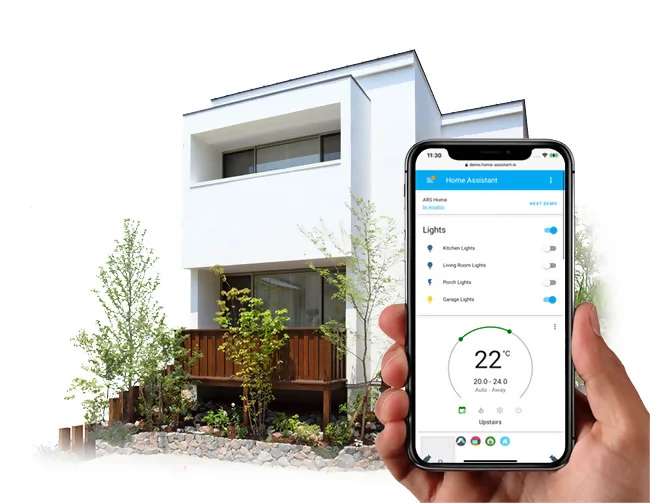
Standard monitoring is the SEMS Portal with its mobile app. Beyond that, Modbus TCP and RTU are available along with ready integration with Home Assistant, so the inverter slots easily into a home automation system of your own.
The practical benefit is concrete: knowing current generation, the automation can start a water heater or washing machine precisely when the sun covers their draw, rather than on a timer. For a grid-tied installation without a battery, this is the principal way to raise the share of self-consumption.
Operating conditions
An operating range of -25 to +60 °C and climatic category 4K4H permit outdoor mounting in our climate without reservation. IP65 withstands rain and snow; humidity is permissible up to one hundred per cent without condensation.
Passive cooling at three kilowatts works flawlessly — there are no fans, and noise below 25 decibels is practically imperceptible. The unit can hang in a hallway or on a wall beside a living room.
A maximum operating altitude of 4,000 metres is superfluous for most sites, but it indirectly indicates thermal headroom: cooling is poorer in thin air, and the manufacturer allowed for that.
Three kilowatts of grid-tied generation is the fastest way to cut an electricity bill without complications and without batteries. Send us your average monthly bill and a photo of the roof: we will work out how many panels fit and show the real payback period without embellishment.
Characteristics GoodWe GW3K-DNS-G40
Reviews about GoodWe GW3K-DNS-G40 from real users
No reviews found