
 m. Сміла, Незалежності, 67г. оф, 406/6























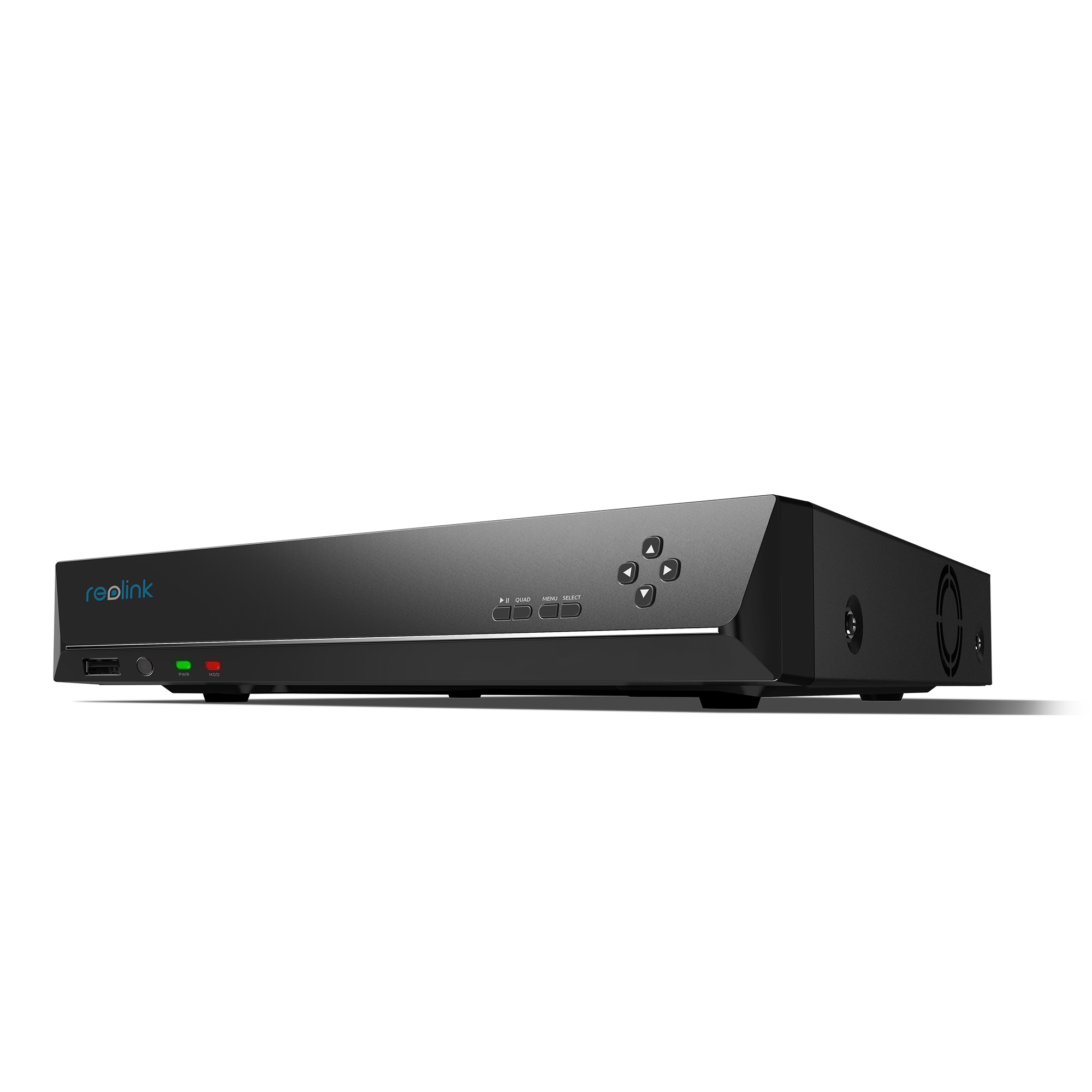
REOLINK RLN16-410 NO HDD (16 PoE, 2 BAYS) - IP VIDEO RECORDER




Description Reolink RLN16-410 no HDD
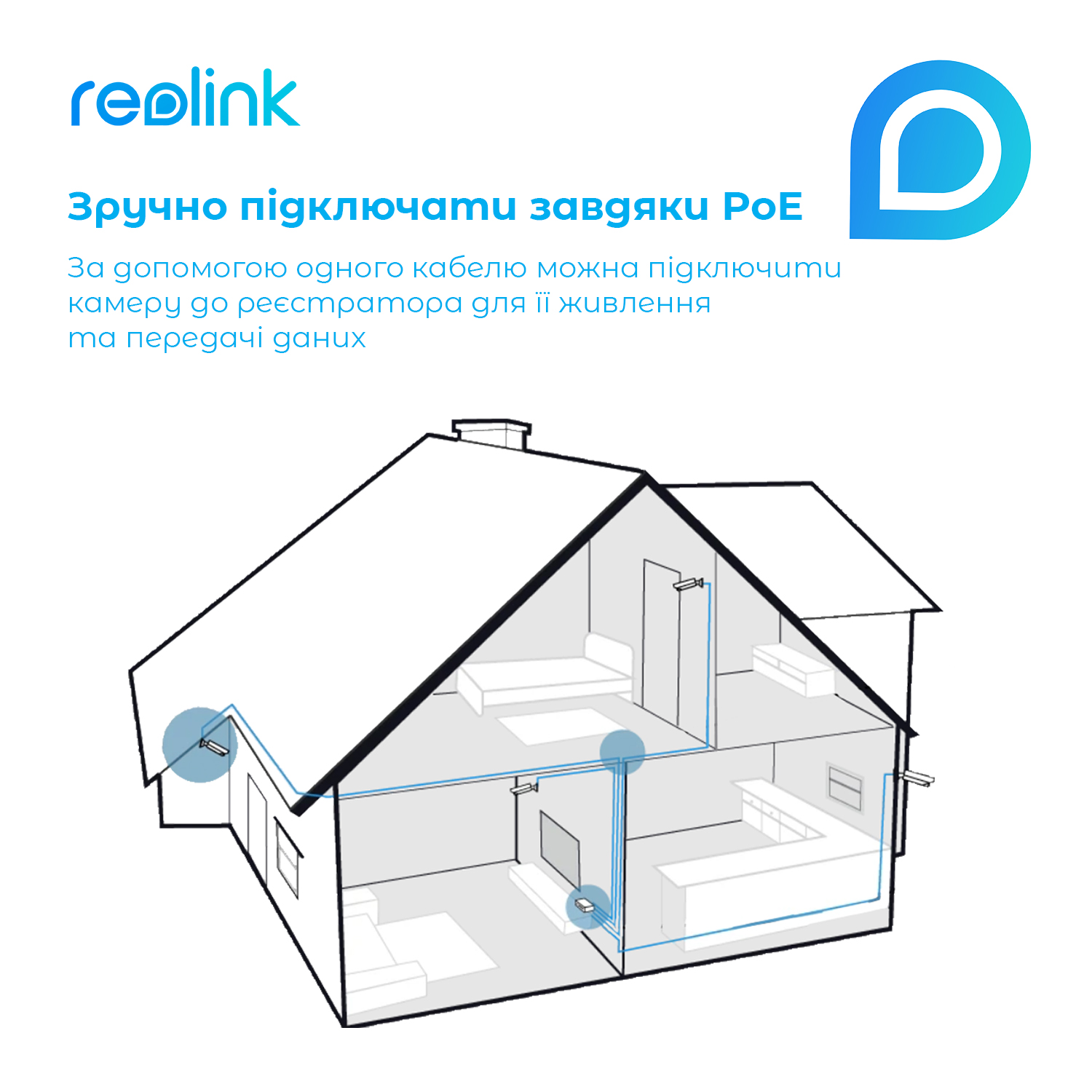
Sixteen PoE ports: one cable per camera instead of two
The RLN16-410 carries sixteen built-in IEEE 802.3af/at PoE ports rated at up to 25 W each, so a single UTP run carries both power and video to every camera. On a sixteen-camera install this is where the real money is saved: no sixteen separate 12 V lines, no sixteen power bricks in the cabinet, and no hunting for an outlet in the attic or halfway up a lighting pole. Compare it with the Ajax recorders in this same catalogue — the 16-channel Ajax NVR has no PoE at all, so the price of a sixteen-port PoE switch and the rack space for it go straight on top. The 25 W per-port headroom covers even cameras with floodlights and heated housings, which occasionally run out of budget on plain 802.3af and its 15.4 W ceiling. Two limits are worth knowing: the ports negotiate at 10/100 Mbps, so this is video transport rather than a gigabit backbone, and each copper run is capped at the usual 100 metres.
No hard drive in the box, and that is a deliberate configuration
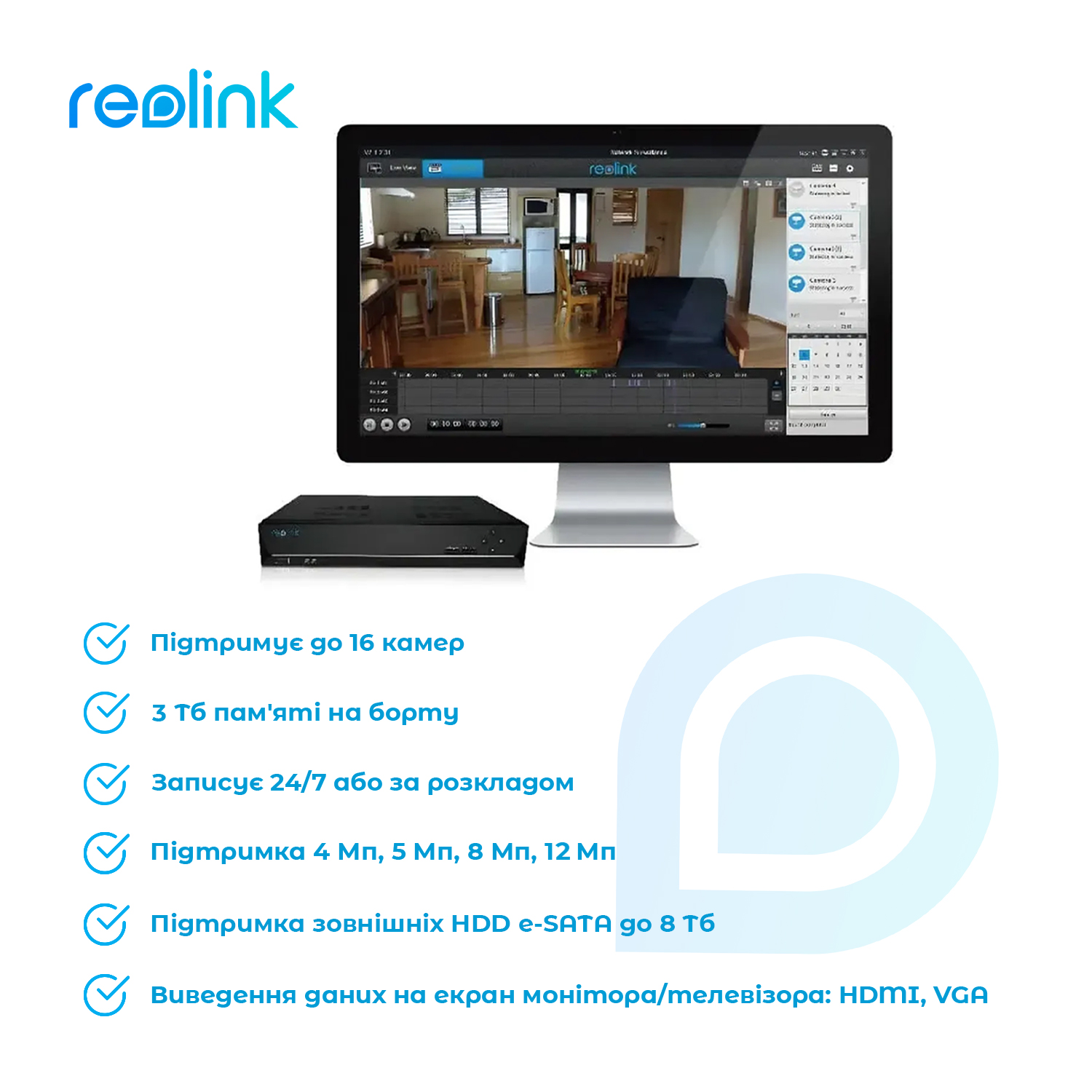
The words "no HDD" in the model name mean exactly what they say: both SATA bays arrive empty, and a drive has to be bought separately before the unit records a single frame. This is not corner-cutting but a different buying logic — you decide whether eight cameras need 2 TB or whether a fully loaded recorder deserves two 8 TB drives. Each bay accepts up to 8 TB, which puts the ceiling at 16 TB of local archive with no external storage involved; the product card quotes a more conservative 8 TB, which is the per-drive figure. Buy a surveillance-grade drive such as WD Purple or Seagate SkyHawk rather than a desktop disk: consumer drives are not designed for continuous linear writing and, in a system recording 24/7, typically start failing in their second year. If picking and fitting a drive is not something you want to deal with, the same catalogue has Reolink NVS16 on the identical platform with 4 TB already installed.
How many days of archive actually fit: the arithmetic
A working rule of thumb for Reolink cameras using H.265: a 4 MP camera in continuous recording produces roughly 32 GB per day, an 8 MP (4K) camera about 65 GB per day. Run that against a 4 TB drive in this recorder, of which around 3.6 TB survives formatting, and you get about fourteen days for eight 4 MP cameras, roughly seven days for sixteen 4 MP cameras or eight 4K ones, and only three and a half days if all sixteen channels are 4K. An 8 TB drive doubles every one of those figures — fourteen days for a full sixteen-channel 4 MP system — and two such drives in both bays stretch it to around twenty-eight days, which is exactly the month of depth insurers and retail security departments tend to ask for. If your cameras still encode in H.264 instead of H.265, subtract roughly forty per cent from all of the above, because the same frame occupies about one and a half times more space. Switching from round-the-clock recording to motion-triggered recording multiplies depth three to five times, although on a busy driveway or a shop floor the gain will be far more modest than on a quiet warehouse.
Twenty-four channels, 16 MP per stream and two monitors at once
The platform is built for twenty-four cameras rather than sixteen: sixteen wired PoE devices plus up to eight battery-powered Reolink Wi-Fi cameras joining the same system with no cable at all. That matters during expansion — when every port is taken but a remote gate or a container at the far end of the yard still needs covering, you add an Argus or a Go and leave the cabling untouched. Streams of up to 16 MP per channel are accepted, so the recorder will not become the bottleneck either for today's 4K cameras or for the 12 MP models you may install two years from now. The HDMI and VGA outputs drive two monitors simultaneously at up to 3840×2160, which suits a guard room: the grid of every camera on the big screen, one expanded feed on the second. Simultaneous playback is limited to four channels, and that is an honest ceiling for this class — scrubbing all sixteen recordings in parallel is not on the menu.
Reolink cameras pair themselves, and the honest truth about other brands
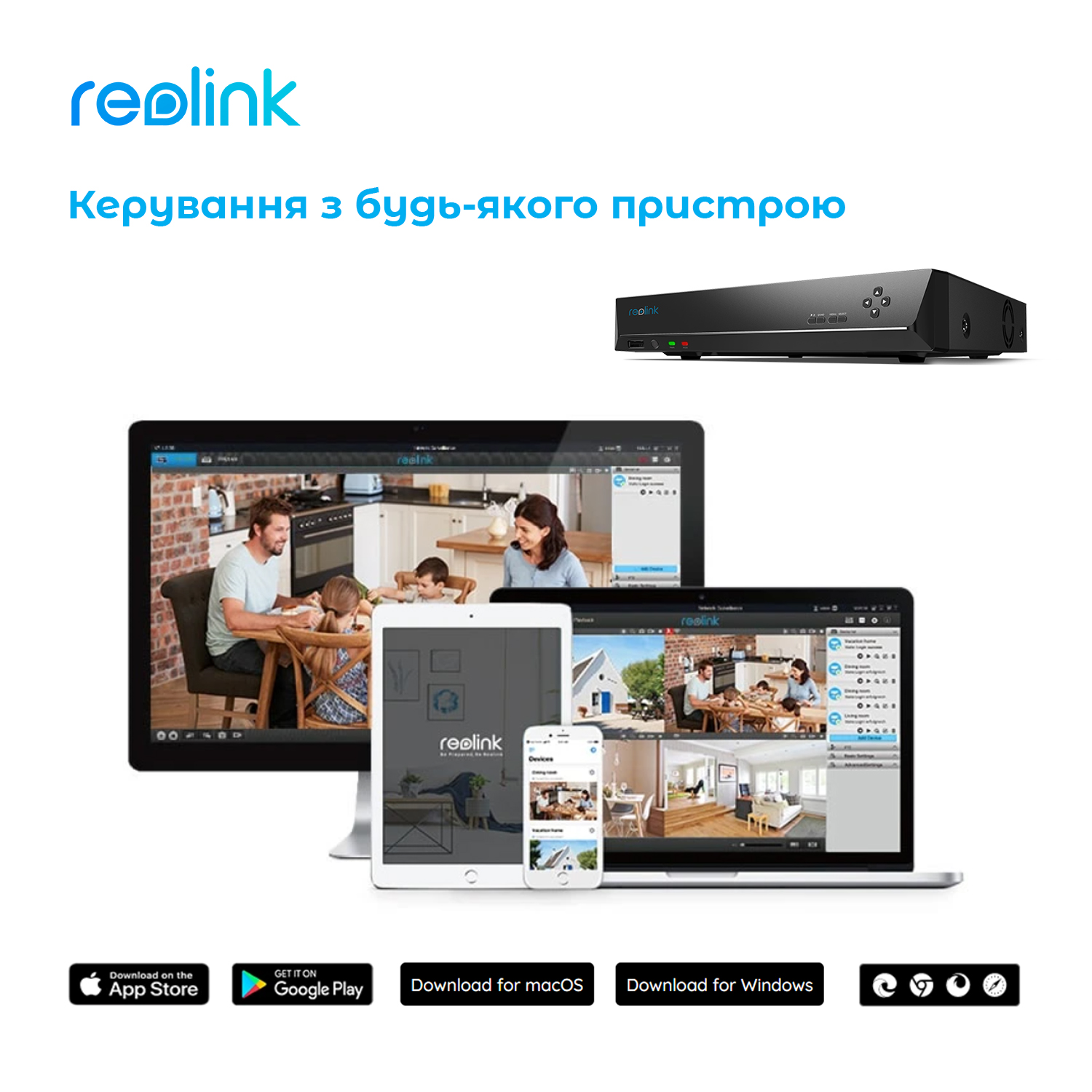
This is where the Reolink ecosystem earns its keep: plug a Reolink camera into a PoE port and it appears in the interface on its own, with no manual IP addresses, no RTSP port hunting and no entering passwords one device at a time. Remote access through the Reolink app works via the unit's UID, so there is no static IP, no port forwarding on the router and no DDNS to configure — noticeably simpler than a Hikvision or Dahua of the same class. The flip side of that simplicity is brand lock-in: the recorder is officially supported with Reolink cameras, while third-party devices connect only over ONVIF and with no compatibility guarantee whatsoever. In practice a third-party camera will usually give you a picture and a recording, but without person and vehicle detection, without camera settings exposed in the recorder's interface and often at a reduced bitrate. Reolink's own guide even advises disabling advanced encoding options on a third-party camera and falling back to plain H.264, which eats through disk space faster still.
Where this recorder belongs and where it is overkill
Sixteen PoE ports and two drive bays describe a site where cameras are counted in dozens: a warehouse with several gates, a production floor, a service station with bays and a forecourt, a vehicle depot, one level of a shopping centre, a holiday resort or a small cluster of private houses under shared security. A 330 mm wide chassis weighing 1.8 kg belongs in a rack or a dedicated technical room rather than on a hallway shelf — under load it runs warm, cools actively and is audibly noisy, so a living room or bedroom is the wrong address. The -10 to +55 °C operating range allows an unheated but dry space such as a warehouse or a technical container, yet IP20 means zero resistance to dust and moisture, so an open workshop or an unsealed outdoor cabinet will kill it. For a private house running four to six cameras this model is plainly excessive: half the ports would idle and you would be paying for capacity you never touch. Conversely, if a site already runs eight cameras and you know it will run twelve within a year, buying an eight-channel unit with the idea of replacing it later rarely pays — the price gap is smaller than the cost of migrating the system a second time.
How it compares with the neighbouring recorders in this catalogue
Its closest relative here is the Reolink NVS16: the same RLN16-410 platform, the same sixteen PoE ports, but with a 4 TB drive already fitted. The gap is essentially the price of that drive plus the convenience of a single warranty on the whole device; if you are willing to buy a 4 TB WD Purple for roughly four to five thousand and turn four screws, the no-HDD version is clearly the better deal, and you are not paying for a disk you would later want to replace with something bigger. Reolink NVS8 costs half as much but offers eight PoE ports and a single bay — a sensible choice right up until the site outgrows eight cameras. Reolink NVS36 takes thirty-six channels across three bays, yet has no PoE ports whatsoever, so a separate PoE switch is mandatory; its logic is scale, not installation simplicity. If sixteen channels with genuine third-party camera support is what you need, look instead at the Hikvision DS-7616NXI-K1(B): cheaper and far less fussy about camera brands, but also without PoE and without automatic pairing, which is precisely why Reolink wins when every camera on site is a Reolink.
Tell us how many cameras you plan and how far they sit from the recorder, and we will size the drive to the archive depth you need and check that the PoE budget covers all sixteen ports.
Characteristics Reolink RLN16-410 no HDD
Reviews about Reolink RLN16-410 no HDD from real users
No reviews found







