
 m. Сміла, Незалежності, 67г. оф, 406/6























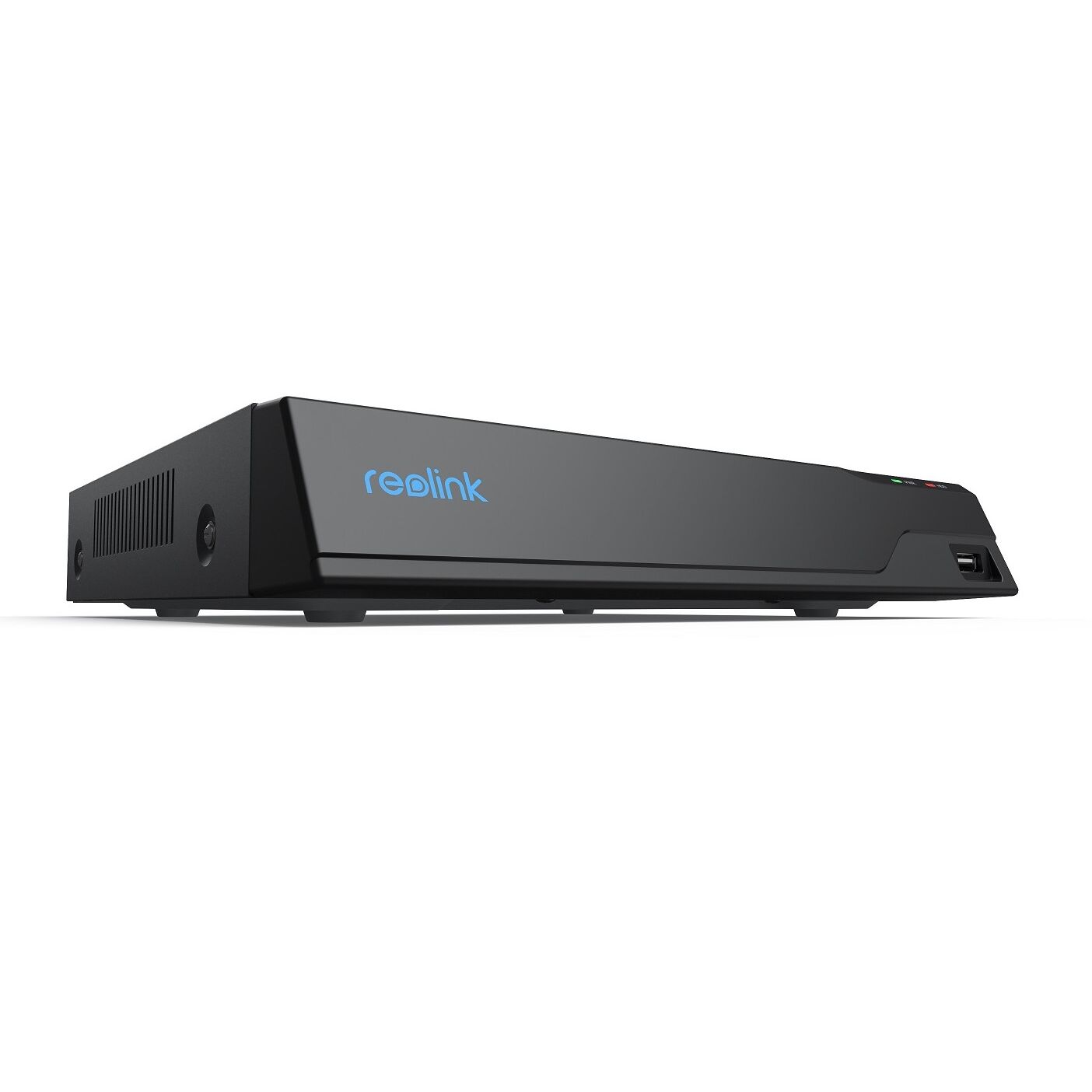
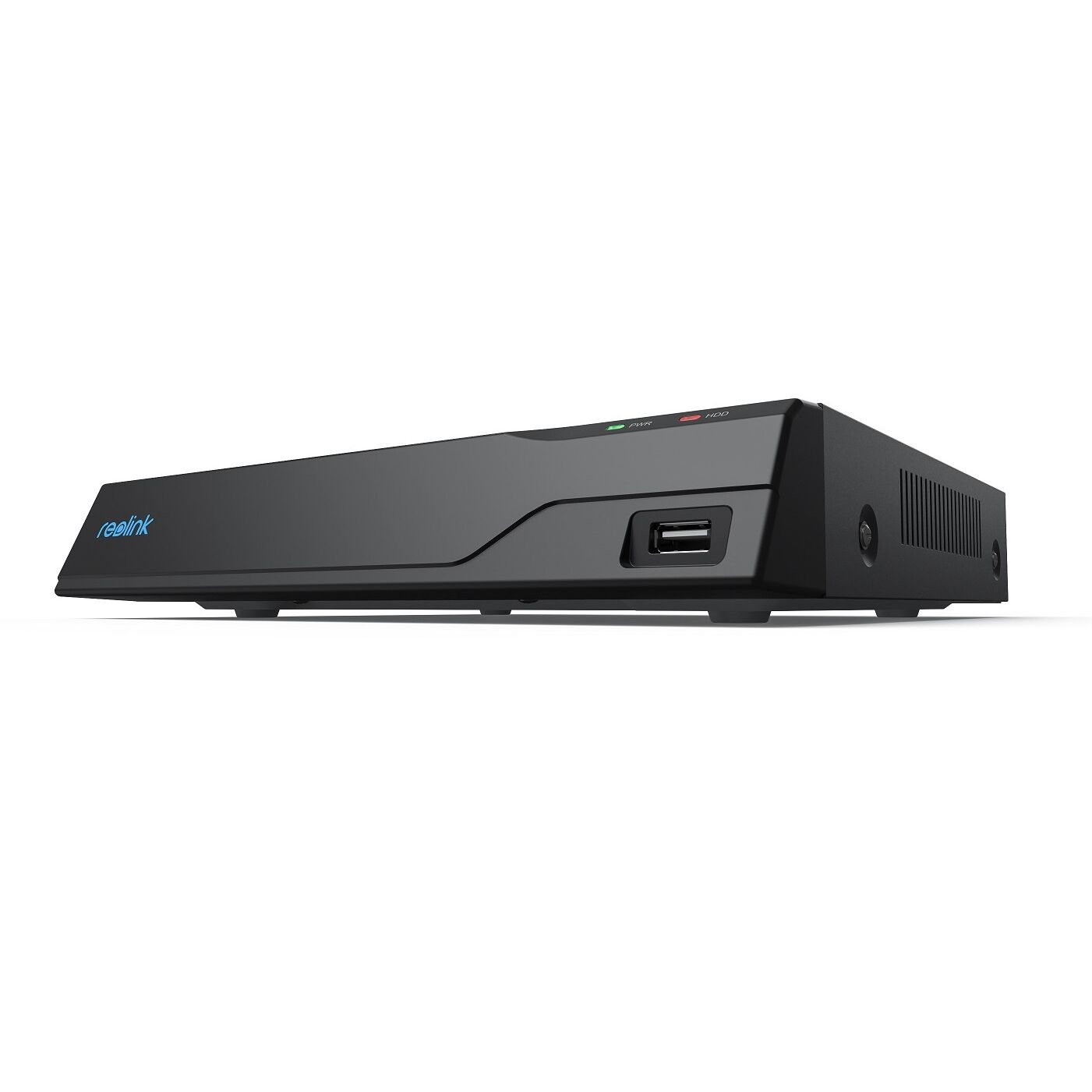
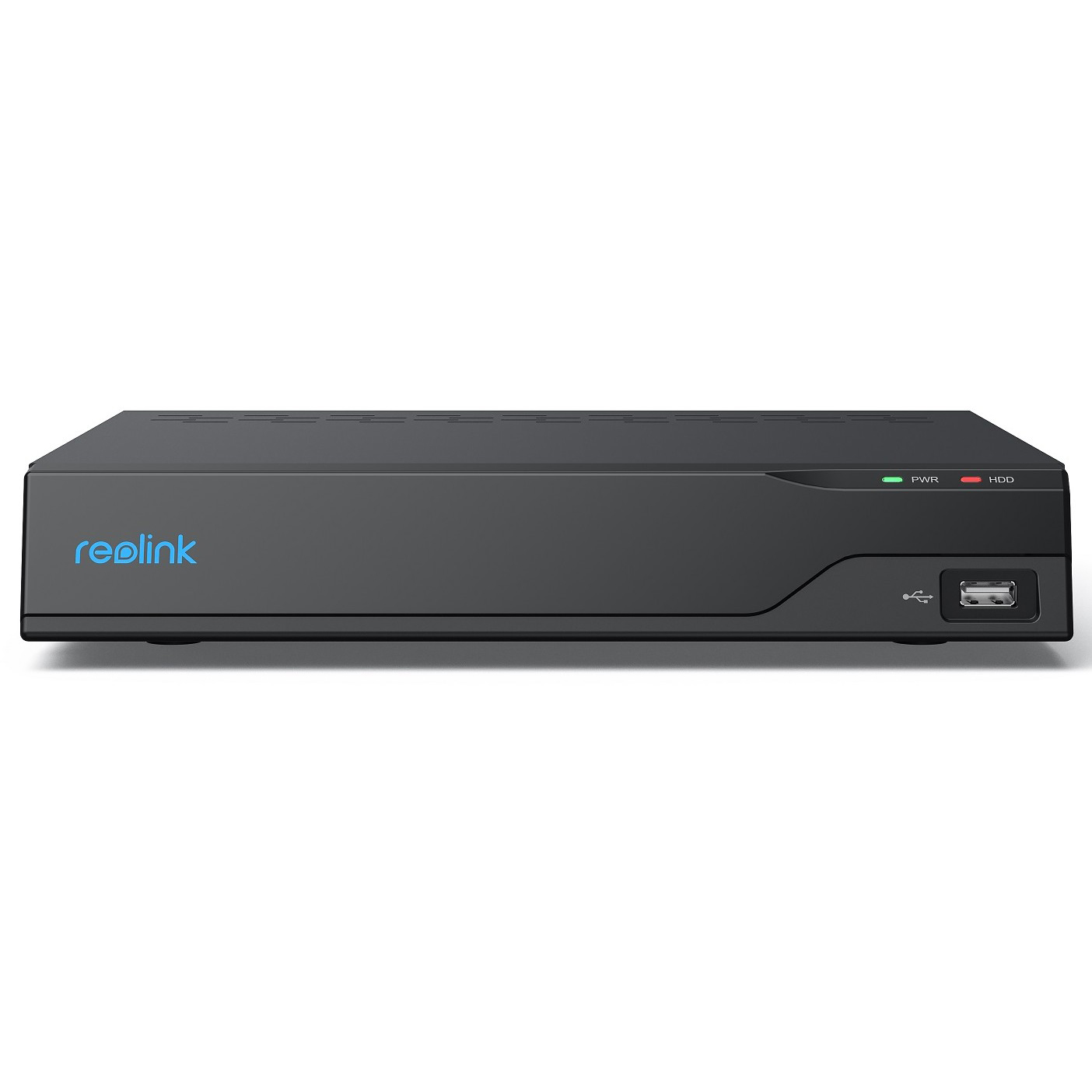
REOLINK NVS8 (RLN8-410) (8 PoE, HOT-SWAP HDD) - IP VIDEO RECORDER




Description Reolink NVS8 (RLN8-410)
Eight PoE ports for eight channels: no separate switch in the budget
The NVS8 carries exactly as many built-in PoE ports as it has recording channels, so every camera arrives on a single Ethernet run that carries power and video at the same time. That is the practical gap between this recorder and PoE-less models such as the Hikvision DS-7608NXI-I2/S(E) or the Ajax NVR in this same catalogue, where an eight-port PoE switch, another outlet in the cabinet and another failure point join the estimate on day one. The ports follow IEEE 802.3af/at and the bundled supply delivers 48-53 V, which covers ordinary wired Reolink cameras drawing roughly 10-12 W without any arithmetic; the power budget only deserves a second look when all eight cameras run floodlights, sirens and housing heaters at full tilt. Two limits are worth knowing before the cable goes into the wall: the camera ports are 10/100 Mbps, which is plenty for eight H.265 streams, and the run from recorder to camera must stay under 100 metres or you need an intermediate switch. One more compatibility note that catches buyers out — battery models from the Argus and Go families are not powered over the cable at all, so those eight ports mean eight wired cameras of the P and RLC families.
No drive in the box, and what that changes for the estimate
This configuration ships without a pre-installed disk: the spec sheet says so plainly, which puts it alongside the RLN16-410 without HDD from this catalogue rather than alongside ready-made bundles such as the NVS16 with its factory 4 TB. You buy the drive separately and budget for it from the start, and in exchange you pick the capacity that matches the archive depth you actually need instead of inheriting the manufacturer's choice. There is a single bay and it accepts up to 6 TB, so the ceiling is fixed: nothing larger goes inside, and the only route to more space is the eSATA port and an external drive. Use a surveillance-grade disk — WD Purple, Seagate SkyHawk or an equivalent — because a desktop drive under continuous linear writing wears out noticeably faster and tends to fail silently, right up to the day the footage matters. The spec card also lists hot-swap support, which the smaller NVS4 does not have: replacing a worn disk does not force you to stop recording the other cameras, and on a site under round-the-clock guard that is the difference between a planned service call and a blind window.
How many days those 6 TB actually hold
Archive depth is easy to calculate once you know what one channel consumes per day under H.265: roughly 22 GB for a 2 MP camera, about 43 GB at 4 MP, about 86 GB at 8 MP and about 130 GB at 12 MP with continuous recording. After formatting, a 6 TB disk leaves roughly 5.4 TB, or about 5400 GB, and the rest is division: eight 4 MP cameras burn some 345 GB a day and give you roughly 15-16 days, eight 2 MP cameras stretch past a month, and eight 8 MP cameras leave only seven or eight days. Cut the count to four cameras and the same 6 TB covers about a month at 4 MP, which is the most common private-house scenario by a wide margin. Two settings move the numbers hard: switching cameras from H.264 to H.265 adds around 40 per cent of depth for free, and event-based recording instead of 24/7 stretches the archive three to five times, although a busy driveway will show far less gain than the perimeter of a quiet warehouse. The planning rule of thumb is blunt — if you need a month of archive across eight 4 MP cameras, one 6 TB disk will not do it and the eSATA expansion belongs in the first estimate.
12 MP per channel, H.265 and two independent monitors
The recorder accepts streams up to 12 MP, so cameras like the P340 and P344 from this catalogue deliver their full resolution instead of being trimmed back to 4K the way cheaper platforms do it. H.265 sits alongside H.264, and on a system whose archive lives on a single disk that codec line is not a footnote but a direct multiplier of recording depth. The HDMI and VGA outputs work simultaneously at up to 3840×2160, so the guard post and the manager's office can each have their own screen rather than sharing one. Up to 20 accounts — 19 users plus an administrator — let you issue separate logins to security staff, tenants and management instead of the single shared password that has to be changed after every resignation. Recording at 25 frames per second per channel keeps a car passing the camera from jumping between frames when you step through the footage later.
The intelligence lives in the cameras, not in the recorder
The recorder itself handles classic motion detection, while person and vehicle recognition happens inside the Reolink cameras; the NVR receives the finished event tag, stores it and uses it to filter the archive and trigger notifications. The consequence is practical: smart alerts work exactly as well as the specific camera supports them, and pairing a basic camera with this recorder in the hope that the NVR will think for it simply does not work. Server-side analytics are absent across the board — no face recognition, no licence-plate reading, no visitor counting, no perimeter analytics — and for those tasks the catalogue offers other answers, including the senior RP-PNxx-NHD with perimeter protection running in the recorder itself. There are also no alarm inputs or outputs and no RS-232 or RS-485 ports, so a siren, a barrier or a door contact cannot be wired to the recorder directly; every notification path runs through the network and the app. And the brand limitation deserves stating before purchase rather than after: the platform is fully at home with Reolink cameras, while third-party devices connect over ONVIF with part of the functionality left behind.
Where it belongs and where another recorder fits better
This is the natural recorder for a private house with four to eight cameras, a small shop, a car wash, a service station or a single-floor office — sites where the cameras are wired, the runs stay within a hundred metres and the channel count is not about to jump. At 255×232×49.5 mm and 1.4 kg it sits on a shelf in a technical cabinet or in a wiring niche, and the IP20 rating with a -10 to +45 °C range means the room has to be dry and must not bake in summer. An unheated outdoor enclosure or an attic under a metal roof is the wrong home for it: condensation and summer heat kill the disk faster than any recording load. It is also the wrong choice if the site already runs, or soon will run, on battery and Wi-Fi cameras as its backbone — the catalogue answers that scenario with the wireless NVS12W. And if the roadmap points past eight cameras within a few years, look straight at the sixteen-channel models: ports cannot be added later, and swapping the recorder means reconfiguring the whole system.
How it differs from its neighbours in this catalogue
Its closest relative is the Reolink NVS4: same logic, same chassis, same drive-free delivery, but half the channels and half the PoE ports, without eSATA and without hot-swap, while supporting cameras up to 16 MP. If four cameras is your final number, the junior model covers the job for less; if you are at six to eight or planning to grow, the channel count settles the argument by itself. Above sit the RLN16-410 without HDD and the NVS16 with its factory 4 TB, offering sixteen PoE ports and two drive bays — worth taking for the channels and the archive depth, not "just in case", because eight unused ports never pay for themselves. Among other brands the nearest match is the Hikvision DS-7108NI-Q1/8P(D): also eight channels and eight PoE ports with the same 6 TB ceiling, considerably more open to third-party cameras over ONVIF, while Reolink wins on simplicity because its own cameras are picked up automatically without typing in IP addresses and passwords. The Dahua DHI-NVR1108HS-8P-S3/H is the third option in this class and supports drives up to 8 TB, which matters most to owners who already run Dahua cameras — while the NVS8 remains the simplest choice for a system built entirely on Reolink.
Tell us how many cameras you plan to connect, at what resolution, and how many days of archive you need — we will advise which drive capacity to buy up front and whether eight channels will be enough.
Characteristics Reolink NVS8 (RLN8-410)
Reviews about Reolink NVS8 (RLN8-410) from real users
No reviews found







