
 m. Сміла, Незалежності, 67г. оф, 406/6























HIKVISION IDS-7208HUHI-M1/XT (8 CHANNELS, RS-485) - HYBRID VIDEO RECORDER

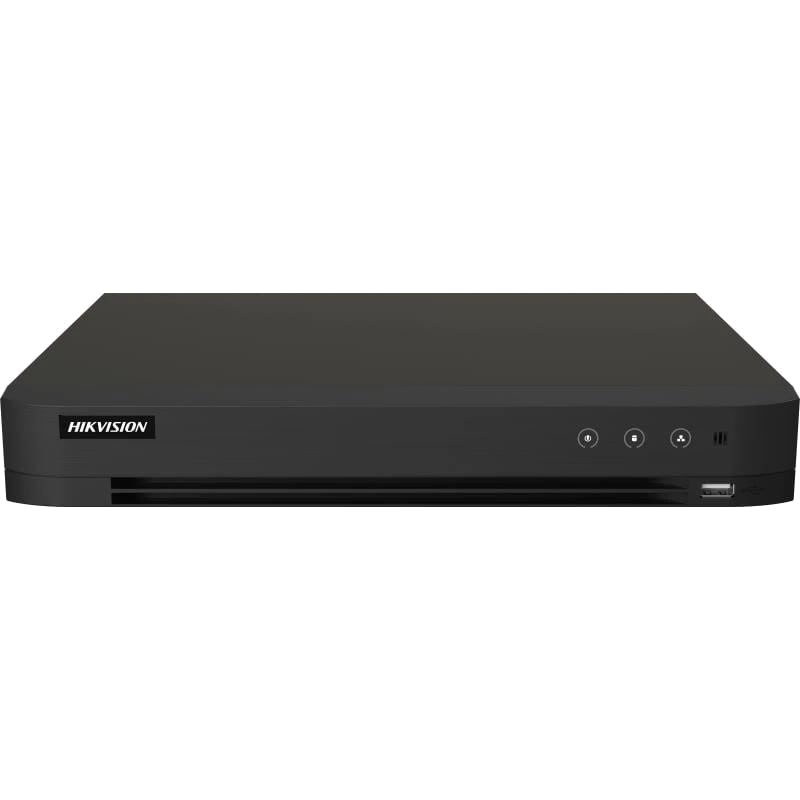
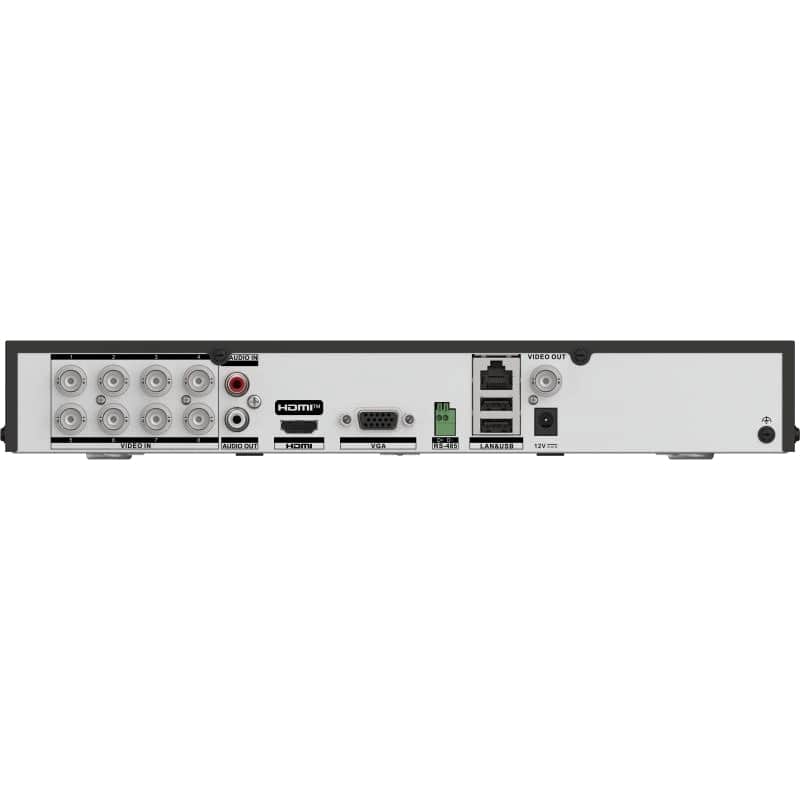
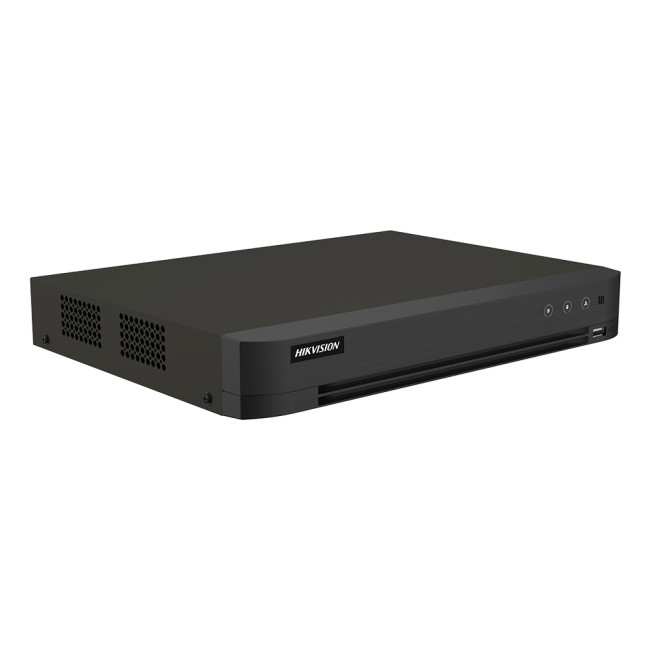
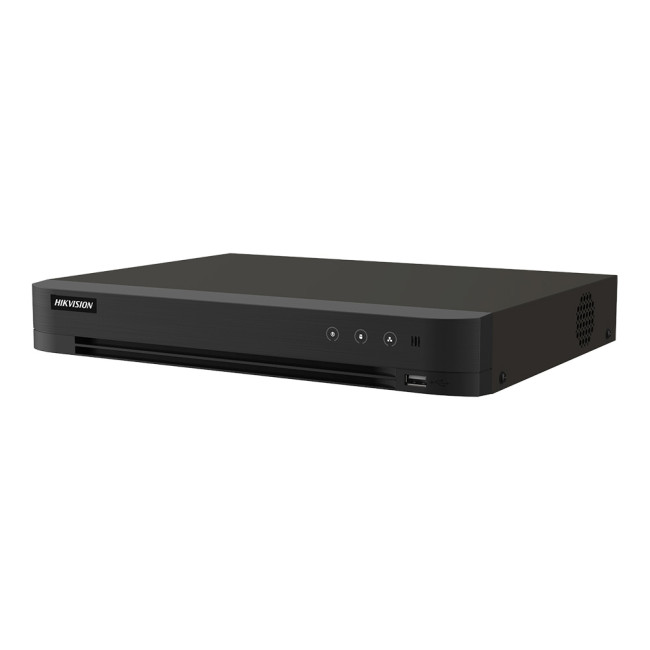
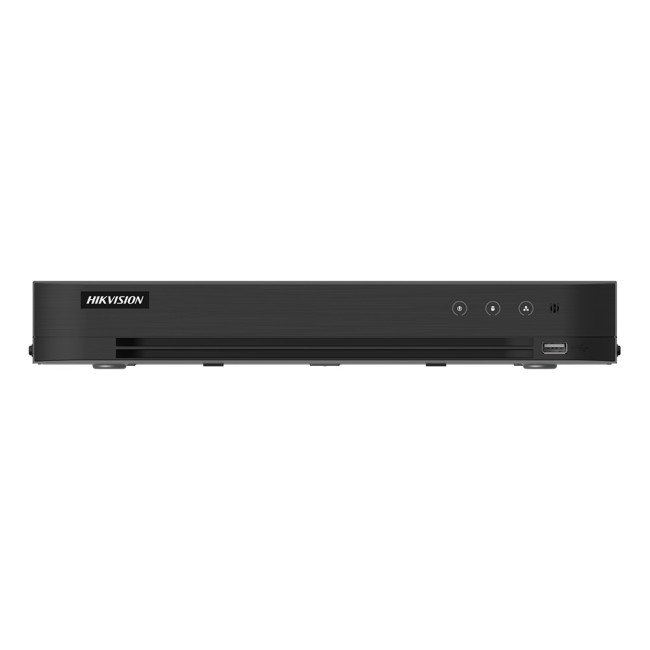
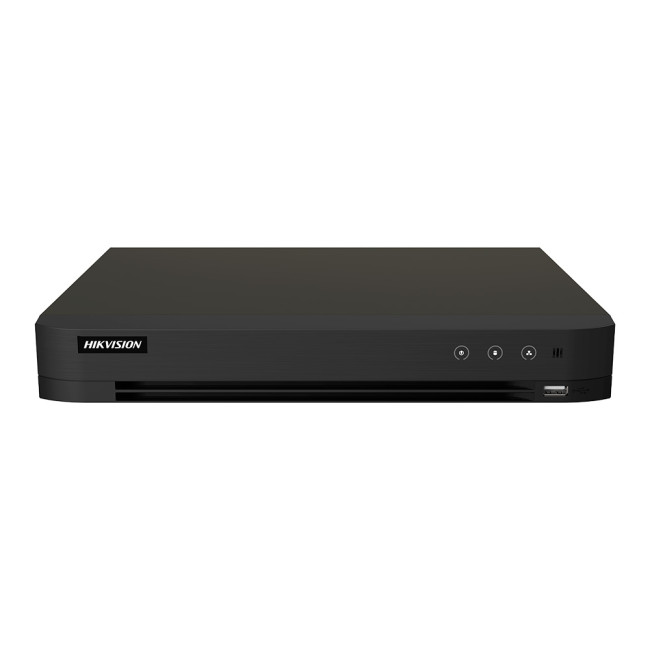


Description Hikvision iDS-7208HUHI-M1/XT
A hybrid DVR with eight BNC inputs, not a network NVR
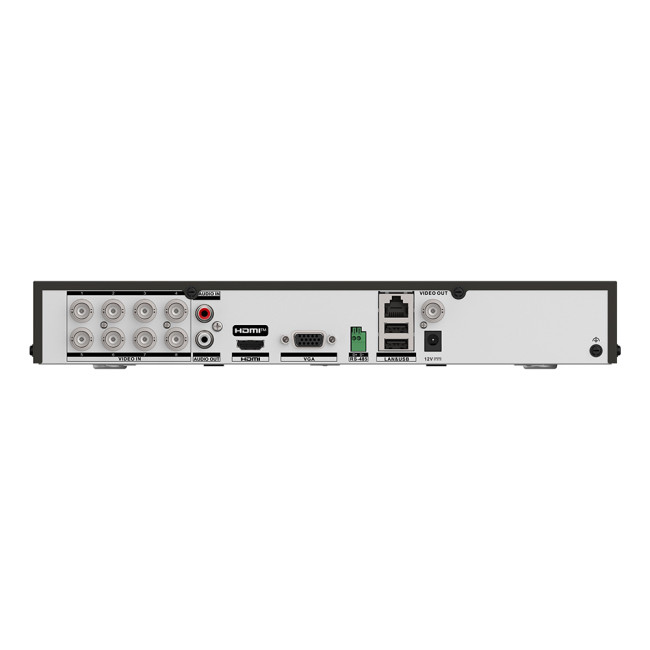
The iDS-7208HUHI-M1/XT belongs to the hybrid digital video recorder family, and that line has to be drawn before ordering, because it decides which cameras will physically connect at all. Its rear panel carries eight coaxial BNC inputs that auto-detect four analogue standards - HD-TVI, HDCVI, AHD and legacy composite CVBS - with a handful of network channels over Ethernet on top, which is where the "5-in-1" label comes from. The practical meaning is narrow and valuable: a site that already has coax running to every camera point gets modernised by swapping one box, with no chasing out walls and no new twisted pair. Pure network NVRs from this same catalogue - the DS-7616NXI-K1(B), the DS-7608NXI-I2/S(E) or the DS-7604NXI-K1(D) - are no help there at all, because they only accept an IP stream over the network and have no coaxial inputs whatsoever. The reverse is worth knowing too: for a greenfield install cabled in twisted pair from day one a hybrid is wasted, since the analogue path limits both resolution and frame rate more harshly than any IP channel in the same class.
8 MP over coax: the frame rate you pay with
The reason to choose the HUHI index specifically is that its analogue path reaches 8 MP, whereas the junior HGHI stops at 1080p and the HQHI at 3K. Raising resolution over coaxial cable without a trade-off is not possible, however, and here the trade-off lands on frame rate: 8 MP records at roughly eight frames per second, 3K Lite and 5 MP at twelve, 4 MP at fifteen, and only at 1080p do you get the full 25 frames quoted in the specification. In practice that means 8 MP belongs where detail on a largely static scene matters - a shop window, a till, a warehouse rack, a fence line - because at eight frames a person walking briskly leaves a few smeared frames rather than smooth motion. For an entrance gate with moving vehicles the smarter compromise is 4 MP at fifteen frames: enough detail for a plate at close range, and motion that still reads properly. This is exactly why resolution on this recorder is set per channel rather than uniformly across all eight, and a thought-out configuration delivers more than maximum figures in every row.
AcuSense on all eight channels, face capture on one
The lower-case i in the model name marks AcuSense - deep-learning object classification that separates people and vehicles from everything else that moves - and in advanced mode it is available on all eight analogue channels. The difference against plain pixel-change detection shows up in the first week: a cat in the yard, a branch in the wind, rain caught in a floodlight beam and cloud shadow stop waking the phone, so the owner does not switch notifications off on day three the way they usually do with cheap recorders. The same classification underpins the perimeter-protection events - line crossing, intrusion into an area, region entrance and region exit - so an alarm fires for a person or a vehicle entering the zone rather than for any movement in it. The unit also captures faces and lets you search the archive by them, but be clear about the scale: that is one channel, not eight, so the camera for the job is chosen deliberately - a front door or a checkout, not a wide yard view. One more platform quirk usually discovered in the menus: classic motion detection and AcuSense cannot be enabled on the same device at once, so the response strategy has to be chosen rather than combined.
How many channels can become IP, and where the hybrid mode ends
On top of the eight coaxial inputs the recorder takes IP cameras over the network, bringing the total to twelve channels - eight analogue plus four network. The network side has its own ceiling: around 24 MP in total and roughly 80 Mbit/s across all IP channels, so four 4-megapixel cameras fit comfortably while four 8-megapixel ones at a high bitrate sit right against the limit. That is a sensible path for staged modernisation: the analogue cameras serve out their remaining life and record as before, while the points that matter - the gate, the till, the stockroom - get IP cameras running a full 25 frames with no Lite modes. ONVIF appears in this model's protocol list, so third-party IP cameras connect properly and not only Hikvision ones - a real difference from the junior HGHI series, where ONVIF is not declared. There are no built-in PoE ports at all, and that is the classic first-install surprise: every IP camera needs either a separate PoE switch, an injector, or its own power adapter run to the camera position.
One drive, iSCSI, and the archive depth in actual days
The chassis has a single SATA bay for a 3.5-inch drive, and no drive is supplied. The product card quotes a 12 TB ceiling while the official documentation for this series says 10 TB, so if you are planning a drive larger than 10 TB, confirm compatibility before buying it. Here is the archive maths for a fully loaded eight channels under H.265 Pro+: eight 4 MP cameras at fifteen frames add up to roughly 20-25 Mbit/s, that is about 220-260 GB a day, and a 10 TB drive holds roughly 38 to 45 days of continuous recording. Drop every channel to 1080p at 25 frames and the aggregate falls to about 12 Mbit/s, daily consumption to around 130 GB and archive depth stretches to roughly two and a half months; push all eight channels to 8 MP instead and the same drive lasts something like two to three weeks. One advantage this model holds over its juniors matters here: NFS and iSCSI are both declared, so the archive can be moved onto network storage and the single-bay limit sidestepped without changing the recorder - and where no NAS exists, event-based recording instead of continuous buys a multiple-fold gain, because AcuSense reliably separates real events from background.
Ports, outputs and mounting: 4K on HDMI, RS-485, but no alarm terminals
HDMI delivers up to 3840x2160, that is true 4K, and VGA up to Full HD runs simultaneously with it, so a pair of monitors on the guard desk connects without adapters and without toggling between them. The point of a 4K output is not elegance but the mosaic view: with eight 8-megapixel channels a Full HD monitor simply has no pixels left to show detail, forcing the operator to expand each channel full-screen, whereas on 4K the scene is readable without extra clicks. The RS-485 port drives analogue PTZ cameras over the same coax or a separate pair - a capability pure NVRs generally lack, and on sites with an old pan-tilt camera it solves the problem without replacing hardware. Alarm inputs and outputs, however, are not declared on this build: a reed switch, a beam barrier or a siren cannot be wired to the recorder directly, and every response stays a video event or a notification - the line does include a separate /4A+8/4ALM build with those terminals, so if a siren is part of the plan, confirm the exact build. A 319 x 240 x 48 mm chassis weighing about 2 kg and 12 V power from a 2 A adapter mean the unit drops into a low-voltage cabinet and is easy to back up from an ordinary 12 V battery.
Where this model belongs and what it was really built for
The primary scenario is a site with coax already in place where the client is not prepared to lose that infrastructure yet wants genuine detail rather than merely "something visible": a small shop with a window and tills, a car wash, a service garage, a warehouse with tall racking, a production floor on eight cameras. There, 8 MP over coax covers the tasks 1080p traditionally fails - reading a price tag or a part number on a shelf, telling which banknote a customer handed over, catching the plate of a car pulling onto the wash. The second strong scenario is a large private property already ringed with coax: AcuSense on all eight channels gives meaningful perimeter protection without a hundred false alarms a night, and the single face-capture channel logically goes to the pedestrian gate. Where it does not belong: a site built on twisted pair, which wants a pure NVR instead; a system that needs plate recognition in traffic or people counting, neither of which exists here; and any configuration needing more than eight video cameras, since twelve channels are only reached by adding IP. Factor the single drive bay in separately: if the client asks up front for six months of history on eight 8 MP channels, no amount of configuration will deliver that without network storage.
How it differs from neighbouring recorders in this catalogue
Its closest relative here is the Hikvision iDS-7108HQHI-M1/S(E): the same compact eight-BNC hybrid on a single drive, but its analogue path stops at 3K, AcuSense covers only four of the eight channels, the output is capped at Full HD and there is no RS-485 - a sensible pick when 3K is enough and paying up for 8 MP and a 4K output buys nothing practical. The junior DS-71xxHGHI-M1(C) from the same catalogue sits a level lower again: 1080p Lite, classified motion detection without AcuSense and without face capture, a drive ceiling of 4 TB, and it is chosen when the brief really is "see that something happened, not the detail of it". From Dahua the direct rivals are the DH-XVR5216AN-I3 with sixteen analogue channels and a 16 TB drive ceiling and the DH-XVR5108HS-4KL-I3/T on eight: worth considering if the site already runs HDCVI cameras, because staying inside one brand simplifies both setup and service. If there is no coax on site at all, the comparison should not be against hybrids: the DS-7616NXI-K1(B) gives sixteen IP cameras at full frame rate, and the DS-7108NI-Q1/8P(D) eight cameras with PoE built in, meaning no separate switch. In short, the iDS-7208HUHI-M1/XT is for squeezing maximum detail and proper analytics out of coax that is already in the walls, and for that job it is the strongest unit in this catalogue.
Tell us how many cameras you have, which standard they use, whether the coax is already in place and how many days of history you need, and we will say whether eight channels are enough and what drive size to plan for.
Characteristics Hikvision iDS-7208HUHI-M1/XT
Reviews about Hikvision iDS-7208HUHI-M1/XT from real users
No reviews found







