
 m. Сміла, Незалежності, 67г. оф, 406/6























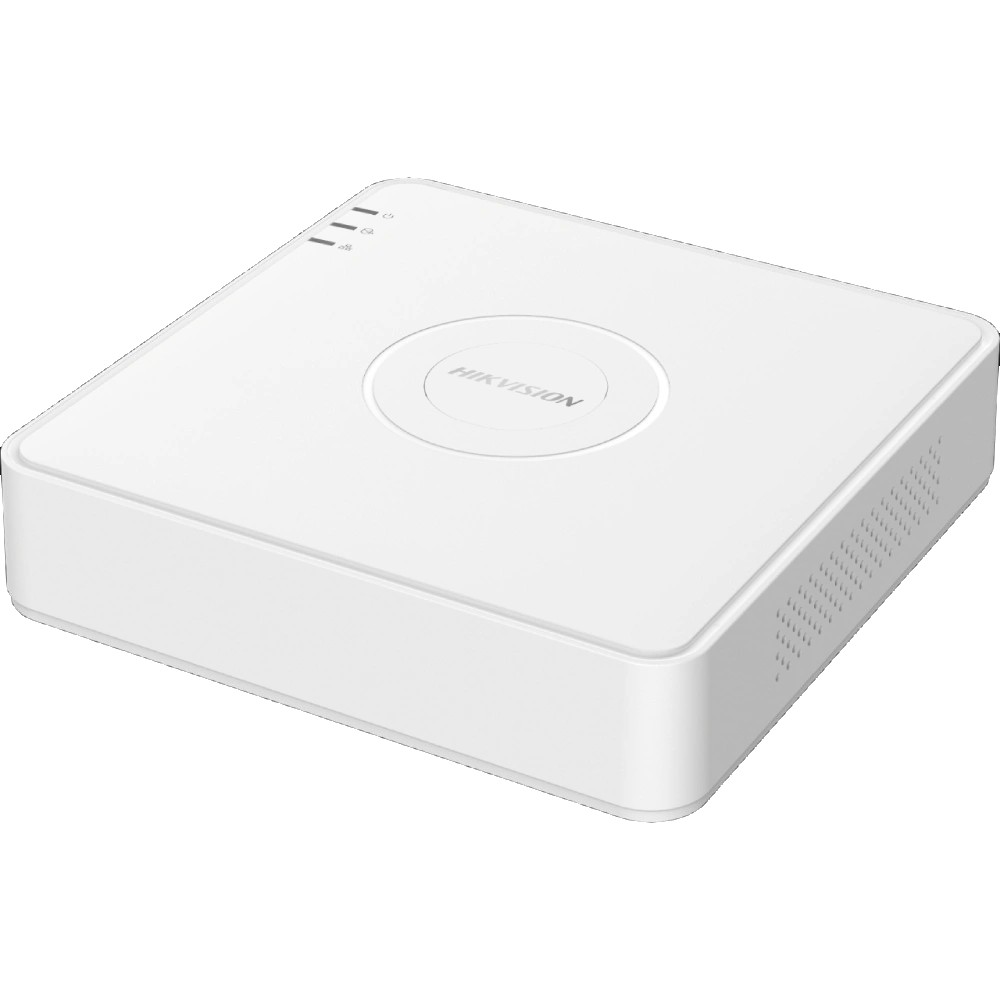
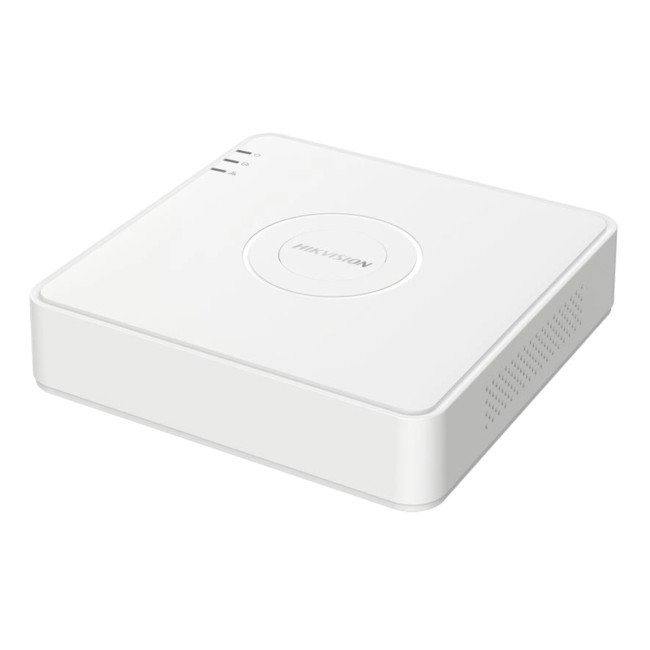
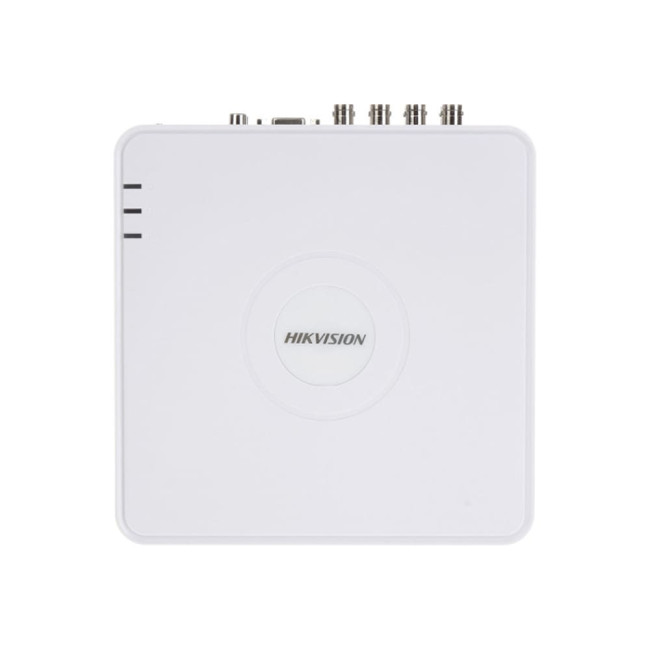
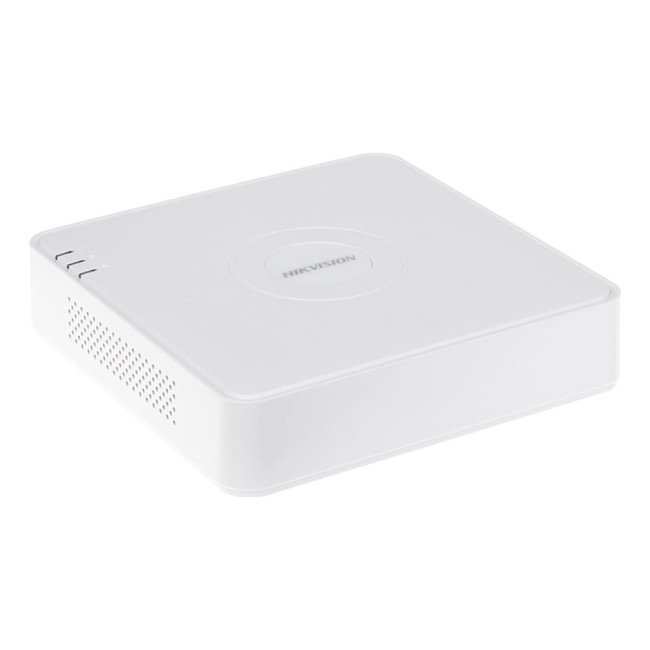
HIKVISION IDS-7108HQHI-M1/S(E) (8 CHANNELS, 5 MP) - HYBRID VIDEO RECORDER

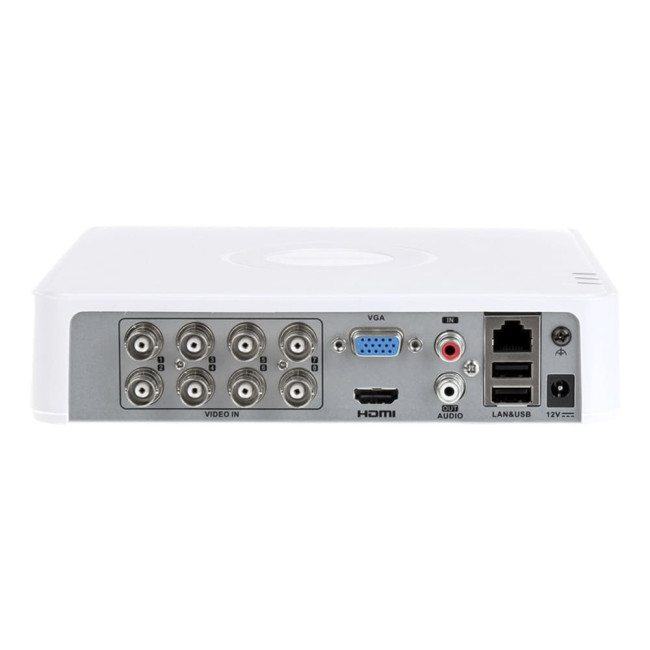


Description Hikvision iDS-7108HQHI-M1/S(E)
A hybrid DVR for existing coax, not a network NVR
The HQHI letters in the model name mean this is a hybrid digital video recorder rather than a network NVR: eight BNC inputs on the rear panel accept analogue HD cameras in HD-TVI, AHD, HDCVI and legacy CVBS formats, and the recorder detects the format on its own, with no jumpers and no firmware swapping. The practical payoff shows up wherever coaxial cable is already in the walls: upgrading a 720p system to 5 MP means replacing the cameras and the recorder, while the cable runs, conduits and chased walls stay untouched. On top of the eight analogue inputs the unit takes two extra IP channels, and once analogue inputs are freed up it switches to a mode with up to 10 IP channels at 6 MP, or an enhanced mode with up to 12 IP channels at 4 MP. That headroom is what makes the model convenient for a staged migration: today you keep six working analogue cameras and add two IP units at the gate, a year later you replace the rest without throwing the recorder away. Do not confuse this device with the DS-7xxxNI or DS-7xxxNXI network recorders — those work with IP cameras only, and coaxial cable simply cannot be connected to them.
How many frames per second you actually get at 5 megapixels
The spec sheet says 5 MP and that is accurate, but with a caveat that sellers usually skip: at maximum resolution the recorder writes roughly 12 frames per second per channel, about 15 frames in 4 MP mode, and the full 25 frames only become available in 1080p Lite. For most security work 12 frames is no disaster, because a person walking past the camera stays in frame for several seconds and lands in dozens of separate stills, among which a usable one almost always turns up. It becomes a real problem when you need to reconstruct fast motion — a hand reaching towards the till, or a car passing the gate at forty kilometres an hour — and at that point it is smarter to step down to 1080p deliberately and gain smoothness. There is also an intermediate 3K format at 2960 by 1665 pixels, a sensible compromise between five-megapixel detail and the load it puts on the disk. The combined 96 Mbps bandwidth across eight channels means you will practically never hit a throughput ceiling with analogue cameras: the real limit here is always either disk capacity or frame rate.
AcuSense and Motion Detection 2.0 work on an either-or basis
The iDS prefix stands for AcuSense, deep-learning analytics that runs inside the recorder rather than inside the camera. For a hybrid system that distinction matters: an analogue camera has no intelligence of its own, so the recorder is the component that separates objects into people, vehicles and everything else. Motion Detection 2.0 with classification is available on all eight analogue channels and filters out the classic sources of false alarms — branches in the wind, headlight shadows, rain and insects circling the infrared illuminator. Full AcuSense rules — line crossing, area intrusion, region entrance and region exit — are limited to four analogue channels, so it is worth assigning them to the directions that matter most: the gate, the side door, the back entrance and the till area. One caveat deserves to be known before purchase: Motion Detection 2.0 and AcuSense cannot be enabled at the same time on the same device, so you choose between soft filtering on every channel and precise perimeter rules on four. Face detection and face search run separately, and that is what saves the most time during an investigation: instead of scrubbing through hours of footage you scroll a strip of captured faces.
Camera power: there is no PoE here and there cannot be
An analogue camera needs two cables — coax for video and a pair of conductors for 12 V power — so the question of built-in PoE does not arise for a hybrid recorder at all: it has no such ports and cannot have them given the nature of the analogue path. In practice the problem is solved either with a combined cable that carries coax and power in one jacket, or with a separate 12 V power supply in the same cabinet as the recorder. Eight typical analogue cameras drawing 4-5 W each call for a 12 V source rated around 5 A with a little headroom — an inexpensive box, but one that has to be budgeted and drawn into the wiring plan before installation starts. The recorder itself runs on 12 V at 1.33 A and consumes up to 12 W without a disk, so the whole node together with the cameras sits comfortably on a domestic UPS during a power cut. That is in fact a quiet advantage of the analogue branch over IP: in a PoE system an outage also means keeping the switch alive, whereas here everything hangs on a single 12 V rail.
A single bay for up to 10 TB: how many days of archive that really is
There is one drive bay here: a 3.5-inch SATA disk of up to 10 TB, not supplied in the box and chosen separately according to the archive depth you need. Useful reference figures for H.265 Pro+ are as follows: an analogue 1080p camera recording continuously eats around 22 GB per day, a 4 MP camera about 32 GB, and a 5 MP camera at twelve frames roughly 38 GB. The arithmetic for a full set of eight cameras at 1080p is therefore about 175 GB per day, which works out to roughly 23 days of archive on a 4 TB disk, 34 days on 6 TB and almost two months on 10 TB. Push all eight cameras to 5 MP and the daily figure climbs to about 300 GB, so the same 10 TB disk now holds around a month and a 4 TB one barely a fortnight. Motion-triggered recording cuts the volume by three to five times, though a shop or a warehouse with constant daytime traffic will see a far smaller gain than an empty yard at night. Choose a surveillance- grade drive such as WD Purple or Seagate SkyHawk: there is no hot swap and no RAID here, and round-the- clock writing wears an ordinary desktop disk out quickly.
Where this model belongs and what jobs it was built for
This recorder is aimed not at new builds but at sites that already have working coaxial infrastructure: a shop with a decade-old system, a service station, a warehouse, a car wash, a small workshop, the entrance hall of an apartment block. The typical scenario runs like this: eight ageing 720p cameras produce an unreadable picture, the owner swaps them for five-megapixel HD-TVI units and installs this recorder, and within a single working day has a system where faces at the till and plates at the gate are legible — with no chased walls and no rerouted cable. The second strong scenario is a retail floor, where the four AcuSense channels cover the front door, the till area, the back entrance and the stockroom while the remaining cameras provide general coverage. A compact 200 by 200 millimetre body just 45 millimetres tall sits on a shelf in the back room next to the router, so no dedicated rack is required. For a site being built from scratch, though, this DVR is the wrong choice: there it makes more sense to pull twisted pair from day one, because the analogue branch is limited in resolution, in frame rate and in room to grow.
How it differs from the neighbouring models in this catalogue
The most affordable neighbour in this catalogue is the Hikvision DS-71xxHGHI-M1(C): also a hybrid DVR, but half the size in channel count (four instead of eight), with a 4 TB disk ceiling and no AcuSense analytics at all. If you genuinely have four cameras and do not need a person told apart from a branch in the wind, the entry model of the range covers the job and there is no reason to reach for this one. In the opposite direction sits the iDS-7208HUHI-M1/XT: the HUHI series accepts analogue cameras all the way up to 8 MP and takes a disk of up to 12 TB, so paying the premium for it only makes sense if you are actually installing eight-megapixel HD-TVI cameras — with five-megapixel units that headroom simply sits idle. Dahua's DH-XVR5108HS-4KL-I3/T is the competing equivalent with a 16 TB disk ceiling, noticeably dearer, while matching cameras and service inside the Hikvision ecosystem remain simpler to arrange in Ukraine. The comparison that matters most is with the network Hikvision DS-7108NI-Q1/8P(D): it costs more, but brings eight built-in PoE ports and works with IP cameras, running a single cable to each point. The rule of thumb is simple: if coax is already in the walls, take this DVR and save on cable and labour; if the site is new or the cable has to be pulled anyway, invest in an IP system, which has far more future in it.
Tell us which cameras you are running today and how long the coaxial runs are — we will confirm whether they will work with this recorder as they are, and size the disk for the archive depth you need.
Characteristics Hikvision iDS-7108HQHI-M1/S(E)
Reviews about Hikvision iDS-7108HQHI-M1/S(E) from real users
No reviews found







