
 m. Сміла, Незалежності, 67г. оф, 406/6























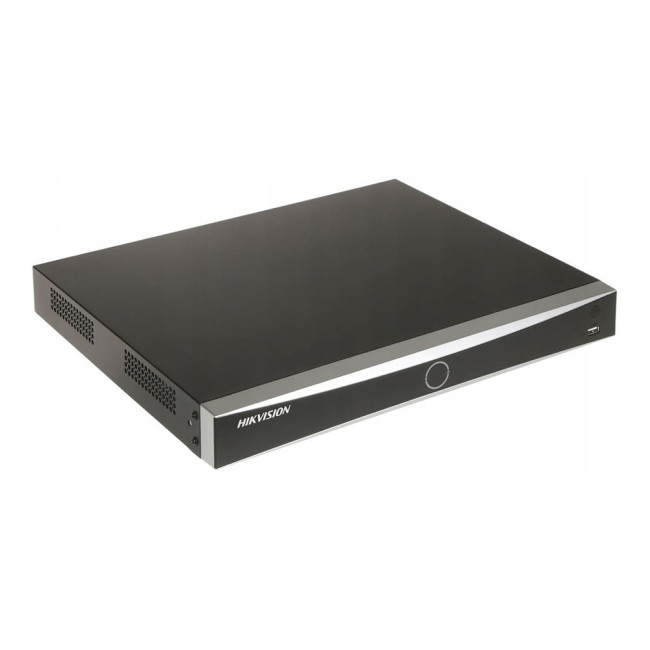
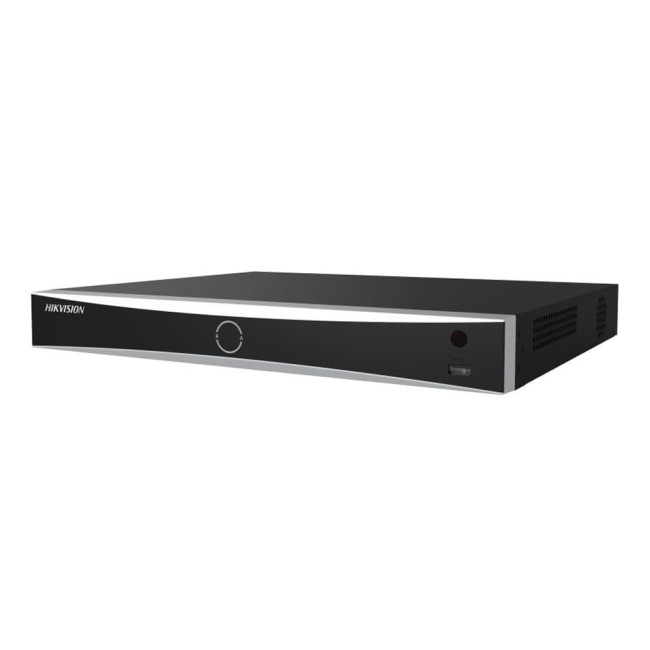
HIKVISION DS-76XXNXI-K2(D) (8 CHANNELS, 2 HDD) - IP VIDEO RECORDER

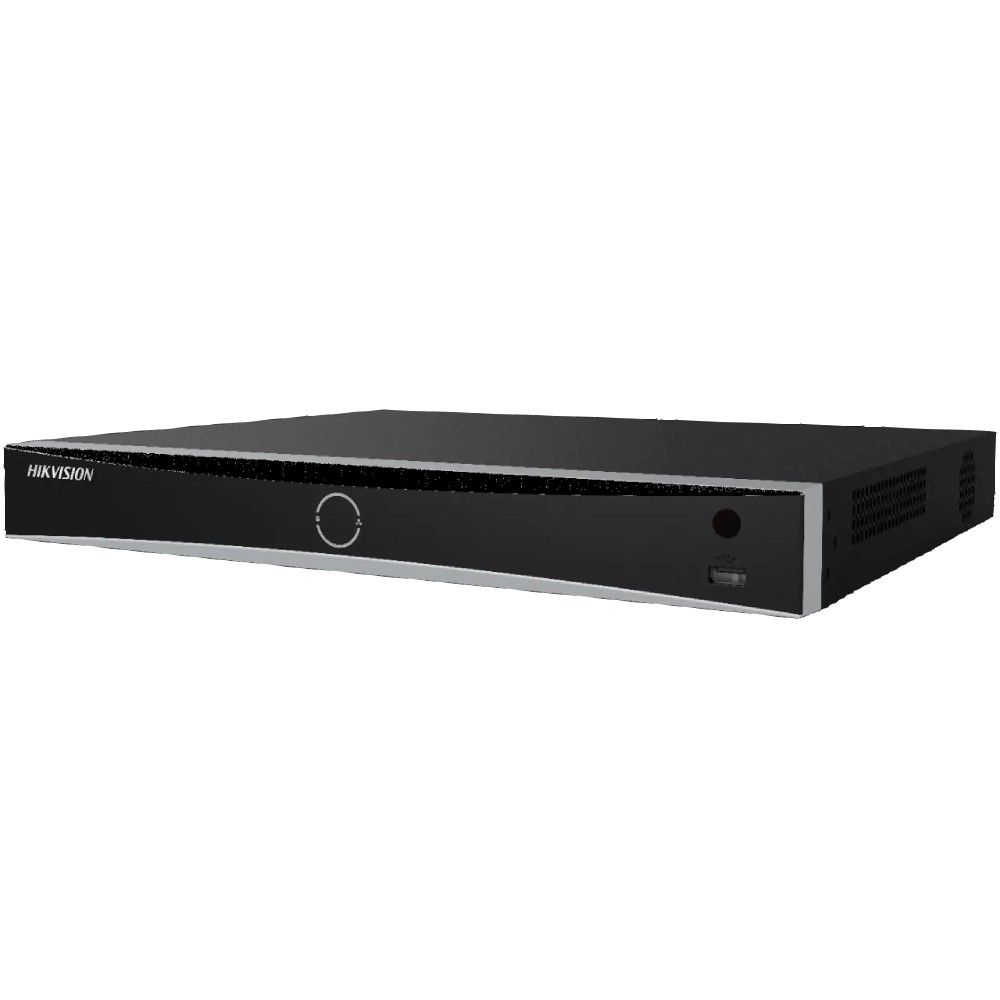
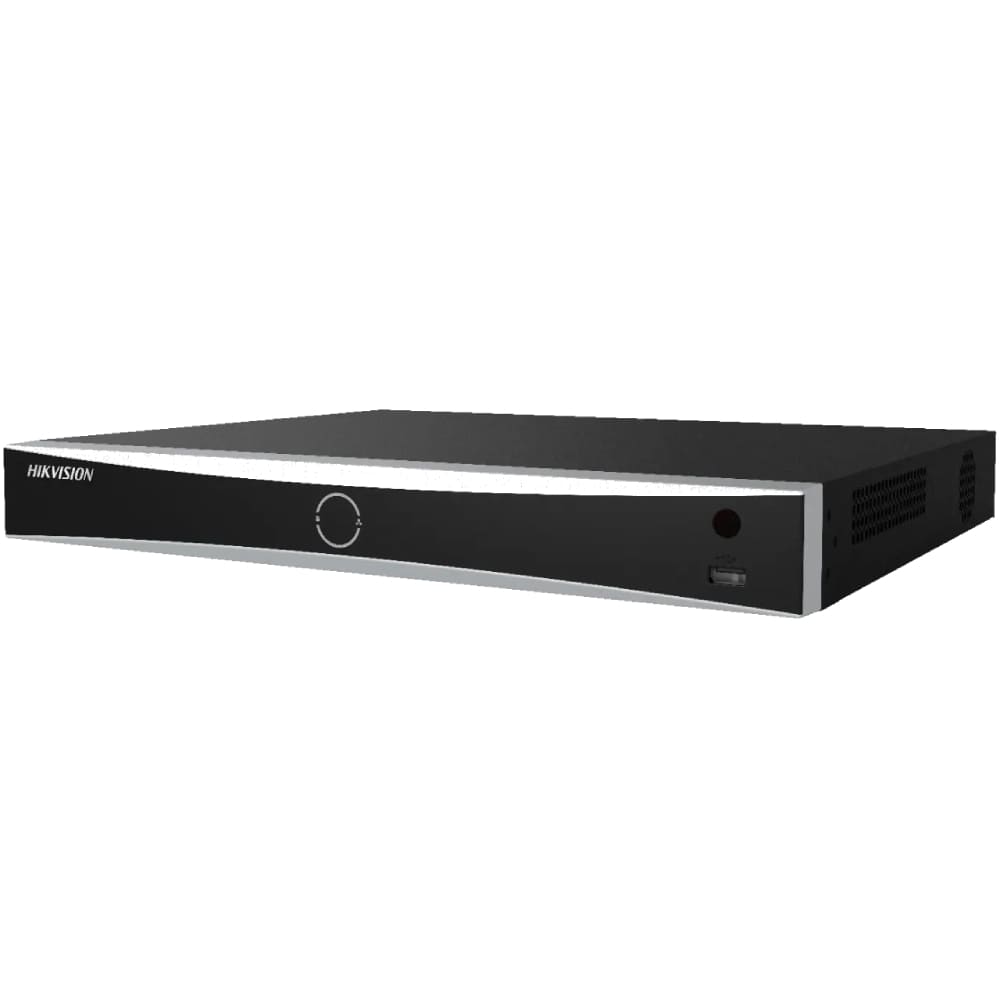
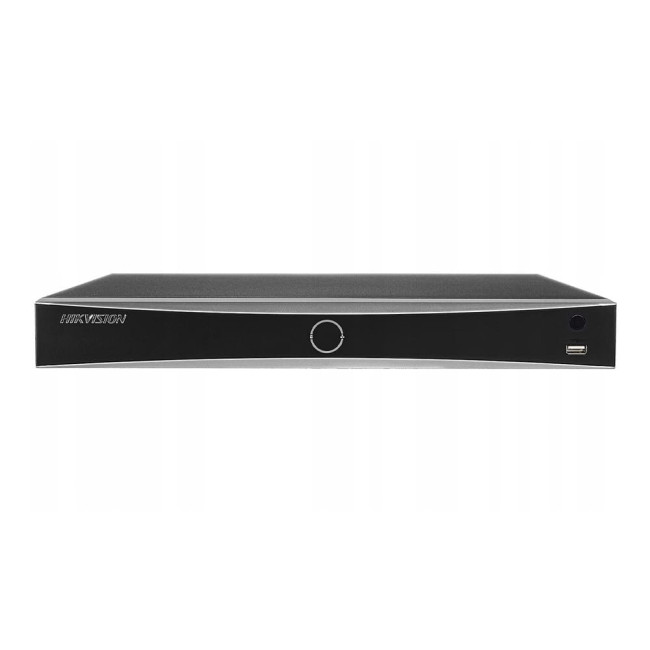


Description Hikvision DS-76xxNXI-K2(D)
A pure network NVR: what it accepts and what it will not
The NXI letters in the model name tell you this is a network video recorder in the strict sense: it takes IP cameras only and has no analogue input for coaxial cable at all. That is the line that separates it from Hikvision's hybrid families HQHI, HUHI and HGHI, which happily accept existing HD-TVI cameras over the wiring that is already in the walls. If your site is already cabled with coax and replacing the cameras is not on the table, this recorder is the wrong purchase — the catalogue carries the hybrid iDS-7108HQHI-M1/S(E) and DS-71xxHGHI-M1(C) for exactly that situation. Where the system is built from scratch, or migrated to twisted pair, the pure NVR repays you with higher resolution, genuine two-way communication with the camera and analytics that coaxial video simply cannot carry. K2 in the index means two drive bays and (D) marks the hardware revision; the DS-76xxNXI-K2(D) line exists in 8-channel and 16-channel versions inside the same chassis, so confirm the channel count in the specification table of this particular listing before you order.
No built-in PoE — budget for a switch separately
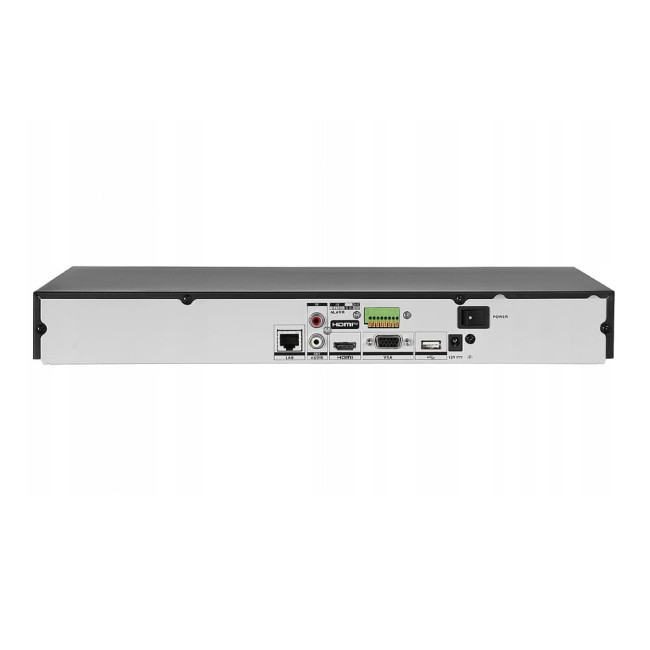
There are no PoE ports on the rear panel: the recorder offers a network interface to join your LAN, and powering the cameras is left to you. In practice that means a PoE switch or injectors are a mandatory line in the estimate — for eight cameras installers typically pick an 8- or 9-port switch with a 60-120 W total PoE budget, counting 6-12 W per camera. Many buyers read this as a drawback, yet the separate-switch layout has a real advantage: the switch can sit closer to the cameras, in a cabinet at the far end of the property, so you pull a single uplink to the recorder instead of eight camera runs. A switch is also far easier to replace or extend than ports soldered into the recorder, and when it fails you replace an inexpensive box rather than the recording node itself. The honest downside is one more link in the power chain: your UPS has to carry both the recorder and the switch, otherwise a mains failure kills the cameras before the recorder even notices they are gone.
160 Mbps of incoming bandwidth: how many cameras really fit
The limit that bites first is not the channel count but the aggregate bitrate, and here it is 160 Mbps incoming. For a sense of scale, a 2 MP camera in H.265 at 25 fps produces roughly 2-4 Mbps, a 4 MP camera 4-6 Mbps and an 8 MP camera 8-12 Mbps. Eight 8-megapixel cameras therefore fit inside the budget with room to spare, leaving headroom for the substream, for the bitrate spikes that rain, snow and wind-blown foliage always cause, and for cameras you add later. Recording resolution goes up to 12 MP, so the box will not become the bottleneck if you put one high-resolution overview camera on the gate. Keep only the decoding ceiling in mind: live viewing at full quality is limited to roughly two 12 MP channels or three at 8 MP, which is why the multi-view on the monitor quietly switches to the substream — the recorded file keeps its full quality regardless.
AcuSense: the recorder tells a person from a branch
Deep-learning Motion Detection 2.0 runs on every channel and classifies a moving object as a human or a vehicle instead of merely registering that pixels changed. You feel the difference on the very first night: without that filter an owner collects dozens of alerts about a cat, a street-lamp shadow and a branch in the wind, switches notifications off within a week, and the system stops being a security system at all. Here the alert arrives when there is genuinely a person in frame, and the archive gains a search by object type — instead of scrubbing through eight hours of footage you get every human appearance in a chosen zone in about a minute. Perimeter protection is included as well, meaning line crossing and intrusion into a defined area, along with facial recognition on one channel from the video stream or up to four channels from captured pictures, with as many as 16 face libraries. One limitation is worth knowing in advance: the face analytics here are basic, and if you need licence plate reading, visitor counting or object attributes, that is the job of the senior I-series rather than this model.
Two drives, up to 16 TB and what that means in days
The two SATA bays take up to 16 TB in total, and it is disk capacity rather than channel count that usually decides how far back you can rewind. The rough arithmetic is good enough for planning: one 2 MP camera recording around the clock in H.265 consumes roughly 30-35 GB a day, a 4 MP camera about 50-55 GB and an 8 MP camera 100-110 GB. Eight 4 MP cameras running 24/7 therefore write about 430 GB a day, so a fully populated 16 TB holds somewhere near 35-37 days; the same eight cameras at 8 MP shrink that to 18-20 days, while 1080p stretches it to roughly two months. Fit a single 8 TB drive instead and every figure above halves, which is precisely the argument for the two-bay version over a single-bay one. Event-based recording multiplies the depth two to four times on a quiet site, but in a shop or a warehouse with constant movement the gain is marginal, so size the disks for continuous recording and treat detection as a bonus.
Outputs, monitors and the small things that matter on site
HDMI delivers 4K (3840 × 2160) and VGA works simultaneously with it, which gives you two screens: one in the owner's office and one at the guard post or in the sales floor, where a visible live image discourages a share of visitors by itself. On an eight-channel system a 4K output is not marketing: in an eight-window layout each tile receives about a quarter of Full HD, and on a 4K panel a face in such a tile is still readable, while on an ordinary 1080p monitor it is not. Four alarm inputs and one output are on the back: the inputs take a reed switch on the gate or an infrared barrier so that recording and alerts start from an external sensor, and the output drives a siren or a floodlight. The metal-and-plastic chassis measures 385 × 315 × 52 mm and weighs about a kilogram, running from an external 12 V adapter at up to 15 W without drives — even a modest UPS keeps it alive for a long time. Control is conventional: a mouse locally, a web interface and the Hik-Connect app remotely, with DHCP, DDNS, NTP, SMTP and UPnP giving you e-mail alerts and outside access without a dedicated public IP address.
Where it belongs and the jobs it was built for
Eight channels describe a typical detached house with a perimeter — two gates, two or three facade cameras, one on the back yard and a couple indoors — as well as a small shop, a service station, an office or a warehouse with one or two loading bays. The pair of drive bays makes the model appropriate wherever footage has to be kept for a long time because of an internal policy or an insurer's requirement: a car wash, a stockroom under material liability, a venue with a till area. An operating range of -10 to +55 °C and IP20 protection say plainly that this is indoor equipment — a rack, a storeroom, a locked niche — and not an unheated garage, let alone an outdoor enclosure. Think about the physical hiding place too: a recorder an intruder finds in two minutes and carries away together with the disks devalues the whole installation, so mount it out of sight and enable duplication of important events to the cloud or a network drive. For a two- to four-camera site the model is overkill and the four-channel DS-7604NXI-K1(D) does the same job; if twelve to sixteen cameras are planned, look straight at the 16-channel versions instead of parking a second recorder beside this one.
How it differs from its neighbours in this catalogue
Its closest relative is the DS-7604NXI-K1(D): identical AcuSense analytics and the same 16 TB ceiling, but only four channels and a single drive bay, so if four cameras is genuinely the final number the junior model settles the task without the extra outlay. The DS-7108NI-Q1/8P(D) tempts with eight built-in PoE ports — one cable per camera and no separate switch — yet it is a Q-series box without AcuSense, meaning human and vehicle classification only happens if the camera itself can do it, and its storage ceiling is 6 TB. The DS-7616NXI-K1(B) doubles the channels with the same analytics but keeps a single drive bay, so sixteen cameras write into half the capacity and per-camera archive depth falls roughly fourfold against a fully populated K2. The DS-7608NXI-I2/S(E) is the senior I-series: it adds licence plate recognition, people counting and video structuralisation, powers straight from 220 V and spreads viewing across three monitors — worth the step up at a barrier-controlled entrance or in a shop that counts visitors, but unnecessary for guarding a residential perimeter. In short, the DS-76xxNXI-K2(D) is the right call when you want AI detection without extra features, a deep archive on two disks and your own camera-power topology built around a separate switch.
Send us the number of cameras, their resolution and the archive depth you want, and we will calculate the disk capacity and match a PoE switch to the configuration, so the recorder does not have to be replaced six months from now.
Characteristics Hikvision DS-76xxNXI-K2(D)
Reviews about Hikvision DS-76xxNXI-K2(D) from real users
No reviews found







