
 m. Сміла, Незалежності, 67г. оф, 406/6























HIKVISION DS-7108NI-Q1/8P(D) (8 CHANNELS, 8 PoE) - IP VIDEO RECORDER

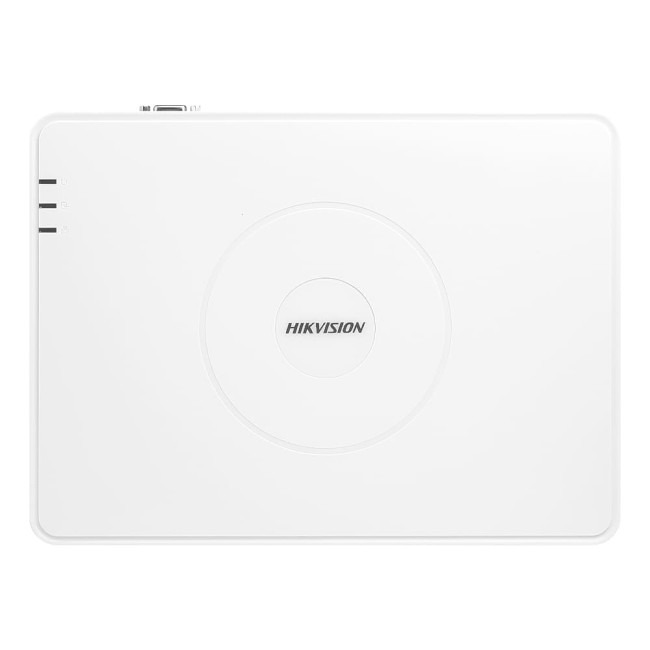
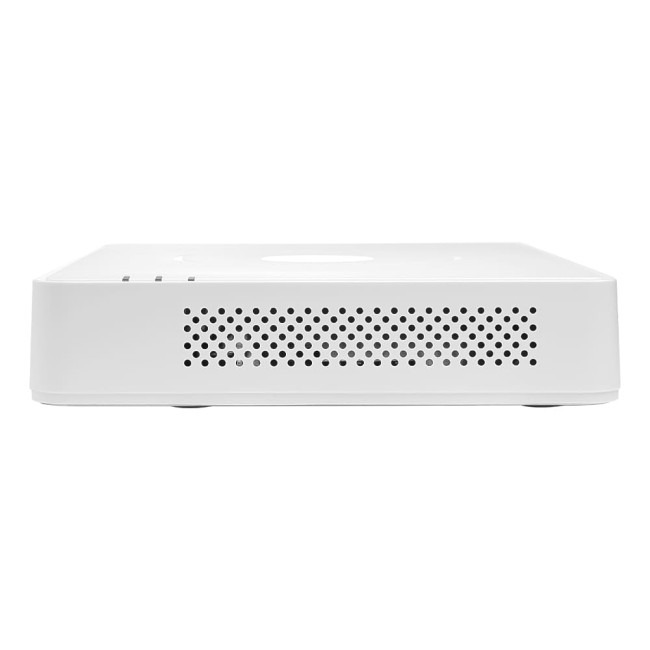
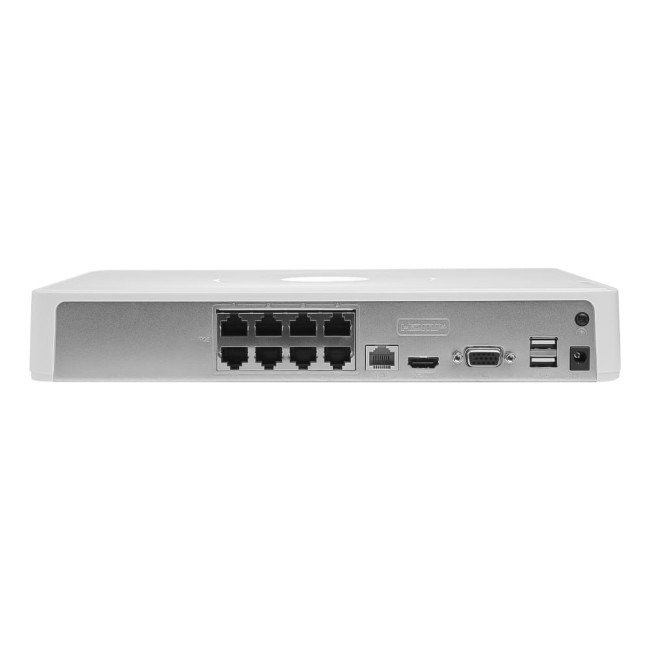
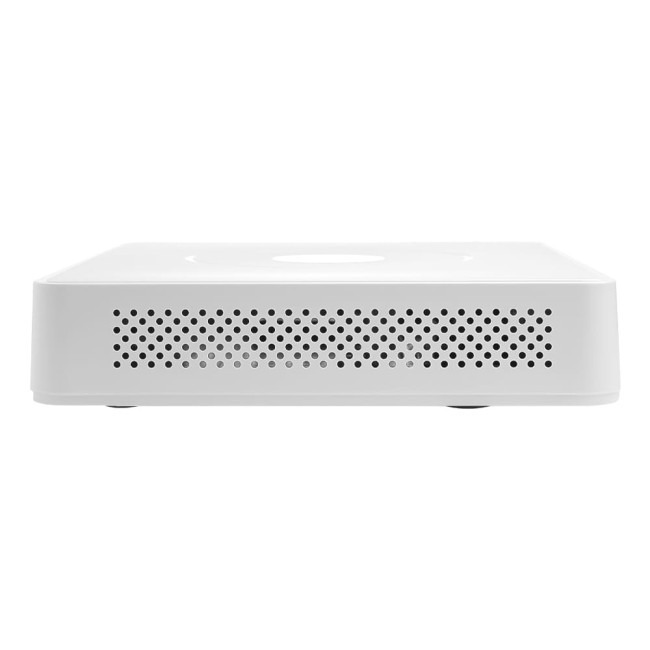
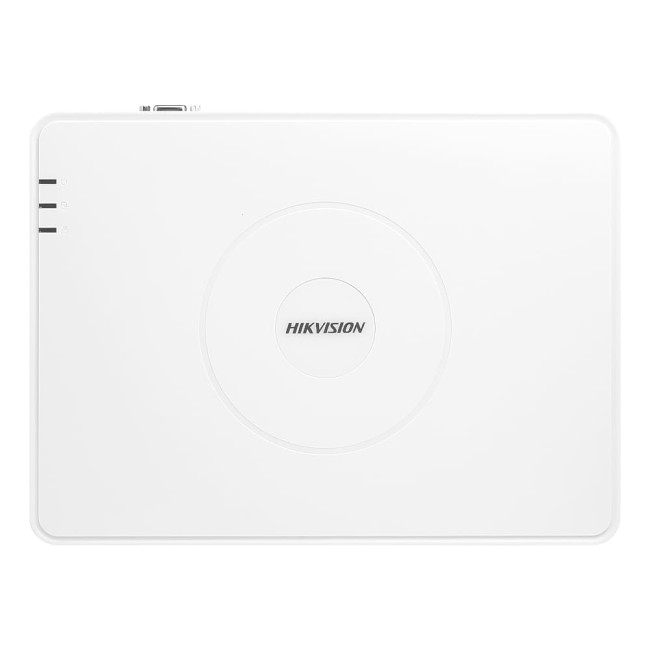
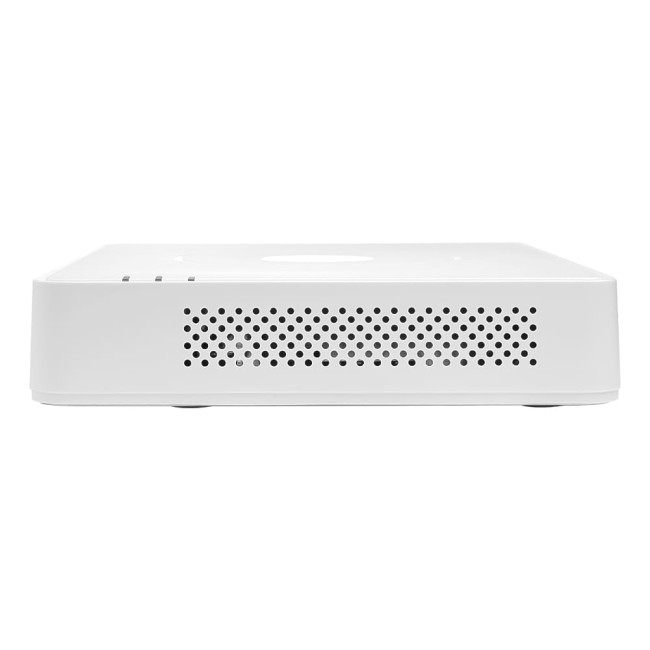
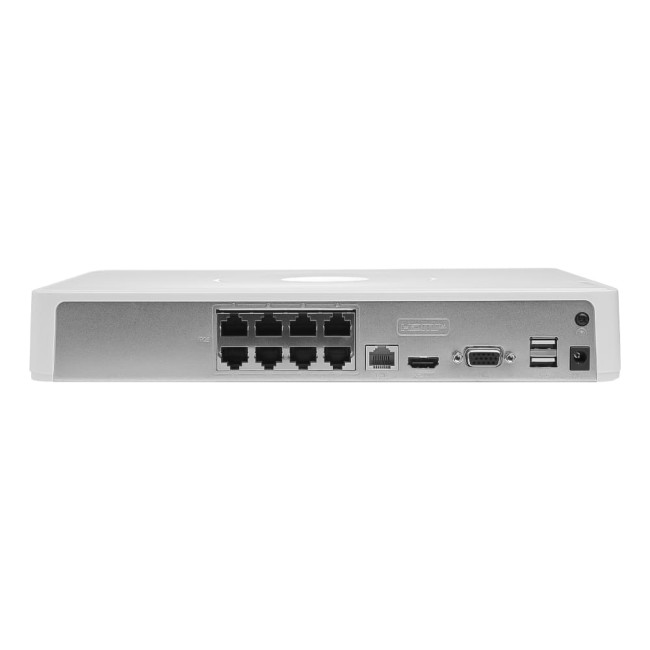
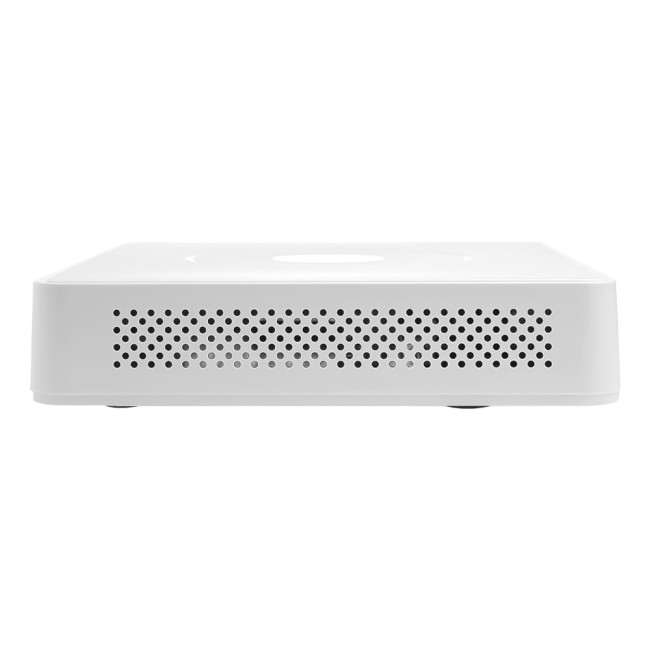


Description Hikvision DS-7108NI-Q1/8P(D)
Eight PoE ports: power and video on a single cable to every camera
The practical heart of this model is its eight built-in IEEE 802.3af/at PoE ports, which means one single run of twisted pair reaches each camera and carries both power and the video stream. That removes the most expensive part of an installation: no separate PoE switch in the cabinet, no mains socket beside every camera, no extension leads on the facade, and the entire power side of the system collapses into one 48 V supply. A typical outdoor Hikvision camera with infrared illumination draws 5-8 W, so eight of them together take roughly 40-65 W and fit the recorder's PoE budget with room to spare. That headroom is worth checking model by model, because the total PoE power differs between revisions of the series, and if you plan cameras with housing heaters, pan-and-tilt motors or a powerful white-light floodlight, a single point easily climbs to 12-25 W and eight of those will exceed the budget. The second caveat is distance: PoE works reliably up to 100 metres of twisted pair, and longer runs need either a repeater switch halfway or a fibre segment.
This is a pure network NVR: analogue cameras will not connect to it
The NI in the model name stands for Network Interface, meaning the unit accepts IP cameras and nothing else. Do not confuse it with Hikvision's hybrid recorders such as the iDS-7108HQHI-M1/S(E) or the DS-71xxHGHI-M1(C): those carry BNC inputs for coaxial cable and analogue HD-TVI cameras on the rear panel, whereas this one has eight RJ-45 sockets and not a single BNC. If your site already has coax in the walls and working analogue cameras, this recorder is simply the wrong device for them — you would have to replace the entire cabling or buy a hybrid model instead. On a new site, on the other hand, twisted pair is the clearly better investment: it costs less than combined coaxial cable, carries far higher resolution and leaves the system room to grow. Third-party cameras connect over ONVIF, while native Hikvision devices are found and added automatically as soon as the recorder is activated, which saves the most nerves when you are doing the installation yourself.
Eight channels, 6 MP inputs and a 60 Mbps pipe: where the real ceiling sits
The specification says the recorder accepts cameras of up to 6 MP, which is true, but full-channel recording is only guaranteed up to 4 MP — and it is that figure, not 6 MP, that should drive the design of a full eight-camera set. The reason is bandwidth: incoming traffic is capped at 60 Mbps, so eight 4 MP cameras at roughly 4 Mbps each add up to 32 Mbps and fit comfortably, while eight six-megapixel streams at maximum quality run past the limit. Decoding for live view has its own ceiling: the unit renders four channels at 1080p simultaneously, or two channels at 4 MP, or a single 6 MP stream, and you feel that during synchronous four-channel playback. The video output matters too: HDMI here tops out at 1920 by 1080, so plugging in a 4K monitor will not add detail — it has no effect on what gets recorded, but the difference shows when you review footage on a large screen. If 4K cameras on a 4K monitor are the goal, look at the NXI series instead; this model was designed for a balanced 2-4 MP system.
A Q-series unit without AcuSense: what analytics you get and what you do not
The Q in the name marks the Value series, and that shows directly in the analytics: there is no full deep-learning AcuSense running inside this recorder. What you do get are the basic rules — line crossing and area intrusion, plus classic motion detection; facial recognition, face picture comparison and thrown-object detection stayed in the higher ranges. In practice this means something simple: the intelligence has to live in the cameras rather than in the recorder, so pair this unit with cameras that carry AcuSense on board — the G2 or G3 generations — which tell people and vehicles apart from branches and shadows by themselves. Put cheap analytics-free cameras on it instead and you will get an alert for every movement in frame, switch the notifications off within a week, and lose the security function of the system altogether. Smart search across a selected area of the frame does work here, and it speeds up investigations noticeably: instead of scrubbing hours of footage you draw a rectangle around the door and watch only the fragments where something moved inside it.
A single bay for up to 6 TB: how many days of archive that really is
There is one drive bay, capped at 6 TB, and the disk is not included in the box, so it has to be budgeted separately. The reference figures for round-the-clock H.265+ recording are these: a 2 MP camera consumes about 22 GB per day, a 4 MP camera around 32 GB, a 6 MP camera roughly 48 GB. For a full set of eight cameras at 2 MP that works out to about 175 GB per day, which is roughly 11 days of archive on a 2 TB disk, 23 days on 4 TB and 34 days on the maximum 6 TB. Move all eight cameras to 4 MP and the daily figure climbs to around 255 GB, so even a six-terabyte disk holds only about 23 days — which is exactly why the 6 TB ceiling is this model's main limitation for anyone who needs a month or more of footage. Two further corrections are worth making: formatting leaves roughly 5.4 TB usable out of 6 TB, and event-based recording instead of continuous cuts the volume three to five times, but only on sites without constant traffic. Choose a surveillance-grade disk such as WD Purple or Seagate SkyHawk: there is no hot swap and no RAID here, and an ordinary desktop drive under continuous writing wears out in a year or so.
Where this model belongs and what jobs it was built for
This is a recorder for a medium-sized new site where the system is being built from scratch on twisted pair: a private house with six to eight cameras around the perimeter, a small office, a service station, a cafe, a corner shop. A typical working configuration looks like this — four 4 MP cameras on the corners of the house, two covering the gate and the side door, two more indoors, all of it connected by eight cables straight into the recorder with no extra hardware in the cabinet. The compact 48-millimetre-tall body weighing about a kilogram sits on a shelf in the boiler room or a service niche next to the router, so a proper server rack is unnecessary. Remote access runs through Hik-Connect, and for a private property the limit of 16 simultaneous connections is generous, though a shop with several managers and an accountant should keep it in mind. What you should not do with this model is build a 4 MP system with a month-long archive, or feed it six-megapixel cameras at maximum quality: the first plan hits the disk ceiling, the second hits the 60 Mbps pipe.
How it differs from the neighbouring models in this catalogue
Its closest relative within the brand is the hybrid iDS-7108HQHI-M1/S(E): the same channel count and even AcuSense analytics on board, but it works with analogue cameras over coax and has no PoE at all, so the choice between the two is settled by the cable already in the building rather than by the spec sheet. If you need four channels instead of eight but with 4K and serious analytics, the DS-7604NXI-K1/4P(D) is the more logical direction: it takes cameras up to 12 MP, runs AcuSense inside the recorder and holds a disk of up to 16 TB, though it offers only four PoE ports. The DS-7616NI-Q1(E) in this same catalogue is the identical Q-series level stretched to sixteen channels with an 8 TB disk ceiling, but it carries no built-in PoE whatsoever and forces you to buy a switch separately — which is precisely why, for a system of exactly eight cameras, this model usually works out more practical. Among the competitors the nearest are Dahua's DHI-NVR1108HS-8P-S3/H and the Reolink NVS8 (RLN8-410): Dahua offers a higher disk ceiling, Reolink a simpler app and automatic pairing with its own cameras, yet both tie you tightly to their own brand of camera, whereas the compatible Hikvision range in Ukraine is the widest. The simple rule: six to eight cameras up to 4 MP and a ready-to-run kit out of the box — take this model; 4K and analytics inside the recorder — pay the premium for the NXI series.
Tell us how many cameras you are planning and at what resolution — we will work out the PoE budget, the disk size for the archive depth you want, and whether the built-in ports will do without a separate switch.
Characteristics Hikvision DS-7108NI-Q1/8P(D)
Reviews about Hikvision DS-7108NI-Q1/8P(D) from real users
No reviews found







