
 m. Сміла, Незалежності, 67г. оф, 406/6























DAHUA DHI-NVR2116HS-I2 (16 CHANNELS, 12 MP) - IP VIDEO RECORDER





Description Dahua DHI-NVR2116HS-I2
Sixteen channels in a chassis that takes up one shelf
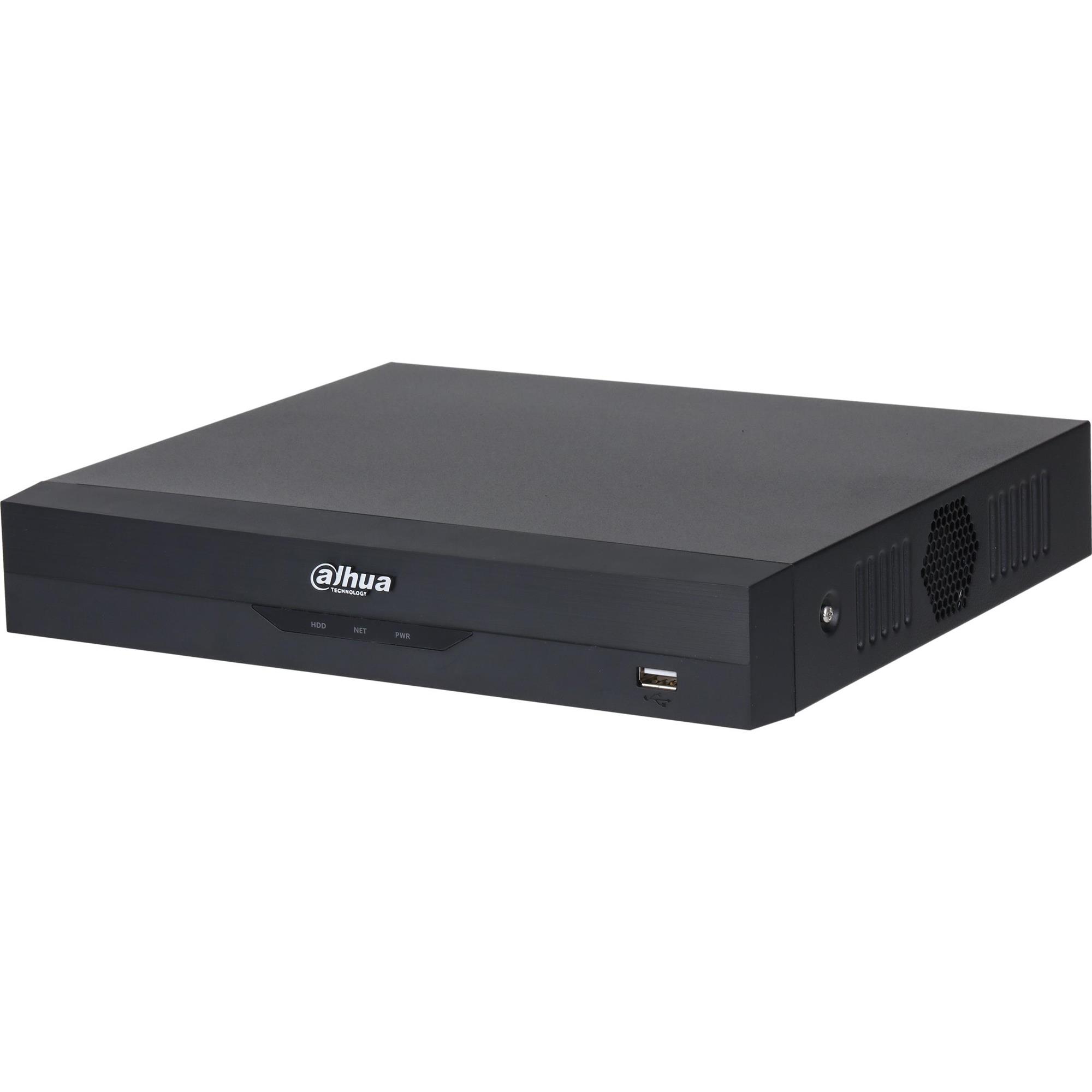
The HS in the model name stands for Half Size: a 1U case 260 mm wide and 232.7 mm deep, weighing 810 g. For a sixteen-camera system that is unusually small, since classic 16-channel recorders normally fill the full depth of a rack and weigh two or three times as much. In practice it means the unit slides into a shallow low-voltage cabinet, onto a shelf in a back room or into the small equipment niche of a shop where a full-size chassis simply would not go. The body combines metal with plastic rather than being plastic throughout, so the top panel doubles as a heatsink — which matters on sites where the recorder lives in a closed, unventilated cupboard. Compactness has exactly one price, and it is a serious one: there is room inside for a single hard drive, and that, rather than the channel count, is what limits the system first.
144 Mbps across sixteen cameras: how to avoid hitting the ceiling
Total incoming bandwidth is 144 Mbps, which divided evenly across sixteen channels gives about 9 Mbps per camera. That is enough for all sixteen positions to record at 4 MP with headroom, or for roughly ten cameras to run at 8 MP with a generous bitrate while the rest stay at 2-4 MP. The classic design mistake is setting every camera to maximum quality “just in case” and then finding that some channels drop recordings; the right approach is to allocate bandwidth by the importance of each position, giving the most to the gate and the till area. Smart H.265+ and Smart H.264+ help considerably here: on a static scene they cut the stream several times over, so the real load in a warehouse or a shop closed for the night comes out well below the calculated figure. Cameras up to 12 MP are supported, but do not plan on 12 MP optics across all sixteen channels — the bandwidth runs out long before the channels do. One nuance rarely printed on a price list matters more than the headline figure: those 144 Mbps apply with analytics switched off, and the moment you enable WizSense on the recorder the incoming bandwidth drops to 72 Mbps, halving the budget per camera — so plan resolutions around the lower number if you intend to use the smart detection at all.
One bay for up to 10 TB serving sixteen cameras — the model's central compromise
There is a single SATA bay accepting a drive of up to 10 TB, and the drive is bought separately rather than supplied. Run the numbers for continuous H.265 recording: sixteen 2 MP cameras generate roughly 670 GB a day, so a full 10 TB disk covers about two weeks. Sixteen 4 MP cameras exceed 1 TB a day and leave you with some ten days of history, and at 8 MP you are down to a single week. The usual answer is also the correct one — move most channels to motion or WizSense event recording, which stretches the depth two- or threefold and turns that week into a month. If, however, you genuinely need thirty days of continuous footage from all sixteen cameras, this model cannot physically deliver it, and a two-bay recorder such as the DHI-NVR22xx-I2 from this catalogue is the answer.
No PoE ports: sixteen cameras still need power from somewhere
The back panel offers a single gigabit RJ-45 for the network and no built-in PoE switch, which is the most significant budget item in a sixteen-channel system. You will need a separate managed or unmanaged 16-port PoE switch, chosen not only by port count but by power budget: sixteen outdoor cameras with IR illumination at 8-12 W each add up to 130-190 W, so a switch rated for 120 W total will fail you despite having the right number of ports. The recorder itself draws around 10 W without a disk and runs on 12 V, barely touching a UPS battery — but a 150 W switch demands serious backup power, and that is worth planning before installation rather than after the first outage. There is a practical advantage to having no PoE on board: on a large site it is easier to collect cameras into several zone switches (warehouse, sales floor, car park) and run one uplink to the recorder than to pull sixteen separate cables into a single point. If everything does converge on one spot and you want fewer boxes, this catalogue also lists recorders with PoE built in, such as the DHI-NVR2108-8P-I2 or the Hikvision DS-7108NI-Q1/8P(D).
WizSense across sixteen channels: where the analytics reach and where they stop
The I2 index means WizSense support, with the recorder running analytics on its own processor regardless of what the cameras can do. You get four channels of SMD Plus separating people from vehicles, one channel of perimeter protection with virtual lines and zones, and one channel of face detection and recognition backed by a local database. The nuance that matters on a sixteen-channel unit is arithmetic: four smart channels amount to a quarter of the inputs, so they must be assigned deliberately to the positions that matter most — the gate, the staff entrance, the till — while the remaining channels fall back on ordinary motion detection. That is still far better than nothing, since those twelve plain channels keep recording and still raise basic alerts; you simply filter wind and shadows out by hand. When smart detection is required on all sixteen positions, the answer is not a bigger recorder but cameras with WizSense of their own, because then each camera does its own analysis and the recorder stops being the bottleneck.
The kind of site this model was built for
Sixteen channels take you past the family home and into medium-format shops, vehicle workshops, warehouses, small production units, car washes, two-storey offices and the courtyards of apartment blocks managed by a residents' association. A site like that typically runs four to six perimeter cameras, two or three at the gate, several indoors and one each over the till or the guard post — which is exactly where sixteen inputs are consumed without any spare. The recorder has two video outputs, HDMI and VGA, and drives two monitors at once, which suits a guard post: the overall mosaic on one screen, an enlarged view of the critical position on the other. An operating range of -10…+55 °C and IP20 protection mean a heated room; a common warehouse mistake is mounting the recorder in an unheated enclosure by the gate, after which the drive stops spinning up in winter. This is not the model for a site that needs a long archive from every camera at once, nor for an owner who wants to install a recorder and forget it — a single disk needs its health watched.
How it compares with the other 16-channel recorders here
Its nearest rival on channel count is the Hikvision DS-7616NXI-K1(B): also sixteen channels, also one disk, also up to 10 TB, but with AcuSense analytics instead of WizSense, so the choice usually comes down to whose cameras are already on site. The cheaper Hikvision DS-7616NI-Q1(E) takes only up to 8 TB and belongs to the simpler Q series — a reasonable pick when the recorder is asked for recording alone, without smart detection. The main alternative within the Dahua range is the DHI-NVR22xx-I2 with two drive bays: if you need a month of footage rather than a week, paying for the second disk solves a problem that no bitrate setting can. And a point of principle: every model named here is a pure NVR and will not accept analogue cameras, so if the site already has coax running to sixteen positions, look at the hybrid DH-XVR5216AN-I3 from this same catalogue, which handles HDCVI and IP together. In short, the NVR2116HS-I2 packs the most channels into the least space and is the sensible choice where cameras are many and deep round-the-clock archiving is not critical.
Tell us about the site — how many cameras, at what resolution and how many days of archive you need — and we will work out whether a single disk in this model is enough or a two-bay recorder pays for itself.
Characteristics Dahua DHI-NVR2116HS-I2
Reviews about Dahua DHI-NVR2116HS-I2 from real users
No reviews found







