
 m. Сміла, Незалежності, 67г. оф, 406/6























DAHUA DHI-NVR2108-8P-I2 (8 CHANNELS, 8 PoE) - IP VIDEO RECORDER



Description Dahua DHI-NVR2108-8P-I2
Eight built-in PoE ports: one cable per camera instead of two
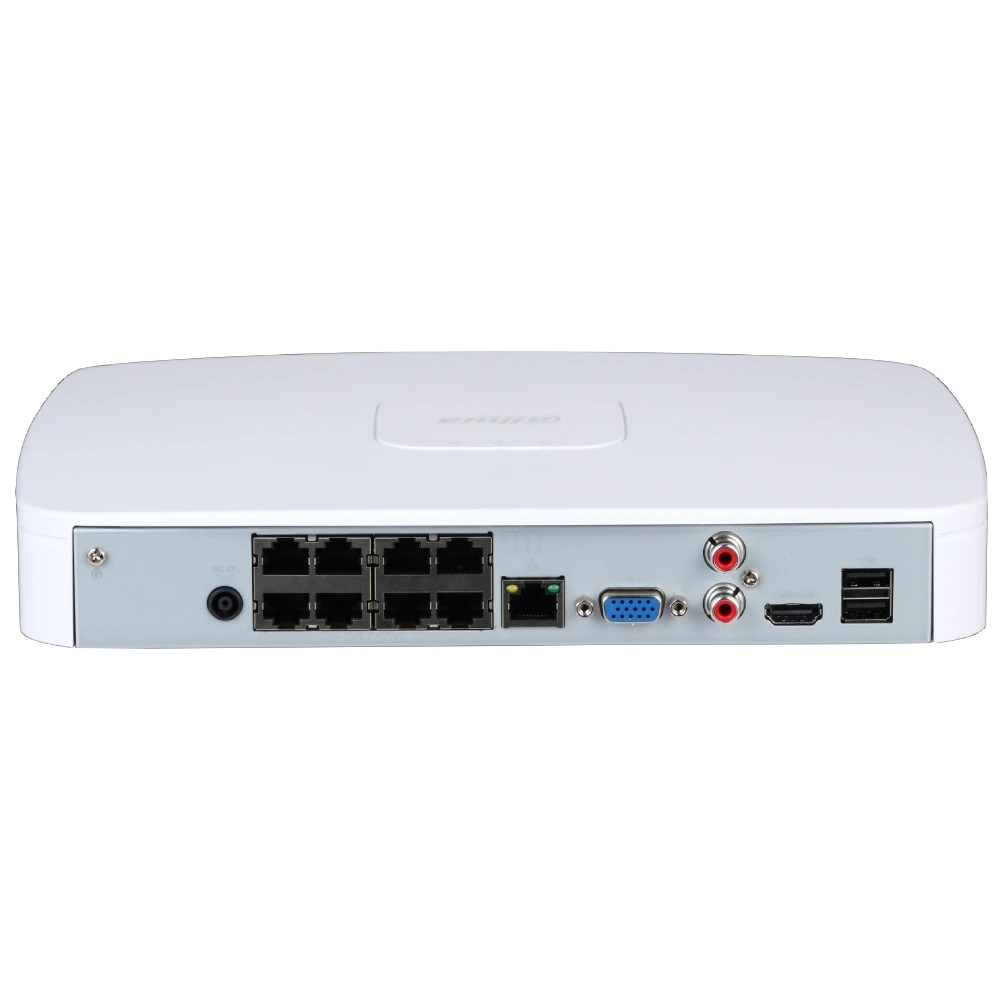
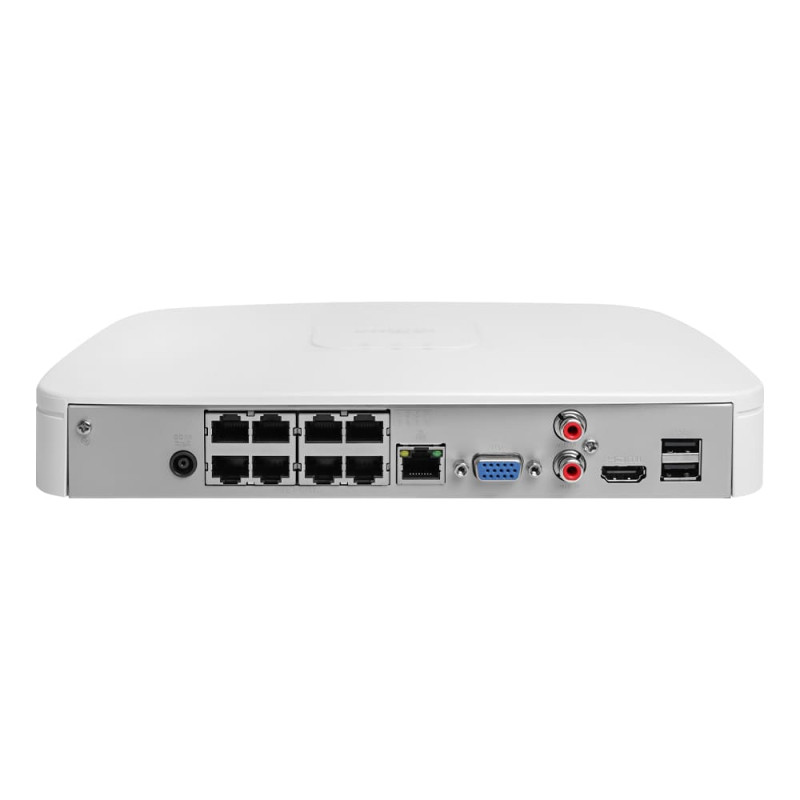
The 8P in the model name stands for eight PoE ports on the rear panel, and that is the whole reason to choose this version over the plain NVR2108-I2 without power on the ports. Every camera arrives on a single twisted-pair run that carries data and power together, so there is no separate PoE switch in the cabinet, no 12 V adapter at each mounting point and no second cable channel to cut through the wall. The PoE budget is 72 W shared across all eight ports, with up to 25.5 W available on a single port, which covers both 802.3af and 802.3at — including cameras with a white-light floodlight or a heated housing that a plain af switch simply cannot feed. In practice the sum works out like this: eight ordinary Dahua dome or bullet cameras draw 5–8 W each, 40–64 W in total, and fit inside 72 W with room to spare, but add two PTZ domes or a couple of floodlight models at 15–20 W and the power budget runs out before the ports do. One limit is worth knowing in advance: the PoE ports themselves are 10/100 Mbps (only the uplink LAN port is gigabit), and standard PoE reliably feeds a run of about a hundred metres — beyond that you need an intermediate switch or a locally powered camera.
A pure IP recorder: what that means if coaxial cable is already in the walls
The NVR2108-8P-I2 is a network recorder in the strict sense: it accepts IP cameras over Ethernet only and has no BNC input for an analogue signal at all. On a site built from scratch that is the right call — the IP path goes up to 12 MP, carries video and power on one cable and leaves you with a single network instead of two parallel systems. If, however, coaxial cable from an older analogue installation is already running through the house or the warehouse, this recorder cannot use any of it: you either pull fresh twisted pair along the same routes or buy a converter for every camera and add a failure point at each one. That is precisely the case the hybrid XVRs in this catalogue are built for — Dahua DH-XVR51xxC-I3/T, DH-XVR41xxHS-I/T or DH-XVR5216AN-I3 take HDCVI over coax and IP at the same time, so the existing cable stays in service while cameras are replaced gradually. The first question before ordering is therefore not about channels or disk size but about cable: working coax on site points to an XVR, while no cabling yet or planned twisted pair points to this NVR, with no premium paid for hybrid inputs you will never use.
WizSense inside the recorder: smart detection even with basic cameras
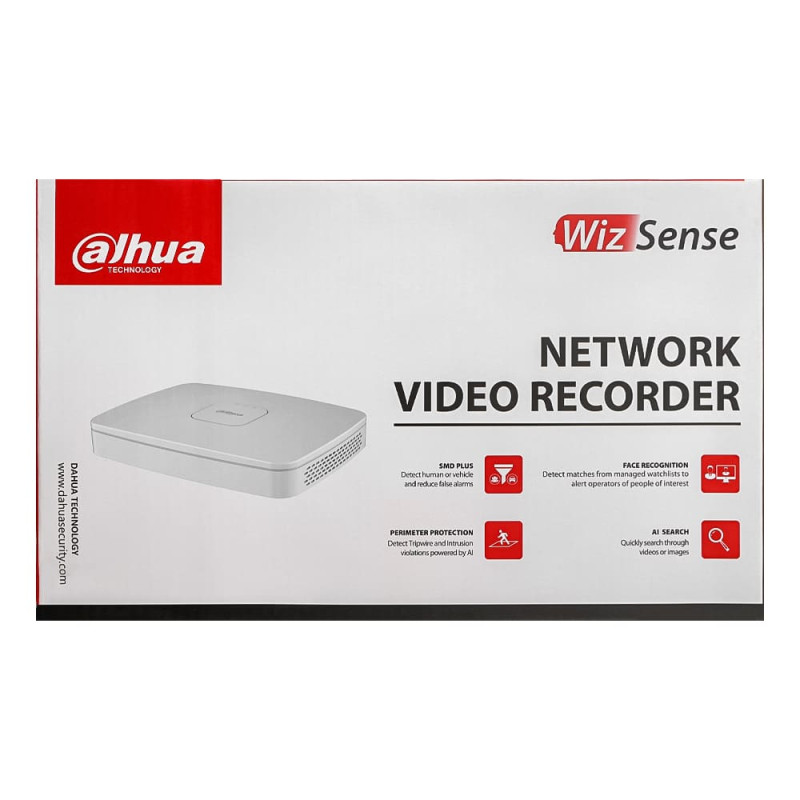
WizSense here is not a sticker on the case but a dedicated AI chip that analyses the streams on the recorder itself, which means the smart functions are available even when the cameras carry no analytics of their own. On its own silicon the unit handles four channels of SMD Plus — a second pass that separates people and vehicles from foliage, rain and changing light — plus one channel of perimeter protection with tripwire and intrusion zones and one channel of face detection and recognition backed by ten databases holding up to 5,000 images in total. When the cameras do their own analytics the recorder's resources are freed and the ceilings rise noticeably: up to six SMD Plus channels, four perimeter protection channels and five face recognition channels, because the heavy lifting happens in the camera and the recorder only logs finished events. The practical value lies in suppressing false alarms: without SMD Plus an eight-camera system pushes a notification for every branch, every cat and every pair of headlights passing on the street, the owner switches notifications off within a week, and the security function disappears along with them. AI search by metadata deserves a separate mention — instead of scrubbing through eight hours of footage you pick an object type or upload a face photo and get matches across every channel for the day, which is where the real time saving lives when an incident has to be reconstructed.
144 Mbps of recording bandwidth and the decoding ceiling
Incoming and recording bandwidth are capped at 144 Mbps with recorder-side analytics off, and at exactly half that — 72 Mbps — once analytics are running, so this is the first figure to check when picking cameras. Eight 4 MP cameras in Smart H.265 add up to roughly 40–50 Mbps and fit either mode comfortably, whereas eight 8 MP cameras at maximum quality can push past 72 Mbps, which means lowering the bit rate or moving the analytics onto the cameras. The second ceiling concerns live view on the local monitor: with AI off the recorder decodes one 12 MP channel, two 5 MP channels, three 4 MP channels or six 1080p channels at once, and with analytics enabled those numbers drop again. This does not mean the remaining cameras stop recording — all eight channels are written at full quality, the multi-screen view simply falls back to the lower-resolution sub-stream. Confusion on exactly this point is the most common source of disappointment: buyers expect eight full 4 MP images on one HDMI output and see a mosaic of sub-streams instead, even though that is normal behaviour for any recorder in this class.
A single bay for up to 10 TB: how many days of archive you really get
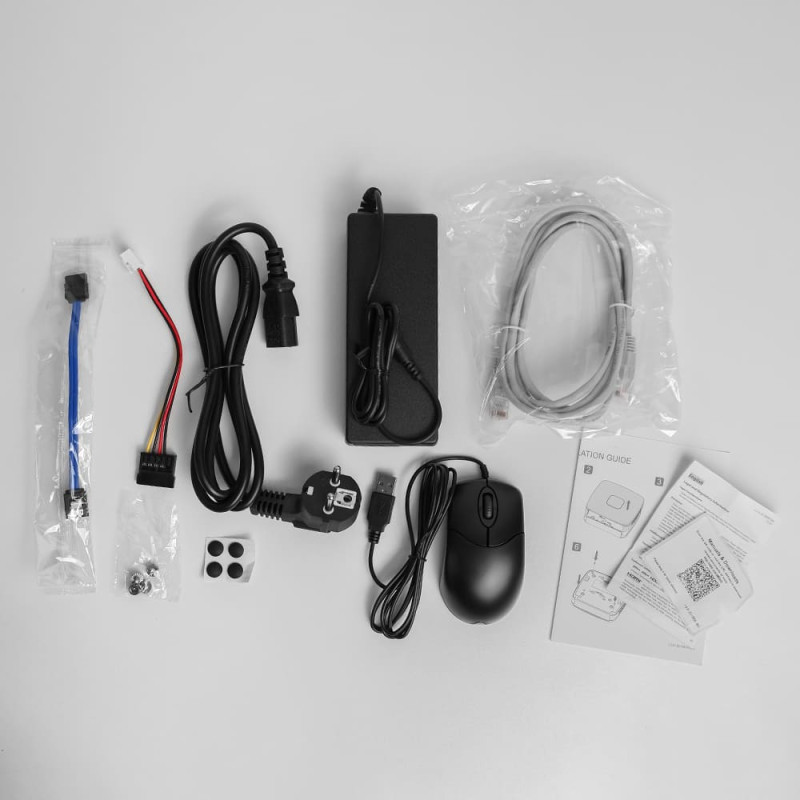
The chassis holds one SATA bay for a 3.5-inch drive of up to 10 TB, and no drive is supplied in the box — it is ordered separately, ideally a surveillance-rated model designed for continuous writing rather than a desktop disk. The rough arithmetic for 24/7 recording in H.265 runs as follows: eight 2 MP cameras consume around 250–280 GB per day, so an 8 TB drive holds roughly a month; eight 4 MP cameras need about 430 GB per day, which empties the same 8 TB in 18–19 days and gives around three weeks on a full 10 TB. Eight 8 MP cameras recording continuously generate over 850 GB a day and leave only 11–12 days even on the largest supported drive, so at that resolution the recorder is better configured for event-based recording. Smart H.265+ can cut the bit rate several times over in a static scene and double or triple those figures, but it should not be built into the calculation: an outdoor view with trees and passing cars is almost never static. If the requirement is 30 days or more at 4–8 MP there are two honest options — record on events rather than continuously, or choose a recorder with two drive bays, because there is no hot swap, no RAID and no eSATA here, and replacing the disk means stopping the recording.
Where this recorder belongs and the jobs it was built for
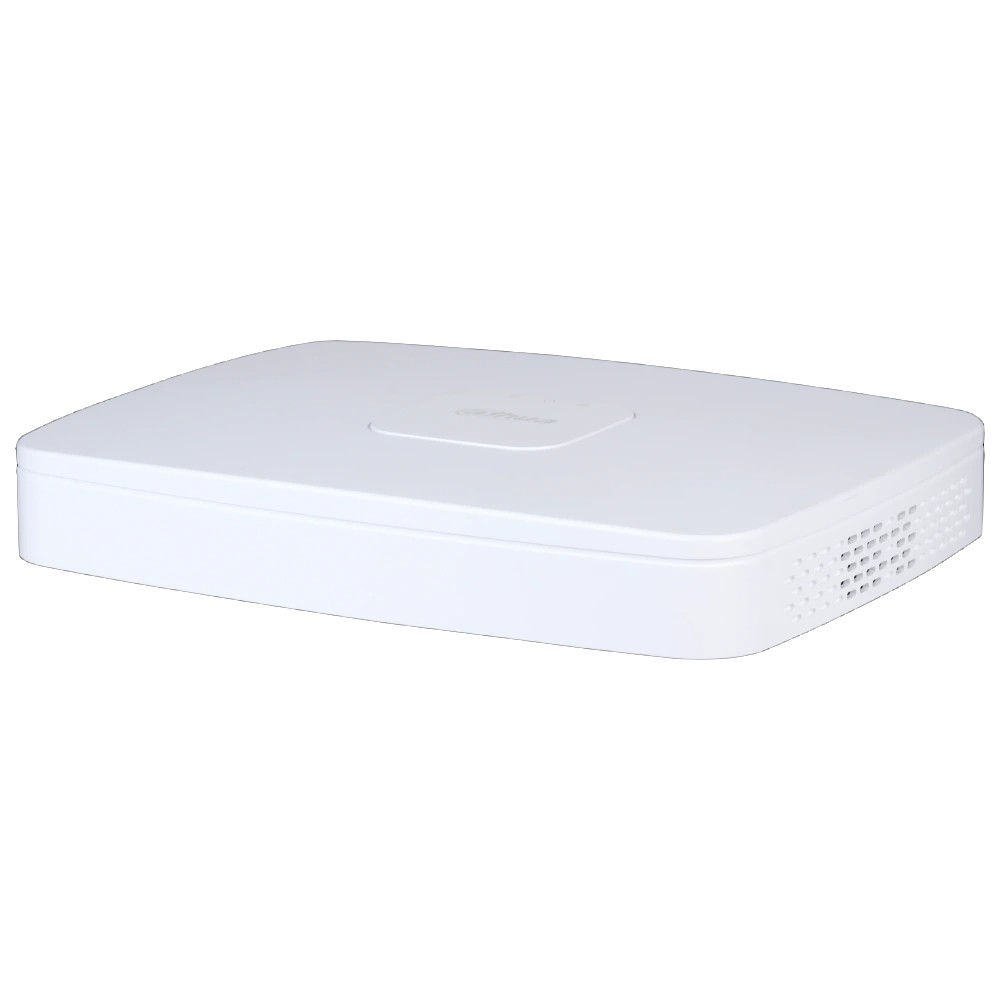
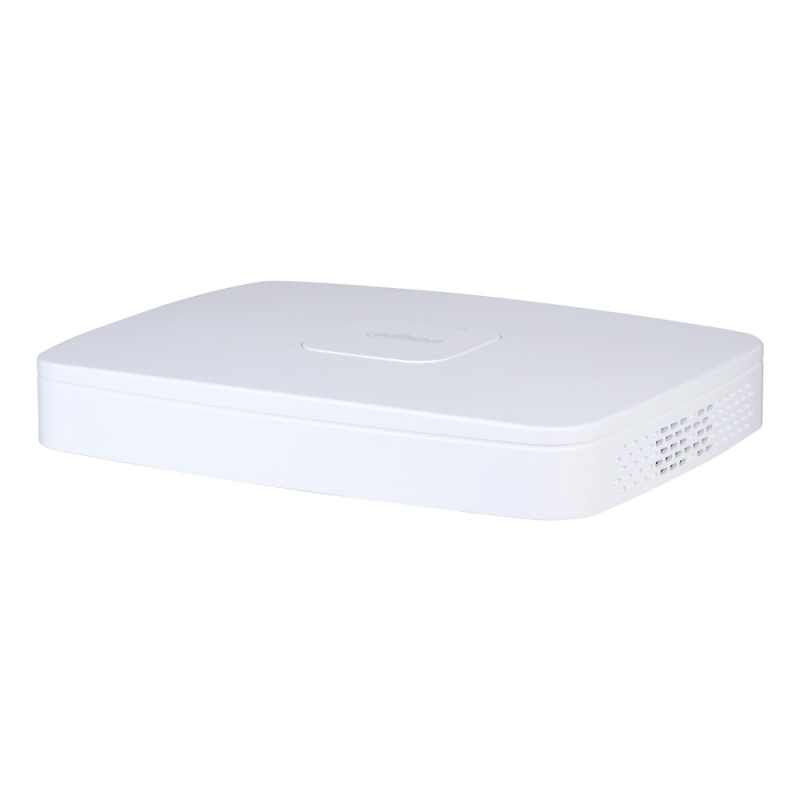
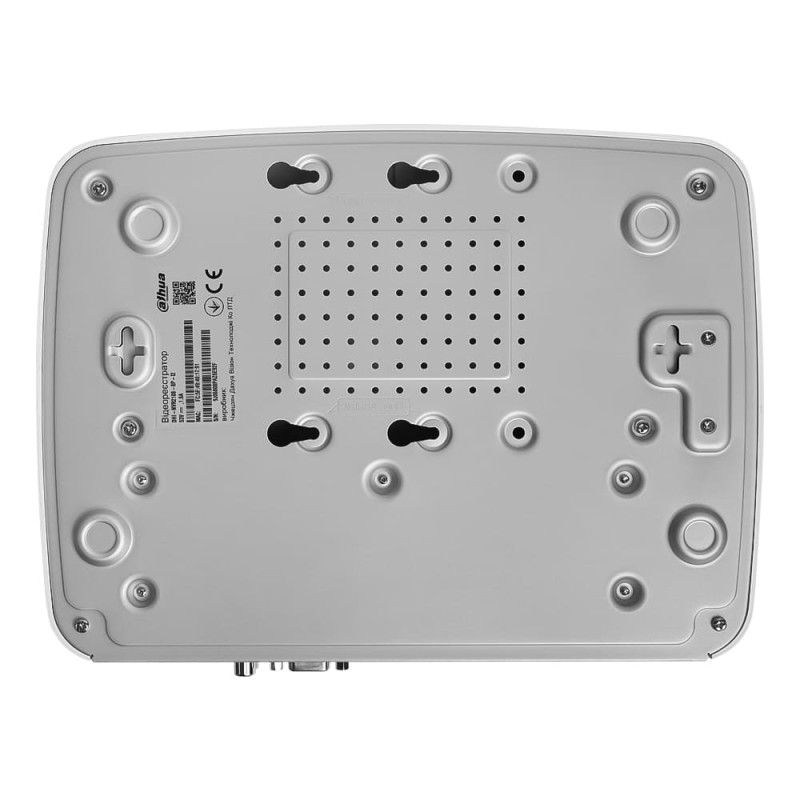
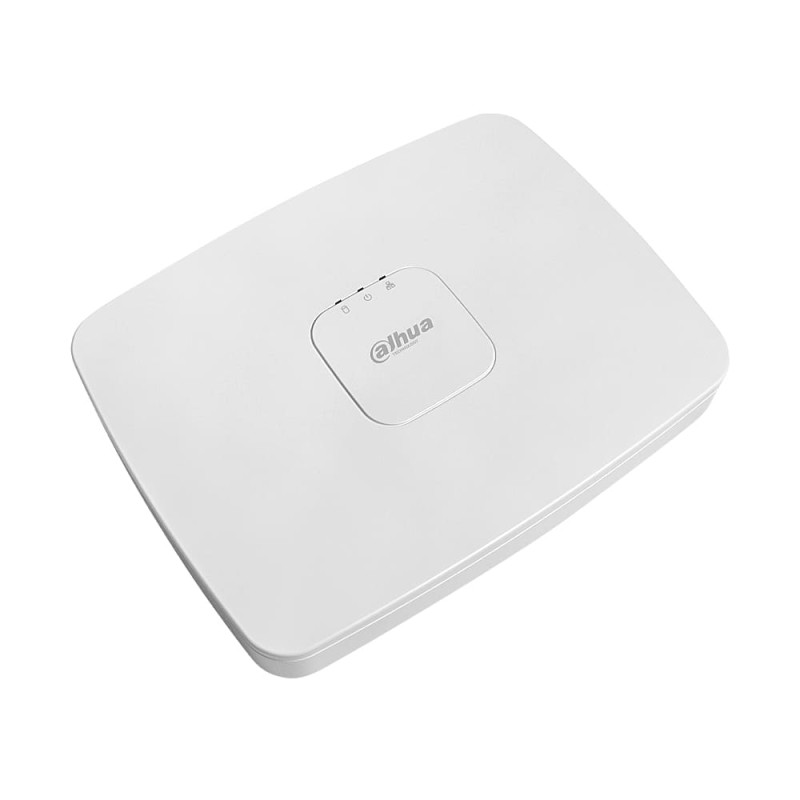
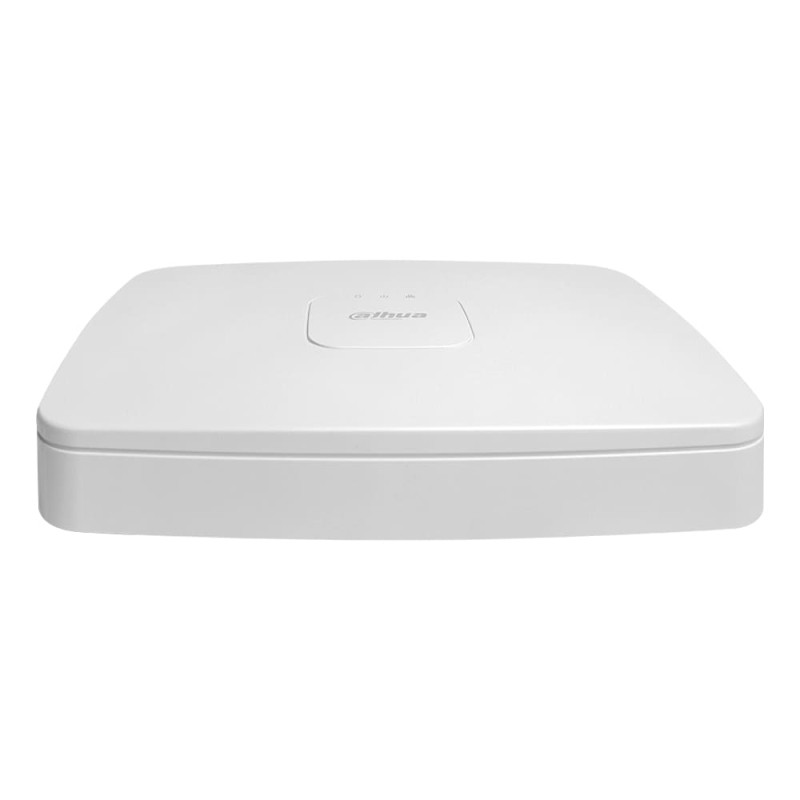
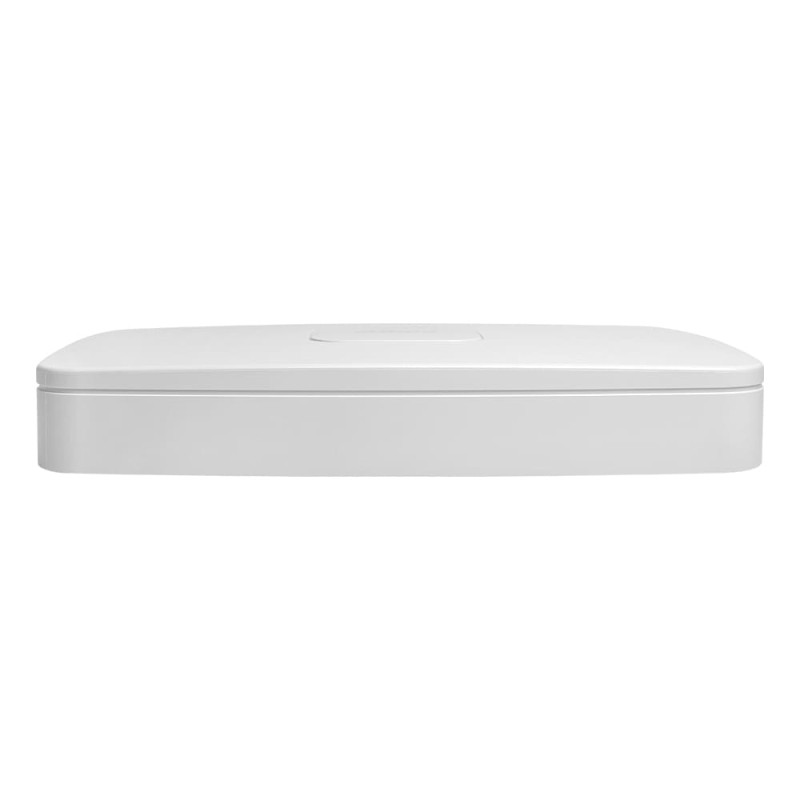
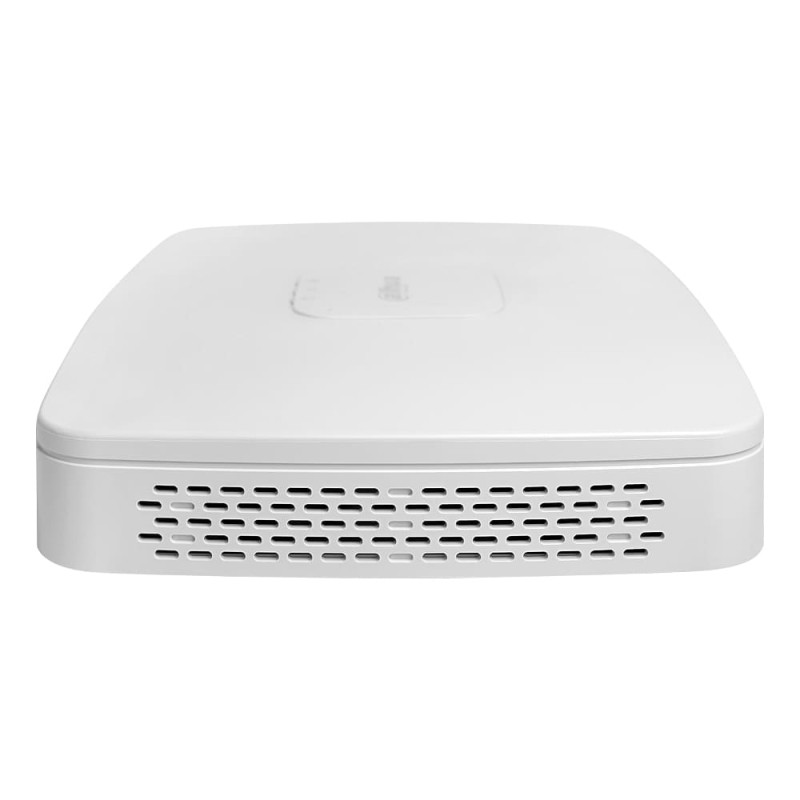
The typical fit is a private house or a small business that needs five to eight IP cameras and would rather avoid a separate cabinet with a switch: yard, driveway, gate, facade, back entrance, garage and a couple of indoor positions all land on one unit. The second common case is a shop, café, service station or small warehouse, where eight channels cover the till area, the entrance, the sales floor, the stockroom and the loading bay — and the single face recognition channel logically goes to the entrance, where people pass the lens head-on and close up. The plastic desktop chassis measures 270×206×47.5 mm and weighs 0.7 kg, so it sits on a shelf in a cabinet or a utility room, but IP20 protection and a -10…+55 °C range mean dry indoor placement only: an unheated attic or an outdoor enclosure in winter is out of the question. The temperature-controlled fan is quiet, yet a bedroom or a silent office is still the wrong place for it — a technical niche is better. It is out of place where more than eight channels are needed, since one 16-channel unit always beats two recorders with two apps and two archives, and where cameras are spread 150–200 metres apart: there it is cheaper to deploy intermediate PoE switches and buy a recorder without PoE at all.
How it differs from the neighbouring models in this catalogue
The closest relative is the Dahua DHI-NVR1108HS-8P-S3/H from the entry-level 1xxx line: the same channel count and the same eight PoE ports, but a budget series with a lower disk ceiling of 8 TB and markedly weaker analytics inside the recorder. If your cameras already run WizSense and do all the processing themselves, you will barely notice the difference and the cheaper unit is sensible economy; if the cameras are basic, it is precisely the 2xxx-I2 series that adds recorder-side SMD Plus, perimeter protection and face recognition. Within the same family the Dahua DHI-NVR2104-P-I2 offers the identical platform in four channels with four PoE ports, which is the right scale for a flat or a holiday house where a fifth camera will never appear. The Dahua DHI-NVR22xx-I2 and DHI-NVR2116HS-I2 give 8 and 16 channels without built-in PoE: better where a managed switch is already installed or cameras are distributed across several floors, though the switch and its power then have to be budgeted separately. From other brands the direct rival is the Hikvision DS-7108NI-Q1/8P(D) — also 8 channels and 8 PoE, but a 6 TB disk ceiling instead of 10, which means a shorter archive all else being equal; the Reolink NVS8 is simpler to set up yet works fully mostly with Reolink's own cameras. In short, this model earns its place when you need exactly eight IP cameras wired turnkey on one cable each, a deep archive on a single large drive, and analytics that do not depend on how clever the cameras happen to be.
Tell us how many cameras you plan, at what resolution, and how many days of archive you need — we will work out the PoE budget and the required drive size and say plainly whether this model is enough or a 16-channel unit makes more sense.
Characteristics Dahua DHI-NVR2108-8P-I2
Reviews about Dahua DHI-NVR2108-8P-I2 from real users
No reviews found







