
 m. Сміла, Незалежності, 67г. оф, 406/6























DAHUA DHI-NVR1104HS-S3/H (4 CHANNELS, NO PoE) - IP VIDEO RECORDER

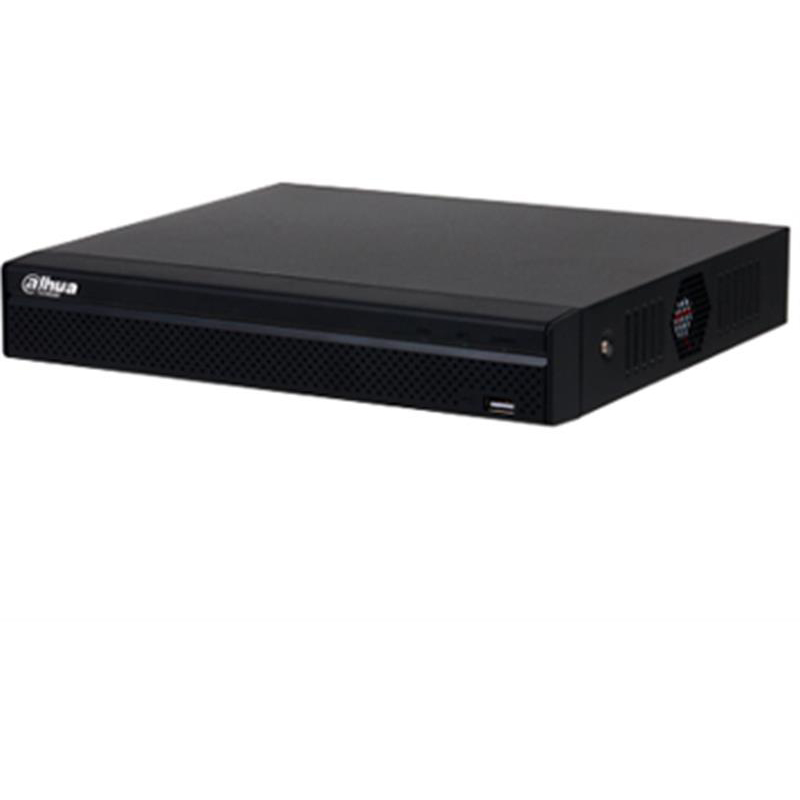
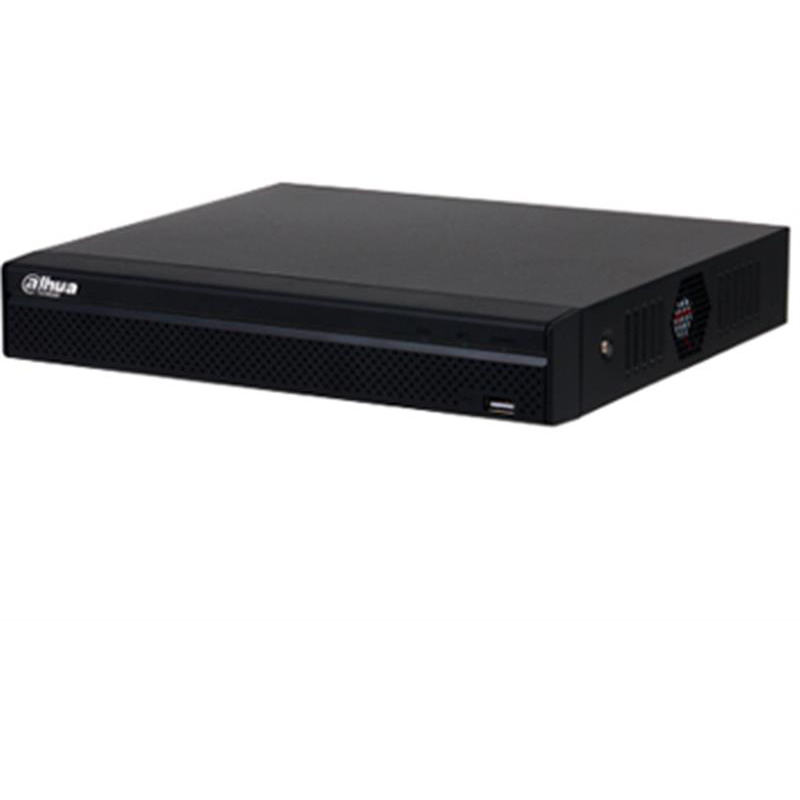
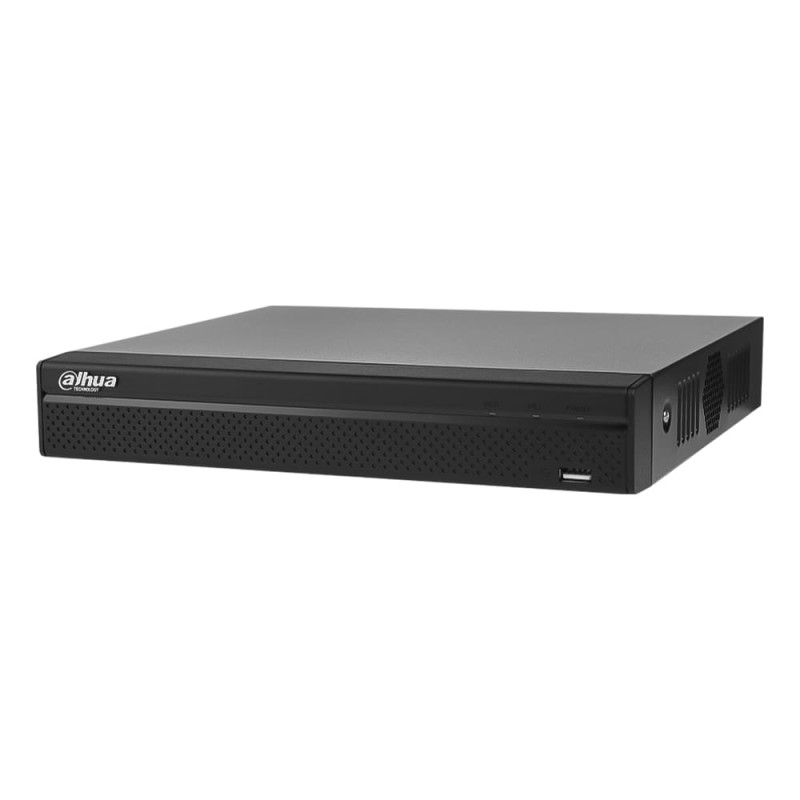



Description Dahua DHI-NVR1104HS-S3/H
A pure network NVR: IP only, no coax at all
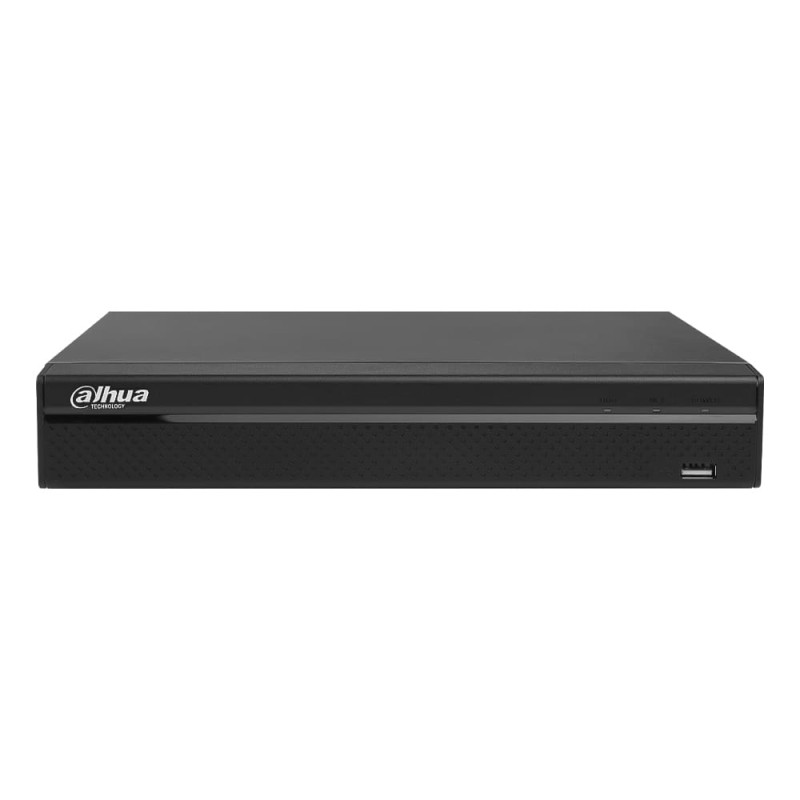
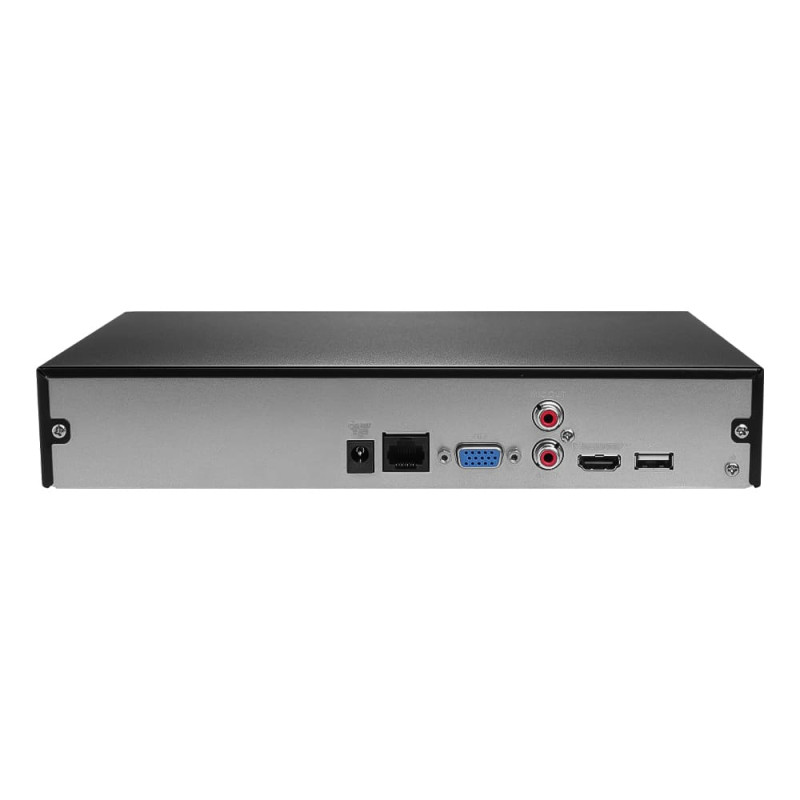
The DHI-NVR1104HS-S3/H is a pure network video recorder, and that word «pure» is literal: there is not a single BNC connector on the back panel, so an analogue HD camera on coaxial cable simply cannot be attached to it. All four cameras reach the unit over the local network, through one Ethernet port and a switch, and the recorder treats them as ordinary network devices with their own IP addresses. That is the dividing line between this box and the hybrid Dahua XVR models sold in the same catalogue: an XVR accepts HDCVI over coax as well as IP, which is exactly what you need when a site already has old coaxial cable in the walls and nobody is going to re-run it. On a green-field installation the IP approach pays off in ways analogue never will — a single twisted pair carries video, audio and control, picture quality does not degrade with cable length the way an analogue signal does, and every camera is configured individually from a browser. The recorder is not locked to Dahua cameras either: ONVIF and RTSP are supported, so third-party models can be brought in, though vendor-specific features do not always survive the crossing and a mixed-brand shopping list is worth verifying before you buy.
Four channels at up to 8 MP and an 80 Mbps pipe: where the real ceiling is
The unit records up to four channels at up to 8 MP per camera with an 80 Mbps incoming bandwidth, and it is that bandwidth figure, not the megapixel count, that actually limits what you can build. Run the arithmetic: four 8 MP cameras encoded in H.265 with movement in frame produce roughly 8 Mbps each, about 32 Mbps in total, which leaves you with more than a twofold headroom and room to raise the bitrate deliberately on the gate or the till area where detail matters. Smart H.265+ and Smart H.264+ are both supported — these are the adaptive modes that cut the stream by another third to a half on static scenes such as a closed yard at night or an empty warehouse aisle, because the codec stops spending bits on a motionless background. One detail that is rarely spelled out on product pages: the HDMI and VGA outputs of this model top out at 1920×1080, so an 8 MP image is scaled down to Full HD on the local monitor. The recording itself is kept at full resolution, so nothing is lost — you simply have to zoom into the frame during playback, or review the archive on a computer or in the mobile app, to see the detail you paid for.
There is no PoE here, so budget for a switch from day one
This is the version without the letter P in the model name, which means no built-in PoE ports: the recorder does not feed the cameras, and each of them needs either its own 12 V power supply or a PoE switch or injector upstream. In practice four outdoor 2–4 MP cameras with IR illumination are comfortably served by the cheapest four-port 802.3af switch — a typical camera draws 5 to 8 watts, some 25–30 W in total, which even a modest 60 W switch covers with room to spare. The downside is obvious: a second box, a second socket and a second point of failure, and both devices must sit on the same UPS, otherwise a power cut leaves you with a recorder and no cameras, or the other way round. The upside is just as real: the switch can be placed closer to the cameras, which is how installers get past the 100-metre limit on a twisted-pair run, and you are free to add self-powered or Wi-Fi cameras that a built-in PoE block would never have fed anyway. If none of that flexibility matters because every camera is wired and close by, the sensible choice is the DHI-NVR1104HS-P-S3/H — the same recorder with four PoE ports already inside.
One drive up to 8 TB: how many days of archive you actually get
Inside there is a single SATA bay for a drive of up to 8 TB; the disk is not included and is bought separately, and there is no hot swap, no RAID and no eSATA port, because this is the entry class and there is simply nowhere to put a mirror drive. Here is the archive depth maths for continuous 24/7 recording in H.265: one 2 MP camera consumes roughly 21 GB per day, a 4 MP camera about 42 GB, an 8 MP camera about 85 GB. On an 8 TB drive — call it 7.3 TB once formatted — four 2 MP cameras therefore give you somewhere around 85 to 90 days of footage, four 4 MP cameras about six weeks, and four 8 MP cameras only about three weeks. Two settings stretch those numbers considerably: enabling Smart H.265+ on static scenes, and switching part of the cameras to motion-triggered recording, after which an empty yard overnight occupies almost nothing. A practical rule of thumb for a private house: if you want a guaranteed month of archive from four 4 MP cameras, a 4 TB drive is enough, and 8 TB is what you buy when you need three months of depth or you are running 8 MP cameras.
Where this recorder belongs and what jobs it was built for
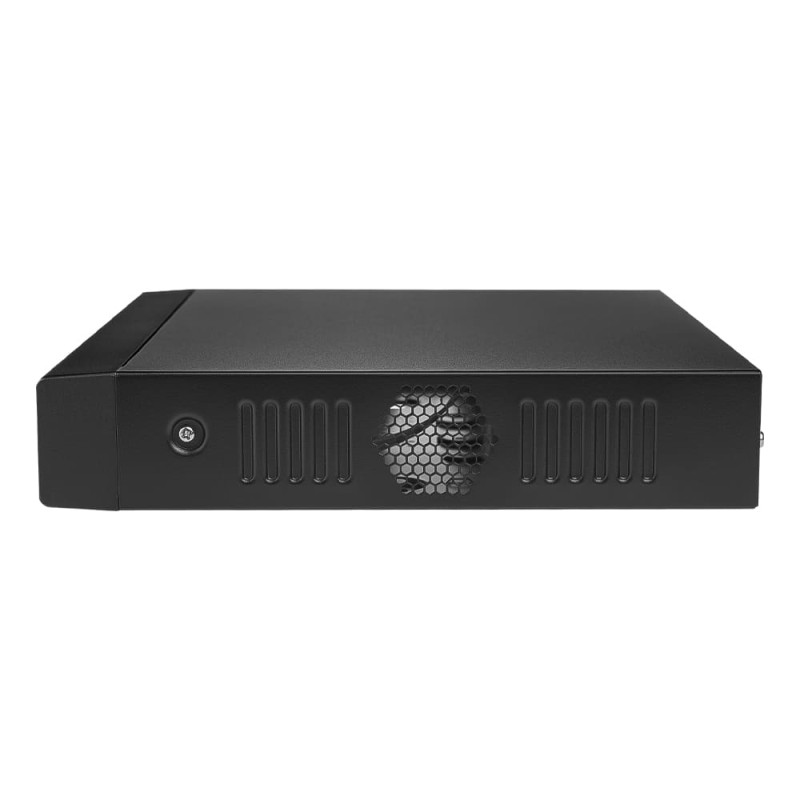
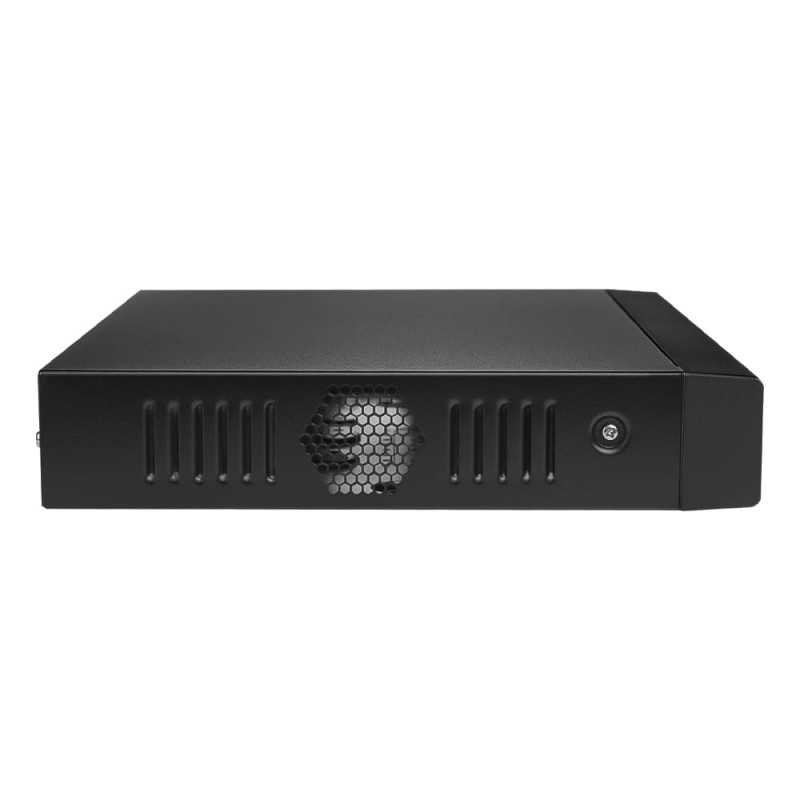
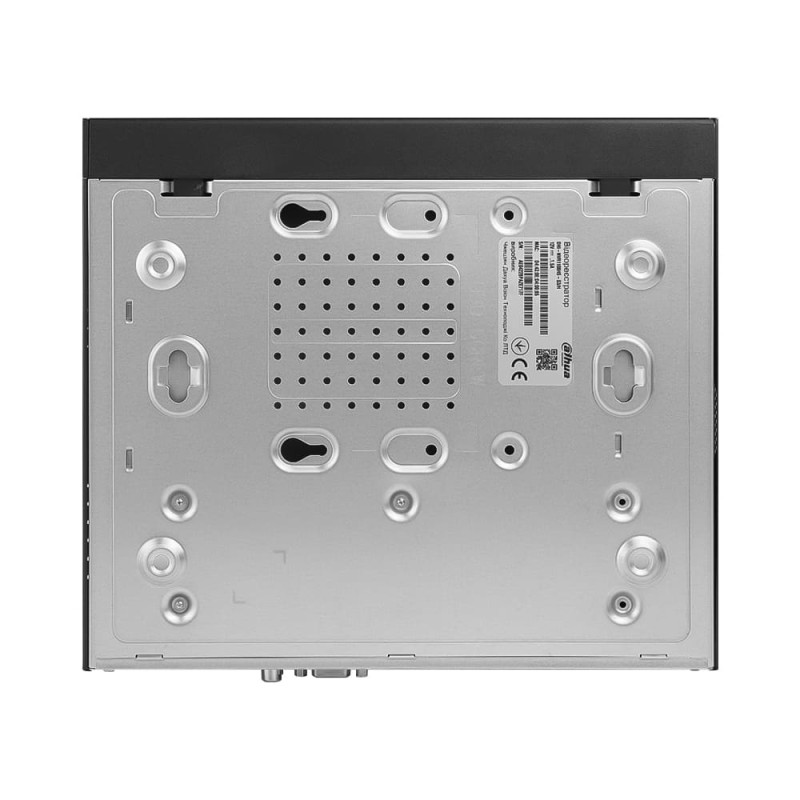
Four channels is the classic private-house layout: the driveway gate, the porch or front door, the back yard and the garage or outbuilding. It fits a small shop or coffee bar just as neatly — till, sales floor, entrance and stockroom — and it suits a flat where one camera also watches the landing outside the door. The chassis is compact at 260×225×48 mm and 0.81 kg, so it drops onto a shelf in a cabinet, into a low-voltage niche or onto a bracket behind the television, and the external 12 V adapter lets you run it from a small UPS without an inverter. An operating range of -10 to +45 °C and an IP20 rating point unambiguously at indoor mounting: an unheated garage or an outdoor enclosure without a heater is out of the question in winter, and so is a dusty workshop, because cooling here is passive and dust settles straight onto the board. Do not buy this model as a platform to grow into six or eight cameras — the channel count cannot be expanded, and adding a fifth camera means replacing the recorder with an eight-channel unit.
Control, remote access, and what this model deliberately does not do
Operation is by mouse plus a full web interface and network administration, while remote access runs over P2P: the recorder establishes the connection to the Dahua cloud service itself, so you need neither a static public IP address nor port forwarding on the router. Mobile apps cover iOS and Android, desktop clients cover Windows and macOS, HTTPS, DHCP, DNS, NTP, IPv4 and IPv6 are all supported, and the two video outputs (HDMI and VGA) can drive separate monitors — one at the guard's desk, another in the office. Now the limits worth knowing before you order: this model has no alarm inputs or outputs and no RS-232 or RS-485, so a siren or a gate reed switch cannot be wired to the recorder directly, only through the cameras if they have the terminals. Server-side video analytics is not part of the package either: the unit works with classic pixel-change motion detection, while human and vehicle classification, face detection, perimeter crossing and people counting are absent from its feature list. The practical consequence is a simple strategy — if you want smart notifications that ignore branches and cats, the intelligence has to live in the camera, so choose WizSense models and let the recorder simply store their stream and their events.
How it differs from the neighbouring recorders in this catalogue
Its closest relative is the DHI-NVR1104HS-P-S3/H: identical internals, the same four channels and the same 8 TB drive limit, but with four PoE ports built in — paying for that letter P effectively replaces buying a separate switch, and with all-wired cameras it almost always pays off. The DHI-NVR1108HS-8P-S3/H is the same family in an eight-channel, eight-PoE body: choose it if you already have five cameras or know you will reach eight, because a four-channel unit cannot be expanded. The senior DHI-NVR21xx-I2 series from this catalogue takes drives up to 10 TB and carries markedly stronger on-board analytics, which justifies it wherever human and vehicle classification has to happen in the recorder rather than in the camera. If your site already has analogue cameras and coaxial cable in place, this model is simply the wrong tool — look instead at the hybrid DH-XVR5104C-4KL-I3, which accepts both HDCVI and IP and lets you modernise in stages. Among non-Dahua neighbours the obvious rival is the Hikvision DS-7604NXI-K1(D): also four channels without PoE, but with a 16 TB drive ceiling and AcuSense, so it is the pick for a deeper archive or a Hikvision camera fleet, while this Dahua wins on simplicity and a lower entry threshold.
If you are not sure whether four channels are enough, or what drive size matches the archive depth you have in mind, send us the number of cameras, their resolution and the number of days you want to keep — we will size the configuration for your site.
Characteristics Dahua DHI-NVR1104HS-S3/H
Reviews about Dahua DHI-NVR1104HS-S3/H from real users
No reviews found







