
 m. Сміла, Незалежності, 67г. оф, 406/6























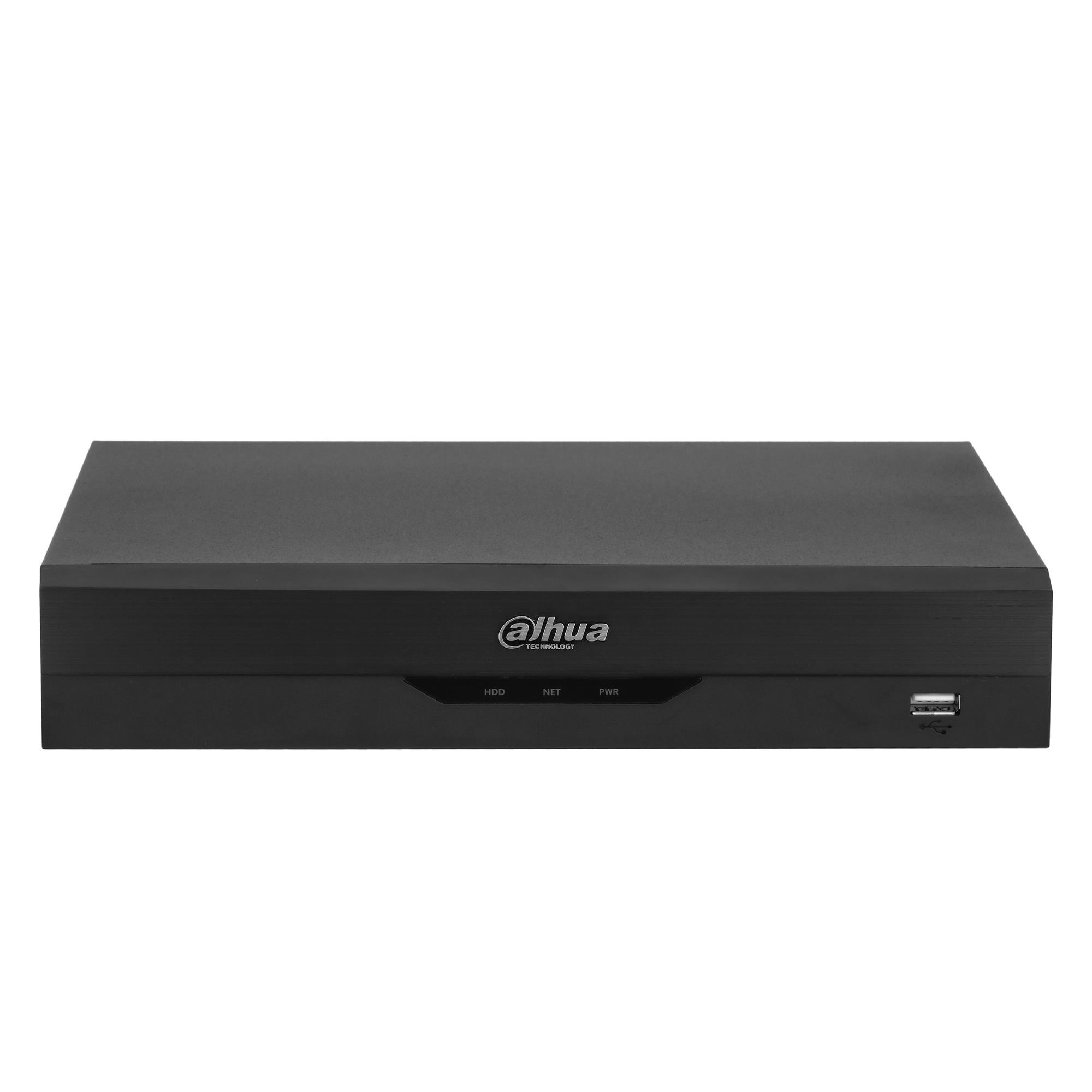
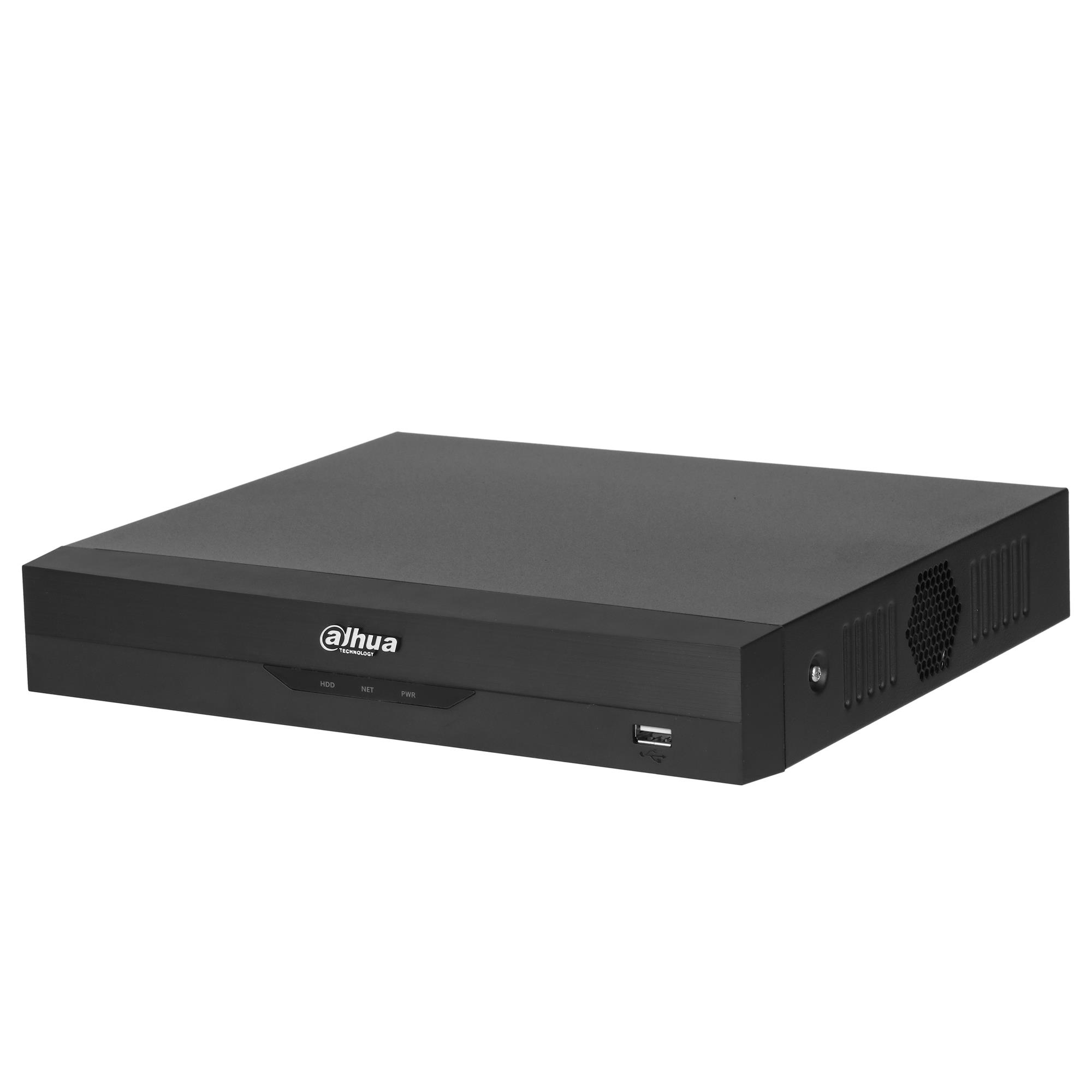
DAHUA DH-XVR5108HS-4KL-I3/T (8 CHANNELS, RS-485) - HYBRID VIDEO RECORDER

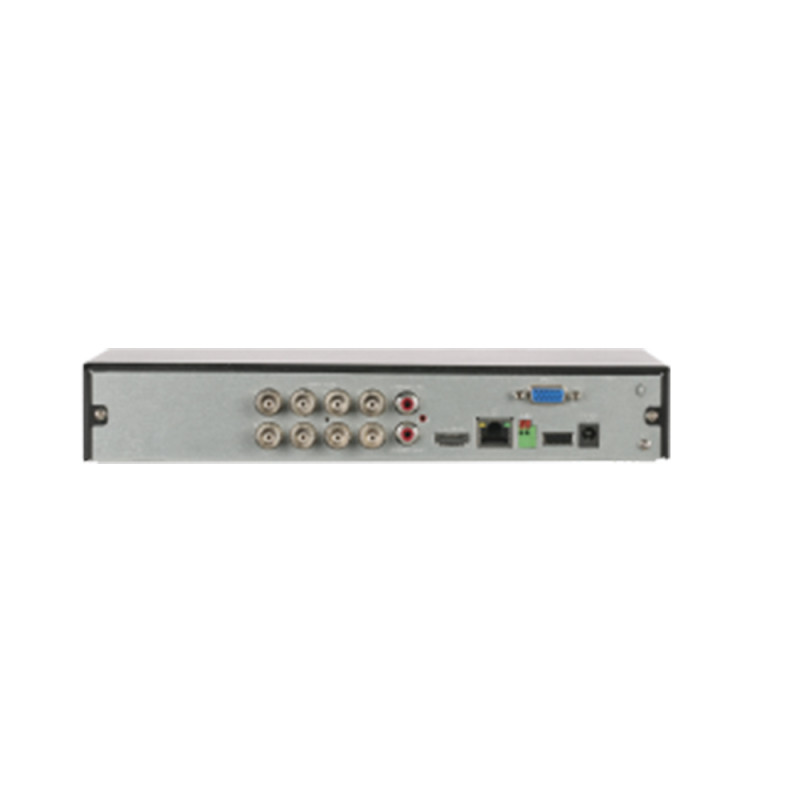


Description Dahua DH-XVR5108HS-4KL-I3/T
Eight BNC inputs that accept five different signals
This recorder belongs to the penta-brid class: each of its eight coaxial inputs works out for itself what has been plugged in — HDCVI, AHD, TVI or legacy analogue CVBS — and on top of that the unit also takes IP cameras from the local network. On a site where coax is already in the walls, an upgrade therefore comes down to swapping one box: cameras, cabling and power supplies stay exactly where they are, while you gain a modern codec, real analytics and an app on the phone. Automatic format detection removes the most tiresome part of inheriting someone else's system, because you no longer need to establish which standard the previous installer actually used — the recorder sorts each channel out independently. There is a practical bonus for mixed sites: some channels can stay on coax while others move straight to IP, and both groups appear in the same multi-view and the same archive. The boundary deserves stating too — a hybrid path will never match pure IP with PoE, so in a new build where network cabling is going in anyway there is no reason to buy this compromise.
Eight analogue channels plus up to sixteen IP
The base configuration is eight analogue cameras, but network streams run alongside them: eight IP channels are available immediately and eight more open up by converting the analogue inputs, which puts the ceiling at sixteen IP cameras. That makes the model less a DVR replacement than a bridge between two eras, because a system can start with eight analogue cameras and finish, years later, with sixteen network ones without changing the recorder or rebuilding the archive. IP channels accept cameras of up to 8 megapixels, so the gate or the till area belongs there — that level of detail is simply beyond the analogue path. Total throughput is 128 Mbps incoming, recording and outgoing, which is genuine headroom rather than a line on a spec sheet: eight streams at 8 Mbps occupy only half of it, leaving real room for future 8MP cameras. One gigabit RJ-45 serves both the IP cameras and remote viewing, so once the network side fills up it is worth putting cameras on a separate VLAN or switch rather than letting video streams compete with household traffic.
4K and 5MP recording: what to pick and what you give up
The 4KL in the model name stands for 4K Value, and behind that marketing phrase sits a concrete trade-off: the BNC input accepts a 4K HDCVI signal at 25 frames, but the recorder encodes within its own budget — 4K up to 7 frames per second, 6MP up to 10, 5MP up to 12, 4K-N and 4MP up to 15, and only 1080p carries a full 25 frames on each of the eight channels. Choosing a resolution here is therefore not a tick box but a decision about what matters on that particular camera: detail in a single frame, or smooth motion. Static scenes — a warehouse, a corridor, a stockroom, a sales floor — favour 4K or 5MP at the lower frame rate, because people move slowly there, the frames are sufficient, and the ability to zoom into a fragment and read it stays intact. A driveway, a gate or a passage inverts the logic: a car at 30 km/h covers more than eight metres a second, so at seven frames a plate can simply fall between exposures, and such a channel is better left at 1080p or 4MP with the full 25 frames. H.265+ together with full-channel AI Coding studies the scene and spends bitrate on moving objects while coding the static background coarsely, so an empty yard at night produces a stream less than half the size of H.264 — which converts directly into extra weeks of retention. The HDMI output runs up to 3840x2160, so eight or sixteen tiles on a 4K monitor still stay legible, while VGA drives a second screen at 1080p and both outputs can be configured to show different sets of cameras.
One drive up to 16TB and the retention that follows
There is a single SATA bay taking a drive of up to 16TB, and for an eight-channel system that is enough even with generous settings. The working figures for H.265 are these: a 1080p channel at 25 frames consumes roughly 20GB a day, a 5MP channel at 12 frames about 40GB, and a 4K channel at seven frames about 60GB. Eight 1080p cameras on a 4TB disk therefore give around 25 days of continuous recording and about 50 days on 8TB; eight 5MP channels fill 8TB in roughly 25 days and 16TB in about 50; eight 4K channels on a 16TB drive hold some 33 days. If more depth is needed the compromise suggests itself — keep 4K on the two or three channels that matter and drop the rest to 1080p, which roughly doubles overall retention without losing the important views. One limitation belongs in the decision rather than the fine print: a single bay with no RAID and no hot swap means a failed drive takes the entire archive, so where footage may become evidence you want a two-bay recorder or the habit of exporting critical clips immediately.
WizSense analytics on all eight channels
Analytics run inside the recorder, which for a coax system is the only route to sensible alerts, since an analogue camera never examines the scene and simply forwards a raw signal. SMD Plus works on all eight channels at once and separates people and vehicles from branches, shadows, rain and animals — unlike classic motion detection, after which owners silence push notifications by the third night and the installation stops functioning as security. Perimeter protection also covers eight channels: a virtual line or zone reacts to a fence being crossed or a restricted area being entered rather than to any movement, so passers-by beyond the hedge trigger nothing. Face detection and face recognition get two channels each (up to twelve face captures per second per channel), and the database holds up to ten separate lists with 20,000 images in total — enough to enrol the household and be alerted only to strangers, with those two channels naturally assigned to the front door and the pedestrian gate where people walk towards the lens. The limits deserve equal clarity: there is no licence plate recognition, no visitor counting and no heat mapping, and more importantly, adding IP channels beyond the original eight switches the analytics off entirely (IVS, SMD Plus, face detection), so sixteen cameras and smart alarms cannot be had at the same time — a constraint worth settling at the planning stage.
Power, ports and mounting conditions
There are no PoE ports, which is characteristic of the whole XVR class: analogue cameras run from a separate 12V supply, and the IP side needs a PoE switch or injectors budgeted separately. The unit itself takes a 12V 2A adapter and draws under 10W without a disk, so together with the drive it rides out a power cut on a modest UPS — more important than it sounds, because losing power mid-recording periodically ends in a damaged archive file system. The port list runs to HDMI and VGA for two independent monitors, USB 2.0 at the front and USB 3.0 at the back (exporting hours of footage to a stick benefits noticeably from the faster port), one RCA audio input and one output plus eight channels of audio over coax, an RS-485 port for PTZ cameras and a single gigabit RJ-45; alarm inputs and outputs, eSATA and RS-232 are not provided. The 1U case measures 260x237x48mm, weighs about 0.9kg and carries IP20 protection, which places it indoors on a shelf, in a low voltage cabinet or on a wall inside a service niche. Its -10 to +55C operating range is wider than usual for this class, so a closed cabinet that warms up in summer poses no problem, though an unheated outbuilding in January still falls outside the specification.
What kind of sites this model was built for
Eight channels is the most common system size for a private house with a yard, a small shop, a cafe, a car wash or a light industrial plot: four cameras usually fall short, while sixteen are rarely needed. The model is happiest where coax already exists but expectations have risen — the owner no longer wants merely to see that somebody walked in, but to zoom in and make out a face or a plate, which is exactly why 4K and 5MP sit here instead of the 1080p typical of hybrids. Its second strong scenario is a site mid-transition, with some cameras already on the network and others still on coax: sixteen IP channels in reserve let the replacement stretch over years without buying another recorder. It is the wrong purchase where twelve to sixteen analogue cameras are needed right now, since that calls for a sixteen-channel chassis. It is equally not the first choice for a shop whose recorder has to drive a siren or receive a signal from an alarm panel, because that needs the alarm loops this compact case does not have.
How it compares with the neighbouring recorders in this catalogue
Its closest rival here is the Dahua DH-XVR51xxHS-5M-I3/T, which does offer a sixteen-channel version, but records at 5MP and 12 frames, accepts IP cameras only up to 6 megapixels, and on the junior versions carries just 32 Mbps of incoming bandwidth. The decision reduces to one question: more than eight cameras means the 5M series, while eight or fewer with a demand for detail makes the step up to the 4K-L version worthwhile, buying both higher resolution and four times the throughput plus analytics on every channel instead of four. The Dahua DH-XVR5104C-4KL-I3 is the same 4K-L platform cut to four channels in a smaller case, a sound answer for a flat or a compact yard. The DH-XVR51xxC-I3/T and DH-XVR41xxHS-I/T sit lower still with 1080p, four channels and minimal analytics, which is a budget DVR swap rather than a platform to grow into. With no coax on site the comparison moves to network models: the Dahua DHI-NVR22xx-I2 and DHI-NVR2116HS-I2 give eight and sixteen IP channels respectively, while the DHI-NVR2108-8P-I2 or the Hikvision DS-7108NI-Q1/8P(D) also power eight cameras down the same cable, removing both the power supplies and half the installation work from the quote.
Tell us how many cameras already sit on coax and how many network ones you plan to add, and we will calculate the disk size that matches the retention depth you want.
Characteristics Dahua DH-XVR5108HS-4KL-I3/T
Reviews about Dahua DH-XVR5108HS-4KL-I3/T from real users
No reviews found







