
 m. Сміла, Незалежності, 67г. оф, 406/6























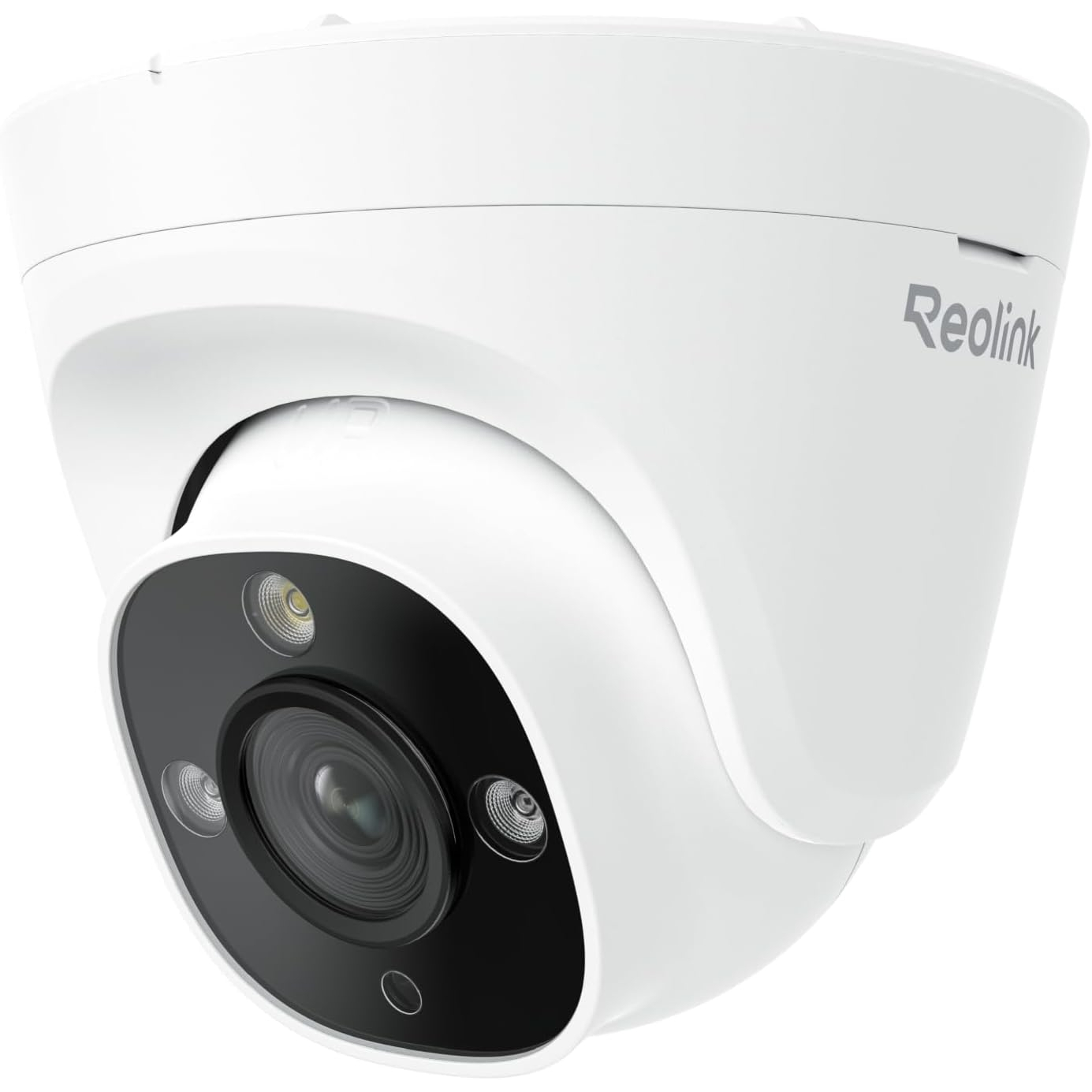
REOLINK RP-PCT8M (8 MP/2.8 MM) - DOME PoE IP CAMERA



Description Reolink RP-PCT8M
4K on a 1/2.7-inch sensor: what eight megapixels actually buy you
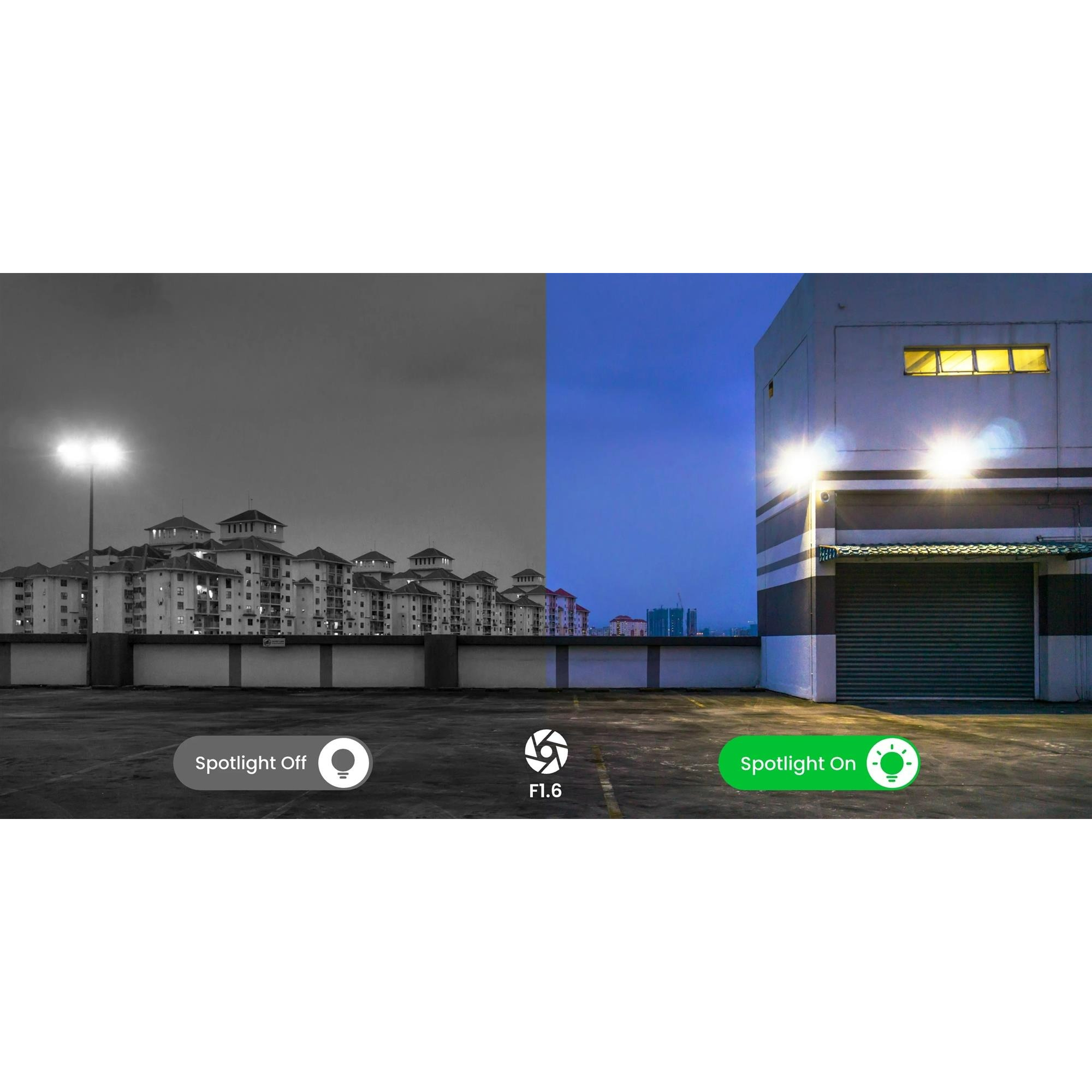
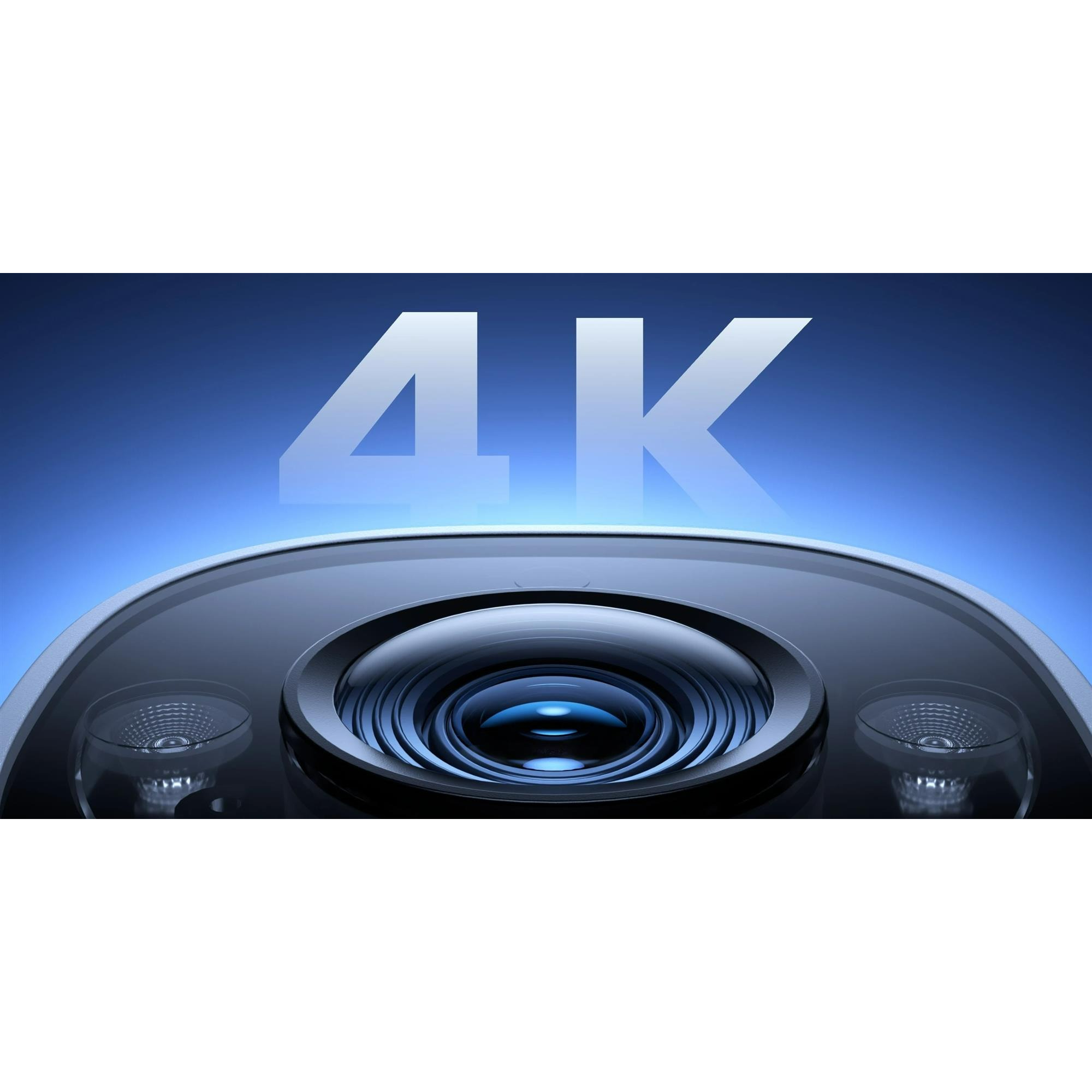
Eight megapixels (3840x2160) is four times the pixel count of the Full HD cameras that still dominate budget installations, and that gap decides whether your footage is evidence or merely a record that something happened. In practice 4K lets you zoom into an already recorded frame and still make out a face or a licence plate, because the digital zoom works on real sensor data instead of inventing detail. The 1/2.7-inch sensor paired with a fast f/1.6 lens gathers noticeably more light than the f/2.0 modules used in cheaper cameras, so at dusk or under a single street lamp the image keeps its colour rather than dropping straight into monochrome. Recording at 25 frames per second keeps a person walking briskly past the gate, or a car rolling through at 20-30 km/h, from smearing across individual frames when you step through the recording later. The cost of 4K is real and has to be planned for: the stream is roughly four times heavier than a 2 MP one, which affects both recorder storage and the upload bandwidth you need when watching remotely.
Two separate night vision systems: discreet infrared and a colour spotlight
The camera carries two independent light sources, a pair of 850 nm infrared LEDs reaching up to 30 metres and a white spotlight rated at 700 lumens. Infrared is invisible to the eye and produces the classic black-and-white night image, which is the right choice where light would be a nuisance: bedroom windows facing the yard, a neighbour's house across the street, a shared stairwell. The spotlight is for the nights when colour genuinely matters, because a colour clip shows that the jacket was red and the car a silver estate, and those are the details an insurer or the police can act on, whereas a grey silhouette proves nothing. Light behaviour is configurable: constantly on, triggered only by an event, or disabled on a schedule, so the spotlight can be set to wake up only when the analytics has actually seen a person, which by itself turns away a fair share of unwanted visitors. Know the limits before you mount it: 30 metres assumes open ground with no obstacles, and 700 lumens light the area in front of the camera rather than the whole plot, so a long perimeter is covered by two cameras facing each other, not by one brighter unit.
Person, vehicle and animal detection plus perimeter rules
The analytics runs inside the camera and classifies people, vehicles and animals separately, so you can leave alerts switched on only for the categories that matter to you. The difference from plain motion detection is not cosmetic: a camera without AI fires on a swaying branch, a cloud shadow, heavy rain and the neighbour's cat, the owner disables notifications within a week, and the system stops performing any security function at all. Beyond classification the model supports perimeter rules, meaning line crossing, intrusion into a drawn zone, and loitering longer than a set number of seconds. In everyday use this is what lets you ignore pedestrians walking along the fence while still getting an instant push the moment somebody steps over the gate line or stands by the garage door for more than a minute. Alerts arrive by push and e-mail, and the quality of the analytics depends heavily on the angle: mount the camera too high and point it almost straight down, and it mostly sees the tops of heads, at which point person classification starts failing exactly when you need it.
PoE power, a metal housing and what mounting really involves
The camera runs either on 802.3af PoE or from a separate 12 V supply, so in the standard configuration a single UTP cable carries both power and network to the mounting point. Budget the 12 W draw in advance: an inexpensive eight-port PoE switch with a 60-65 W total budget will comfortably carry four or five of these cameras rather than eight, and that arithmetic is what most first-time installations get wrong. The housing is metal, 526 g at a diameter of 117 mm, and the IP67 rating means full dust protection plus resistance to powerful water jets, so the camera belongs on an exposed facade and not only under an eave. The -30 to +55 °C operating range matters in a real winter: models rated only down to -10 °C frequently refuse to start after an overnight power cut in January. The eye-ball turret shape has a practical advantage too, since the inner ball is aimed precisely after mounting and is hard to twist by hand, unlike a bullet camera on a long bracket that an intruder can knock aside with a stick.
Storage: a 512 GB card, a Reolink recorder and third-party systems
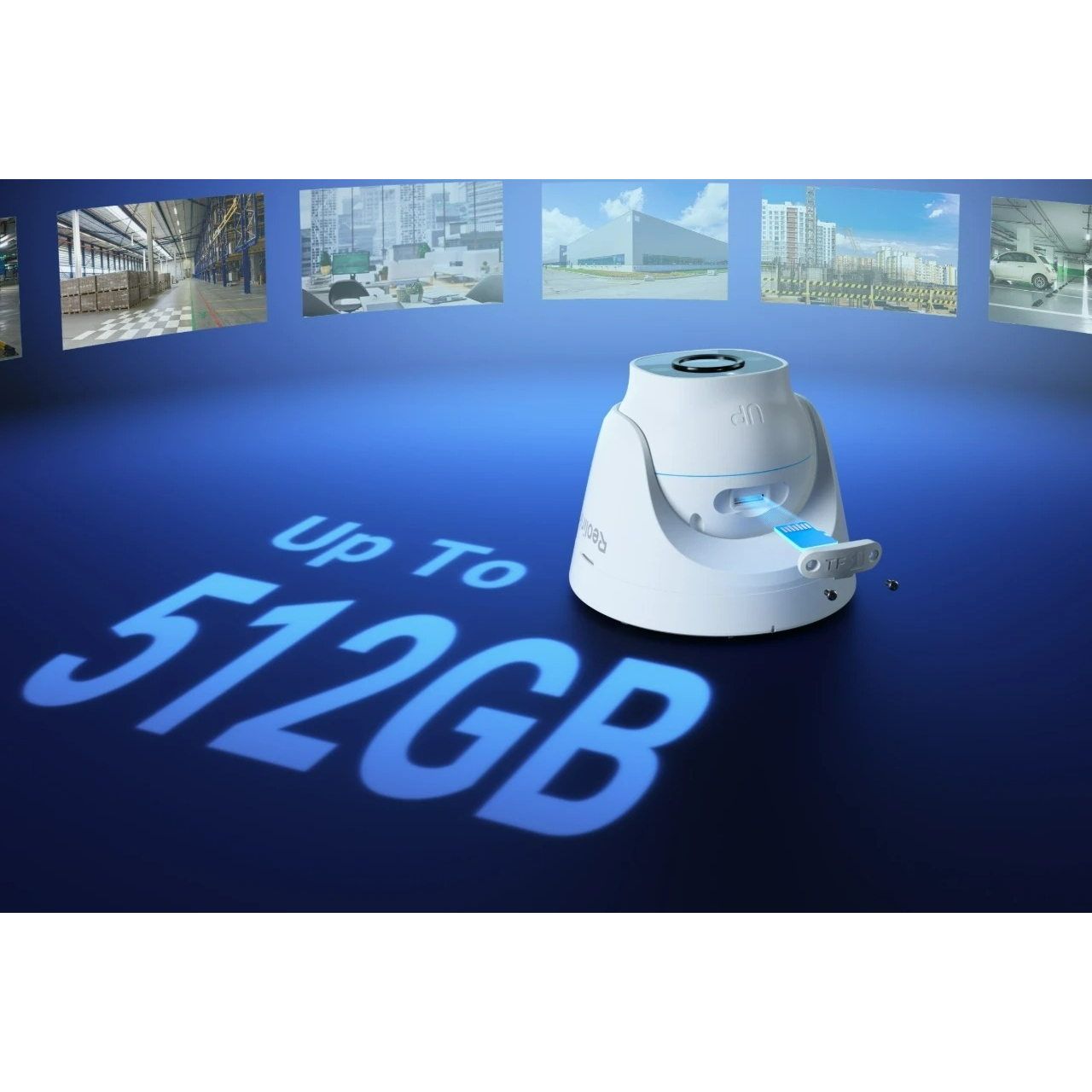
The camera takes a microSD card of up to 512 GB, and local recording saves you at the worst possible moment, because if the cable is cut or the recorder is switched off, the footage from that gap still sits inside the camera. As a rough guide, a 4K stream in H.265 consumes about 20-25 GB per day of continuous recording, so a 512 GB card holds roughly three weeks of non-stop archive and considerably more when writing on events only. For a permanent installation a recorder makes more sense: this catalogue carries the Reolink NVS4 with four channels and the NVS8 with eight, both with built-in PoE, and they pick up same-brand cameras automatically without manual address entry. H.265 support earns its keep here, since the same scene stored in H.265 occupies roughly half the space of H.264, which doubles the depth of the archive you get from a 2 TB disk. The camera also serves RTSP and speaks ONVIF, so it integrates into a third-party NVR or Home Assistant, with one honest caveat: outside the native app you get the video stream without the convenient event handling.
Where this camera belongs and the jobs it was built for
A 2.8 mm lens with a 105-degree horizontal field is an overview camera: one unit covers a typical house yard, an entrance gate area, a small car park or a shop floor in full, with no blind corners at the edges. Around 3 metres is the sweet spot for mounting height, because lower than that puts the camera within arm's reach and higher tilts the view so steeply downward that faces stop being readable. Up to 8-10 metres the frame supports confident facial identification, at 15-20 metres you reliably recognise build, clothing and vehicle type, and past 25 metres you are essentially left with the fact that movement occurred. That is precisely why this model is the wrong tool for a spot where a plate or a face has to be read at distance: that job needs narrower or zoom optics, while 2.8 mm is placed to watch an area. Indoors it works well in shops, warehouses and stairwells, though in a narrow corridor the 105-degree view introduces visible barrel distortion at the edges, and compact indoor models are more practical in tight spaces.
How it differs from the neighbouring Reolink models in this catalogue
Its closest relative is the RP-PCB8M with identical 8 MP and 2.8 mm internals in a bullet housing on a bracket, which is more visible from a distance and therefore deterrent in itself, but also easier to knock out of alignment and distinctly bulkier on a clean facade. The RP-PCT12M keeps the turret shape but moves to 12 MP and a 4 mm lens, trading field of view for detail, which makes it the choice for a long driveway rather than an overview yard and worth the step up only when small detail at distance genuinely has to be read. If a single position needs both the wide view and the ability to zoom in, look at the RP-PCV8MZ or RP-PCB8MZ with a motorised 2.7-13.5 mm lens and 5x optical zoom, a higher class of camera that removes the need to swap hardware once the requirement becomes clearer after installation. Conversely, where there is neither cable nor socket a PoE model simply cannot be installed, and the right answer is a battery Argus B340 or a Go series unit with LTE, provided you accept that a battery camera records on events and not around the clock. Finally, if you are building a budget multi-point system and 5 MP is enough, the junior P324 in a dome housing covers the same scenario with less headroom for digital zoom.
If you are unsure how many cameras and which optics your site actually needs, send us the perimeter length, the number of entrances and whether a recorder is planned. We will put together a placement plan showing what each camera will have in frame.
Characteristics Reolink RP-PCT8M
Reviews about Reolink RP-PCT8M from real users
No reviews found







