
 m. Сміла, Незалежності, 67г. оф, 406/6























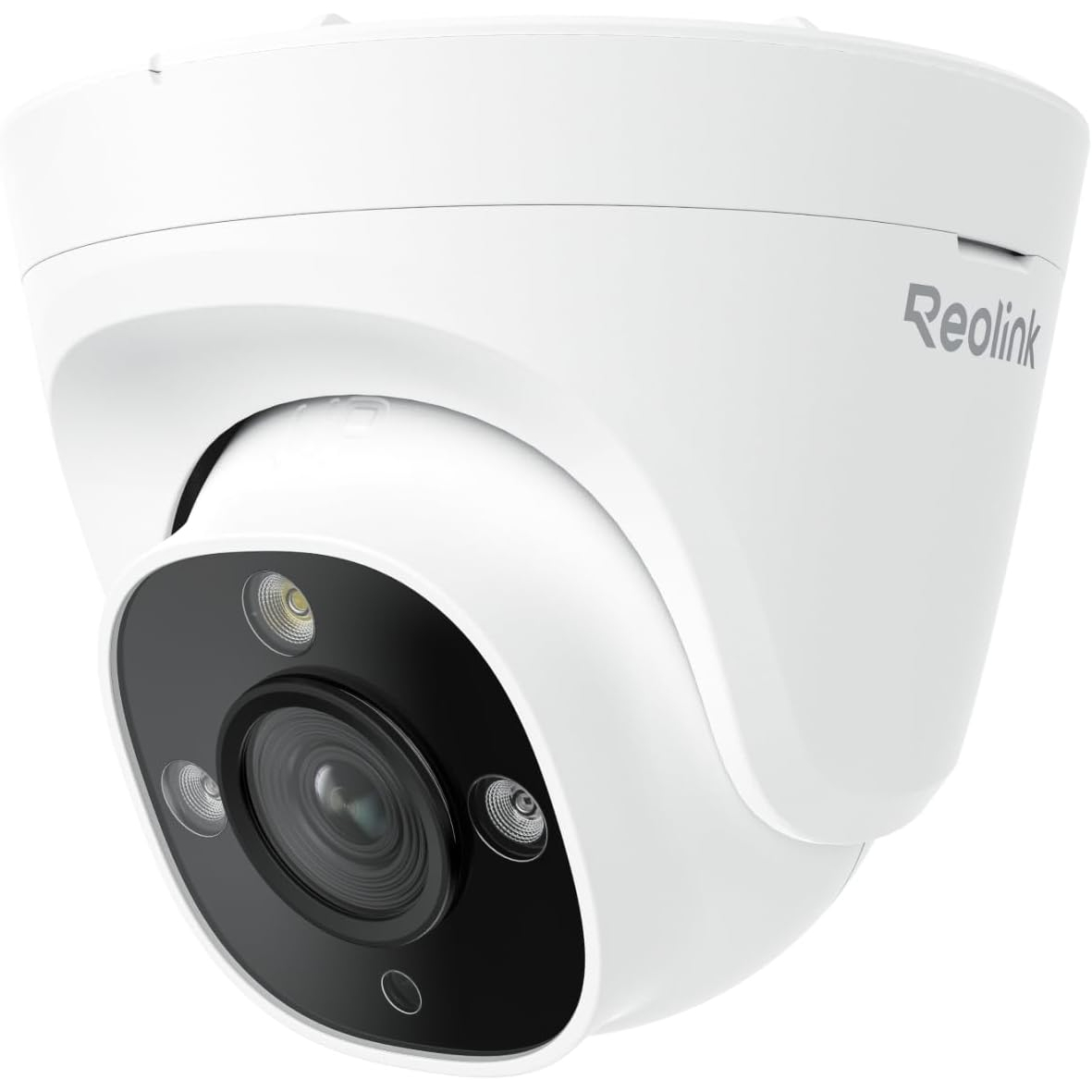
REOLINK RP-PCT12M (12 MP/4 MM) - DOME PoE IP CAMERA



Description Reolink RP-PCT12M
Where this camera belongs and what jobs it actually does
The RP-PCT12M is a wired camera for a site where Ethernet cable is already run or can be run: a private yard, a driveway gate, a retail floor, a warehouse aisle or an office corridor. Its eye-ball dome body mounts on a ceiling, a soffit or a wall and looks down at an angle, so it performs best at 2.5-3.5 metres directly above the point people pass through — a front door, a gate, a till, a loading bay. A 4 mm lens with a 100.4° field of view covers a typical yard or a mid-sized shop floor from a single position, and 12 megapixels leave enough headroom to zoom into the recording afterwards and read a face at the door or a plate at the entrance. Where no cable can be pulled, this is the wrong model: a summer house with no mains power or a building site calls for the battery-powered Reolink Go or Argus, and those record on events rather than around the clock. It is also not a long-range perimeter camera: the illumination works confidently out to 30 metres, so the far corner of a large plot at 60-80 metres will stay effectively outside the usable frame at night.
PoE power: one cable, continuous recording and switch budgeting
The camera runs on IEEE 802.3af active PoE at 48 V and draws under 12 W, so a single twisted pair carries both power and video and no mains socket is needed at the mounting point. The practical limit of one run is 100 metres of cable between switch and camera; beyond that you need an intermediate switch or a media converter, and that belongs in the plan before installation rather than after. Budget 12 W per camera when sizing the switch: eight of these add up to roughly 96 W, so a switch with a 120 W PoE budget or more keeps working without sagging in winter, when the electronics heater kicks in. A 12 V DC supply is supported as an alternative, which helps in houses that already have 12 V wiring left from an older analogue system. The real advantage over battery models is continuity: this camera records 24/7 instead of waking up for an event, so you see not only the alarm itself but also the ten minutes that led to it.
12 megapixels behind a 4 mm lens: what you can actually make out
The 1/2.49-inch sensor delivers 4512×2512 pixels, roughly six times the information of the common 2 MP cameras, and that surplus is exactly what matters when footage has to be reviewed frame by frame. In practice the difference is simple: where 2 MP leaves a blurred smudge instead of a face, 12 MP lets you crop into the archive and recognise features or digits on a plate. The F1.6 aperture helps at dusk, keeping colour footage usable and low in noise during the transition period before the infrared kicks in. Up to 25 frames per second is enough that a person walking briskly past does not smear across individual frames and a car at the gate stays readable while moving. There is a trade-off worth stating plainly: a 12 MP stream is heavier on storage, the same hard drive holds fewer days than it would with an 8 MP camera, and despite the detail a 4 mm lens is still a wide one, so it is not meant for reading number plates beyond 20-25 metres.
Night vision: infrared plus a white spotlight for full colour
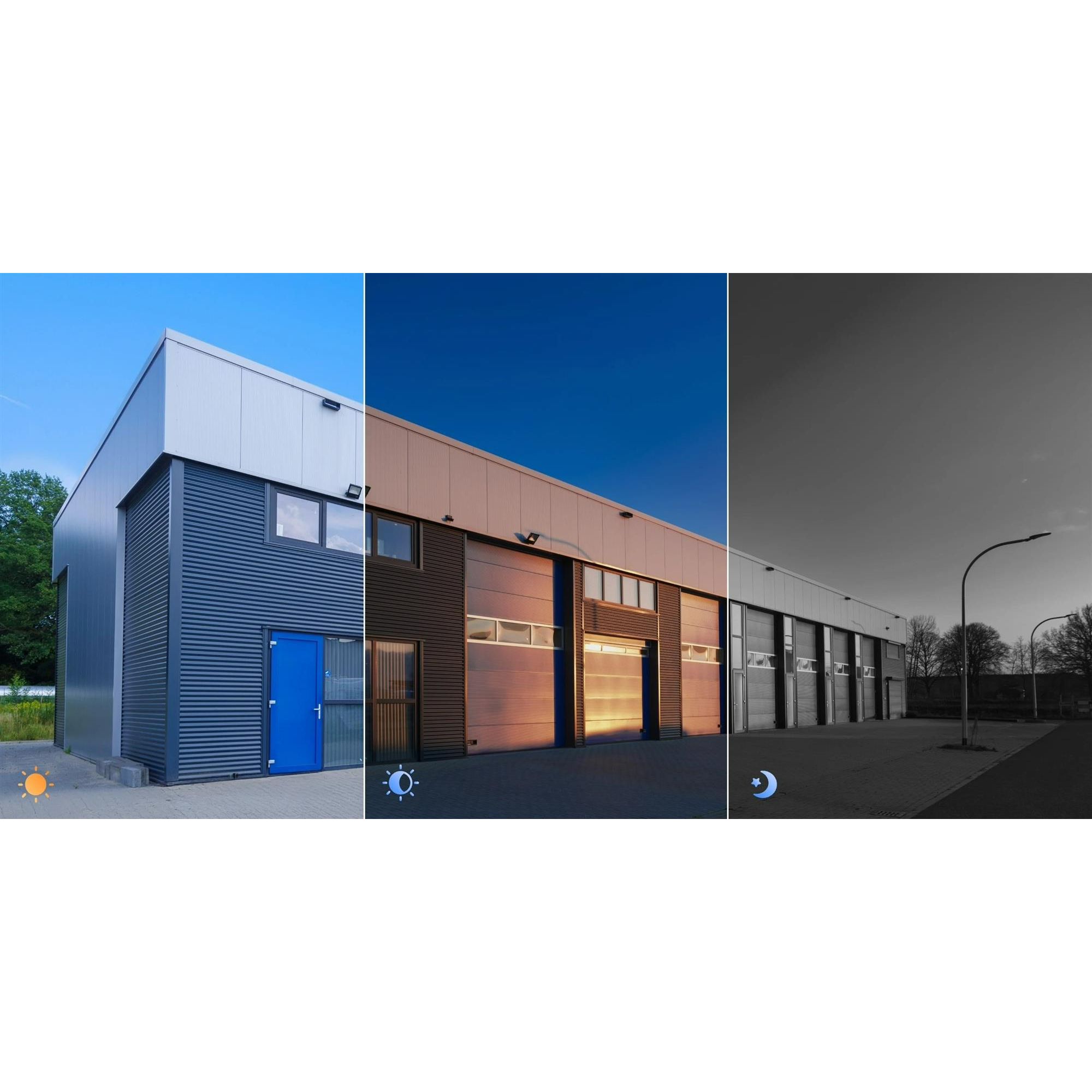
There are two separate lighting systems: classic infrared on two 850 nm LEDs totalling 2.8 W with a 30-metre reach, and a separate white spotlight rated 4.3 W at 6500 K and 600 lumens. Infrared gives an unobtrusive black-and-white image, while the spotlight switches the scene to full colour — and colour is what lets you state that the jacket was red and the car a silver saloon, where a monochrome recording leaves only a silhouette. The spotlight can stay off, stay on permanently, or fire only on an alarm; the last mode suits a yard best, because a sudden burst of light also tells an intruder plainly that he has been noticed. AI ISP processing pulls detail out of the dark parts of the frame, but it does not replace light: if a street lamp covers the area, colour night footage comes out noticeably cleaner. One common mounting mistake is worth avoiding: do not aim the camera straight at a white wall, glass or wet metal, because reflected infrared washes the frame out and you get a bright blank instead of an image.
Analytics, perimeter rules and searching the archive by description
Person, vehicle and animal recognition runs inside the camera, so the alert that reaches you is already classified rather than a vague report of movement. Beyond classic detection there is a full perimeter toolkit — line crossing, zone intrusion and zone loitering — and loitering is particularly useful at a gate, because it ignores passers-by and reacts to someone who lingers longer than the seconds you set. Object removal and forgotten object scenarios are available in beta and make sense in a shop or a stockroom. Unlike the 8 MP models of the same series, this 12 MP version supports AI Video Search: you query the local archive in plain words, along the lines of a person in a dark jacket, which saves hours of scrubbing when you need one episode from last week. Alerts arrive through the Reolink app and by e-mail, and object filtering is what decides whether the owner keeps using the system at all: cameras without analytics fire on every branch and stray cat until the notifications get switched off and the installation stops doing its security job.
Housing, mounting and surviving a real winter
The housing is metal and rated IP67 — full dust protection and tolerance of brief immersion, which means the camera can go on an exposed facade with no overhang above it. The -30…+55 °C operating range is the key difference from many earlier Reolink models limited to -10 °C: after a hard frost with a power cut the camera has to come back up by itself rather than wait for a thaw. At Ø117.4×103.8 mm and 526 g it sits on a standard bracket or straight in a ceiling without any reinforcement. The eye-ball shape has a practical advantage over a classic dome: the lens and the LEDs share an open visor instead of sitting behind one spherical cover, so there is no internal infrared reflection washing the picture out at night. Compared with a bullet body it is harder to twist by hand and less conspicuous on a facade — though if visible deterrence is exactly what you want, the bullet version of the same camera is the more logical pick.
Storage, recorder and third-party compatibility
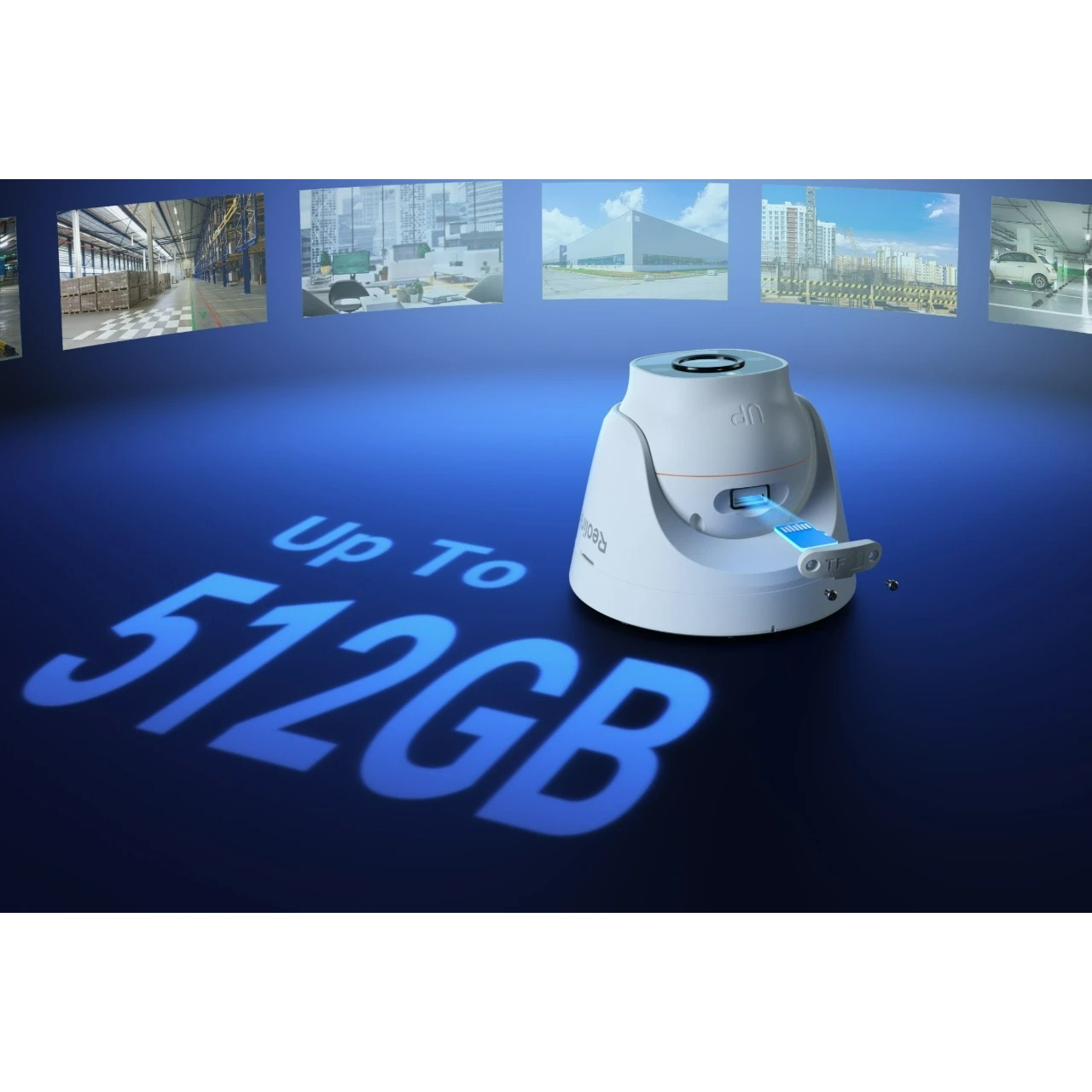
A microSD slot takes cards up to 512 GB, which is about 130 hours of continuous recording at full quality — several days of local archive even with no recorder in the system. H.265 roughly halves the stream size compared with H.264 at the same image quality, so on a recorder with a single 4 TB drive eight of these cameras running 24/7 give somewhere around one to one and a half weeks of depth, with the exact figure depending on how busy the scenes are. With Reolink PoE recorders such as the NVS8 or NVS16 from this same catalogue the camera is picked up almost automatically: plug the cable in and the channel appears. For third-party systems there are ONVIF and RTSP, plus Home Assistant integration, FTP upload and cloud access. The honest caveat sits here: over ONVIF a foreign NVR receives the video stream and basic detection, while the proprietary features — perimeter analytics, AI Video Search, spotlight control — stay inside the Reolink app, so a mixed-brand system should be a deliberate decision.
How it differs from the neighbouring Reolink models in this catalogue
Its closest relative is the RP-PCB12M: identical 12 MP internals, the same 4 mm optics and the same analytics in a bullet body, so choosing between them is choosing a shape rather than a specification — the bullet wins along a long fence and as a visible deterrent, the eye-ball looks better under a soffit and provokes less. Against the older P344, which shares resolution and focal length, this camera differs in three ways that matter outdoors: a wider field of view (100.4° against 93°), 25 frames per second instead of 20 and, above all, a -30 °C rating instead of -10 °C, which is decisive for an unheated perimeter. The junior RP-PCT8M and RP-PCB8M belong to the same series with the same feature set but 8 MP instead of 12 and no archive search by description; if the camera watches a small area and you never intend to crop into footage, paying the premium for 12 MP buys you nothing. If the opposite is true and you need detail at varying distances, the RP-PCB8MZ with 5x optical zoom is the smarter choice: fewer pixels, but you can dial the framing to the scene after mounting. As for the battery lines, Argus and Go sell freedom from cabling rather than image quality, so comparing them with this model is only fair where wired power is genuinely impossible.
If you are not sure how many cameras your site needs or which optics to put where, describe the object to us — perimeter length, mounting height and available cable routes. We will lay out the positions along with a PoE budget and an estimate of archive depth.
Characteristics Reolink RP-PCT12M
Reviews about Reolink RP-PCT12M from real users
No reviews found







