
 m. Сміла, Незалежності, 67г. оф, 406/6























REOLINK P434 (8 MP/2.8-8 MM) - DOME PoE IP CAMERA WITH OPTICAL ZOOM

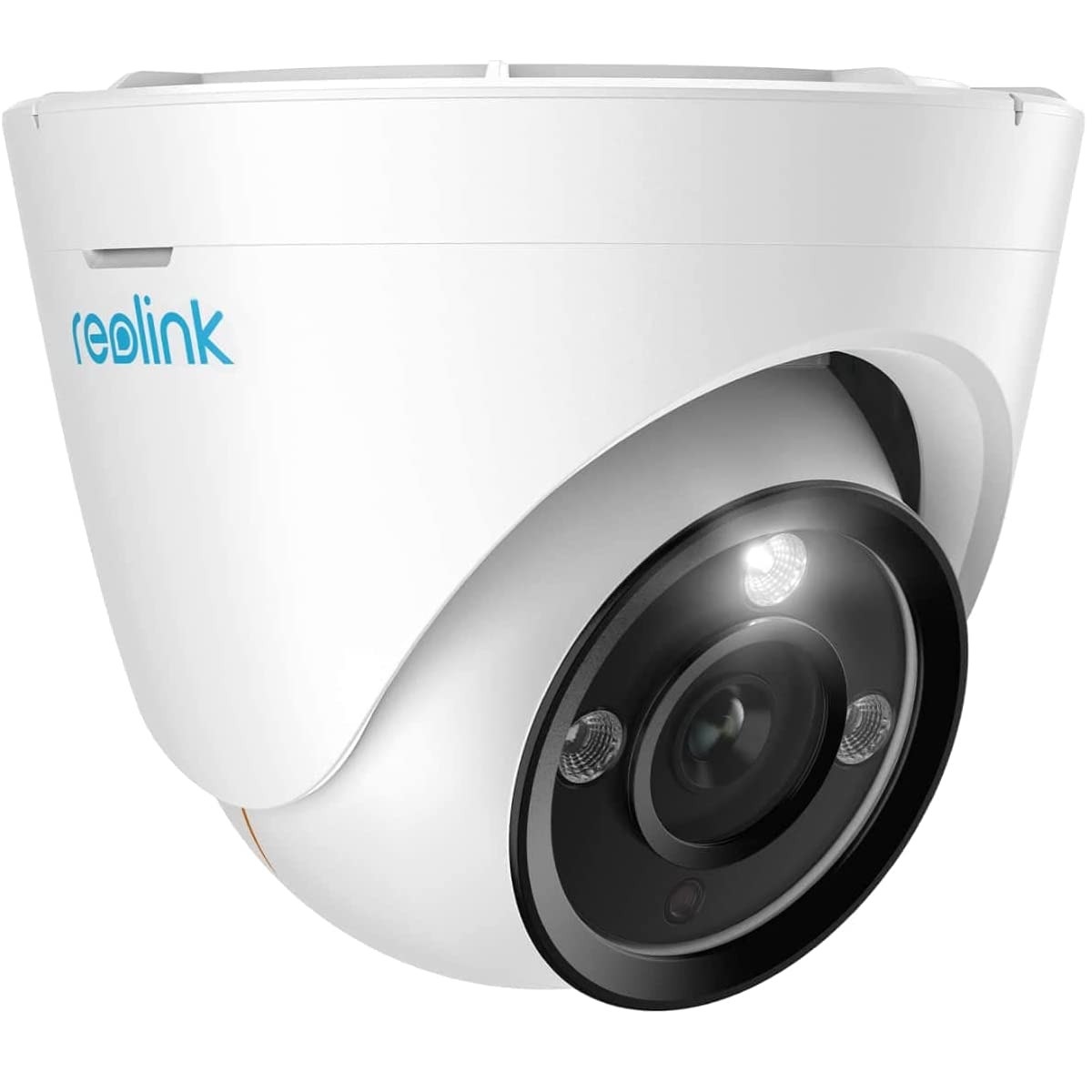
Description Reolink P434
A motorised 2.8-8mm lens: three times optical zoom from the app
What sets the P434 apart from the rest of Reolink's wired range is not the sensor but the optics: a motorised varifocal 2.8-8mm lens changes the field of view from 94 to 50 degrees straight from the app, with no ladder and no screwdriver involved. This is nothing like digital zoom - when the lens moves in optically, the whole sensor gathers light from a narrower slice of the scene, so detail genuinely grows instead of being interpolated. In practice it rescues two very common situations: when the installed frame turns out to include things you did not want in it, such as a neighbour's plot or the road, and when one camera has to both survey the yard and produce a recognisable portrait of whoever is at the gate. Autofocus re-establishes sharpness after every change of focal length, so a reframing takes seconds rather than a service call. There is a trade-off worth naming: narrowing the angle to 50 degrees buys detail but gives up the side zones, which from that moment on are covered by nobody - zoom redistributes coverage, it never adds to it.
8MP on a 1/2.8-inch sensor: what is actually legible in the frame
A 3840x2160 image carries four times the pixels of a familiar Full HD camera, and that reserve is what lets you zoom into a recorded clip after the fact without the face dissolving into a coloured smudge. At the wide 2.8mm end the camera takes in a typical yard or driveway entrance in one frame, and out to eight or ten metres facial features stay recognisable. Move to 8mm and the same sensor is spread across a much narrower scene, raising pixel density on the subject roughly threefold - this is the setting to use when the target is a number plate or an entrance door. The 1/2.8-inch sensor is physically larger than the widespread 1/3-inch parts and, at equal megapixels, produces less noise at dusk, when the illuminators have not kicked in but daylight has already gone. Be realistic about the limit, though: 4K performs no miracles at distance, and for confident plate reading the control point still has to sit ten to twenty metres from the camera rather than across the whole yard.
Colour at night: 30 metres of infrared plus a white spotlight
Night operation works in two stages: two infrared LEDs produce a black-and-white image out to about 30 metres, while a separate 4.7W white spotlight of roughly 700 lumens at 6500K fires on an event and turns the frame fully colour. The value of colour is very concrete: a monochrome clip proves somebody was on the property, whereas a colour frame records that the jacket was red and the car a silver estate, and those are the details that carry weight with the police or an insurer. The spotlight can stay in event mode or be left permanently on, in which case the camera doubles as a porch light - convenient over a doorway, though it will wash out the picture if a pale wall sits close by. Thirty metres of infrared is a genuinely workable distance for a yard, a passage between buildings or the front of a small shop, but a 50-60 metre fence line is beyond it and the far part of the frame will stay dark. Because the camera is mains or PoE powered, switching the spotlight on costs nothing operationally - unlike battery models, light here does not eat into runtime.
Person, vehicle and animal analytics with two-way audio
The built-in analytics classify a moving object as a person, a vehicle or an animal inside the camera itself, so alerts can be limited to the categories you actually care about. That is not a marketing detail: a camera without classification reacts to every branch, cloud shadow and night-time cat, the owner switches notifications off within a week, and the system stops being a security tool and becomes a mere recorder. A microphone and speaker provide two-way audio, so you can answer a courier without leaving the house or tell somebody who has walked into the yard that he is being seen and heard. The H.265 codec is roughly twice as efficient as H.264 for the same picture, which matters most precisely at 8MP: the difference between 40 and 80GB a day directly decides how many days of archive fit on a disk. RTSP and the standard network protocols are supported, so the camera can be handed to a third-party VMS, although some vendor features will be left behind outside the Reolink ecosystem.
PoE 802.3af power, a metal housing and IP67 protection
The camera takes power over a single UTP cable using PoE 802.3af and draws up to 12W, so a system of eight cameras needs a switch with a budget of at least 100-120W rather than a bare-minimum model running at its limit. It also accepts a conventional 12V supply, which helps when the camera has to sit far from the rack and the network arrives over a radio link or an existing cable. The metal body weighs 510g and measures 117 by 104mm, noticeably more rigid than plastic: harder to bend or knock out of alignment, and the metal doubles as a heatsink for the motorised lens assembly. IP67 means full dust protection and resistance to short immersion, a step above the common IP65 rating, and that step genuinely matters on an exposed facade where rain arrives sideways on the wind rather than trickling down from above. The eye-ball form is practical because the ball inside can be re-aimed after mounting, and there is no long arm for an intruder to twist the camera by.
Storage: a 256GB card and Reolink recorder compatibility
A microSD slot takes cards up to 256GB and acts as a standalone archive: even if the network drops or the recorder is switched off, the event is still written locally. The realistic arithmetic looks like this - continuous 8MP recording with H.265 consumes roughly 40-60GB a day depending on how much motion the frame holds, so a 256GB card covers about four or five days of round-the-clock video or several weeks in event mode. For a serious archive depth the camera belongs on a recorder: with a 2TB disk one such camera in 24/7 mode gives roughly a month to six weeks, while a four-camera system lands nearer a week to ten days. The catalogue carries the Reolink NVS4, NVS8 and RLN16-410 recorders with built-in PoE ports, meaning the camera plugs in with one cable directly to the recorder, with no separate switch and no manual IP addressing. Do check the models marked 'without HDD': the disk is not included there and has to be bought separately, otherwise the recorder arrives empty.
Where this camera belongs and what it is built for
The P434 is designed for permanent installation wherever cabling exists and a continuous archive is required: a house facade, a driveway entrance, an office entry, a shop floor, a warehouse, a customer car park. It pays off most in two cases - when the subject is far away, ten to twenty-five metres, so a fixed wide lens would only ever give a general view, and when the exact framing is not known in advance and climbing the ladder twice is not appealing. For a narrow corridor, a small room or a porch its capabilities are excessive: a fixed 2.8mm camera covers that, and the zoom would simply go unused. For a site with no power and no network it is not a candidate at all - this is a wired model and the cable has to be run either way. On elongated sites, such as a long fence or a passage between buildings, two cameras facing each other beat one camera at maximum zoom: zoom shows detail but is blind to whatever happens beside it.
How it compares with the neighbouring Reolink models in this catalogue
Its closest relative here is the P334: the same 8MP sensor, the same eye-ball housing and the same PoE, but with a fixed 2.8mm lens. If your framing is settled in advance and the subjects are close, paying extra for the P434's motorised optics adds nothing, and the simpler P334 gives the same picture for less. The P344 offers 12MP against 8MP but again on a fixed 2.8mm lens: more pixels across a wide view, yes, but no way to move in without losing detail, so the choice between P344 and P434 comes down to whether you need a wider overview or the ability to aim at a point. For longer distances the catalogue has 2.7-13.5mm models such as the Reolink 437 and the RP-PCB8MZ: roughly five times zoom against three here, which suits a long driveway or a gate set well back. Finally the P840 is a pan-tilt camera with the same 2.7-13.5mm range and 60 metres of illumination - take it when you need to follow a subject as well as magnify it, whereas for a fixed viewing direction the P434 does the job with less mechanics to go wrong.
Tell us the distance from the mounting point to whatever you need under control, and what must be legible - a face, a number plate or a general view. We will say whether fixed optics are enough or a varifocal model like this one is genuinely worth it.
Characteristics Reolink P434
Reviews about Reolink P434 from real users
No reviews found







