
 m. Сміла, Незалежності, 67г. оф, 406/6























REOLINK P324 (2.8 MM) - PoE IP CAMERA

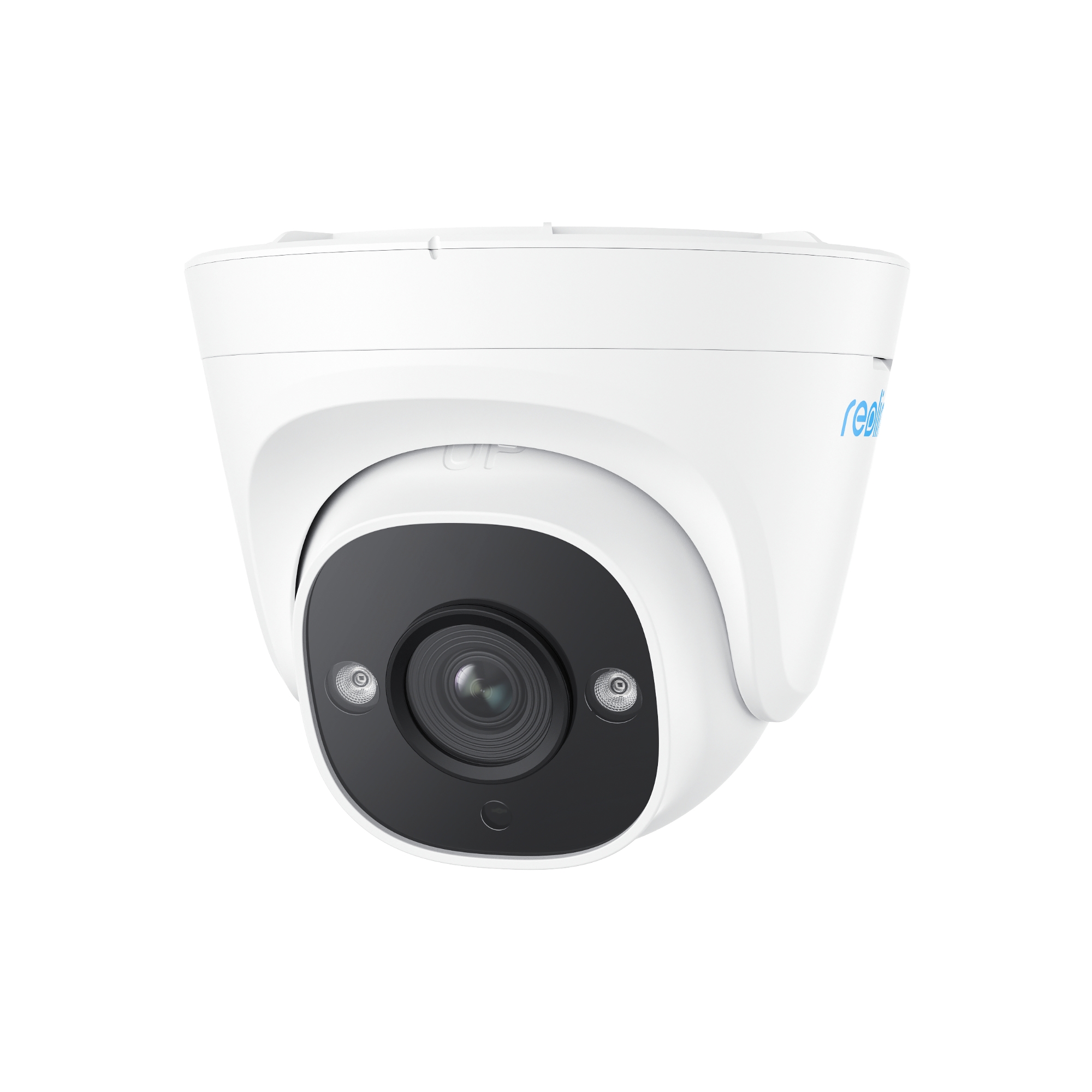


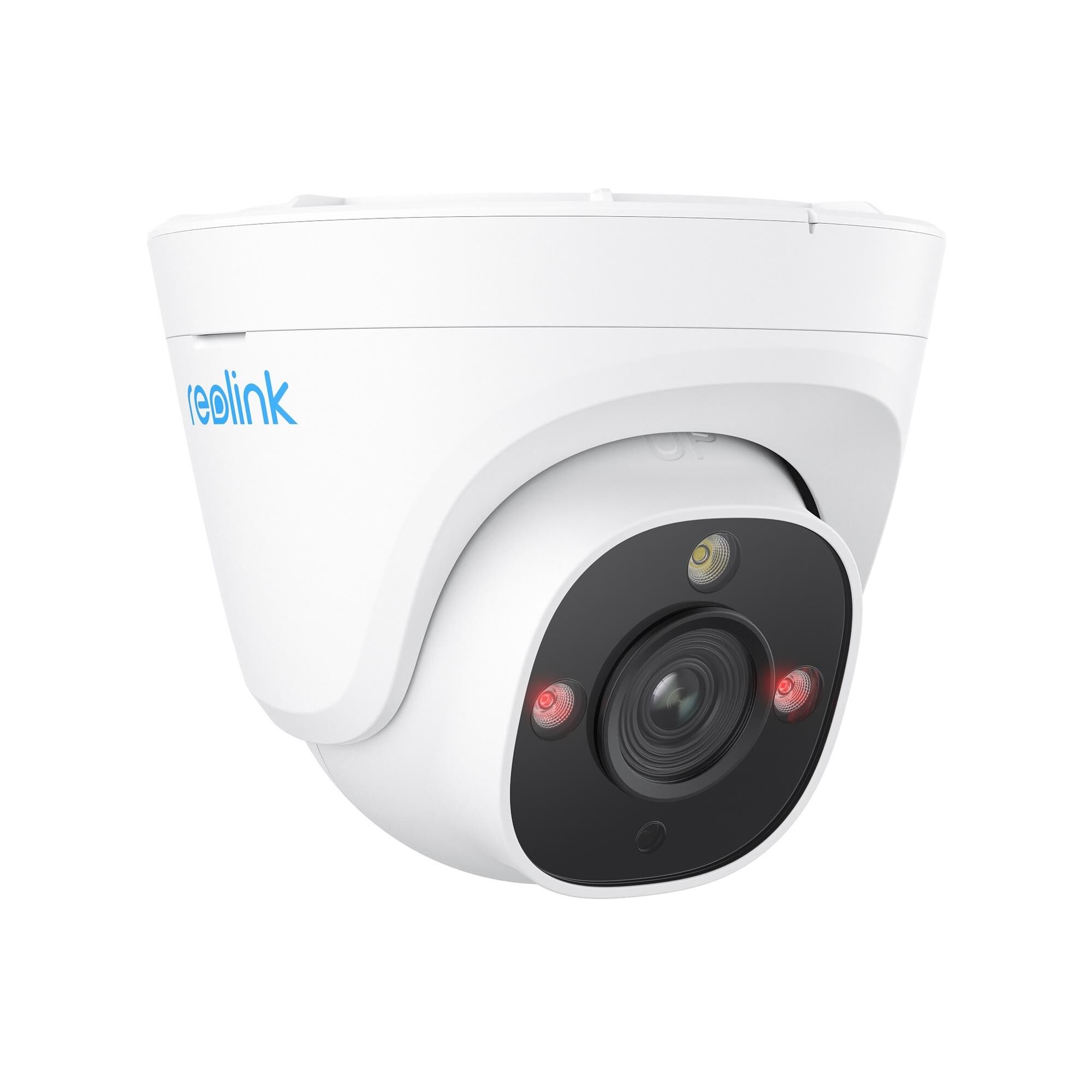


Description Reolink P324
Wired PoE power: a continuous archive instead of separate event clips
The P324 is a wired PoE camera, and that single fact separates it from the battery-powered Reolink Argus and Go lines sitting next to it in this catalogue. One Ethernet run carries both power and data, so the camera never sleeps and can record around the clock rather than waking for a few seconds whenever a sensor triggers. The difference shows up exactly when it matters: a battery model hands you a clip that starts at the trigger, while a wired camera also holds the half-minute before the event and everything that followed. When you are reconstructing a theft, a bumper scrape at the gate or a dispute with a contractor, that before-and-after context is usually what settles the question. The trade-off is the cable itself — you cannot hang this camera on a pole in an open field, you have to pull a line from a switch, and a single Ethernet segment tops out at roughly one hundred metres.
5MP, a 2.8mm lens and a 110° view: what actually fits in the frame
The 1/2.7″ sensor produces 2560×1920 frames, close to five million pixels, which is a visible step up from the two-megapixel cameras still sold everywhere: zoom into a recorded frame and a face or the lettering on a van stays legible where 2MP would give you a smear. The fixed 2.8mm lens covers 110° horizontally and 57° vertically, a genuinely wide overview that swallows a typical house yard, a small retail floor or a loading bay in one shot with no blind corners at the edges. Thirty frames per second keep a person walking briskly three or four metres from the lens from breaking up into motion-blurred stills when you step through the recording. Understand the compromise before you buy: 2.8mm is excellent at showing what happened, but confident recognition of an unfamiliar face or a number plate realistically ends somewhere around six to eight metres, beyond which the subject is simply too small in the frame. For a distant, narrow target you want a longer or varifocal lens, and the P324 is better left doing what it does well — the wide picture.
Night vision: eighteen IR LEDs to 30 metres, and why the image is monochrome
Night duty falls to eighteen infrared LEDs with an effective reach of up to 30 metres, and because they emit outside the visible spectrum the camera neither floods a neighbour's window with light nor announces its own position in the dark. The picture at night is black and white — there are no white spotlights on this model, so the colour of a jacket or a car is information you will not get after dusk. For most jobs that is enough: the fact of entry, the direction of movement and the number of people are all perfectly readable, but if a colour night frame is genuinely critical, Reolink builds separate models with white floodlights and ColorX optics for that. One mounting detail matters more than people expect: infrared bounces off anything close to the lens, so a soffit, a branch or a wall half a metre away will turn the night image into white fog — mount the camera with clear air in front of it. The second classic mistake is glass; shooting at night through a window with IR on simply does not work, because the light reflects straight back into the sensor.
Person and vehicle detection runs inside the camera
The analytics execute on the device itself, so the P324 separates a human being and a vehicle from generic pixel movement and pushes an alert only for the categories you left enabled. That is the whole difference from cameras with plain motion detection, where a branch in the wind, a cloud shadow or rainfall generate dozens of notifications a night — the owner mutes them within a week, and the system stops functioning as security altogether. Animal detection is not listed among this model's features, which dog owners should factor in: the camera will register the dog as movement but will not filter it out as its own category, so detection zones need more careful tuning than on the battery Argus models that do include pet recognition. In practice you solve it with masking — the Reolink app lets you draw areas of the frame to ignore and set a sensitivity threshold, so the road behind the fence or a swaying tree crown drops out of the picture. Alerts land in the app, and the camera can also push stills to FTP or send them by e-mail, which means the basic security loop works without any cloud subscription.
Power, mounting and weatherproofing: what you still have to buy
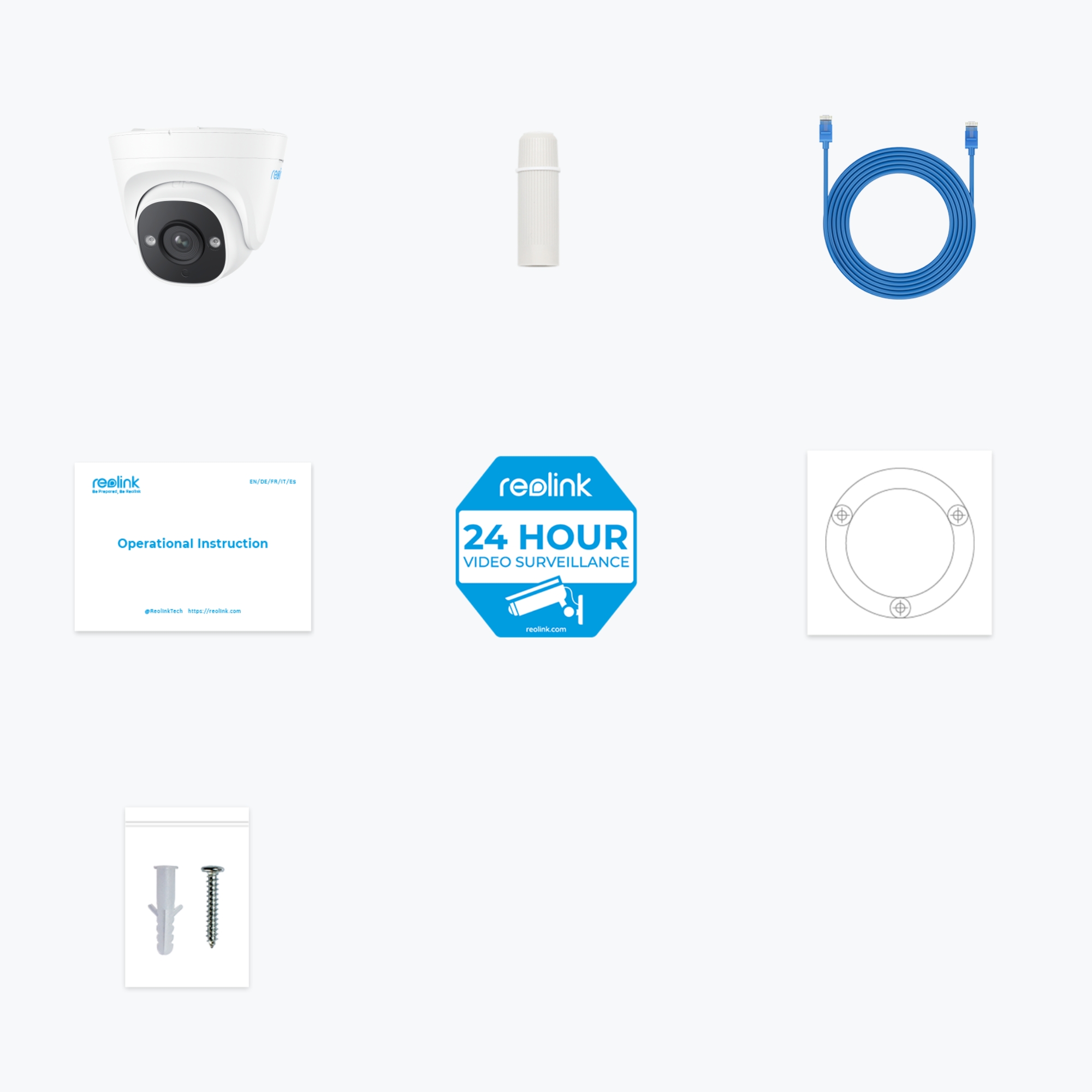
The camera runs on IEEE 802.3af PoE at 48V or on an ordinary DC 12V adapter, drawing under 12W, which in planning terms means eight of them land around 90-100W on an eight-port PoE switch — reason enough not to specify a switch with no headroom. Neither an injector nor a power supply is in the box: you get the camera, the mount, a one-metre patch lead, a drilling template and a weatherproof connector cover, so budget the power source separately. The aluminium alloy housing weighs 526g at 117mm across and carries an IP67 rating — dust-tight and able to survive brief immersion, comfortably more than an exposed facade in driving rain will ever demand. The eye-ball dome form is practical: the inner sphere can be re-aimed after mounting, and knocking it off target by hand is far harder than with a bullet camera on a long bracket. The honest limit is the -10…+55°C operating range — fine under a facade overhang, in a stairwell, a heated warehouse or a shop floor, but in a hard frost on an exposed wall a camera rated to -30°C is the safer specification.
Where the footage goes: card, Reolink NVR or a third-party system
There are three storage routes and they happily coexist. The simplest is a microSD card, with support for up to 256GB listed in this model's specifications: the camera records independently, so a network outage or a yanked cable at the recorder does not create a gap. The second is a dedicated NVR — the P324 is picked up automatically by Reolink PoE recorders such as the NVS8 or NVS4 from this same catalogue, which also feed the camera through their own PoE ports, removing the need for a separate switch. The third is FTP upload plus an RTSP stream, which lets you pull the camera into third-party VMS software, a home server or Home Assistant, though some of the vendor-specific features behave less smoothly outside the Reolink app. For archive depth, use this as a rule of thumb: continuous H.265 recording of a five-megapixel stream consumes roughly 30-45GB per day, so a 256GB card holds about a week of round-the-clock footage, or several weeks if you record on events only.
Where this camera belongs and which jobs it was built for
The natural home for a P324 is anywhere a cable already exists or can be pulled easily and the archive has to be continuous: a house yard, an entrance gate, a garage, a small shop, a cafe, an office, a warehouse or a production bay. The dome form with a wide angle performs best at 2.5-3 metres above a doorway, where the frame catches both the door itself and several metres of approach, and people pass close enough to be recognised. On a retail floor one such camera covers the till area completely — the transaction, the customer and the cashier in a single frame — which quietly ends most arguments about change and unscanned goods. Two scenarios suit it badly: distant targets such as a barrier thirty metres away or plates at a gate, and sites with no power and no network at all — the first needs a narrower lens, the second leaves only a battery model with LTE. One more note for indoor use: IP67 and thirty metres of illumination are wasted inside a dry heated room, and you would be paying for capability you never touch.
How it differs from the neighbouring Reolink models in this catalogue
Its closest relatives here are the dome PoE cameras of the same shape that differ mainly in sensor: the P334 at 8MP and the P344 at 12MP pack more pixels into the same 2.8mm angle, meaning you can crop deeper into the same scene during playback. If the camera watches a compact area — a porch, a till, a garage door — five megapixels is plenty, and paying up for 8 or 12MP buys you nothing but a heavier stream and a disk that fills faster. On a wide scene such as a yard with two entrances or an office car park the difference becomes real, and that is where the higher models earn their keep. The P434 is a different proposition altogether with its 2.8-8mm varifocal lens: you can tighten the view onto the area you care about after mounting, without swapping hardware, which suits distant targets or installations where the final field of view is still undecided. Conversely, if pulling a cable is genuinely impossible, a wired camera makes no sense at all — this catalogue carries the battery Argus B340 and B430 for locations with Wi-Fi and the Go series with LTE for sites with no internet, but remember that all of them record on events rather than continuously and cannot replace a full archive.
Tell us what you need to cover and whether there is a network at the site, and we will suggest the number of cameras, the right optics and a recorder with spare ports for later expansion.
Characteristics Reolink P324
Reviews about Reolink P324 from real users
No reviews found







