
 m. Сміла, Незалежності, 67г. оф, 406/6























REOLINK GO SERIES G430 (5 MP) - PAN-TILT STANDALONE IP CAMERA

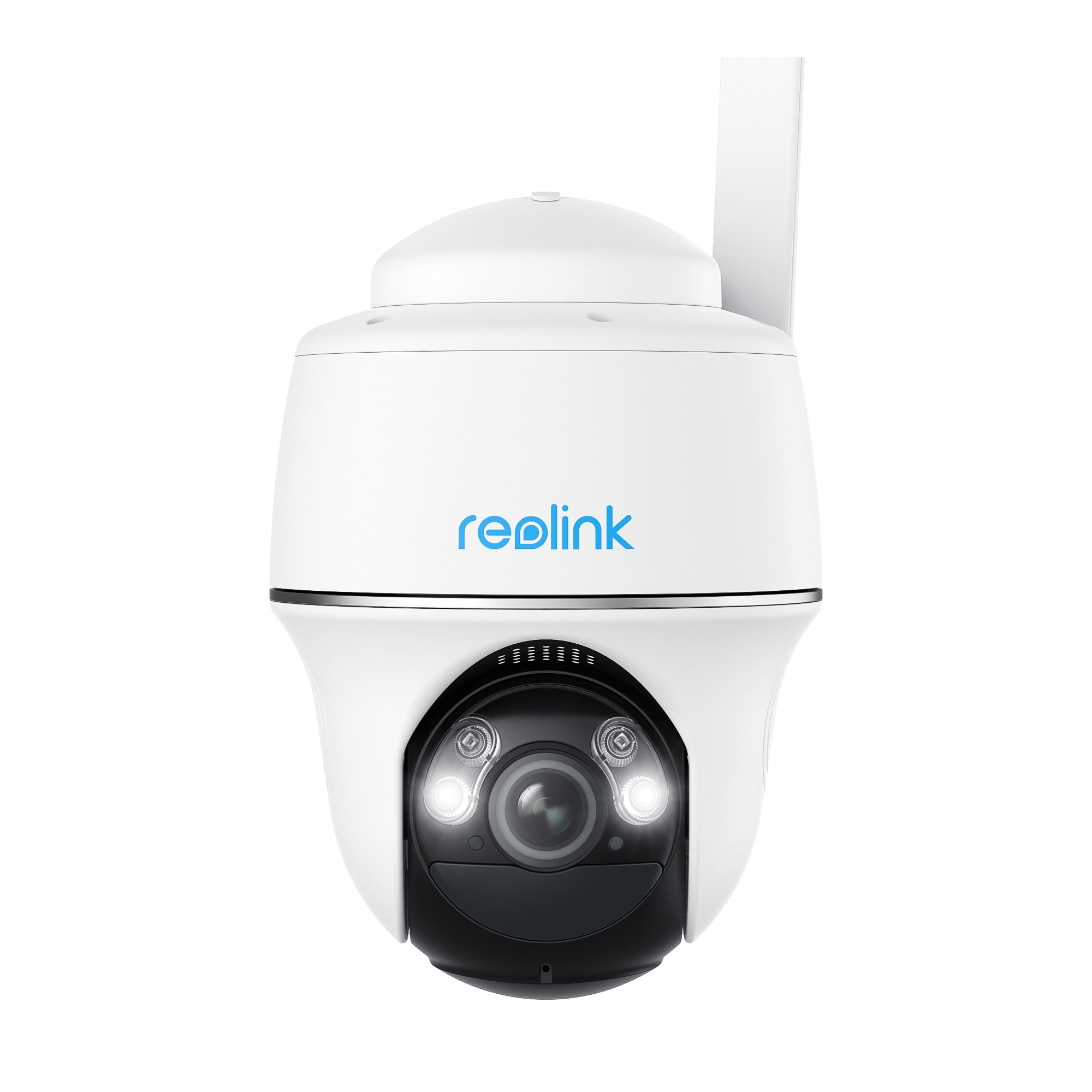
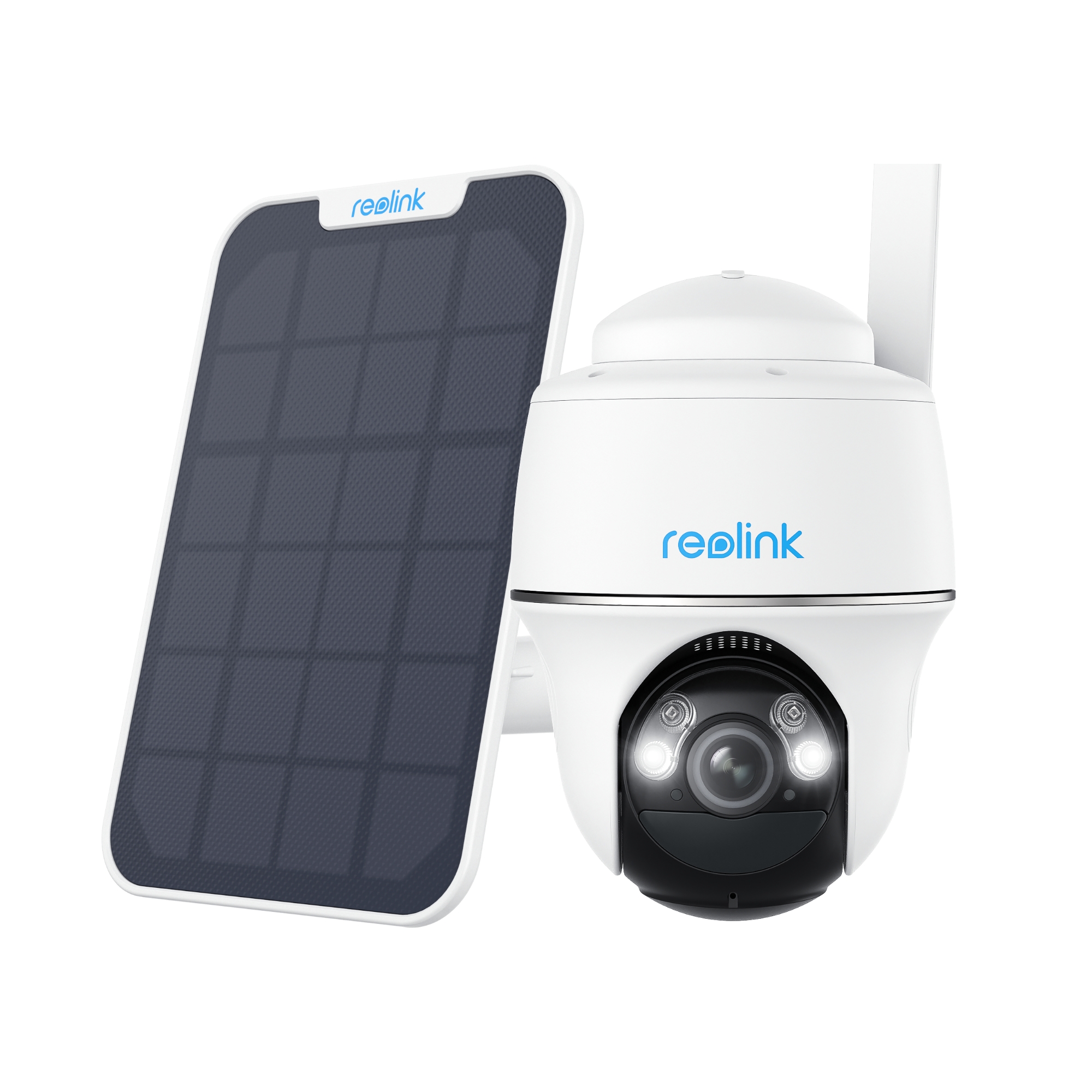
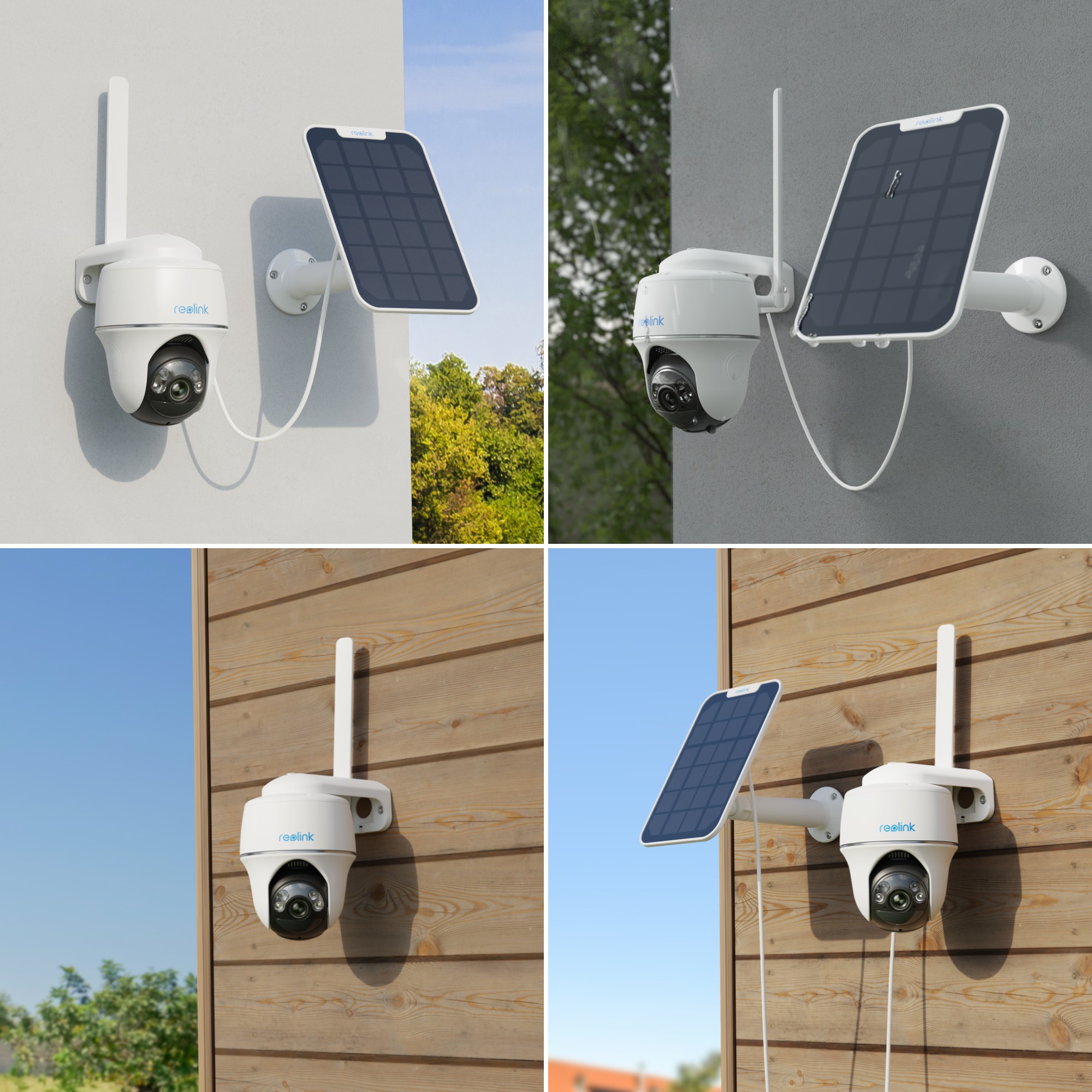
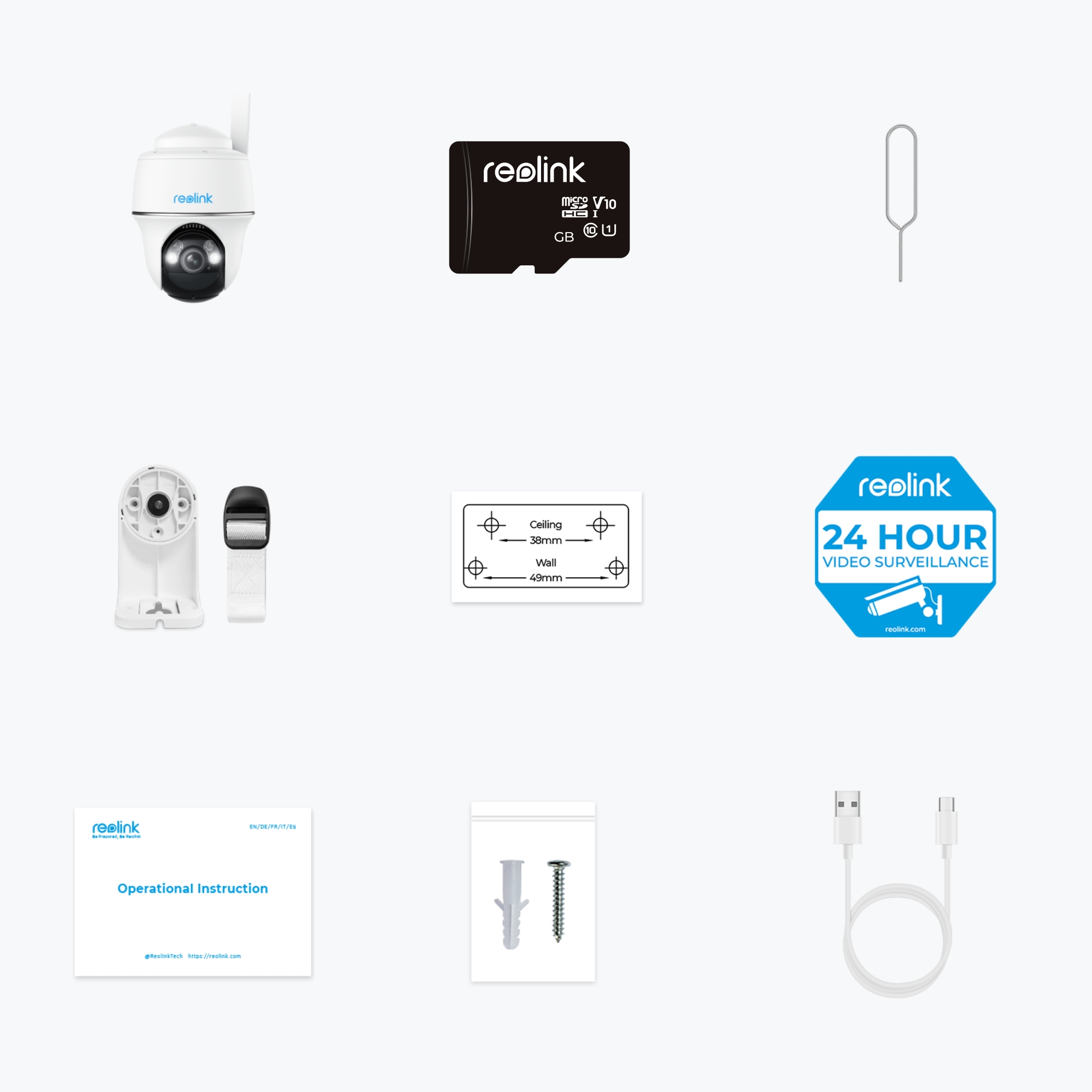


Description Reolink G430
A camera for a site with no power socket and no internet
The Go Series G430 is a self-contained camera built around a 6000 mAh rechargeable battery and an integrated 4G LTE modem, so neither a power cable nor a nearby router is needed to put it to work. You insert an ordinary nano-SIM with a mobile data plan, and the supported LTE bands B1/B3/B7/B8/B20/B28 are exactly the frequencies Ukrainian carriers run on, which removes the usual compatibility guesswork. That makes the use case fundamentally different from any wired model: this camera goes onto a summer house with no electricity supply, a construction site, an apiary or a remote plot of land, where a classic recorder-based system would have nothing to be built on. The price of that freedom is a monthly data allowance — the camera burns almost nothing while idle, but every live view and every uploaded clip costs megabytes, and with ten to twenty triggers a day real consumption usually lands within a few gigabytes per month. Where mains power and stable Wi-Fi already exist, paying extra for the cellular module makes little sense: the same catalogue offers the Argus B430 with the same pan-and-tilt head but over Wi-Fi.
Event-driven recording instead of round-the-clock: how it actually behaves
The key thing to understand about any battery camera is that it does not record 24/7 — it sleeps most of the time, and that is precisely why one charge lasts so long. The G430 is woken by its PIR sensor, which responds to the heat contrast of a moving body across roughly a 90-degree sector at about ten metres; only then does the imager power up, the on-board analytics sort the object into person, vehicle or animal, and recording starts. One to two seconds pass between the movement and the first frame, so the clip usually begins with someone already inside the zone rather than at the moment they appeared fifteen metres away — enough for a report, occasionally not enough to reconstruct exactly where they came in. The 15 frames per second ceiling is another deliberate trade for battery life: pedestrians and slow-moving vehicles are captured cleanly, but a car passing at 60 km/h cannot be picked apart frame by frame. If what you need is a continuous archive where any minute of last week can be scrubbed back to, a battery camera is the wrong tool and a PoE model such as the P344 is the honest answer.
A 355-degree head and automatic tracking
The motorised head covers 355 degrees horizontally and 140 degrees vertically, so a single unit can look almost all the way around itself — from the roof of the neighbouring building down to the ground directly beneath it. The app stores up to 32 preset positions plus one guard position the head returns to once motion ends, which matters more than it sounds: without it the camera simply stays pointed wherever it was last dragged. Auto tracking follows a detected subject within that range, so a person walking across a yard stays in frame far longer than a fixed 90-degree lens would allow. The limitation is worth knowing in advance: while the head is looking one way the rest of the perimeter is unwatched, and rotation takes time, so one motorised camera does not replace two or three fixed ones aimed at different approaches. The sensible layout is to give the G430 an open area it can survey as a whole and to cover a critical point such as a gate with a separate fixed camera.
Night vision: infrared to about ten metres plus a white spotlight
After dark the camera works in two modes — a silent 850 nm infrared array that produces a black-and-white picture out to roughly ten metres, and a 6500 K spotlight that fires on an event and turns the frame full colour. For any later investigation that difference is decisive: monochrome footage gives you a silhouette, colour footage gives you the shade of a jacket and the colour and body type of a car, which are the details that actually identify someone. The spotlight also works as a deterrent alongside the built-in siren, and on an unattended plot sudden light and noise end most intrusion attempts before anything is taken. Ten metres of illumination is an honest figure for a battery device and it is three times shorter than the 30 metres of the wired P340 or P344, simply because those LEDs draw from the same cell that has to last for weeks. The practical conclusion: mount the G430 two and a half to three metres above the area it watches closely, rather than expecting it to light up the far end of the property.
Runtime, charging, and the solar panel that is not in this box
The 6000 mAh cell is non-removable, charges over USB-C and, at a typical few triggers per day, runs for weeks — though the manufacturer deliberately quotes no exact figure, because the real number depends on event count, how often you open the live view, temperature and LTE signal strength. Three things drain it fastest: weak cellular coverage that forces the modem to transmit at higher power, frequent live viewing in the app, and frost. This particular listing is the version supplied without a solar panel, so by default the camera has to be taken down and recharged every few weeks — an annoyance if the site is forty kilometres away, and one that a 3 to 6 W panel with a USB-C lead removes permanently. Plan for the Ukrainian winter as well: in December and January a panel delivers a fraction of its summer yield, and the camera's rated range starts at -10 °C, so a long cold spell will visibly shorten autonomy. If the mounting point sits in shade or under trees, do not plan around solar at all — scheduled top-ups from a power bank will be more reliable.
Storage, the app, and the one compatibility limit that matters
Clips are written to a microSD card of up to 128 GB inside the camera, and that lasts a long time precisely because only events are stored rather than a continuous stream. Reolink Cloud is available as an option and earns its keep where a thief could simply rip the camera off the wall together with the card, but no basic function hides behind a subscription: person and vehicle detection, alerts, live view and local recording all work for free. Now the limitation sellers usually skip: as standalone devices, Reolink's battery and 4G models expose neither RTSP nor ONVIF, because a permanent stream would flatten the battery within a day. In practice that means you cannot add this camera to a third-party recorder, to Blue Iris or to a Hikvision NVR — it lives inside the Reolink app and desktop client and nowhere else. Note too that the Reolink Home Hub, which lifts that restriction for battery Wi-Fi cameras, does not support 4G models at all, so the G430 should be treated as a self-sufficient device rather than a building block of a large mixed system.
Where this camera genuinely belongs, and where it does not
The G430 is at its best on sites with no infrastructure: an unfinished house with no electricity connected yet, a summer cottage standing empty through winter, a construction site with plant and materials, an apiary, a remote store or a trailer out in a field. The second natural case is temporary surveillance — the camera hangs for a month during renovation or harvest, then comes down and moves to the next location without leaving a single drilled channel or cable run behind it. The motorised head pays off specifically in open space: a yard, a machinery park, a plot with several outbuildings, where one 355-degree camera does the job of two fixed ones. A stairwell, a shop floor or a staff entrance is the wrong home for it, because those need an unbroken archive of every minute of the shift, recorder-side access and no wake-up delay. Nor should it be the only camera on an entrance where the whole point is reading plates: a 4 mm lens with a 90-degree field gives the wide picture, not a legible registration number at distance.
How it compares with its neighbours in this catalogue
Within the Go range there are four choices: the G430 is the only one with a motorised head at this price, the Go G340 and Go G330-C both sell with fixed lenses (8 MP on the first, 4 MP on the second), and the TrackMix G770 adds a second imager and tracking with optical reach. If you do not need to swivel and the scene is static, the G340 buys you more pixels for the same money; if the area is wide and the camera has to look around, the mechanics in the G430 justify their cost. The cheaper relative, the Go PT Plus, shares the concept of LTE plus battery plus pan and tilt, but it is the previous generation with a 4 MP sensor, and the gap is essentially payment for resolution and a newer platform. The comparison that matters most, though, is outside Reolink: where power and a network exist buys the P344 with a 12 MP sensor, 30-metre illumination and 24/7 recording, while the Dahua DH-IPC-HDW2449TM-S-IL or the Hikvision DS-2CD1347G3-LIUF give the same continuous archive and work with any NVR. The rule of thumb is simple: if a cable can reach the spot, buy wired — it is cheaper and records everything; if it cannot, the G430 makes possible what no wired camera can do there at all.
If you are unsure whether mobile coverage at your site is strong enough, or how to orient the camera relative to the sun, send us the details of the location and we will suggest a mounting plan and the solar panel rating it would need.
Characteristics Reolink G430
Reviews about Reolink G430 from real users
No reviews found







