
 m. Сміла, Незалежності, 67г. оф, 406/6























REOLINK DUO SERIES P757 (16 MP) - PANORAMIC PoE IP CAMERA

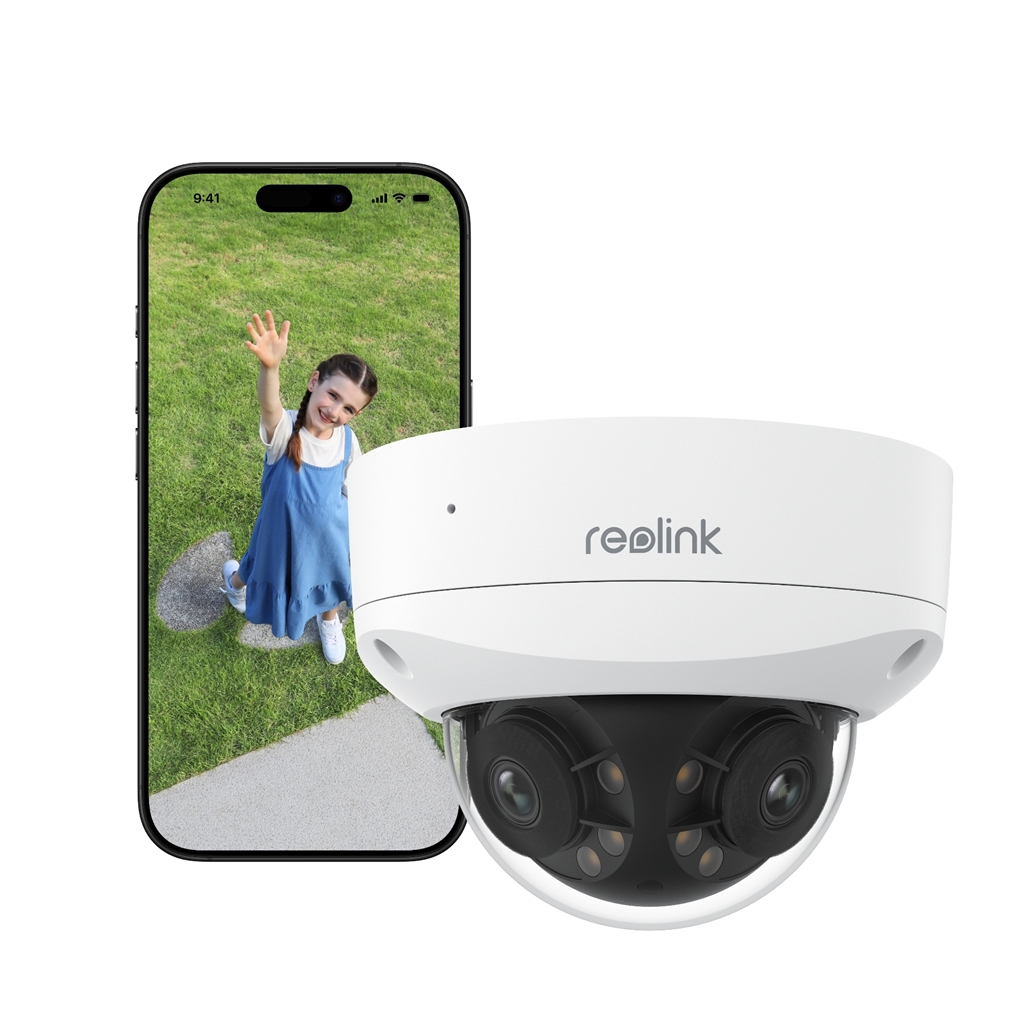


Description Reolink Duo P757
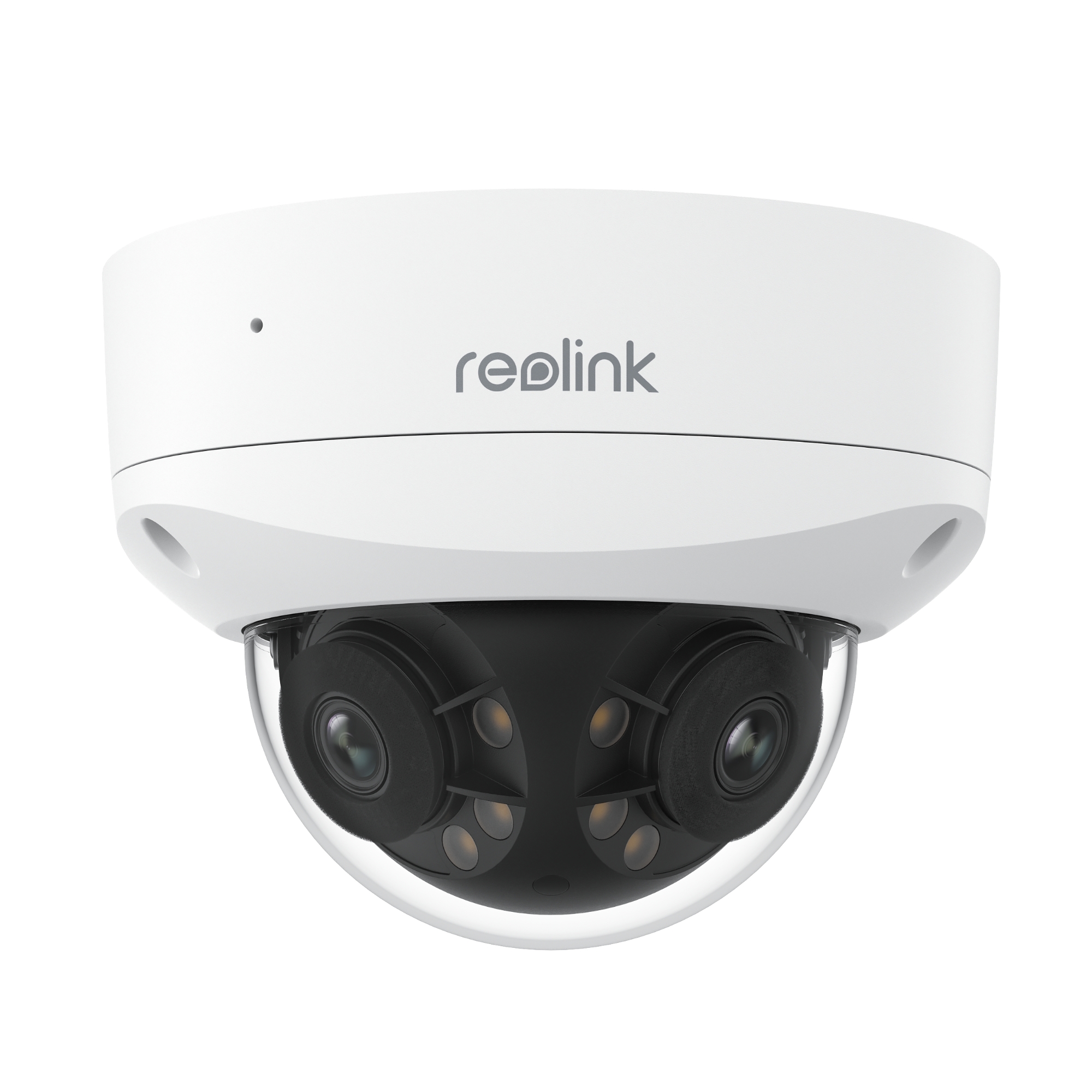
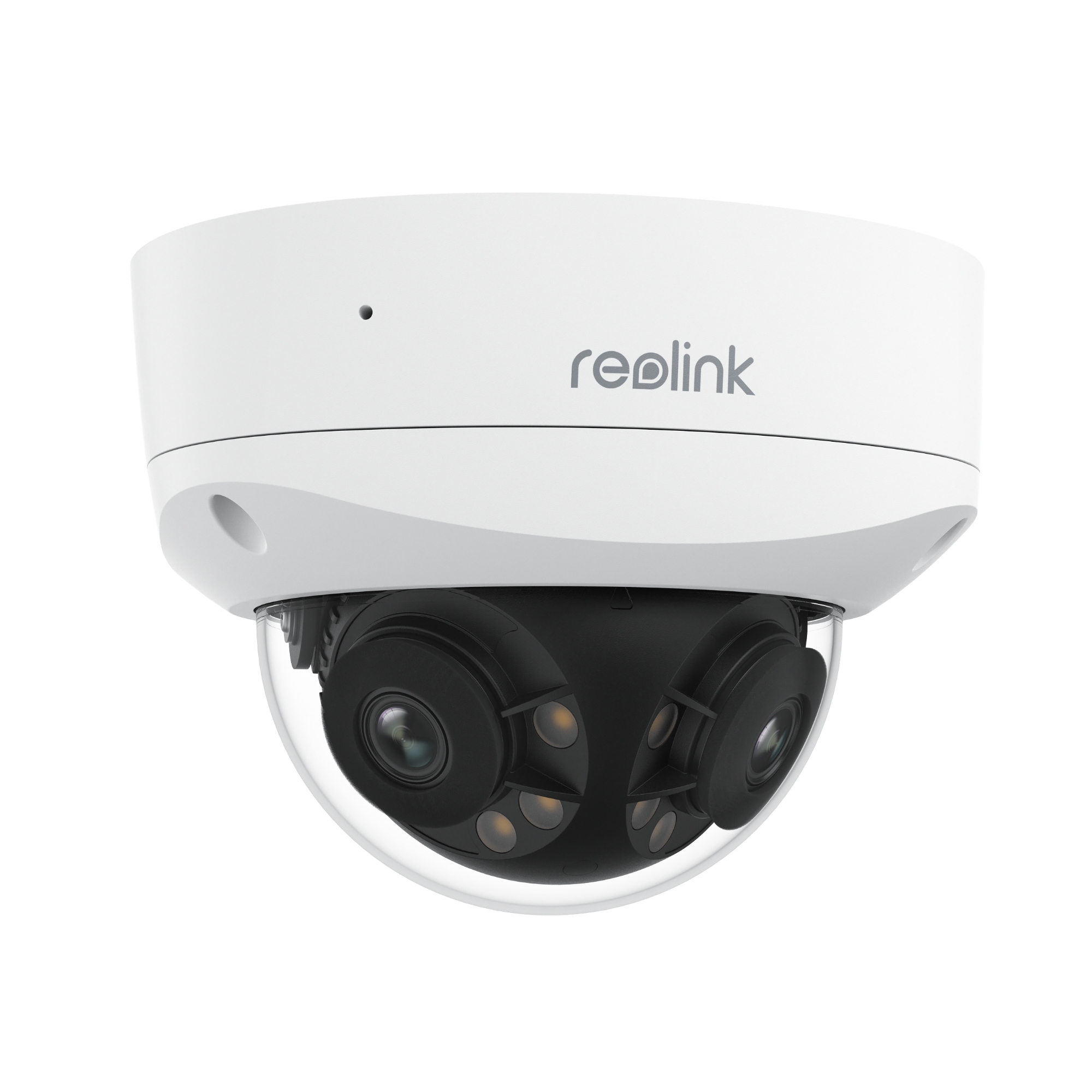
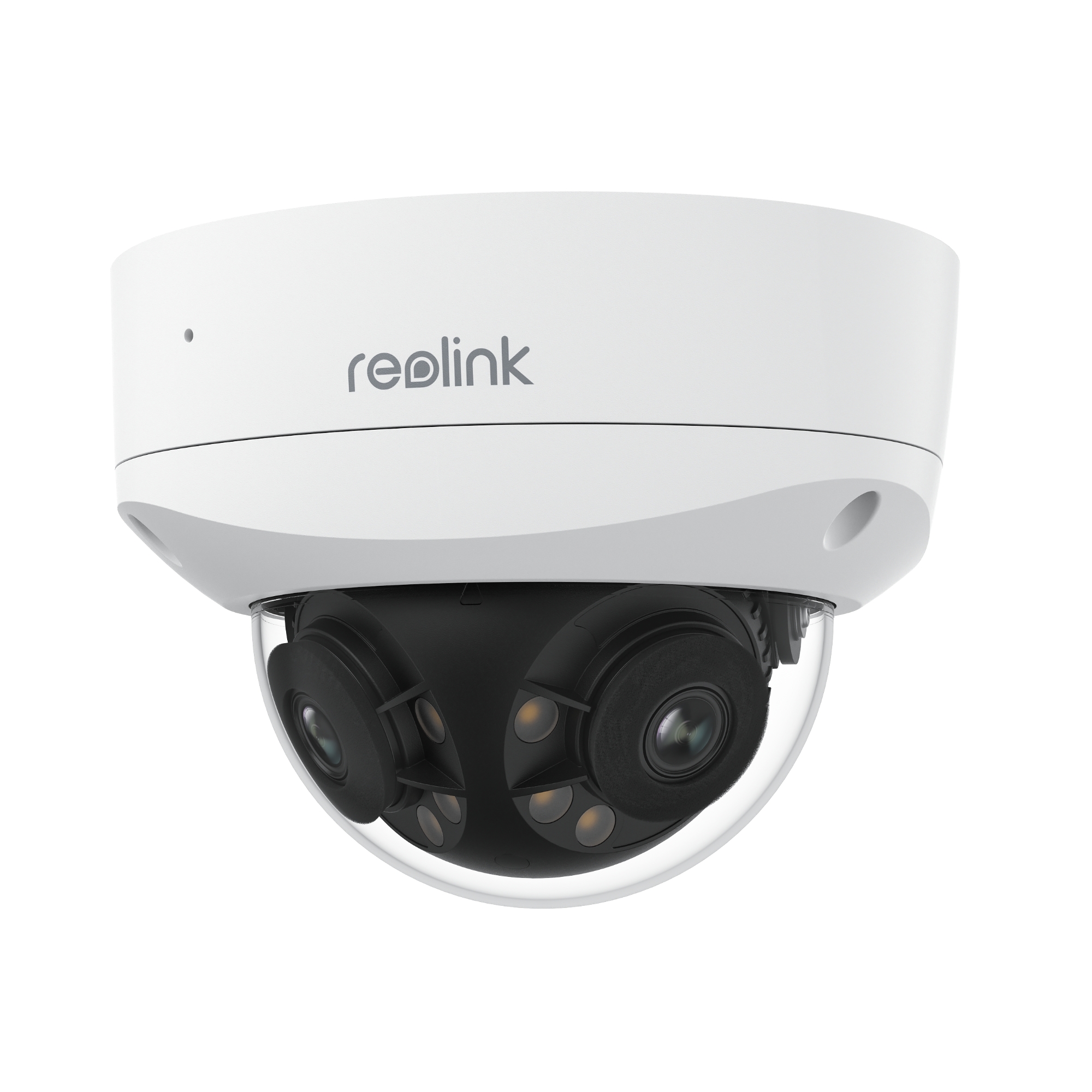
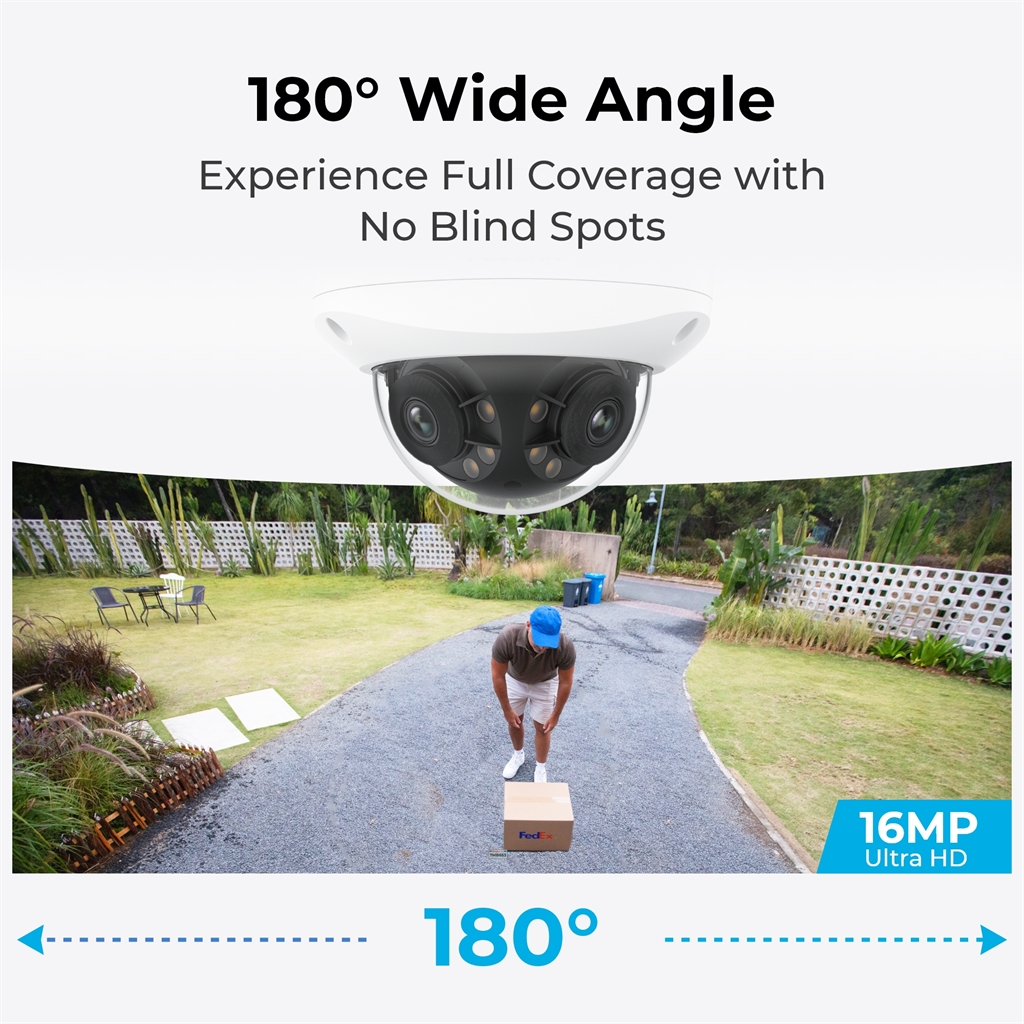
Two sensors in one housing: a 180° view with no corner blind spot
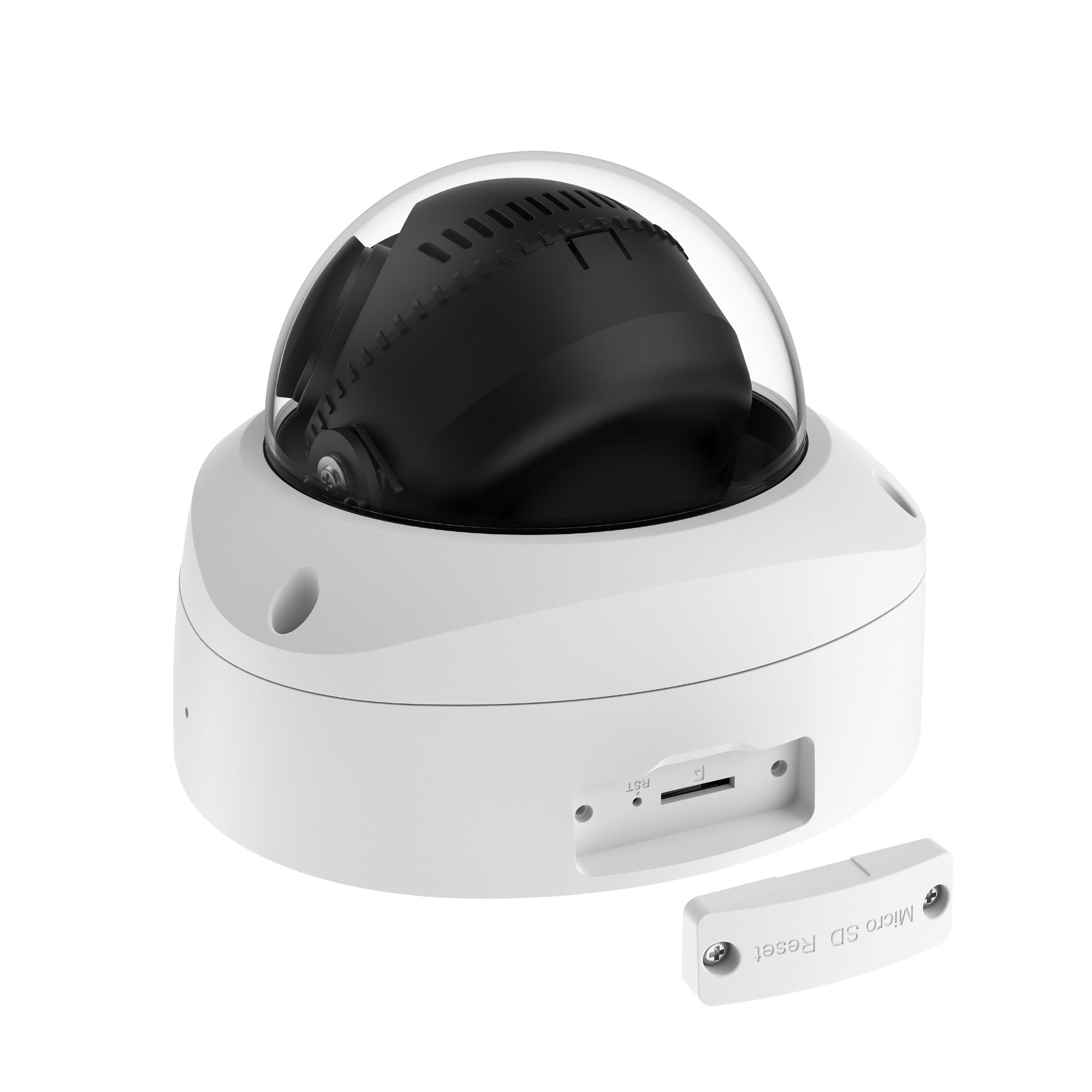
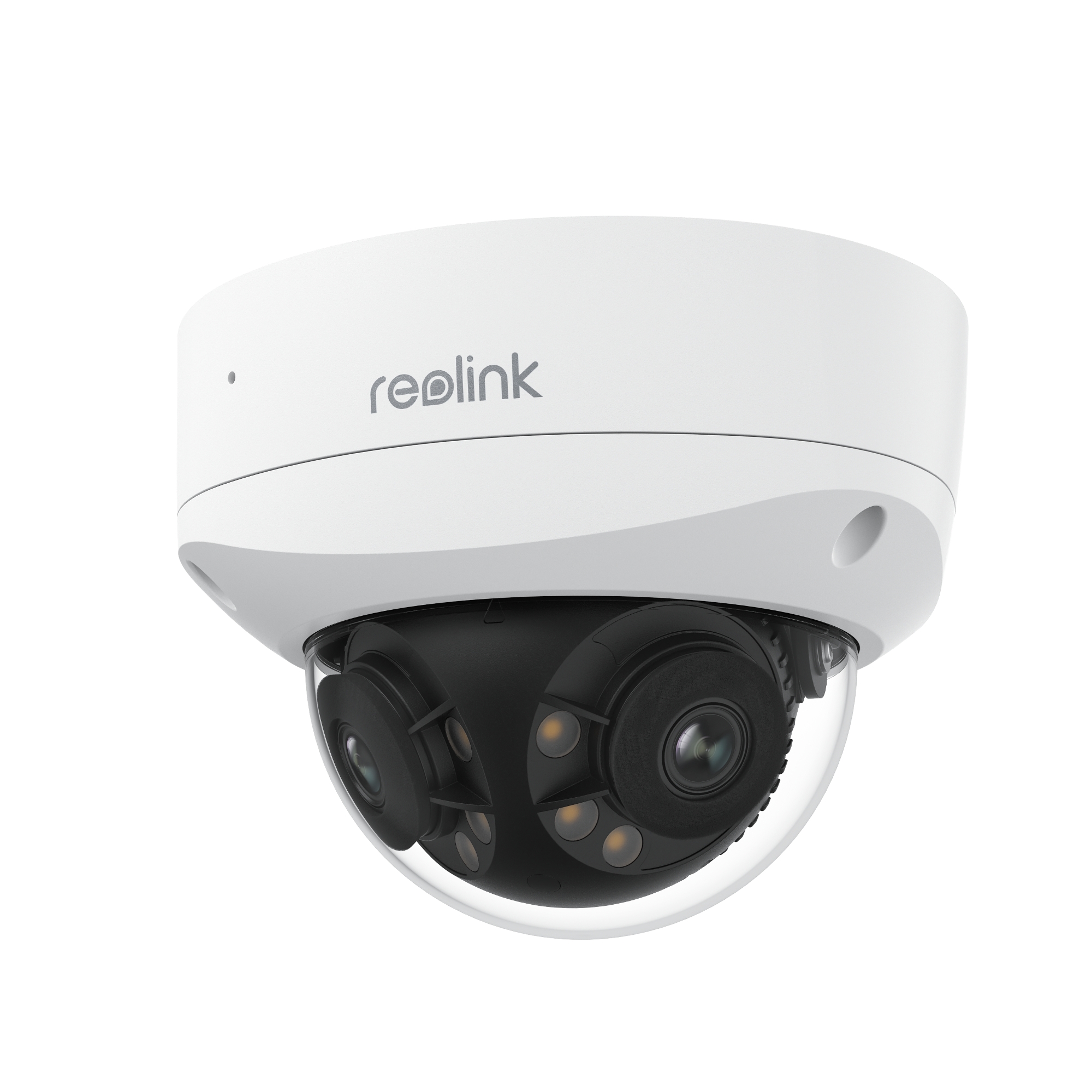
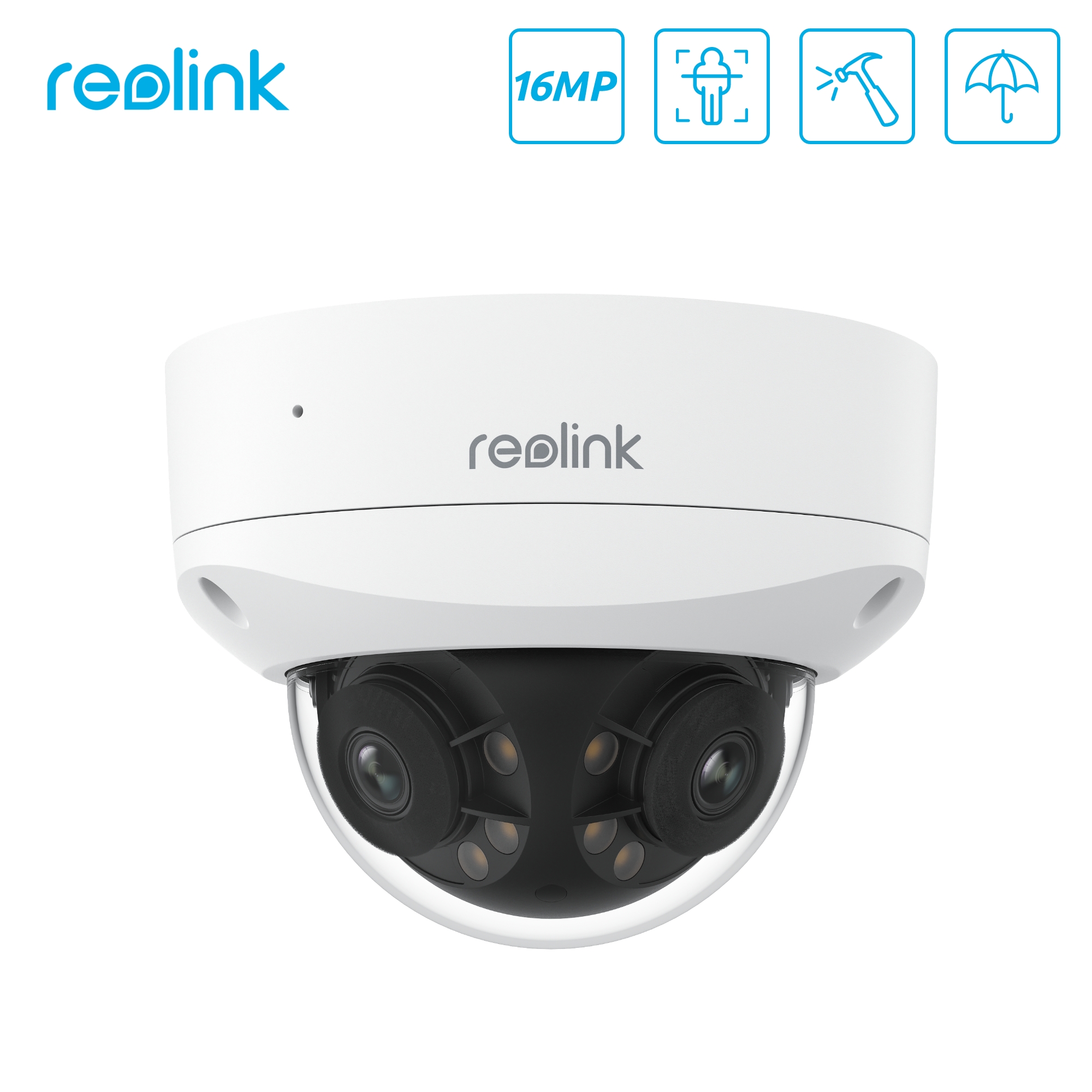
The P757 is not a conventional camera with an ultra-wide lens — it carries two separate 2.8 mm lenses, each with its own sensor, and stitches their images into a single seamless 7680×2160 frame. A single sensor can only reach 180° through fisheye optics, which bends straight lines and smears anyone standing near the edge of the frame into an unidentifiable blur. Because each lens here handles its own half of the scene, the geometry at the edges is close to the geometry at the centre, and a fence still looks like a straight fence on playback. The payoff is clearest on a building corner: one unit covers the driveway and the entire side of the yard at the same time, replacing two cameras, two cable runs and two recorder channels. The trade-off sits in the vertical plane, where coverage stays ordinary at roughly 55°, so mounting height of 2.5-3 metres works far better than the third-floor eaves, and a small dead zone directly underneath the housing is unavoidable.
16 megapixels across 180°: what the detail actually amounts to
The headline figure means little until it is converted into the number that really governs recognition — pixels per degree of coverage. The panorama spreads 7680 horizontal pixels over 180°, which works out to roughly 42 pixels per degree, while an everyday 4 MP camera with a 2.8 mm lens spreads 2688 pixels over about 100-101° and delivers near 27 pixels per degree. So this model does not merely see wider; at the same distance it also resolves noticeably more detail than a typical budget overview camera, and a region of the recording survives being zoomed in on. At full resolution the frame rate is around 20 fps rather than 25-30, which is ample for people, deliveries and parking activity but leaves less headroom when you need to step frame by frame through a fast-moving car. One honest limit that sellers rarely mention: a wide angle always stretches the scene, so reading licence plates at 20-25 metres is out of reach here, and that job belongs to a narrow or varifocal lens on a dedicated point.
Night work: 30 metres of infrared plus a white spotlight
Two different light sources are built in — infrared LEDs reaching about 30 metres for covert black-and-white operation, and a bright white spotlight that produces genuine colour footage after dark. The gap between those modes is the gap between «someone was there» and «a man in a blue jacket and a silver estate car», and it is colour that makes a recording usable for a police report or an insurance claim. The spotlight can stay off and fire only on an event, once the analytics has classified a person or a vehicle, which turns it into a deterrent as well: sudden light in a half-dark yard tells the visitor plainly that he has been seen, and a fair share of attempts end right there. Physics still applies — 30 metres of infrared has to be spread evenly across 180°, so the far edges of the panorama are always dimmer than the centre, and no 180° camera will light a yard the way a narrow-angle model with the same illuminator does. Where a street lamp or permanent porch light is already in place, colour mode performs better without the camera's own spotlight, drawing less power and giving a steadier image.
Analytics, Motion Track and two-way audio
Object classification runs on board: person, vehicle and animal are told apart, and notifications can be narrowed to the single category that matters to you. That is the difference between a system in use and a system switched off — a camera without classification fires on every branch, cloud shadow and cat, the owner mutes alerts within a week, and the security function disappears along with them. Reolink's Motion Track assembles a short visual summary of each event, a strip of frames tracing the object through the scene, so nobody has to open the archive in the morning and scrub through minutes of footage to find out who walked along the fence. The built-in microphone and speaker give full two-way audio: you can hear what is happening in the yard and answer — tell a courier where to leave a parcel, or simply inform a stranger that he is being seen and heard. Audio also raises a legal question, since recording the conversations of customers and staff in a shop or an office calls for notice and care, which is why the microphone is often better left disabled in such rooms.
PoE 802.3af, a vandal-resistant dome and mounting notes
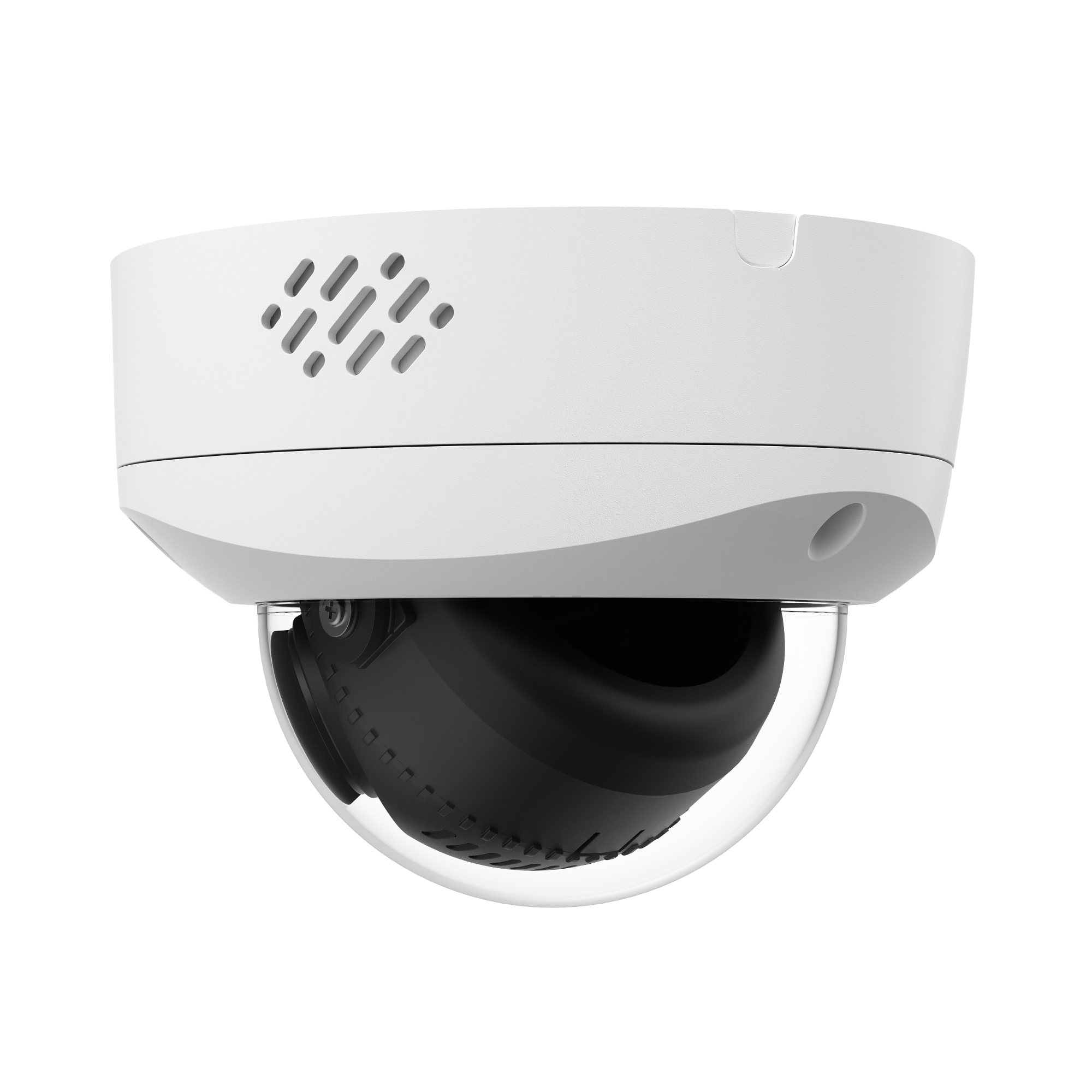
Power and data travel over one cable via PoE 802.3af, with a 12 V input kept as a fallback for sites where the cabling is done but the switch has no PoE. Consumption reaches 12 W, appreciably more than the 5-6 W of an ordinary 4 MP camera, and that has to be budgeted: eight of these units already call for a switch with a PoE budget near 100 W rather than «some 60 W PoE», otherwise several ports will refuse to come up under load. The body is a closed plastic dome, 137×137 mm with a height of 98.5 mm and a weight of 664 g, so it is distinctly bulkier than a standard eyeball and wants a solid base — a timber soffit or plasterboard will sag under that mass over time. IP67 settles rain and dust on an exposed façade, while the dome shape itself resists interference: wrenching it off or twisting it aside by hand is far harder than with a bullet camera on an arm, which matters in stairwells, entrance groups and anywhere within arm's reach. One detail specific to panoramic models: the housing must sit truly level, because any tilt visibly skews the seam where the two halves of the frame are joined.
Storage: microSD up to 512 GB, recorders and compatibility
The camera accepts a microSD card of up to 512 GB — the largest capacity among the cameras in this catalogue, and a panorama with this bitrate genuinely needs it. A realistic estimate: continuous 16 MP recording in H.265 consumes something like 70-90 GB per day, so a full card holds roughly a week of round-the-clock archive, or several weeks in event-triggered mode depending on how busy the scene is. For a month or more of depth the camera goes onto a recorder — the NVS8 (RLN8-410) with its eight PoE ports suits a small site, the sixteen-channel RLN16-410 fits a warehouse or a shop, and on a 4 TB disk this single camera yields around forty days of continuous footage. With Reolink recorders everything works natively: auto-pairing, the panoramic stream, spotlight control from the same app; ONVIF and RTSP will also connect it to third-party NVRs and VMS platforms, but Motion Track, convenient illuminator control and part of the settings stay inside the Reolink app. Before buying a third-party recorder, check that it accepts a 7680×2160 stream, because not every budget NVR will take a frame that large without dropping the resolution.
Where this camera belongs and the jobs it was built for
The natural home for a P757 is an outside corner of a building where two zones meet that would otherwise need two cameras: façade and driveway, yard and the path to the outbuildings, shop entrance and the parking right beside it. It performs equally well in the middle of a wide interior — a sales floor, a workshop, a warehouse aisle — where both sides of a column or truss need to stay visible instead of being split into two unrelated pictures. In stairwells and lobbies the dome plus 180° captures the door, the letterboxes and the flight of stairs at once, a rare case where a single mounting point solves the whole task. Where it does not belong: along a long straight perimeter or a narrow driveway, where reach matters more than width — spreading pixels across 180° wastes them, and a narrower lens does better at the same distance. It is also the wrong choice when the core requirement is recognising a face at an entrance or reading plates; a dedicated narrow-angle camera belongs on that control point, with the panorama left to cover the overview.
How it differs from the neighbouring Reolink models in this catalogue
Its closest relatives here are the 12 MP P340 and P344, which pack more pixels into the frame but see only their own 100-110°, so a corner position needs two of them. If your task is a single zone in a single direction, the simpler 8 MP P334 or 5 MP P324 will handle it for less money and a lighter bitrate, and paying for a second sensor would be money wasted. The varifocal P434 at 2.8-8 mm answers the opposite need — it can pull in the gate or the till and resolve detail at distance, which a panorama fundamentally cannot. The P840 with its 2.7-13.5 mm optical zoom and 60-metre illuminator pans and tracks, yet at any given moment it looks one way only, so an intruder entering from the far side is simply not in frame, whereas the P757 watches both directions all the time. The battery-powered Argus B740X is panoramic as well, but it records on events and is designed for places without mains power, so for permanent round-the-clock coverage on a built site the wired P757 is the sounder choice.
If you are unsure whether one panoramic camera will cover your yard or sales floor, send us a site plan with dimensions and the mounting points you have in mind, and we will show what each frame captures and where a second camera is still needed.
Characteristics Reolink Duo P757
Reviews about Reolink Duo P757 from real users
No reviews found







