
 m. Сміла, Незалежності, 67г. оф, 406/6























REOLINK ARGUS B330 (5 MP) - WIRELESS IP CAMERA

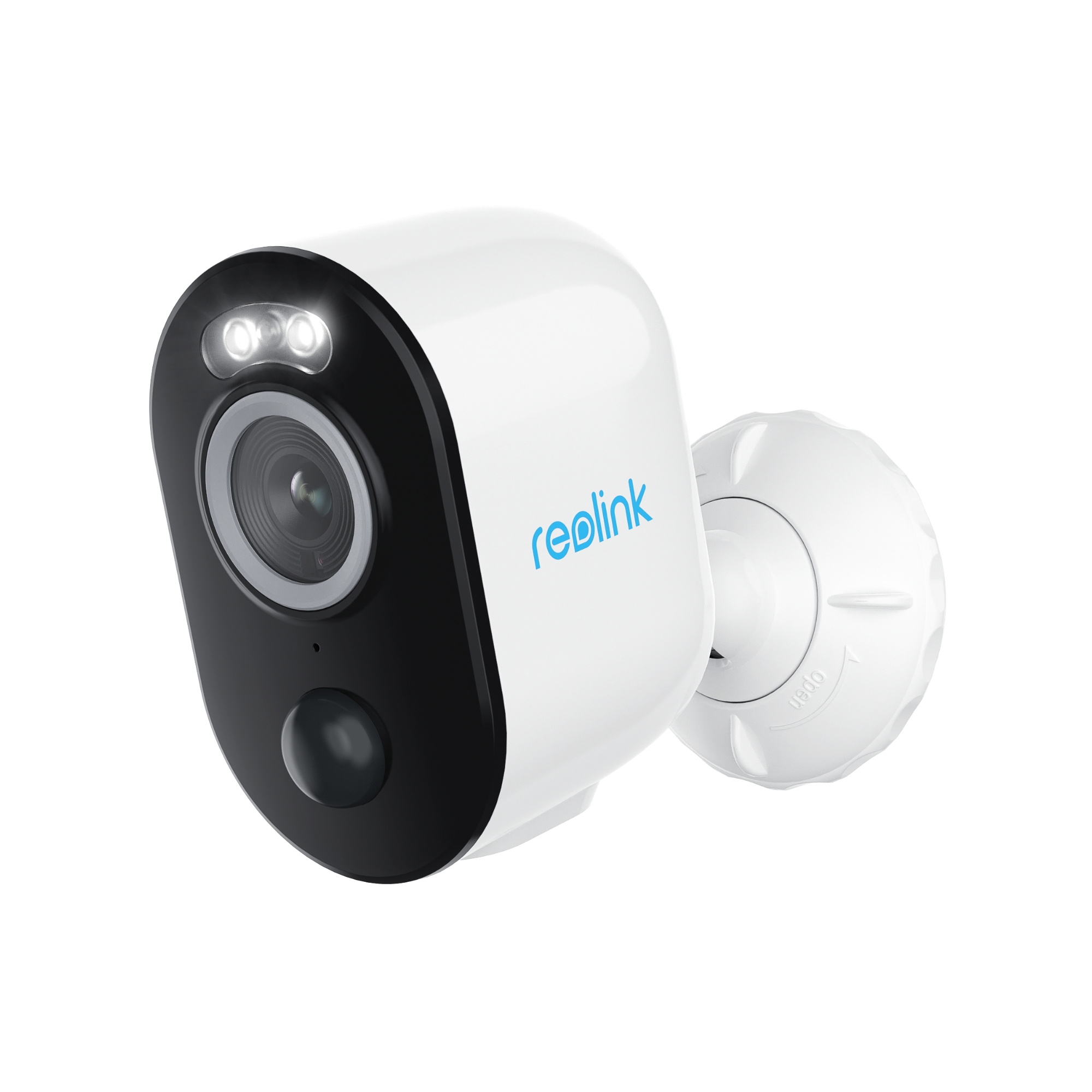




Description Reolink Argus B330
Battery power instead of wiring: not a single cable runs to this camera
The Argus B330 sits in Reolink's battery branch of the range: a 6000 mAh cell lives inside the housing and the only external connector is a USB Type-C charging port, so neither a power lead nor Ethernet has to reach the mounting point. That changes the installation itself rather than just simplifying it — the bracket goes up in minutes, with no channels cut into walls, no socket nearby and no conversation with a landlord, and when that spot no longer needs watching the camera comes down and moves elsewhere. Connectivity runs over dual-band Wi-Fi: the 2.4 GHz band pushes further through brickwork and floors towards the far corner of a plot, while 5 GHz gives the wider pipe you want when streaming a 5-megapixel live view with the router in line of sight. The price of that freedom is concrete enough — every few weeks the camera has to come down for a charge unless you add a solar panel. One more point is often understood too late: Wi-Fi here is not a convenience but the only link the camera has, so the router signal at the mounting point must be genuinely solid, otherwise alerts arrive late or go missing.
Event-driven recording rather than round-the-clock, and what follows from that
This is the single most important thing to grasp before buying any battery camera: the B330 does not record continuously, it sleeps through most of the day and wakes only when something happens. A PIR sensor does the waking, responding to the heat contrast of a moving body across a 100-degree sector out to about 10 metres, with both sensitivity and range adjustable in the app to suit the specific spot. That sleep is exactly why a single charge lasts weeks rather than hours, but roughly a second passes between the start of movement and the first frame, so a person usually appears already inside the zone rather than at the moment of crossing its edge. The maximum frame rate is 15 fps, which handles a pedestrian or a car turning into a driveway perfectly well, yet will not let you step through a vehicle passing at 60 km/h frame by frame. If what you actually need is an unbroken archive where any minute of last night can be scrubbed back to, no battery camera will deliver it — that job belongs to a wired model with a recorder.
How long a charge really lasts, and why the solar panel matters here
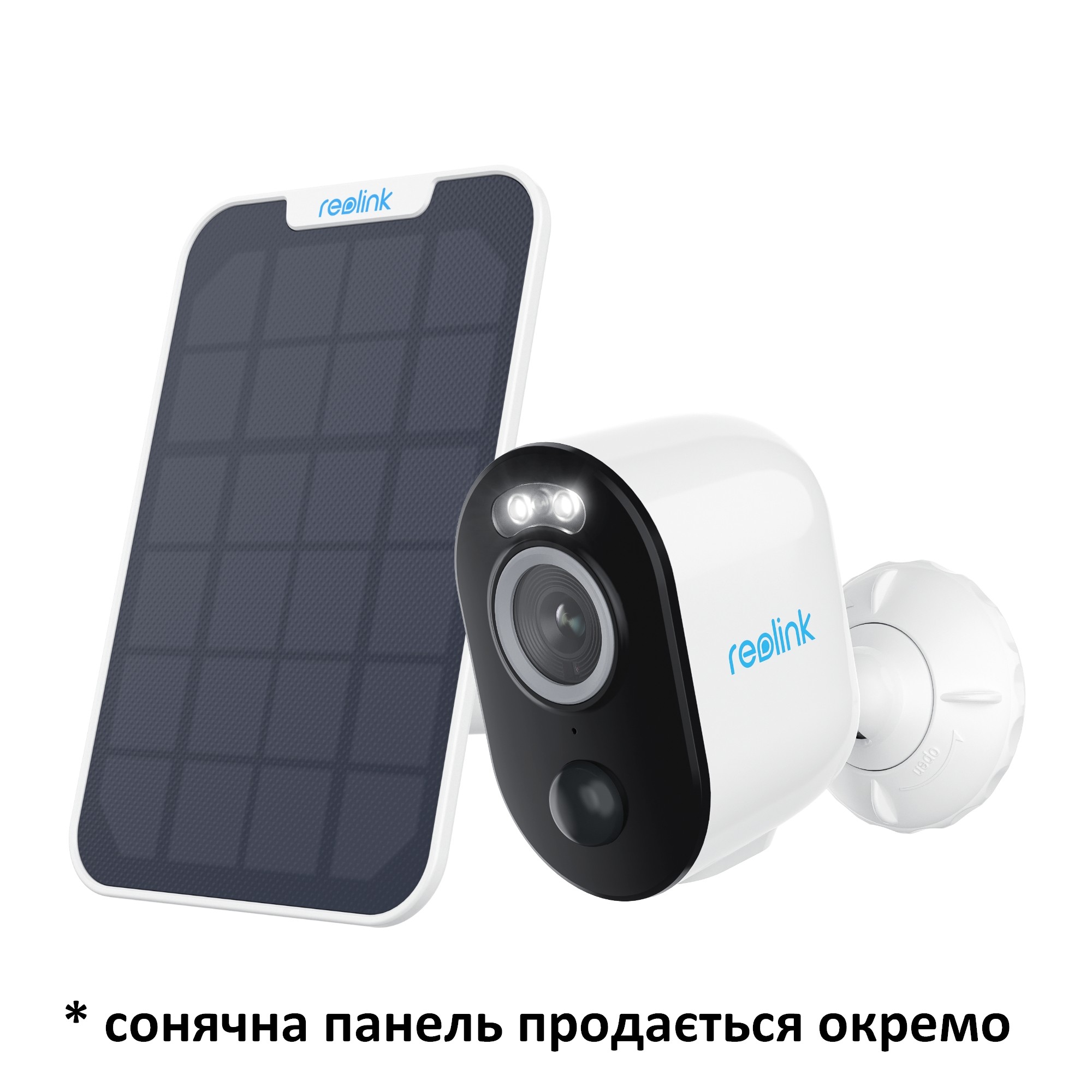
Reolink deliberately avoids quoting a fixed number of days, which is more honest than a round marketing figure: those 6000 mAh are spent according to trigger count, live-view minutes and temperature, not according to the calendar. As a working rule, a quiet location with a dozen events a day runs for roughly a month, a busy entrance for two to three weeks, and opening the live stream several times a day roughly halves whatever figure you started with. Winter adds lithium chemistry to the equation: capacity drops in the cold and this model is rated only down to -10 °C, so in a hard frost the camera either protects itself by shutting down or drains noticeably faster than its summer pattern. That is the real argument for budgeting a Reolink solar panel from the outset — it is not in the box, it connects through the same USB-C port, and with reasonable daylight it removes the charging question entirely. Keep in mind too that the battery is built into the body: there is no quick swap to a spare pack, so without a panel the only alternatives are taking the camera down or charging it in place from a power bank.
Night vision: infrared to ten metres plus two white spotlights
Night operation happens in two stages here, and the difference between them matters to the buyer. By default six 850 nm infrared LEDs of about 0.8 W do the work, invisible to the eye and good for black-and-white footage out to roughly 10 metres — enough for a porch, a path or a small yard, not enough for the far corner of a large plot. When the analytics classify a person or a vehicle, two 2 W white LEDs at 6500 K and around 230 lumens fire up and the picture turns colour: instead of a silhouette in a dark jacket you see that the jacket is blue and the car is a silver estate. Expectations should stay realistic, though — 230 lumens is porch-level lighting rather than a yard floodlight, so usable colour extends five to eight metres before infrared takes over again. The spotlight also brings a side effect that often turns out to be the main one, since sudden light plus the siren tell an intruder plainly that he has been noticed; each activation does eat into the charge, so on a busy spot it is worth limiting white light to person detections only.
Five megapixels, a 2.8 mm lens and a 105-degree view: what lands in frame
The 1/2.7-inch sensor outputs 2880 x 1620, roughly double the pixel count of the widespread 2-megapixel cameras, which in practice means you can zoom into a saved clip instead of guessing at a blurred shape. The 2.8 mm lens with its 105-degree horizontal field is built for the wide shot: one camera covers a typical porch with its path, a two-car parking space or a small courtyard without blind edges. The trade-off of that width needs stating plainly — a face stays recognisable to about six to eight metres, beyond which five megapixels are spread across too much scene, and a number plate is readable only at very close range. Digital zoom in the app adds no detail whatsoever; it simply enlarges pixels that were already recorded, so it is no substitute for optical reach. If plate recognition or a long perimeter is the actual task, a wired camera with a narrower or varifocal lens belongs on that spot, leaving the B330 to the near zone where it genuinely performs.
Storage on a card, cloud without a subscription, and one serious limitation
Recordings land on a microSD card inside the camera, with the shop specification listing support up to 128 GB, and because it writes short event clips rather than a continuous stream, that capacity covers months of activity on a calm site. H.265 compression is roughly twice as economical as H.264 at the same quality, which simultaneously stretches the card and cuts the data the camera pushes over Wi-Fi during playback. Reolink Cloud is available as an option with a free basic tier, but the point worth remembering is different: person, vehicle and pet detection, push alerts and card recording all work with no subscription at all, and a monthly fee buys only off-site backup. Now the limitation best discovered before purchase rather than after — as standalone devices Reolink battery cameras expose no RTSP stream and no ONVIF, so the B330 cannot be added to a third-party recorder, to a VMS, or even to Reolink's own PoE recorders such as the NVS4 or the NVS8. Those protocols appear only through the Reolink Home Hub, so if your system is being built around someone else's NVR or you want the feed in Home Assistant directly, that is a solid argument for a wired model instead.
Where this camera truly belongs, and where it does not
The best scenarios for the B330 are places where running cable is impossible or simply not worth it: the balcony or porch of a rented flat, a house entrance, a weekend cottage visited irregularly, a garage or outbuilding within reach of the router. The cube body on a detachable bracket lets you move it between spots as needs change — watching the gate during renovation work this month, covering the workshop door the next, and leaving no marks on the walls behind it. IP65 handles rain and dust but not pressurised jets, so mounting under an eave or canopy beats an exposed facade by a wide margin, and as a bonus it extends battery life through winter. The camera is out of place wherever an uninterrupted archive is required by the nature of the business: a retail floor, a stockroom with accountable goods, a site under contracted security — anywhere the absence of footage for one particular minute is itself the problem. And separately: if the location lacks not only a socket but internet as well, a Wi-Fi model is helpless there, and the Go series with its own LTE modem is what the job calls for.
How it compares with neighbouring models in this catalogue
Within the battery range its closest neighbours are the Argus B310 and the Argus B340: the B310 saves you but drops to 3 MP, a narrower 88-degree view and 2.4 GHz-only Wi-Fi, while the B340 asks more for the same 5 MP in a bullet housing with IP66 and eight infrared LEDs instead of six. If you need the camera to follow an object rather than simply watch a sector, the catalogue holds the Argus B430 and the Altas PT Ultra B660; if the site has no internet at all, the Go PT Plus or the Go G430 carry an LTE modem, and that modem is precisely what the extra money buys. The comparison that matters most, though, is with wired cameras at the same price: the Reolink P324 costs less and records continuously, while the Hikvision DS-2CD1141G0-I and the Dahua DH-IPC-HDBW1431EP-S4 cost virtually the same, record without gaps, work from -30 °C and never need charging. Their price tag, however, is only the start: add cable, an electrician's time and a recorder — the Reolink NVS4 is pricier, the Hikvision DS-7604NXI-K1(D) — and a complete wired node ends up around three times the cost of one self-contained camera. The honest rule of thumb is this: if the property is yours, cable can realistically be pulled and you need an archive with no gaps, buy the wired camera and a recorder rather than paying for autonomy; if cable is out of the question and the real task is getting an alert and a clip for everyone who walks up, the B330 does that with no installation budget at all.
If you are unsure whether your chosen spot has enough Wi-Fi signal or whether a solar panel is worth adding, send us the distance to the router, a short description of the site and roughly how many events a day you expect, and we will suggest which Reolink battery model fits without unnecessary spending.
Characteristics Reolink Argus B330
Reviews about Reolink Argus B330 from real users
No reviews found







