
 m. Сміла, Незалежності, 67г. оф, 406/6























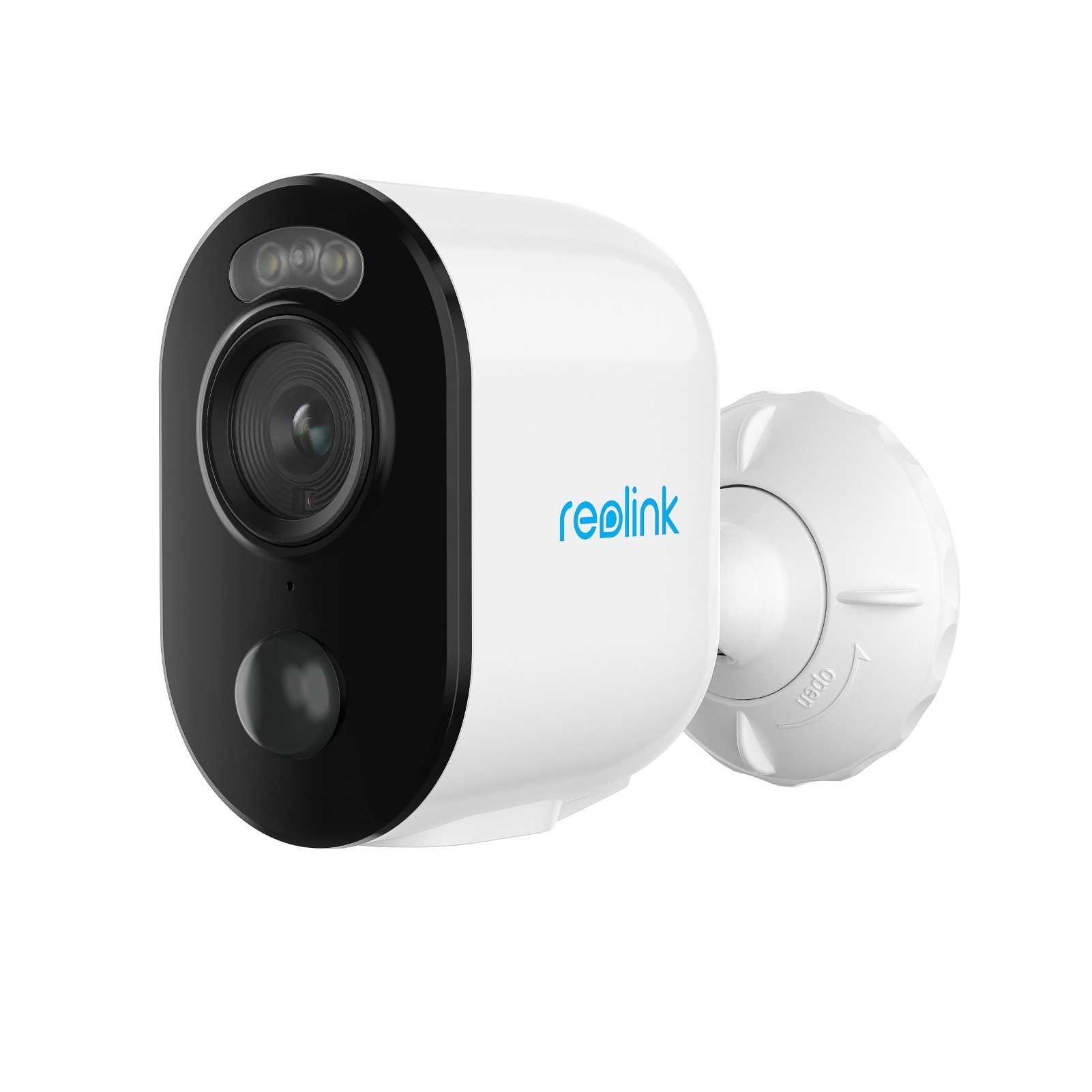
REOLINK ARGUS B310 (3 MP) - WIRELESS IP CAMERA WITH AJAX SUPPORT



Description Reolink Argus B310
A battery camera records events, not a continuous 24/7 archive
The B310 runs from a built-in 6000 mAh battery over 2.4 GHz Wi-Fi, so the mounting point needs neither a power cable nor a network cable. The price of that freedom is the recording model itself: the camera sleeps most of the time, wakes up when its PIR sensor picks up a moving warm body, records the event and goes back to sleep. Your archive therefore consists of separate clips of roughly ten to sixty seconds around each trigger, not an unbroken timeline you can scrub back through hour by hour. For a private house or a weekend cottage that is normally enough, because anything worth reviewing involves movement in frame anyway. If you specifically need continuous footage, for instance to prove that nothing happened at the gate at 14:20, a battery camera is the wrong tool by design and the budget belongs in a wired PoE model instead.
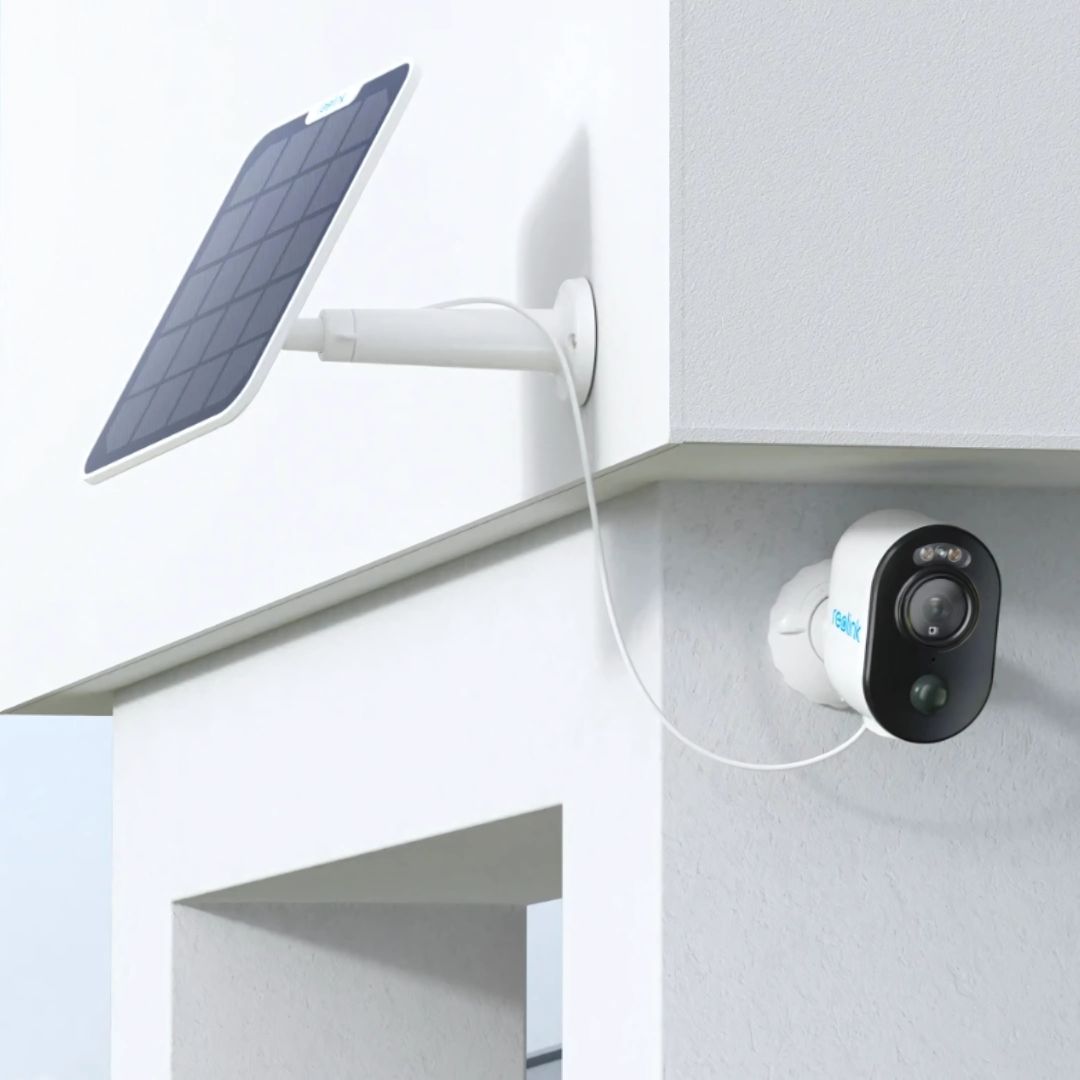
6000 mAh, USB Type-C charging and the optional 3 W solar panel
A 6000 mAh cell is a normal reserve for a compact wireless camera, but runtime is decided by the number of triggers per day rather than by the capacity figure. In a quiet yard where the PIR catches ten to twenty events daily, a single charge lasts for months; the same camera aimed at a busy pavement will be flat in two or three weeks. Charging goes through an ordinary USB Type-C cable and any phone charger, which in practice means taking the camera off its bracket unless you route the cord somewhere convenient in advance. That is why the optional 3 W Reolink solar panel is not a decorative accessory but the difference between maintenance and no maintenance: in decent light it covers daily consumption and keeps the pack full through the whole warm season. Two caveats are worth knowing: the panel is usually not part of the base package and is bought separately, and in December and January short days plus snow on the glass cut harvesting badly, so a camera on the north side of a house will probably need one manual top-up per winter.
3 MP, a 4 mm lens and an 88 degree angle: what you actually see
The 1/2.7 inch sensor delivers 2304 by 1296 pixels, roughly 3 MP, at up to 15 frames per second, which is clearly sharper than the old two-megapixel generation but well short of the 4K models higher up the Reolink range. The 4 mm lens gives an 88 degree horizontal angle, so the frame is narrower and reaches further than the common 2.8 mm at 105 degrees: less width is covered, but a subject at the same distance appears noticeably larger. In practice you will confidently recognise a familiar person at five to eight metres and make out clothing, build and gait at ten to twelve, while reading a licence plate is realistic only from about five metres. Fifteen frames per second is fine for a pedestrian or a car crawling into a driveway, but a vehicle at speed covers several metres between consecutive frames, so a frame-by-frame reconstruction of such an episode will be patchy. That is a reasonable compromise for a battery device: higher resolution and a faster frame rate would mean a heavier stream, more radio time and roughly half the standby life.
Night vision: 10 metres of infrared plus two spotlights for colour
The camera carries both infrared LEDs reaching about ten metres and two white 2 W spotlights at 6500 K. In the default night mode the invisible infrared array works and the recording is monochrome; when colour is needed, the spotlights fire and instead of a grey silhouette you get a person in a jacket of a specific colour. The difference matters most at the moment you have to show the footage to somebody: a black and white outline cannot be described to the police or to neighbours, whereas a colour frame already carries identifying detail. The spotlight also has a side effect that often turns out to be the main one: sudden bright light tells an uninvited visitor plainly that he has been seen, and a large share of opportunistic attempts end right there. Be realistic about range, though: ten metres of infrared covers a porch, a gate or a parking space beside the house, not the far corner of a plot thirty metres away, and this is exactly where the line runs between the B310 and pricier models with 30 metre illumination.
A PIR sensor backed by person, vehicle and animal recognition
Recording starts in two stages: the hardware PIR sensor reacts first to the heat of a moving body within roughly 100 degrees and up to ten metres, and only then does the processor wake up to classify what it sees. This two-step design saves battery because the camera never spends energy analysing every branch swaying in the wind, and at the same time it removes the most common source of false alarms. The analytics then separate people, vehicles and animals, so you can leave notifications on for humans only and stop being woken at night by your own cat or the neighbour's dog. Alerts arrive in the Reolink app and by e-mail, while RTSP, ONVIF and FTP support let you pull the stream into Home Assistant or push snapshots to your own server. The flip side of PIR is physical: it barely sees heat through glass and responds more weakly to a subject walking straight at the lens rather than across the frame, which is worth remembering when you choose the mounting angle.
Where this camera belongs and which jobs it was built for
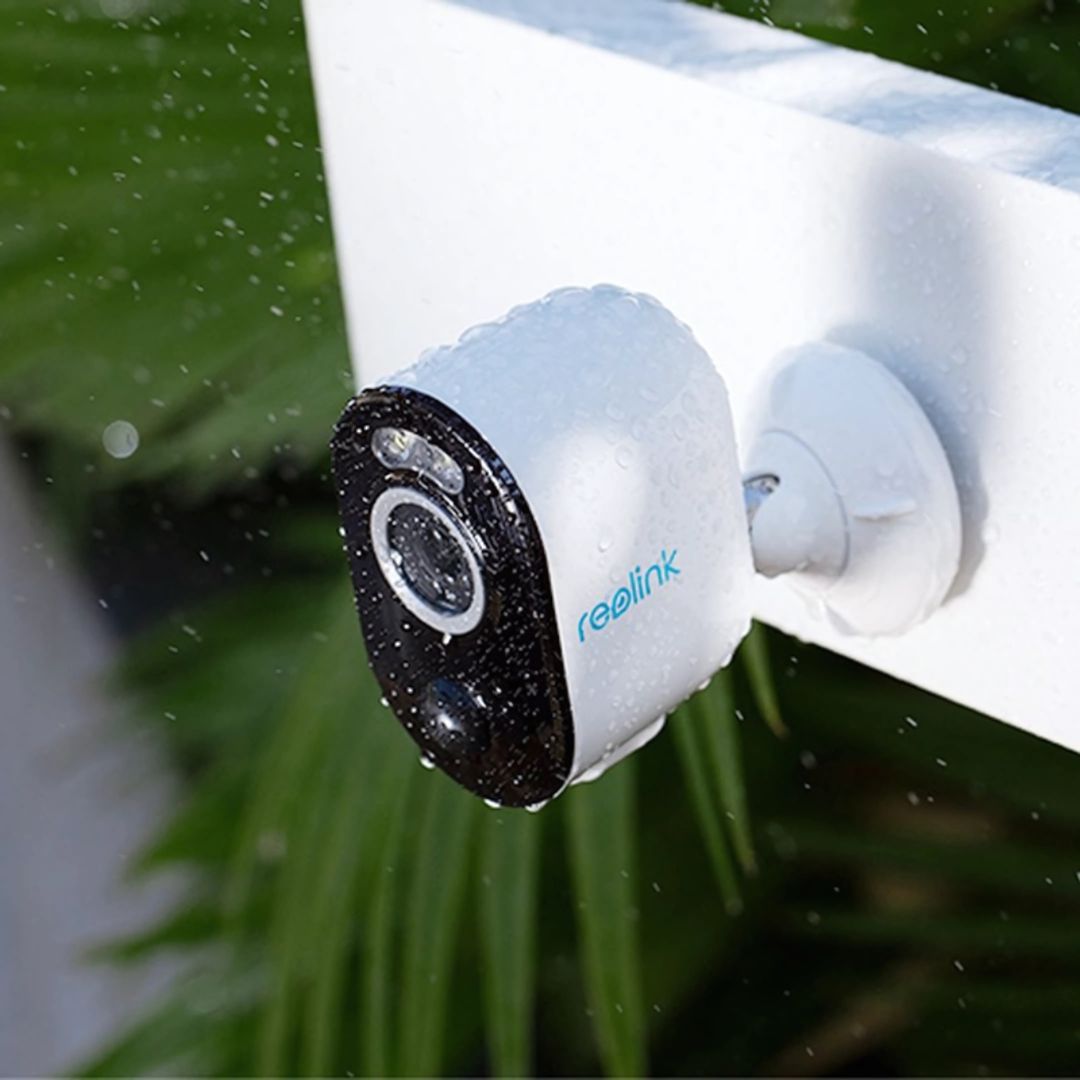
The B310 is meant for spots where running a cable is awkward or impossible: a porch, a side gate, a garage at the back of the plot, a site cabin, or a holiday house visited once a week. The compact cube weighs 239 grams at 127 by 90 by 56 mm, mounts on any wall or post with an ordinary bracket, and its IP65 rating lets it stay out in rain and snow without an extra canopy. Indoors it works as well, in a shop, an office or a corridor, but there a cheaper wired model almost always makes more sense because a socket is nearby anyway. Where it clearly does not belong: a long perimeter or an entrance gate that needs thirty metres of reach, a shop with stock liability that needs a continuous archive, and any spot with constant traffic where the PIR fires every minute and drains the pack. Plan around the -10 to +55 °C range too: the camera survives an ordinary winter, but below -10 the usable capacity drops and the interval between charges shortens noticeably.
How it differs from neighbouring Reolink models in this catalogue
Its closest relative here is the Argus Series B330: the same battery logic and the same app, but 5 MP instead of 3 and a wider 2.8 mm lens, which buys more coverage and more detail for roughly extra. If a cable can in fact be pulled to the spot, the fairer comparison is the wired P324, which costs less than the B310 and still offers 5 MP, 30 metre illumination and, crucially, true 24/7 recording because it is PoE powered. The Lumus E430 is cheaper again and also has a spotlight for colour at night, but it is a wired 5 V device and only wins where a socket is already in place. In the other direction sit the Argus B340 with an IP66 housing and the Go Series G330-C, which works over a 4G SIM rather than Wi-Fi and is the answer for a site with no internet at all. The summary is simple: take the B310 when you need an inexpensive wireless camera for short range with colour night vision, take the P324 or any PoE model when a cable is available, and take the G330-C when there is neither a cable nor Wi-Fi.
If you are not sure whether a battery camera will hold up at your particular site, tell us roughly how many events per day you expect in frame and whether there is a socket nearby. We will advise whether a B310 with a solar panel or a wired model at a similar price works out better.
Characteristics Reolink Argus B310
Reviews about Reolink Argus B310 from real users
No reviews found







