
 m. Сміла, Незалежності, 67г. оф, 406/6























REOLINK ALTAS PT ULTRA B660 (8 MP) - PAN-TILT IP CAMERA WITH A LARGE SENSOR

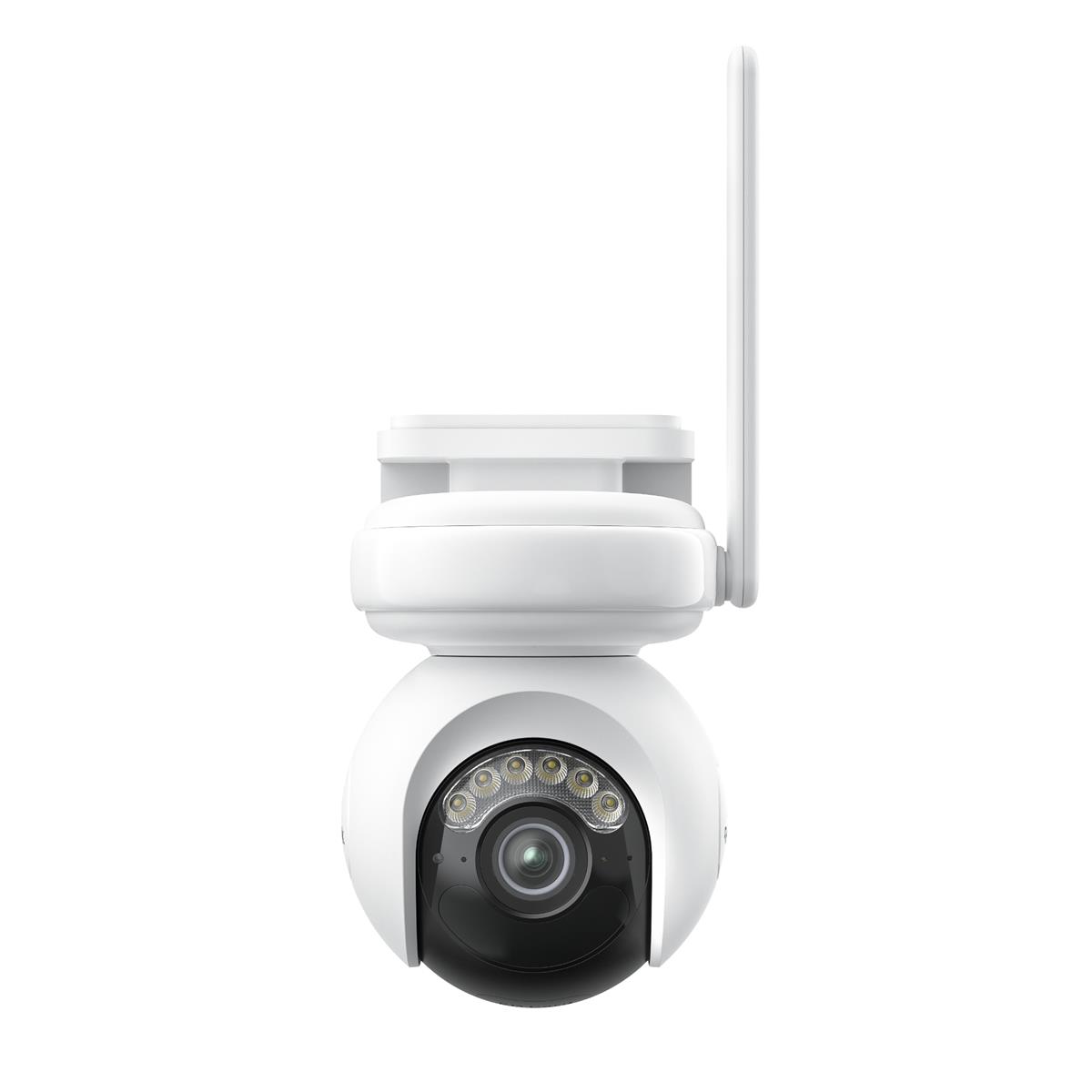
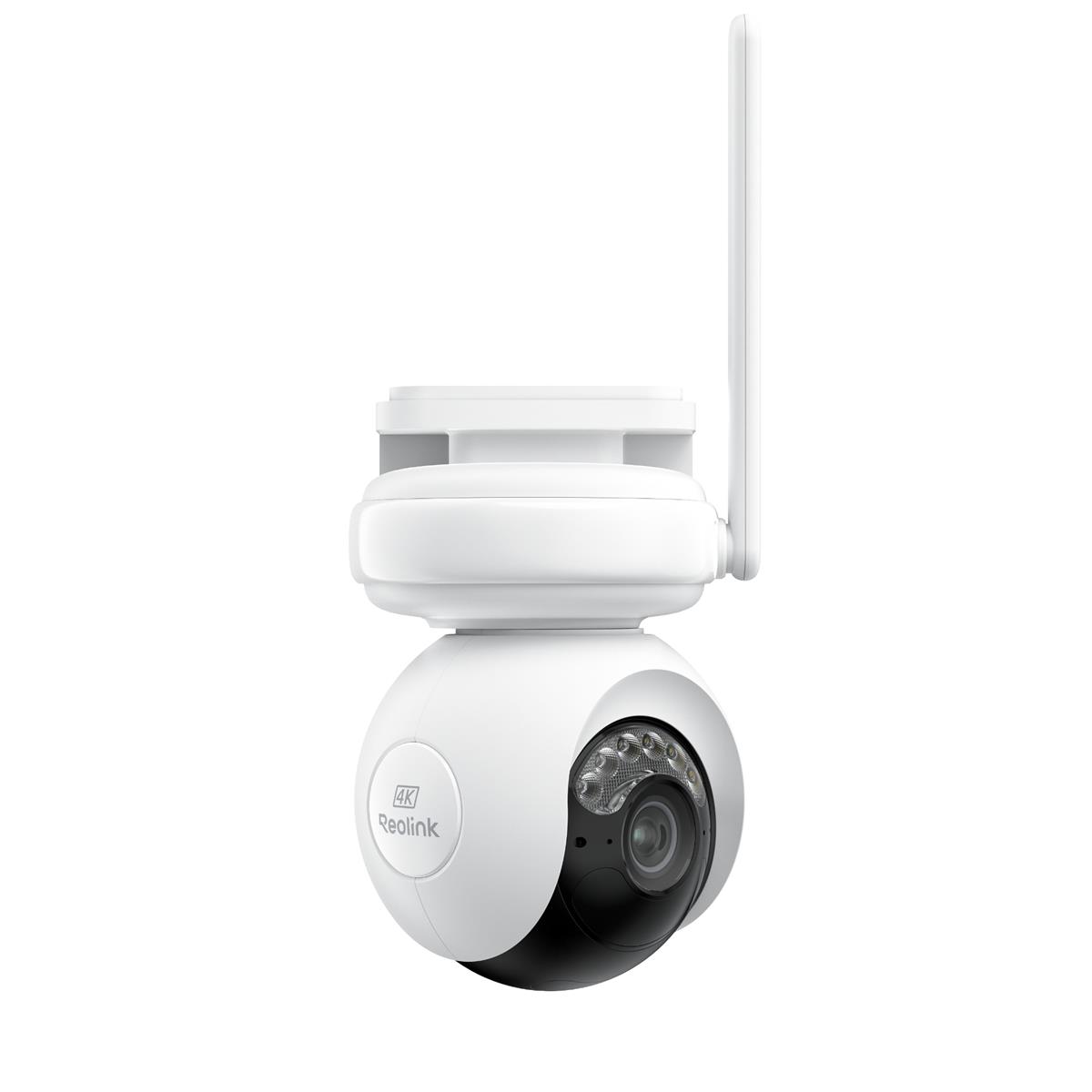
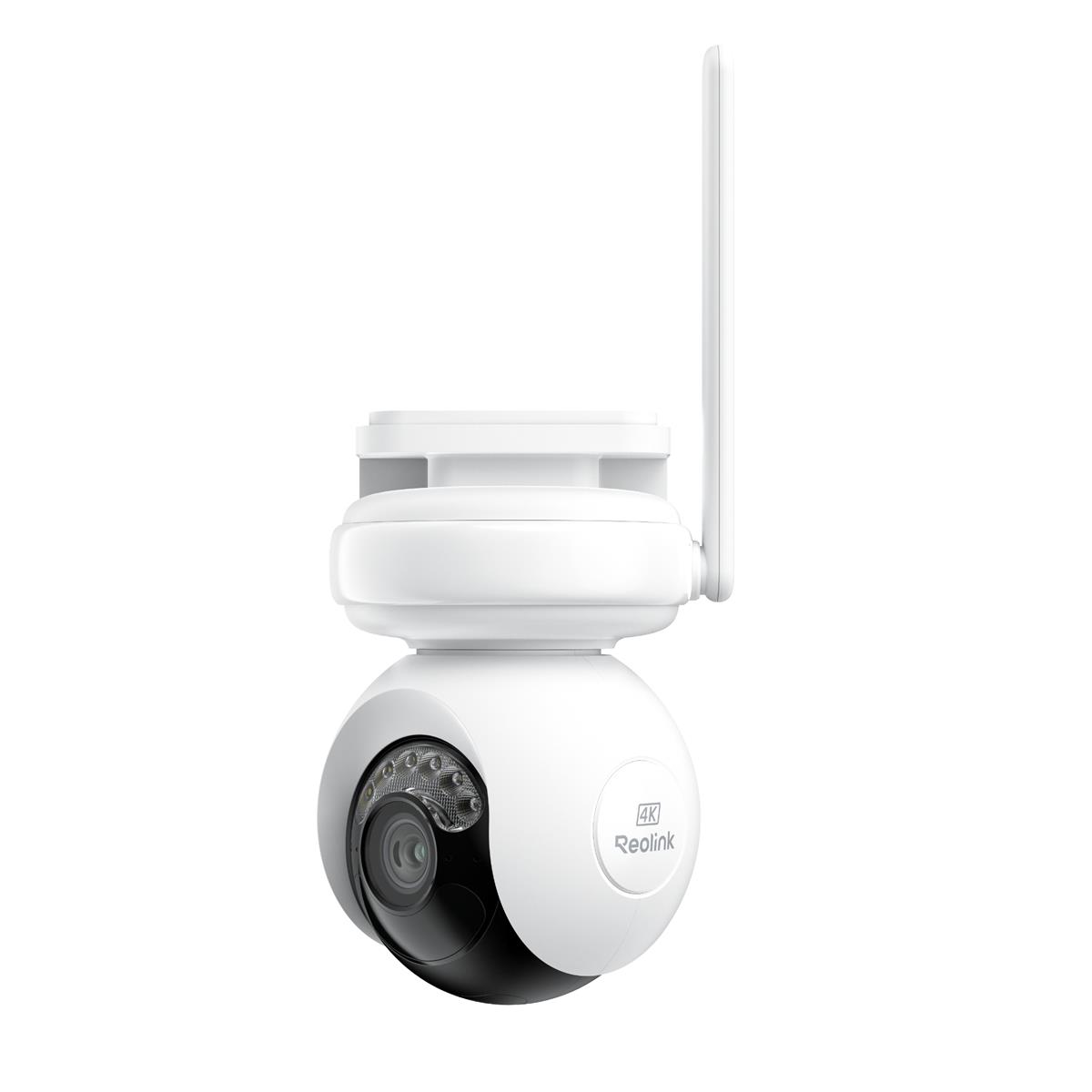
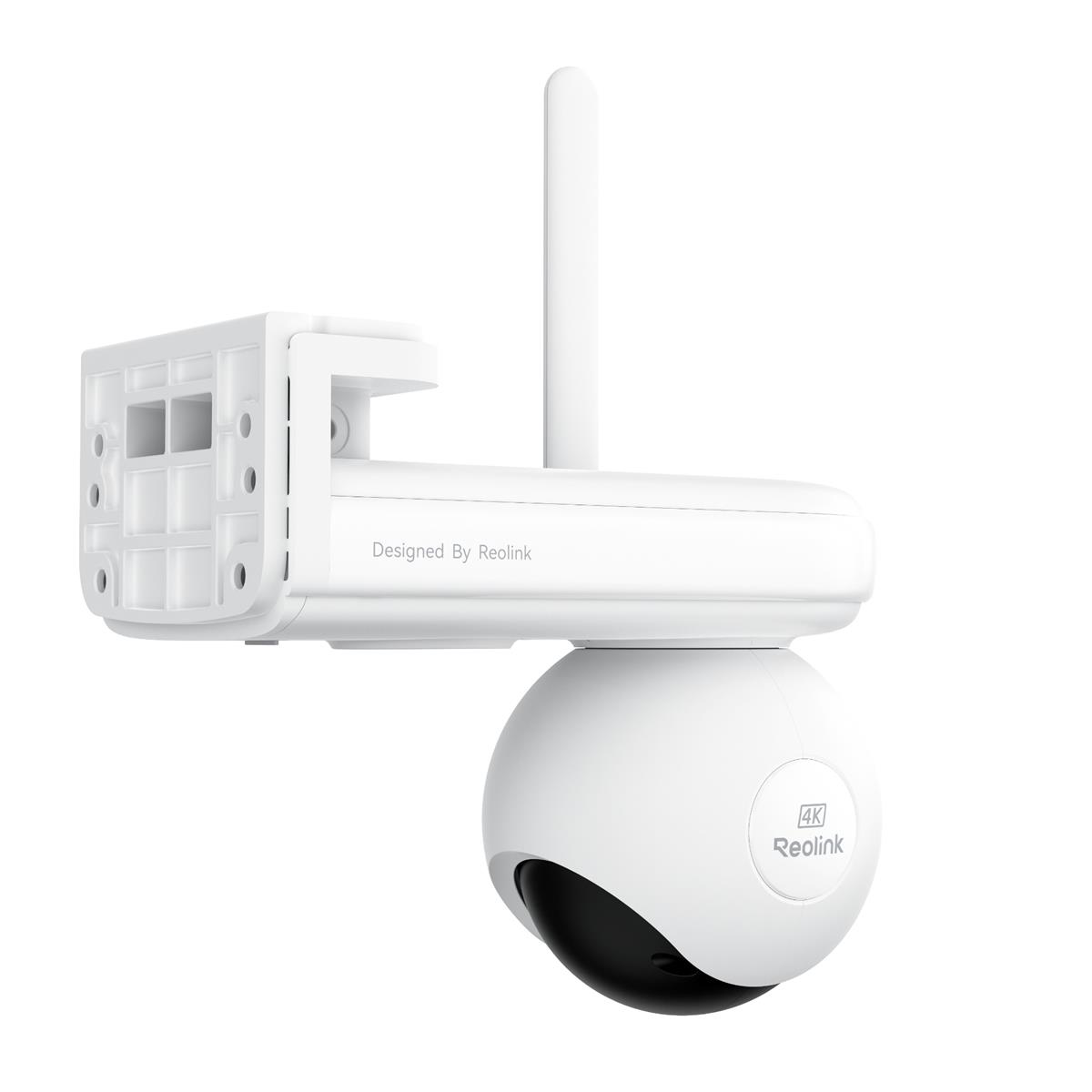



Description Reolink Altas PT Ultra B660
A rare case: a battery camera that really can record 24/7
Almost every wireless Reolink device works on events: the camera sleeps, wakes on its PIR sensor and captures a short clip. The Altas PT Ultra B660 is the exception, because a 20000 mAh pack holding 72 Wh supports a continuous recording mode, giving you an unbroken timeline you can scrub through rather than isolated fragments around motion. One number deserves to be stated up front, since price tags rarely mention it: in full 24/7 mode a single charge lasts roughly 96 hours, about four days, after which the camera needs either a charger or a solar panel. So the honest phrasing is this: the B660 delivers 24/7 not out of the box and forever, but on condition that you keep it topped up. Left in the default event-triggered mode, the same battery stretches into hundreds of days and the camera behaves like an ordinary wireless model with an unusually large reserve.
20000 mAh, a 6 W solar panel and the real arithmetic of autonomy
Seventy-two watt-hours is roughly three to four times the reserve of a typical battery camera with a 5000 to 6000 mAh cell, and that headroom is precisely what makes continuous recording possible at all. To sustain round-the-clock capture the manufacturer points to the 6 W Reolink Solar Panel 2 and about five hours of direct sun per day, which in practice means the panel must face south and stay clear of tree or roof shadow. In PIR-triggered mode the demands collapse: the same six watts need barely ten minutes of daylight to cover a whole day of consumption. The solar panel is a separate accessory rather than a guaranteed part of the box, so check the exact bundle before ordering and budget for a panel if continuous recording is what you are buying the camera for. Winter deserves lower expectations: short days, a low sun and snow on the glass cut harvesting several times over, so in December and January it is sensible either to switch to event recording or to keep the option of taking the camera down for a USB Type-C charge.
355 degrees of pan and 90 of tilt: one camera instead of three
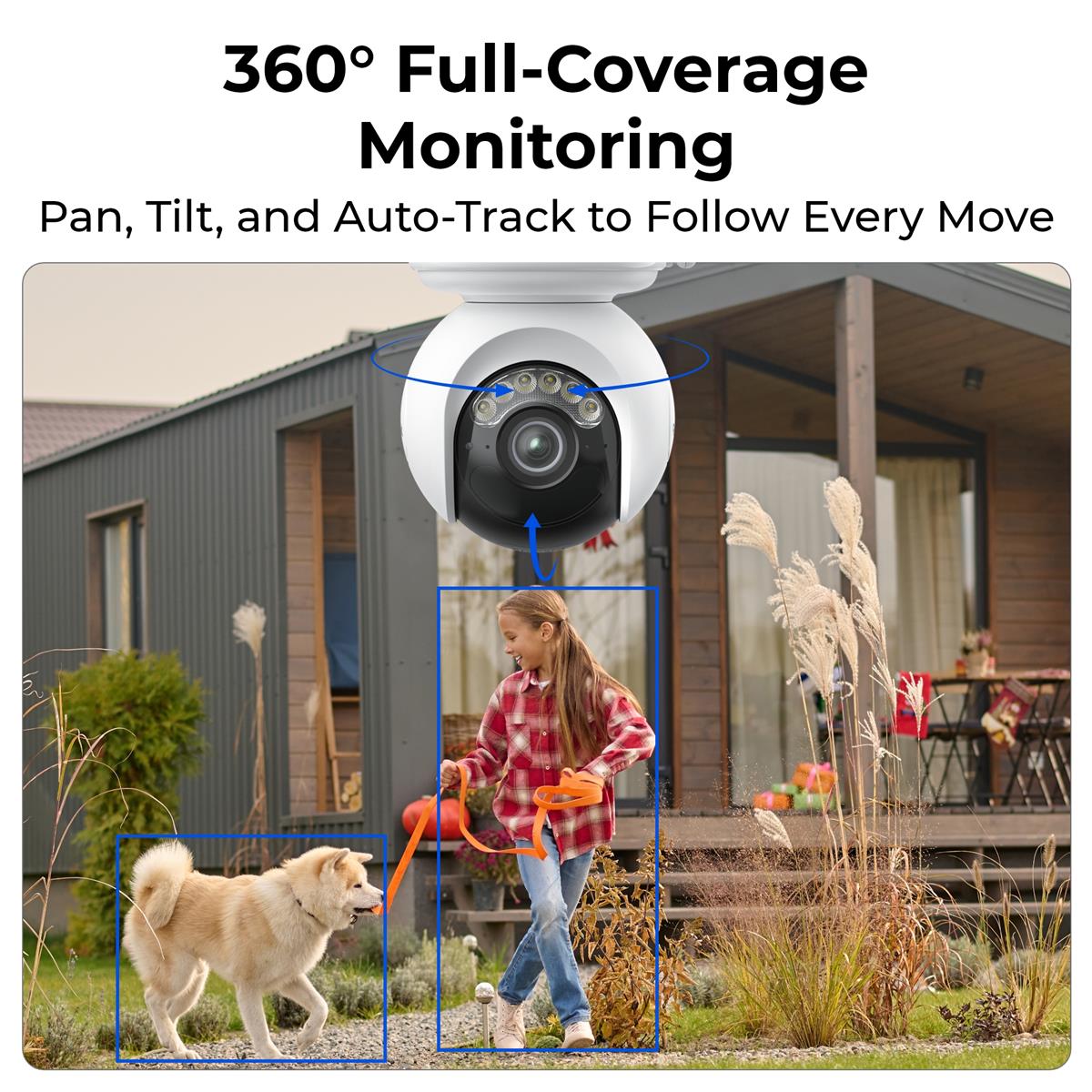
The mechanism pans through 355 degrees and tilts through 90, so from a single point it can look almost all the way around a mast or a post. Combined with auto-tracking it behaves like this: the analytics lock onto a person or a vehicle and follow them until they leave the zone, instead of capturing only the moment they crossed one narrow sector. The benefit is obvious on an awkwardly shaped plot where fixed cameras would need two or three mounting points, while here a single mast in the middle of the yard does the job. There is a catch the marketing clips never mention, though: at any given instant the camera faces exactly one direction, so while it is following a car at the gate, the opposite corner of the plot is not being recorded at all. The sound approach is to treat the B660 as an overview and pursuit camera and to cover critical points such as a door, a gate or a till with separate fixed cameras that always look where they are supposed to.
Eight megapixels on a large 1/1.8 inch sensor and colour at night
The 1/1.8 inch sensor is noticeably larger than the 1/2.7 and 1/3 inch chips of budget cameras, and at the same eight megapixels that means physically bigger pixels collecting more light. ColorX technology is built on exactly that: the camera produces a colour image at night from fast optics and a sensitive sensor rather than from infrared LEDs. For the owner the difference is simple, since instead of a grey outline you see the colour of a jacket, the colour of a car and a hair shade, which are the details that make a description usable. Spotlights are present as well, but their job is mostly deterrence and a fallback for total darkness where there is no ambient light at all. The limitation is worth knowing too: ColorX needs some residual illumination, so in a pitch-black yard with no street lamp anywhere the colour mode performs worse than in an urban courtyard with public lighting.
Dual-band Wi-Fi 6, cards up to 512 GB and where the archive lives
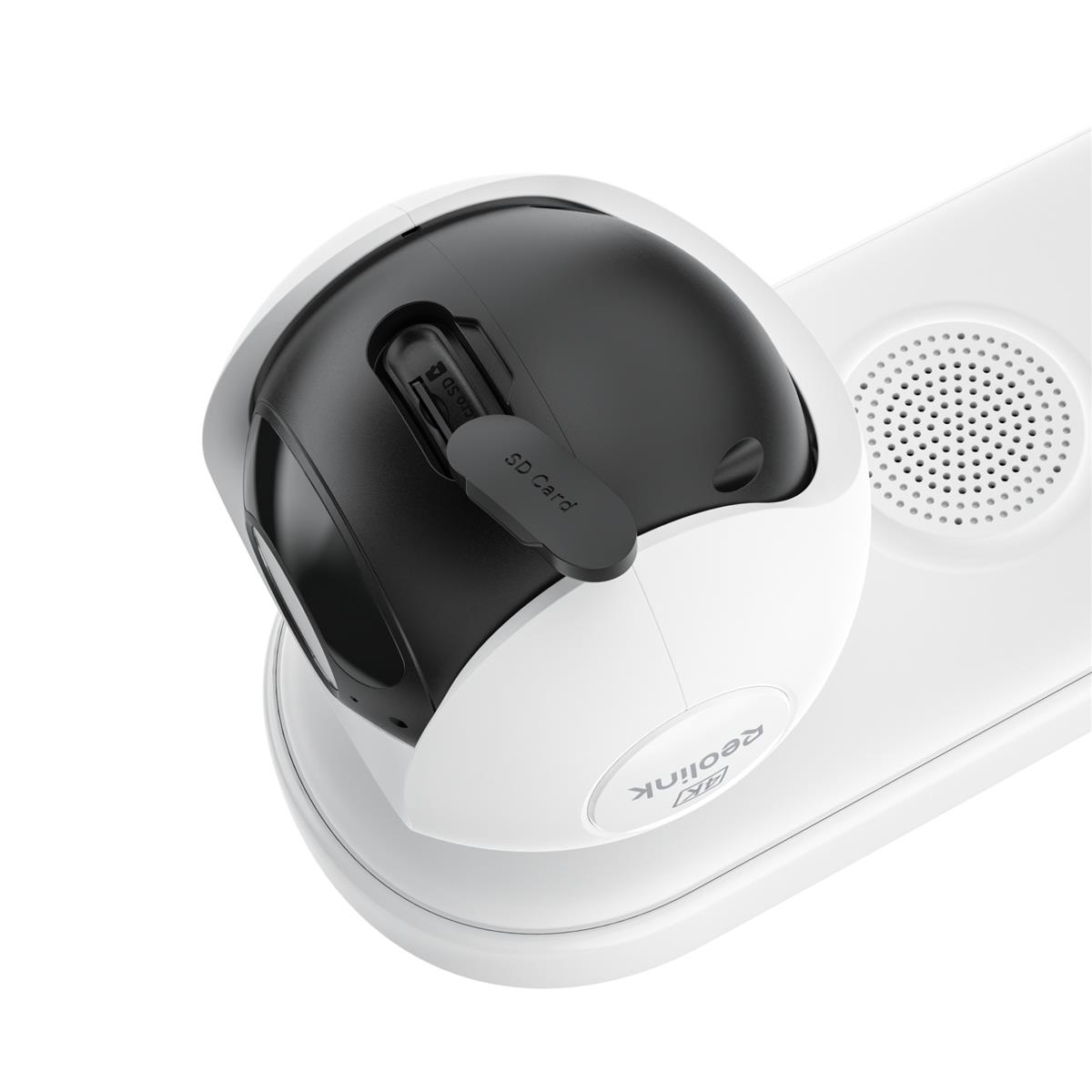
The camera carries a dual-band Wi-Fi 6 radio covering both 2.4 and 5 GHz, and for a battery device this is not marketing but a question of runtime: the faster a given amount of data is transferred, the less time the radio stays awake and the less charge it consumes. The 5 GHz band offers the wider channel a 4K stream wants and suffers far less from congested air in dense housing, while 2.4 GHz remains the fallback for a distant spot at the back of the plot. Local storage is a microSD card of up to 512 GB, which in continuous 4K amounts to roughly a week to ten days and, in event mode, to months. In a multi-camera system it is more sensible to consolidate footage on a Reolink Home Hub or a recorder rather than collecting cards from each camera by hand. RTSP, ONVIF and FTP are supported, Home Assistant integration works and the Reolink cloud is available, so manual video copying stays a fallback rather than the everyday workflow.
PIR, person, vehicle and animal recognition, siren and two-way audio
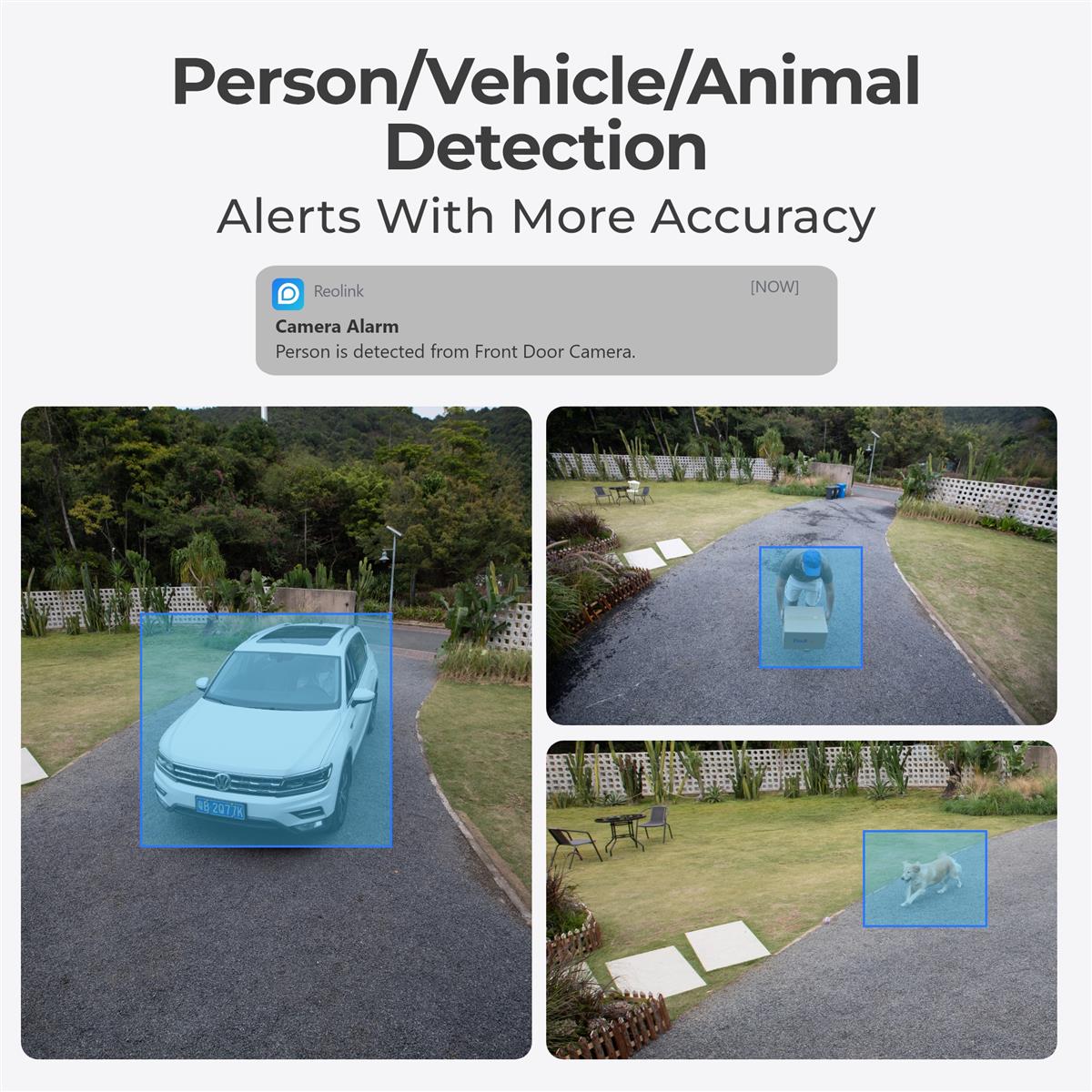
The first detection layer is a hardware PIR sensor with a range of about ten metres and adjustable sensitivity, which reacts to the heat of a moving body and wakes the rest of the electronics. The analytics then classify people, vehicles and animals separately, so notifications can be limited to the categories you care about and a cat on the fence stops waking you at three in the morning. A built-in siren and two-way audio turn the camera from a passive recorder into a means of intervention: you can speak to whoever is at the gate straight from the app, or trigger sound when somebody gets too close to the building. That combination earns its keep at a holiday house or a building site you cannot reach within ten minutes, because a voice from the speaker often ends the situation by itself. Bear in mind that PIR barely works through glass and responds weakly to movement heading straight at the lens, so aim the sensor across a path or a driveway rather than along it.
Where this camera belongs and which jobs it was built for
The B660 suits a site that has Wi-Fi but no convenient route for a cable: a holiday property with a house and outbuildings, an irregularly shaped plot, or a construction site where the site cabin has power but the perimeter has no wiring yet. The 853 gram body measuring 178 by 151 by 102 mm is rated IP65 for outdoor use, though a pan-tilt mechanism is happier under an overhang or on a mast where ice cannot build up on it. Its best position is the middle of the plot or a house corner overlooking the whole yard, so that the pan mechanism has something worth covering; on a narrow balcony or in a corridor that potential simply goes unused. It is clearly overkill for a single fixed point such as an entrance door or a shop till, where a cheaper fixed camera does the same job without paying for a motor. The -10 to +55 °C range needs attention as well: sustained frost cuts usable battery capacity, and together with short daylight that means winter is exactly when 24/7 mode is hardest to maintain.
How it differs from neighbouring Reolink models in this catalogue
Within the battery range its closest relative is the Argus Series B430, also motorised and also wireless, but with 5 MP instead of 8, a smaller sensor, an IP64 shell and no continuous recording mode; the gap is effectively the price of 4K, ColorX and the ability to record around the clock. If panorama matters more than tracking, the catalogue offers the Argus B740X with two sensors and 180 degrees in a single frame and no motor at all, which removes blind spots during rotation but also removes any ability to follow a subject. For a site with no internet the B660 is simply the wrong class, since it is a Wi-Fi camera: there the Go PT Plus or the Go Series G430 with a 4G SIM will work, albeit at lower resolution. The most honest comparison is with the wired P840 2.7-13.5 mm: it costs more but adds optical zoom, 60 metres of illumination and PoE power, which means genuine 24/7 with no sunshine arithmetic involved. The selection rule is straightforward: if a cable can realistically reach the spot, a wired pan-tilt camera is always more dependable, and the B660 wins precisely where no cable exists yet a continuous archive is still required.
Describe the site to us: where the house stands, where people and vehicles come in, and whether Wi-Fi reaches the far corner. We will tell you whether one B660 with a solar panel is enough or whether two fixed cameras independent of the weather work out better.
Characteristics Reolink Altas PT Ultra B660
Reviews about Reolink Altas PT Ultra B660 from real users
No reviews found







