
 m. Сміла, Незалежності, 67г. оф, 406/6























REOLINK 437 (8 MP, 2.7-13.5 MM) - IP CAMERA WITH MOTORIZED ZOOM

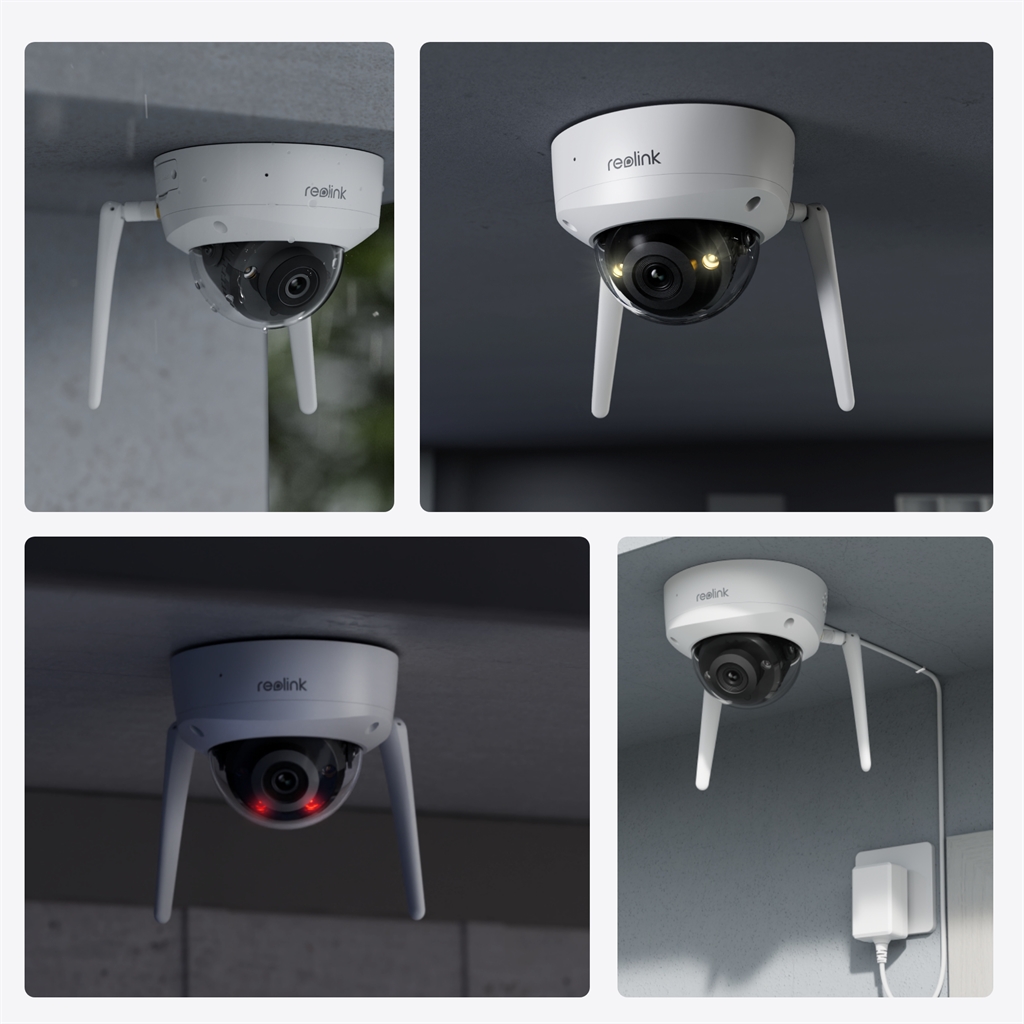
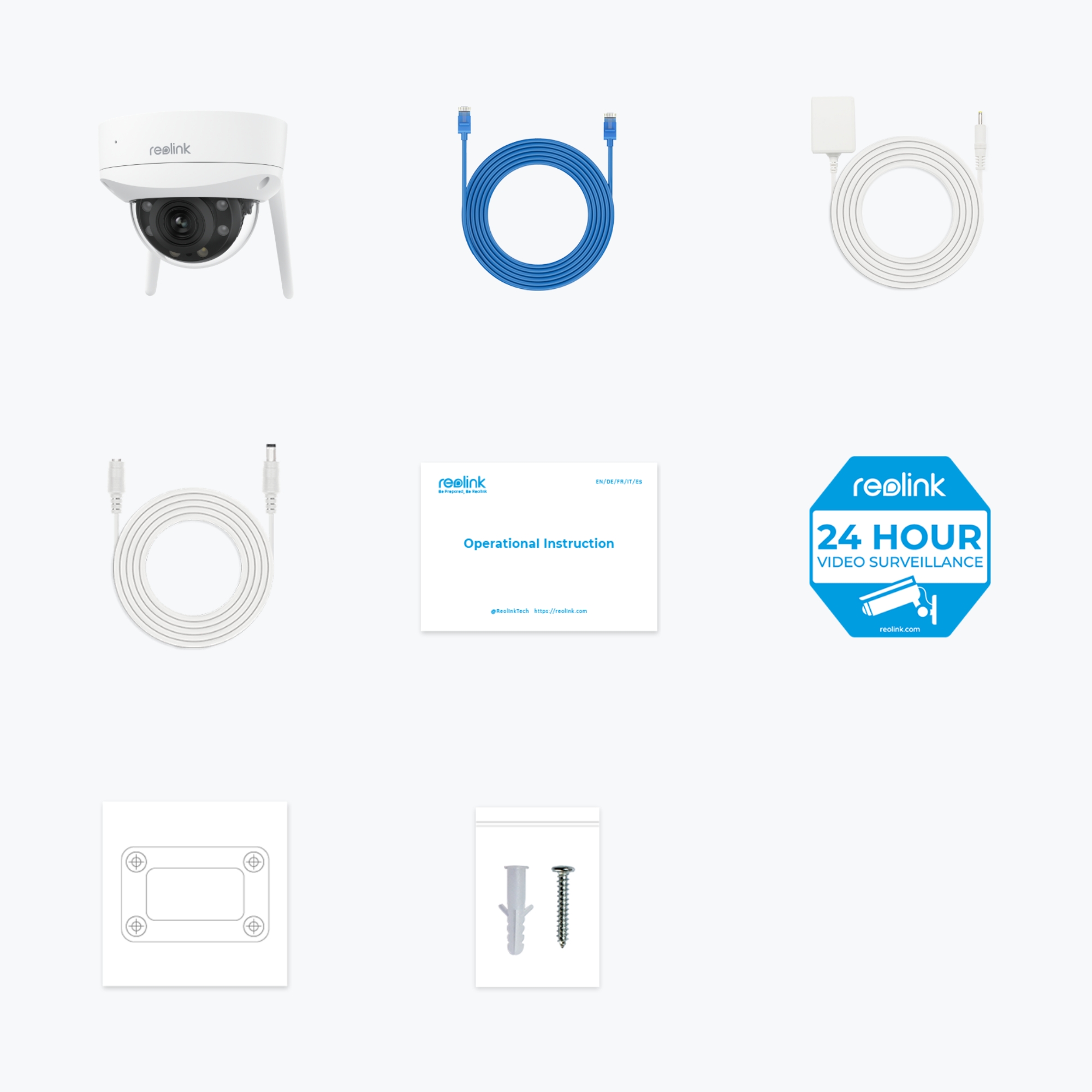


Description Reolink 437
Five times optical zoom: one camera adapts to the job
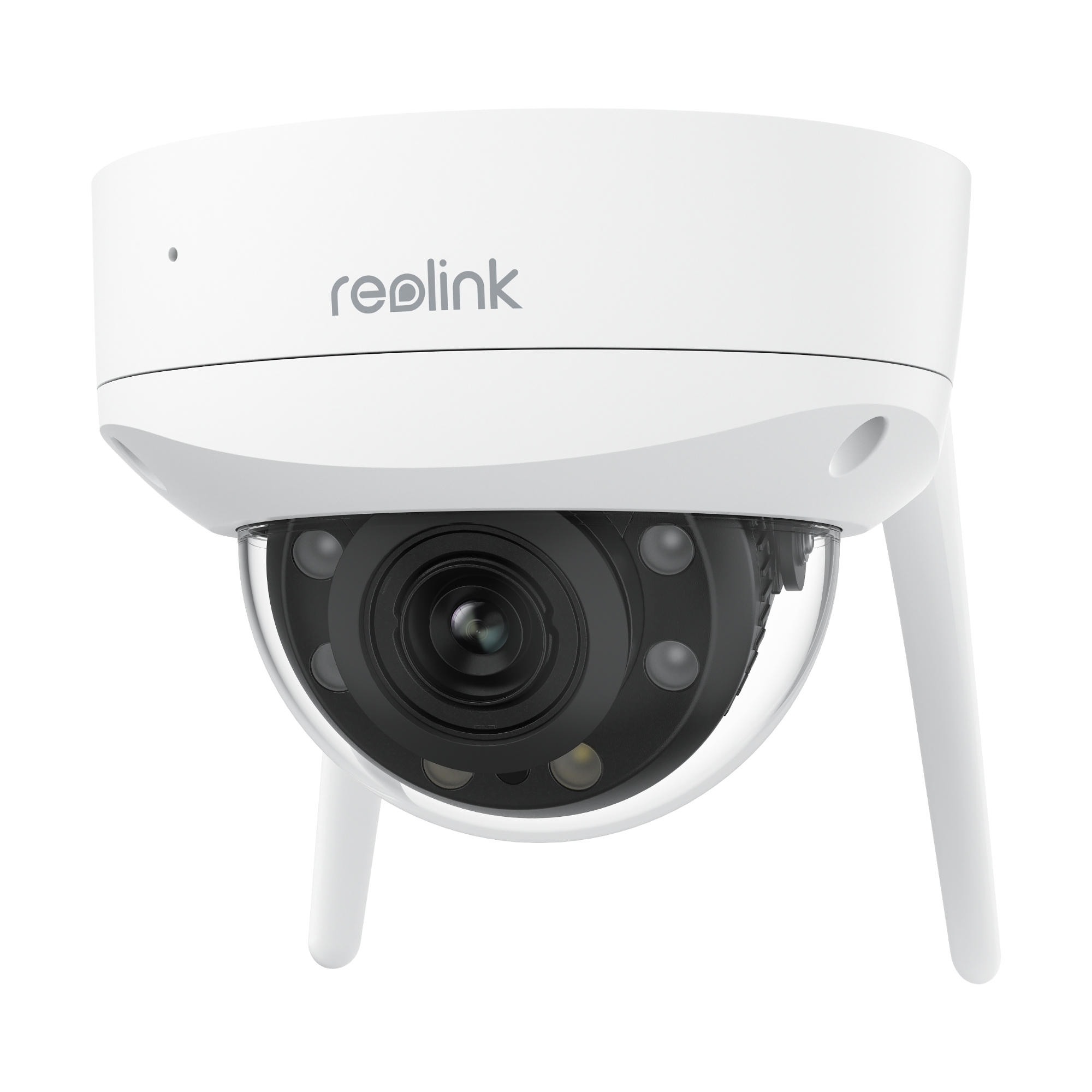
The 2.7-13.5 mm lens is motorised, so the field of view is changed from the app alone — anywhere between 100 degrees wide and 31 degrees tight — with no ladder and no dismounting. That removes the usual lens dilemma at the planning stage: wide open the camera holds an entire yard or shop floor, and once zoomed onto the gate it renders the same object roughly five times larger at the same distance. The zoom is optical rather than digital, meaning glass does the work and detail survives, whereas digital zoom merely stretches the existing pixels into soft blocks. Autofocus re-sharpens the image after every change of focal length, so the whole adjustment comes down to two slider movements on a phone. One limit is worth stating plainly: this is zoom, not pan and tilt — you choose the direction once during installation and cannot swing the lens elsewhere remotely. Where an object has to be followed across a whole site, the catalogue has motorised pan-tilt models for that; the 437 covers a fixed sector but lets you decide its scale long after the bracket is screwed in.
8 MP on a 1/2.8 inch sensor: what it buys and what it costs
A 3840x2160 frame carries four times the pixels of the widespread 2 MP cameras, and that reserve is exactly what lets you zoom into recorded footage afterwards and read something nobody noticed during live viewing. Packing 8 MP onto a 1/2.8 inch sensor means dense photosites, so in deep dusk this camera gives up more than a 5 MP model on the same sensor size — which is precisely why the manufacturer fitted two spotlights rather than one. High resolution has a second price tag, bandwidth: continuous 24/7 recording produces around 8 Mbps, close to 85 GB of archive per day, and that figure belongs in your disk calculation from the very start. Remote viewing does not suffer, because the camera serves a lightweight substream in parallel and mobile data is never asked to carry the 4K stream. Across a 100-degree frame, 8 MP roughly doubles the pixel density per metre compared with 4 MP, which in practice means recognisable facial features out to some 8-10 metres without zooming — beyond that either the optics do the work or the entry point should be moved closer to the camera.
Night work: 30 metres of infrared plus two 400-lumen spotlights
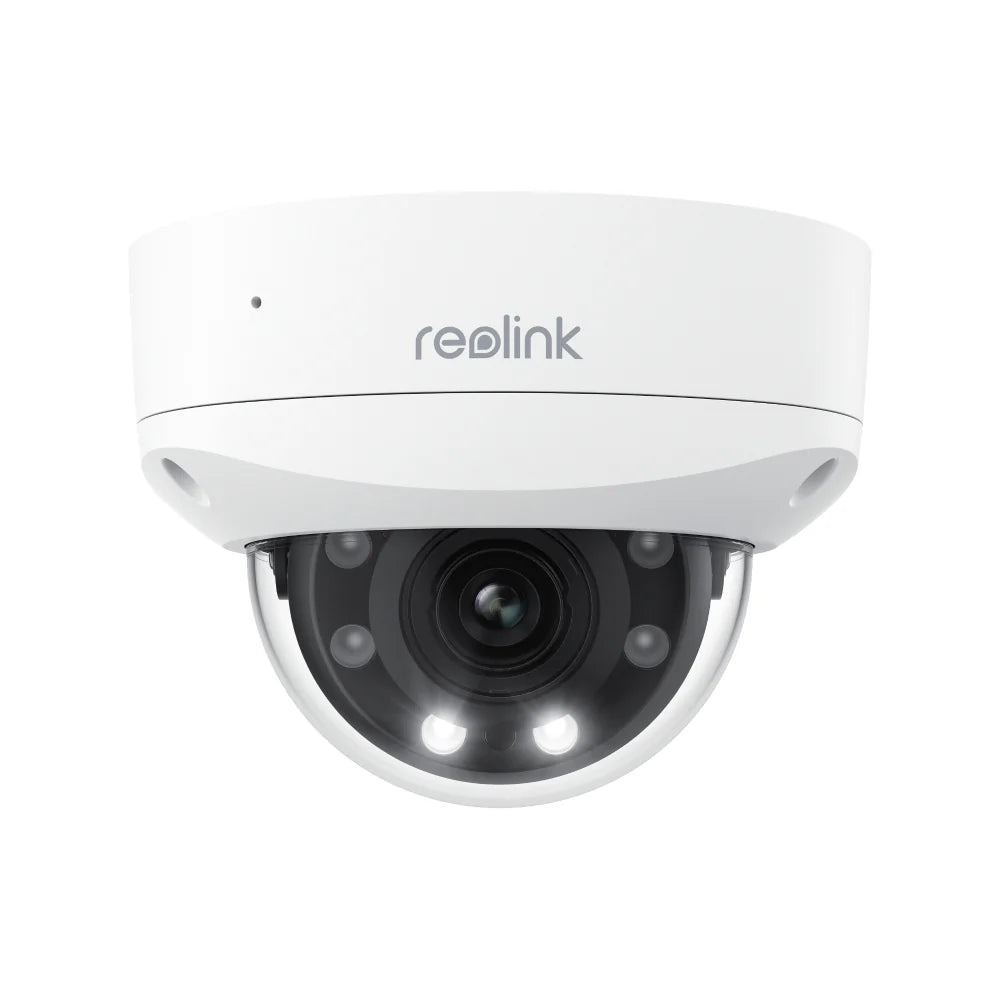
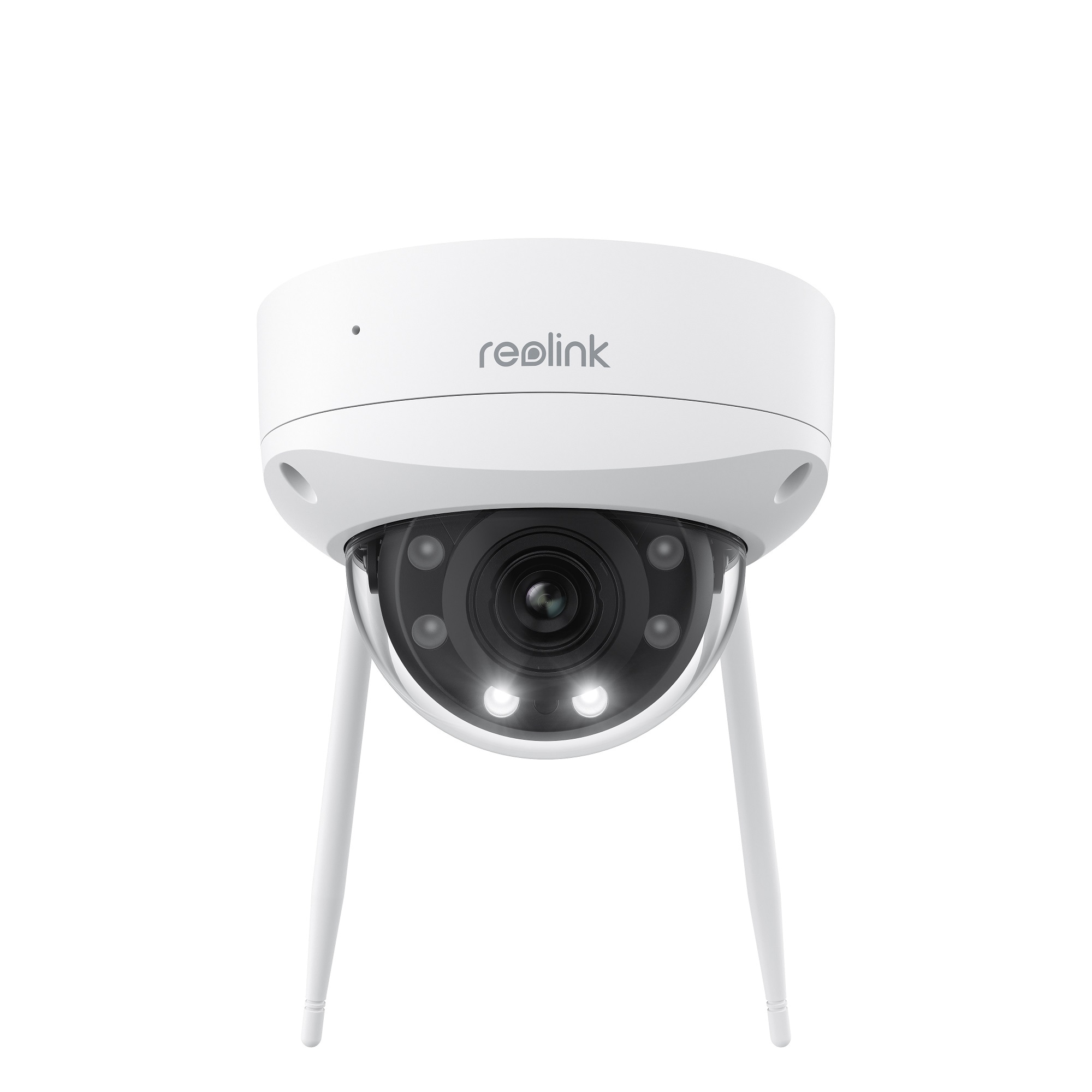
After dark the camera runs in two quite different modes and it pays to keep them apart. Four 850 nm infrared diodes reach roughly 30 metres and stay invisible to the eye, but the picture is monochrome: you get the silhouette, the height and the path, never the colour of the jacket or the car. Two 6500 K white spotlights totalling 400 lumens can fire on an event or burn continuously, turning the frame fully colour — and colour is what you need when someone has to be described to the police or an insurer. The side effect of those spotlights often turns out to be the main one, since sudden light tells an unwanted visitor he has been seen, and a good share of visits end right there. Honest limits apply: the 30-metre infrared figure refers to the wide lens position, and on an open yard the spotlights mostly cover the near zone, so a distant corner of a plot deserves its own camera rather than faith in one. If the camera faces a neighbour's windows, keep the white light on event-triggered mode, otherwise night-time complaints are guaranteed.
Siren, two-way audio and person, vehicle and animal recognition
Analytics run inside the camera, so every event is classified before it becomes a notification: person here, vehicle there, animal separately. The benefit is narrow but decisive — the owner switches off alerts for cats and branches, keeps alerts for people, and starts reacting to them again. There is a speaker as well as a microphone, which makes the app talk function genuinely useful rather than a gimmick: a driver blocking your exit is dealt with in ten seconds without leaving the house. The built-in siren can be chained to the same event as the spotlights, turning a recording device into something that actively interrupts what is happening. Compare that with a camera that has no object classification: it fires on any pixel change, the owner mutes push notifications within a week, and the system quietly stops being security equipment while still dutifully recording.
IK10, IP67 and a metal housing: not a specification-sheet detail
IK10 is the vandal-resistance rating, which corresponds to an impact of about 20 joules — roughly a five-kilogram object dropped from forty centimetres. That matters wherever a hand can reach the camera or something can be thrown at it: an apartment entrance, a playground, a shop doorway, a wall beside a bus stop. The eye-ball dome shape reinforces the same idea, since the lens sits in a ball inside the housing and is awkward to twist away, unlike a bullet camera on a long arm. IP67 covers complete dust ingress protection and short immersion, so driving rain on an exposed facade without any canopy is a non-issue. The -10 to +55 degree operating range is the real constraint in our climate: it copes with an ordinary winter, but for an unheated site in a region that regularly drops below -15 degrees, either plan the mount under an eave and close to the wall or look at cameras rated down to -30 degrees.
Power, connection and where the footage actually goes
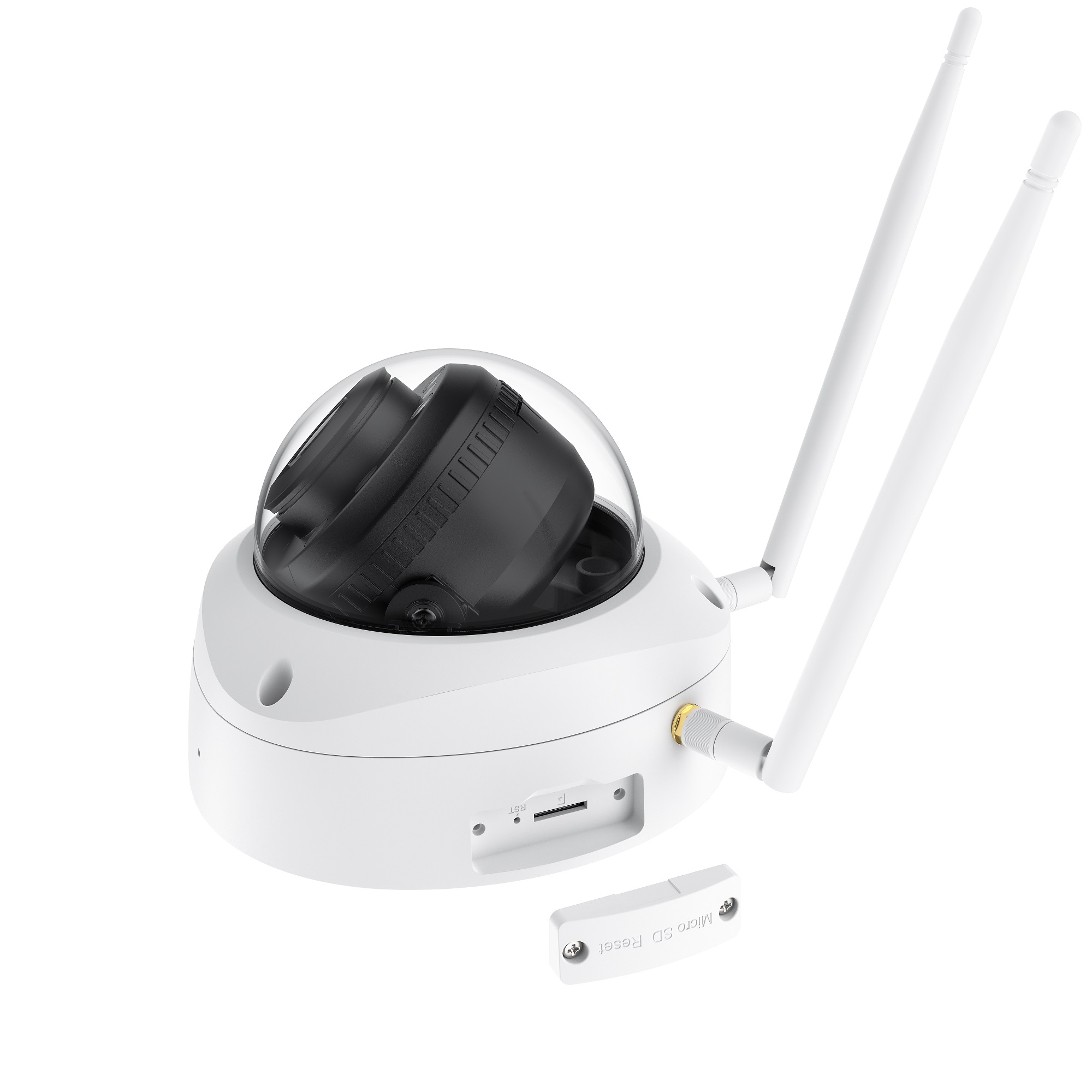
The camera takes 802.3af PoE and draws under 12 W, so an eight-port switch with a 60-65 W budget comfortably feeds eight of them — one cable carrying both power and data up to a hundred metres. A 12 V barrel-jack supply is supported as an alternative, which saves the day where mains power already exists at the pole and the network arrives over a wireless bridge. The microSD slot accepts cards up to 256 GB: that is about three days of continuous 4K, yet several weeks in event-triggered mode, so treat the card as insurance against a broken link to the recorder rather than as primary storage. The intended path is recording to a Reolink NVR, where the camera is picked up automatically once the cable is plugged in, without typing IP addresses or credentials. ONVIF and RTSP are both supported, so the stream can be pulled into a third-party NVR or VMS, but be clear about the trade: another vendor's system gets video and basic detection, while the spotlight and siren logic stays inside the Reolink app. Two further routes exist for the footage — an FTP server and direct Home Assistant integration — which makes the model a sensible building block for a self-assembled smart home.
Where this camera belongs and which jobs it was built for
The 437 is strongest at a point that needs the overview and the option of getting closer later: a gateway with both a pedestrian door and vehicle gates, a shop frontage with window and entrance, a parking bay for a handful of cars, the yard of a small production site. A reliable way to commission it is to set the zoom mid-travel and check whether a number plate is legible where cars stop in front of the gate; if not, pull the optics towards 13.5 mm and accept losing part of the periphery. Indoors, in a sales floor or a restaurant, the vandal-proof housing and the ability to narrow down to one till keep it relevant, though blanket coverage of a small room is cheaper with a wider fixed model. Where it is out of place: a long perimeter with movement along it, which needs either a facing pair of cameras or a tracking pan-tilt model; likewise the far corner of a large plot, where 30 metres of illumination simply will not reach the area of interest. One more practical rule — a motorised lens only earns its keep if somebody actually looks at the picture and tunes it; for a set-and-forget installation a fixed lens chosen for the specific task delivers the same result for less.
How it differs from neighbouring Reolink models in this catalogue
The closest relative is the P434 with its 2.8-8 mm lens: the same 8 MP eye-ball body, but three times zoom instead of five, which makes it equal for yard coverage and weaker when a distant plate has to be pulled in. If zoom is not part of your plan at all, the catalogue holds the P334 with a fixed 2.8 mm lens — identical resolution and housing in a simpler, cheaper version that is perfectly adequate for a yard with one zone of interest. The RP-PCV8MZ and RP-PCB8MZ share the very same 2.7-13.5 mm optics and differ in form factor: dome and bullet respectively, the bullet being more visible from afar and therefore more of a deterrent, but also easier to reach — and that is where the IK10 rating of the 437 wins. When the requirement is tracking rather than magnification, look at the P840: same 2.7-13.5 mm focal range, but a motorised pan-tilt head and illumination out to 60 metres, which suits a large plot. About the letters in the part number: P437 is the PoE version described here, while W437 is its twin with Wi-Fi 6 instead of a cable, sharing the optics, sensor, spotlights and siren — so the choice is simple, take the PoE variant whenever twisted pair can be pulled, and keep the W437 for places where no cable will ever run.
If you are unsure which zoom position covers your particular task, send us a site plan or a photo from the intended mounting point and we will suggest the height, the angle and what will realistically fit in the frame.
Characteristics Reolink 437
Reviews about Reolink 437 from real users
No reviews found







