
 m. Сміла, Незалежності, 67г. оф, 406/6























IMOU TURRET SE 4MP-C - WI-FI/ETHERNET IP CAMERA

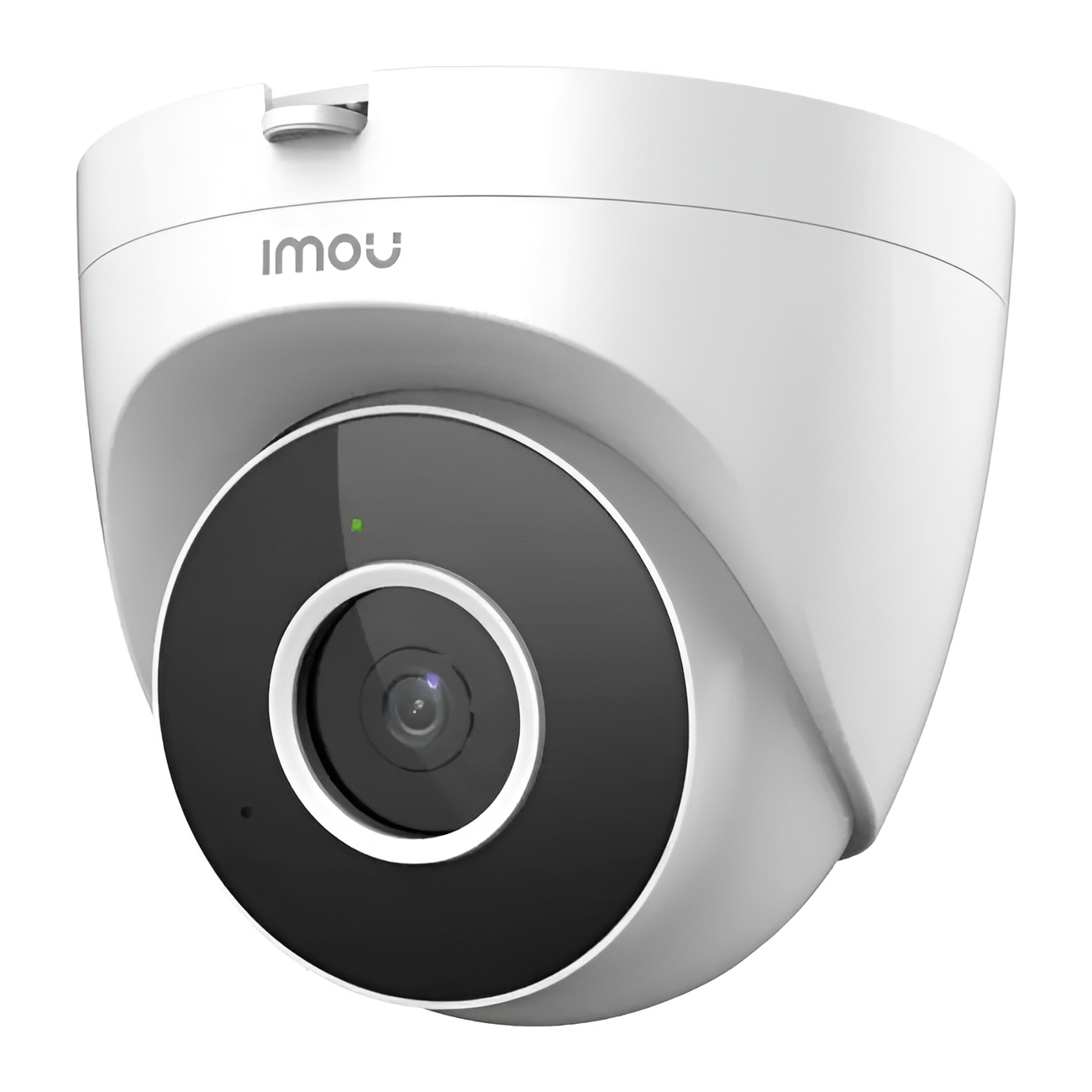


Description Imou Turret SE 4MP-C
Four megapixels for UAH 2430: what the extra resolution buys you
The 4 MP sensor produces a 2560×1440 frame, roughly twice the pixel count of the 2 MP cameras that dominate this price bracket. The difference does not show on the live view; it shows when you open the archive and zoom in, because at 4 MP a face eight to ten metres out stays recognisable while 2 MP at the same distance leaves a blur. The 90-degree field of view is narrower than on models covering 110 to 120 degrees, and that is an advantage rather than a shortcoming: the same pixels are spread across a smaller scene, so detail density per metre is higher. For a typical yard or a small sales floor, 90 degrees is a working compromise — one camera covers the driveway and the gate, or an aisle between shelving units, without trying to swallow everything at once. What this optic is not for is licence plates: beyond fifteen metres even 4 MP through a 2.8 mm lens shows you a car rather than its registration, and that job needs a tighter lens.
The eye-ball body: precise aiming and fewer glare problems
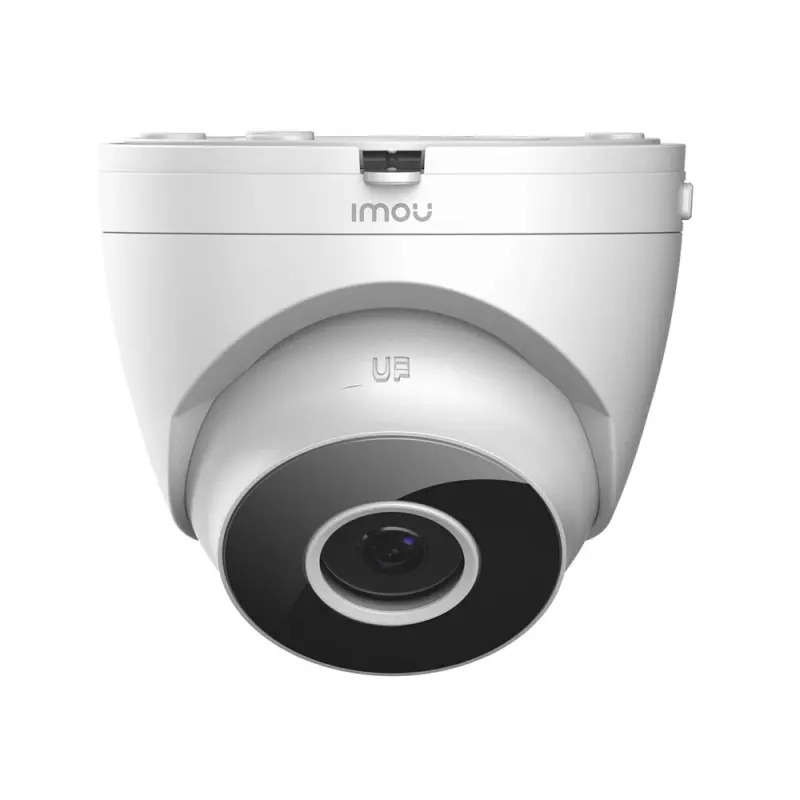
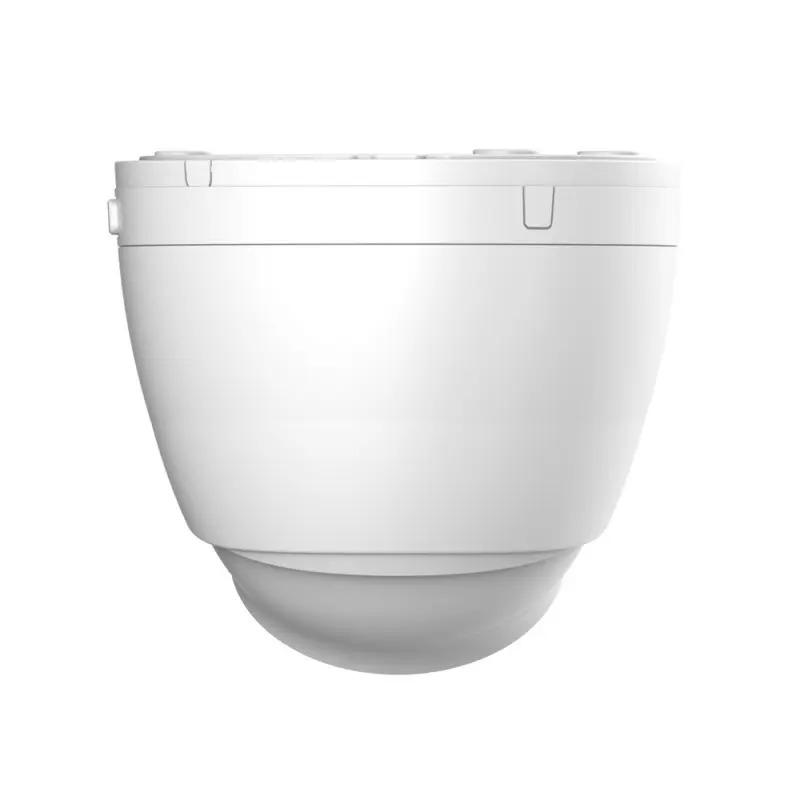
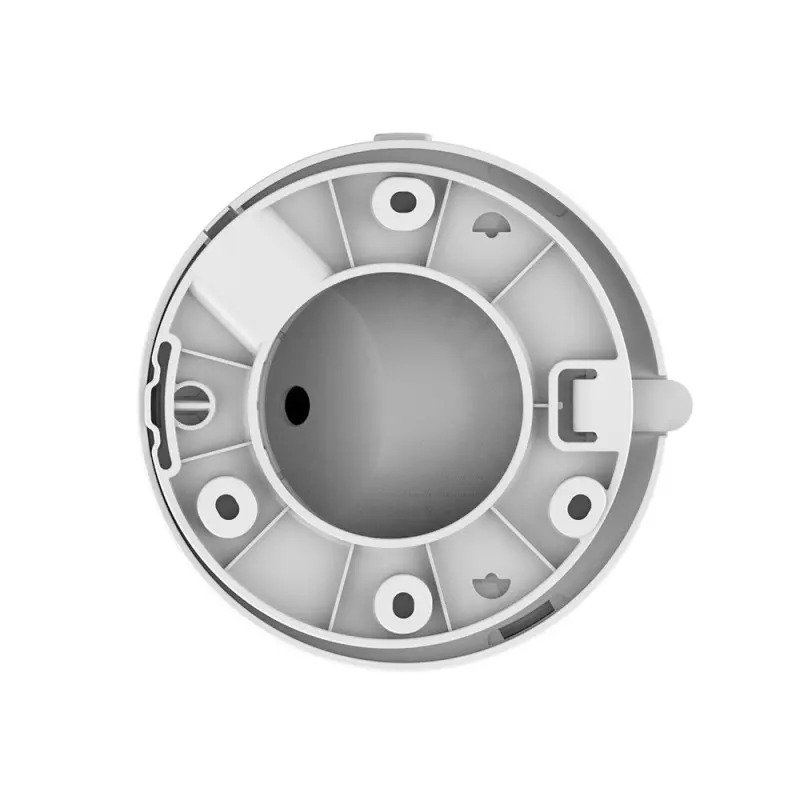
An eye-ball dome is a ball seated in a fixed base, which after mounting can be rotated in any direction and locked, keeping a low profile against the wall or ceiling. Compared with a bullet camera on an arm, this shape brings three practical wins: the integrated shroud shields the lens from direct rain and side glare, the ball is harder to grab and twist aside, and it collects far less cobweb, which infrared illumination otherwise turns into nightly false alarms. At around 200 g and a modest diameter, it needs no reinforced mount — the supplied base on three plugs in brick or concrete is plenty. Aiming is convenient during installation itself: you watch the stream on your phone and turn the ball until exactly the right scene fills the frame. The one drawback of the shape is that it is less conspicuous from a distance, so if you also want the camera to work as a visible deterrent, a bullet housing does that job better.
Human and vehicle recognition: the filter that saves your notifications
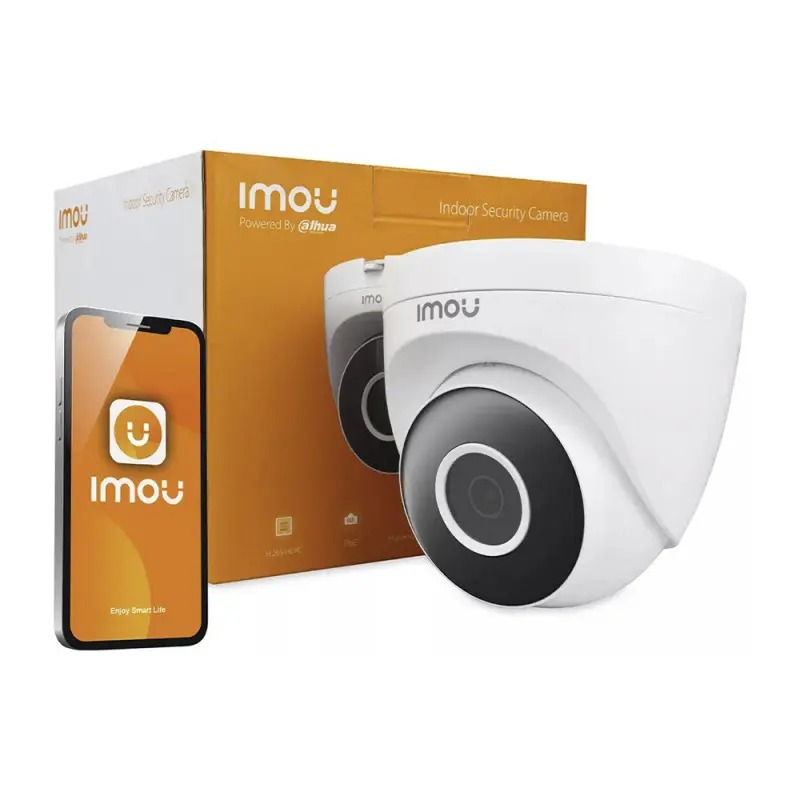
The product card ticks both human and vehicle detection, yet Imou's own datasheet for the Turret SE 4MP declares Human Detection only, so plan around reliable recognition of people rather than around vehicle classification. The value lies entirely in filtering: you enable alerts for the category you care about and stop receiving dozens of night-time pushes caused by insects drifting through the infrared beam or a branch swaying in the wind. Without that filter the story is always the same — after a week the owner mutes notifications altogether, and the system stops guarding anything, becoming an archive nobody opens. There is no separate animal category here, so a rule such as "alert me only about the dog in the yard" cannot be built, and owners of large dogs should expect occasional triggers. Alerts arrive as push messages and e-mail, the camera is managed from the Imou Life app, and the detection itself happens inside the camera — the paid Imou Protect subscription is needed for cloud storage, not for notifications to work.
Wi-Fi and Ethernet together, but no PoE
The camera carries both a 2.4 GHz wireless module and an RJ-45 port, so you can choose the connection to suit the site rather than bending the site around the camera. Cable is always the more dependable option: Wi-Fi at the far end of a yard has to cross a brick wall and a steel gate, and that is exactly where stream dropouts and gaps in the archive appear, the kind that are awkward to explain later. One detail people routinely miss while planning: this model does not support PoE, so even with twisted pair running to the camera for data, it still needs its own 12 V supply at the mounting point. In practice that means either a socket nearby or a second power run from a PSU indoors, and across a four or five camera system that detail shifts the budget noticeably. If a single cable per camera is what you are after, the catalogue has the Imou Bullet 3 3MP PoE at UAH 1575 — cheaper and powered over the cable, but 3 MP instead of 4 and with no wireless module at all.
Storage: memory card, continuous recording, FTP and ONVIF
The camera accepts microSD cards up to 256 GB and supports continuous recording rather than event clips alone, which matters for any investigation where you need to see what happened ten minutes before the trigger. As a rough guide to archive depth: in H.265 a 4 MP stream runs at roughly two to three megabits per second, so a 256 GB card holds on the order of a week to ten days of continuous video before it starts overwriting the oldest material. Beyond the card there is FTP upload and an RTSP stream, while ONVIF support lets you feed the camera into a recorder such as the Imou NVR-N118-8A0E at UAH 4500 and keep the archive centrally. That ONVIF and RTSP support is precisely what separates this model from closed cloud-only cameras: you are tied neither to one app nor to a subscription, and the stream can be pulled into your own system. Do buy a surveillance-rated card, because an ordinary one used for round-the-clock recording wears out within months, and the archive ends right when you need it.
Where to mount it and the jobs it was built for
A 90-degree view with illumination out to 30 metres suits medium-sized scenes: the yard of a country house, a porch and the path to the door, a small shop floor, an office corridor, a garage entrance, an aisle between warehouse racks. The housing is rated IP67, which means dust-tight and resistant to powerful water jets, so on paper it is fit for year-round outdoor duty. The -20 to +50 °C operating range deserves an honest look though: across most of Ukraine that is sufficient, but on an exposed facade a hard frost can drop below the limit, so mounting under an eave or canopy is wiser than picking the coldest corner of the roof. Indoors there are no constraints at all, and for interior work this is one of the cheapest routes to 4 MP with object filtering. Where it does not belong is any position demanding a wide panorama in a single frame — for a large yard at 90 degrees you will either have to pull the camera further back or add a second position.
How it compares with neighbouring models in this catalogue
Its closest relative is the Imou Turret SE-C at UAH 2025: the same shape, the same installation, but 2 MP instead of 4, so the 405 difference is effectively the price of being able to zoom into a recording and identify someone. The Imou Bullet 3MP at UAH 2115 is 315 cheaper with 3 MP, yet it spans a wider -30 to +60 °C range and offers colour night illumination, which makes it the more practical pick for the coldest outdoor positions. The most revealing comparison is with the big brands: the Hikvision DS-2CD1341G0-I at UAH 4005 has the same 4 MP, but its specification lists no human detection at all, so the 1575 premium buys a metal body, PoE power and a recorder ecosystem rather than smarter alerts. The Hikvision DS-2CD1143G2-LIUF at UAH 4140 does combine 4 MP, recognition and single-cable power, and it is the logical next step if the system is being built around an NVR instead of an app. In short, the Turret SE 4MP-C is the rational choice when one or two points need 4 MP with alert filtering quickly and cheaply; if you are installing six cameras with a central archive and a PoE switch, building on a professional line from the start is both cheaper and tidier.
Tell us how many points you need to cover and whether cable can be run — we will put together a camera mix and point out where this model is enough and where a tighter lens is the better buy.
Characteristics Imou Turret SE 4MP-C
Reviews about Imou Turret SE 4MP-C from real users
No reviews found







